A new report by the Armenian NGO "Peace Dialogue" highlights contradictions in Armenian society and the quest of young people for a better life - a quest often frustrated by fear and insecurity.
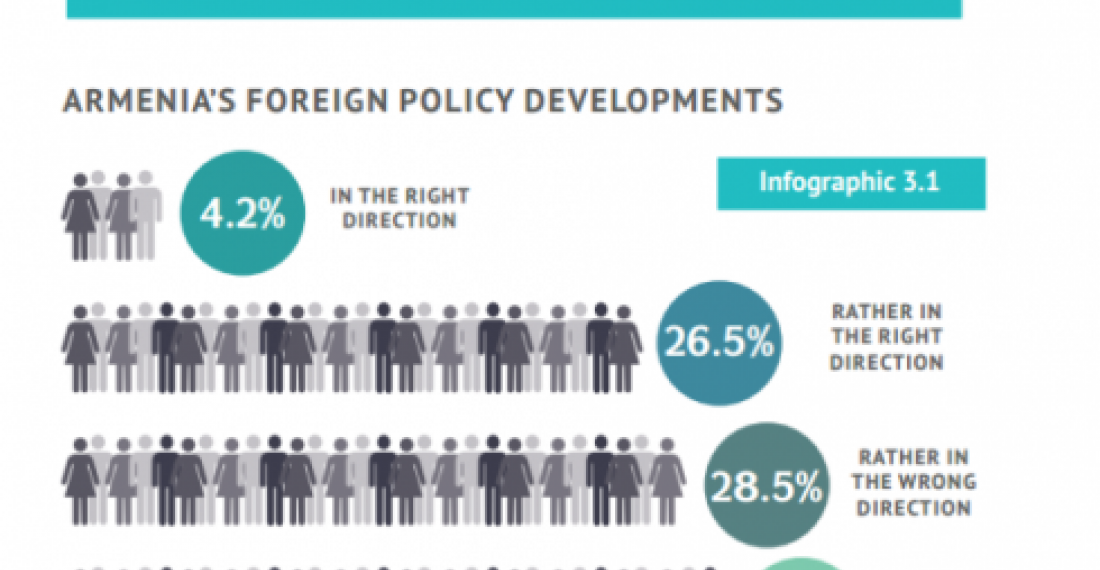
Young people in Armenia are very concerned about the economic and social situation in their country, particularly the lack of jobs, poverty and large scale outward migration. They hope for a better future, but their vision is blurred by a fear about the security of their country and their nation. Young Armenians trust their Church and their Army and consider both as sacred, in contrast to their trust in the government and parliament which is very low.
These are some of the findings from analytical research conducted by the Armenian civil society organisation "Peace Dialogue" published yesterday in a report entitled "Between Freedom and Security". The report is based on face to face interviews with 480 young people aged 18 to 25, and 14 focus groups. (You can read or download the report in full here)
The report addresses the issue of preference amongst young Armenians to membership of the Russia led Eurasian Economic Union (EEU) over closer relations with the European Union (EU). The report concludes that "EEU membership is perceived as a way of preventing war, and EU membership is seen as a way of improving prospects for the protection of human rights and economic development. In other words, due to the security threats facing the country, many young people find it more reasonable to have at least vague security guarantees rather than economic development as a long-term prospect of being within the EU. The logic of participants who prefer the EEU can be expressed in the following sentence - 'secure survival is more preferable than the prospect of economic development in the far future'."
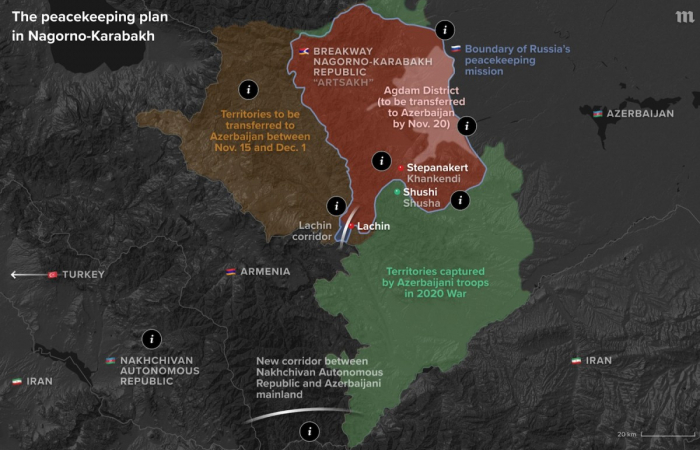
The report highlights contradictions in perceptions of young people on many important issues including the Nagorno-Karabakh conflict. It says that "In the perceptions of young people there is no common approach to the 'resolution' of the Nagorno-Karabakh conflict: they have different views about the future status of Nagorno-Karabakh. While accepting the idea of a negotiation process for a settlement, they do not accept any kind of territorial concession. Many of the respondents are in favour of a military solution to the conflict, however it still remains a question what is their level of understanding of what a possible resolution might be. There are contradictory perceptions among young people over Russia's interest and participation in this conflict. These and many other questions remain to be unwrapped and require additional study. "
Addressing the issue of human rights, the report says that there is a lack of a comprehensive understanding and basic knowledge of the concept of human rights". It add that, "despite this lack of knowledge, young people are able to clearly comprehend the various forms of discrimination between many groups on many grounds." The report says there is a huge demand among young people for justice. It adds, "Surprisingly, young people put the responsibility of human rights violations on themselves instead of demanding the state guarantee those rights." When faced with the choice between human rights and the physical security of their nation, they put security first, the report concludes.
Commonspace.eu political editor said in a comment:
This is an important and timely report prepared by an NGO that has already earned the respect of many for its principled positions and its activism. In its report, the Vanadzor based NGO, "Peace Dialogue" brings out in very graphic terms contradictions in Armenian society, and how fear continues to put the quest for security above everything else. Yet, increasingly, there is also a demand for a better quality of life, for justice and for dignity. Young people are starting to question the certainties of the past, and to demand a better future - a bad omen for those who have often played on the fear amongst Armenians in order to secure their narrow interests.
The report "Between Freedom and Security", written by DIANA TER-STEPANYAN and EDGAR KHACHATRYAN is based on research conducted by the NGO "Peace Dialogue" and implemented in the framework of the project "Safe soldiers for a safe Armenia", supported by the Dutch organisation, PAX. The study is based on 480 face to face interviews and 14 focus groups.
You can read the report in full in English here
Source: commonspace.eu