Türkiye urges response ‘to Israel’s potential acts of sabotage’ in US-Iran ceasefire

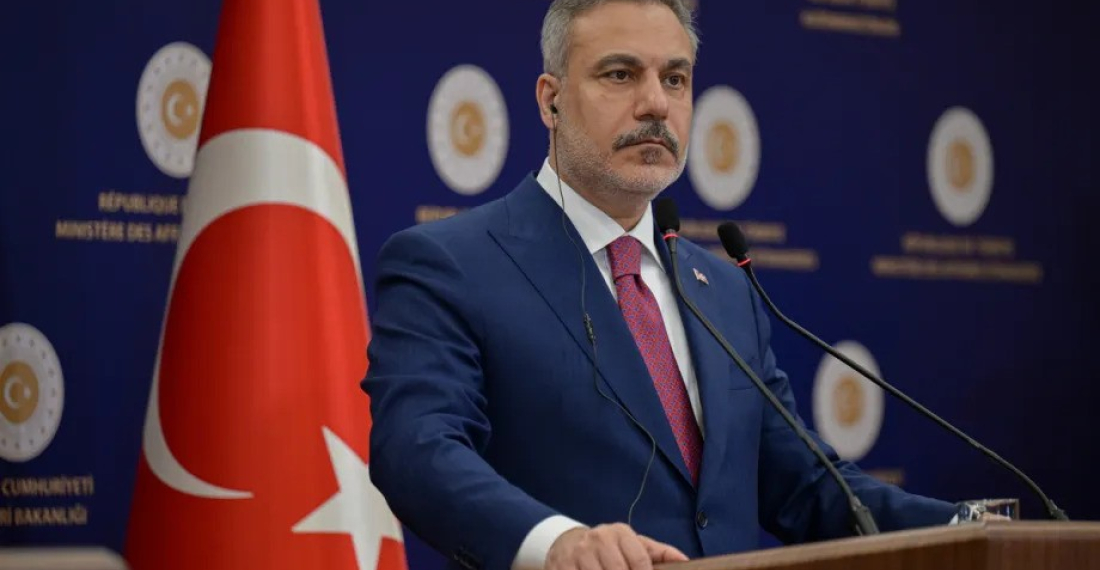
Turkish Foreign Minister Hakan Fidan on Thursday (9 April) urged the international community to appropriately respond “to Israel’s potential acts of sabotage” amid the US-Iran ceasefire.

“We… hope for the establishment of a new security and peace architecture in the region, including the normalization of relations between Iran and the Gulf countries on a stronger foundation. As Türkiye, I would like to reiterate that we are ready to play an active role in this process and provide all necessary support,” Fidan said during a press conference.

It was reported on Friday (10 April) that Washington DC will host Israeli and Lebanese envoys next week to discuss ceasefire negotiations. However, a senior official in the Lebanese president's office has confirmed to the BBC that Lebanon will participate in direct negotiations with Israel next week if, and only if, there is a ceasefire in place beforehand.

Fidan warned that Tel Aviv was “extending” its genocide in Gaza to Lebanon, stressing that “even before the ink on the ceasefire has dried,” Israel’s attacks in Lebanon were carried out without distinction between children and civilians.

He warned that Israel’s large-scale airstrike on Lebanon immediately after the ceasefire announcement was a serious provocation that could make negotiations even more difficult.

Source: commonspace.eu with Middle East Monitor and the BBC
Related articles

Editor's choice
News
European Commission Disburses €1.24 Billion to Boost Ukraine’s Defence Industry

European Commission Disburses €1.24 Billion to Boost Ukraine’s Defence Industry

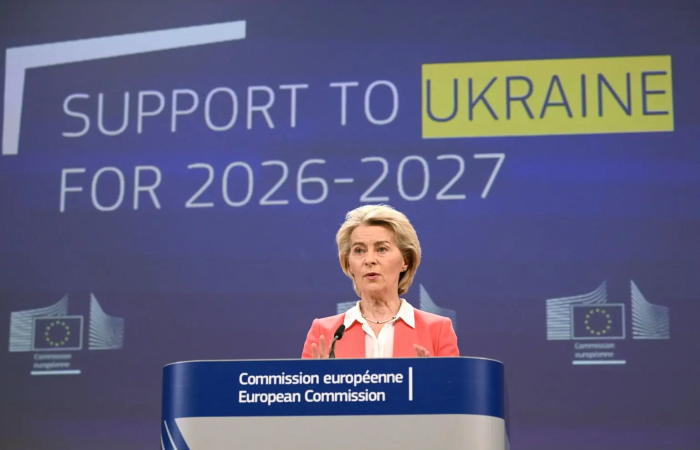
The European Commission disbursed €1.24 billion to Ukraine on Wednesday (October 7) under the defence component of the €90 billion Ukraine Support Loan, earmarked for drones, drone interceptors, ammunition, and missiles produced by Ukrainian entities. European Commission President Ursula von der Leyen said the payment would strengthen Ukraine’s defence industry and its ability to protect people and infrastructure. She described Russia’s ongoing attacks as a deliberate strategy intended to make daily life increasingly difficult for Ukrainians. The Ukraine Support Loan provides an indicative €60 billion for defence and €30 billion for budgetary assistance during 2026–2027. The European Commission plans to disburse €28.3 billion for Ukraine’s defence industrial capacity in 2026, with further payments under the defence component expected in the coming weeks. Funding decisions are based on Ukraine’s evolving requirements and remain subject to agreed conditions and monitoring. According to Ukrainian Prime Minister Serhiy Koretskyi, the latest payment brings Ukraine’s defence financing received through the programme to nearly €13 billion. He said the government would continue working with European partners to ensure the remaining planned funding is delivered on schedule and in full For the remainder of 2026, €32.5 billion in EU financial support remains available to Ukraine. This includes €28.1 billion under the Ukraine Support Loan – €15.4 billion for defence industrial capacity and €12.7 billion in budget support. A further €4.4 billion remains available through the Ukraine Facility, bringing the total budget support available for 2026 to more than €17 billion, subject to Ukraine meeting the relevant conditions. Since 2022, the EU and its member states have provided €228.7 billion in overall support to Ukraine, including €3.8 billion generated from immobilised Russian assets.
Editor's choice
News
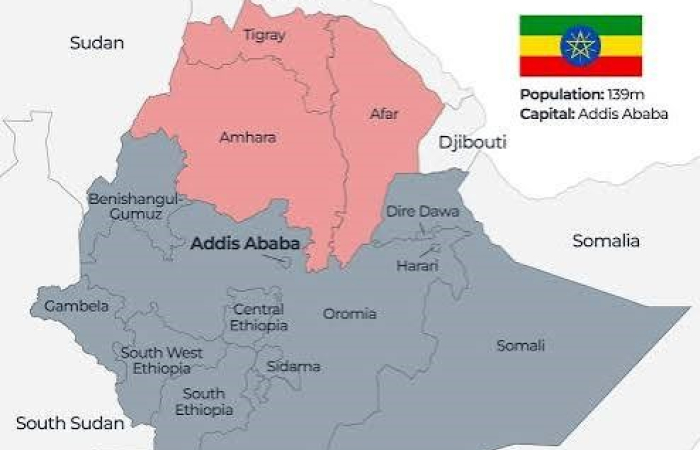
In Ethiopia, government forces take rebel capital

In Ethiopia, government forces take rebel capital

Government forces in Ethiopia, have taken control of the town of Mekelle, capital of the Tigray region. Earlier, Ethiopia's federal military said it had recaptured the main airport in the capital of the northern Tigray region, dealing a major setback to an ​opposition alliance in its stronghold. Clashes pitting a rebel alliance led by Tigray's ruling party ‌against the government and its allied forces broke out in northern Ethiopia last week, in the most serious escalation of violence since a 2020-2022 civil war. The fighting has stoked fears that it could escalate into a wider regional conflict, potentially drawing in neighbouring ​countries in the Horn of Africa and the Gulf. In recent days Ethiopia and Eritrea broke off diplomatic relations amid mutual accusations. In Washington, State Department spokesman Tommy Pigott ​said the United States strongly urged Ethiopia and Eritrea to "exercise maximum restraint and return ⁠to dialogue and cooperation as agreed in their 2018 peace framework." "The Horn of Africa cannot sustain another ​military conflict and humanitarian crisis," Pigott said. "A conflict jeopardizes ongoing U.S. collaboration on shared interests with both countries." The ​federal government in Addis Ababa accused Eritrea of supporting the rebel alliance alongside Sudan and Egypt. The three countries deny this. Troops from the Ethiopian National Defence Forces had regained control of Alula Aba ​Nega Airport in Tigray's capital Mekelle,   A Mekelle resident who asked not to be named for security reasons, confirmed the ‌taking of ⁠the airport by government forces and added they could hear gunfire outside the city centre. This source said they had seen some Tigrayan Defence Force fighters abandoning their posts and heading home, and that there was looting of government facilities taking place in the city. Mekelle's airport, which ​is around 10 km (6 miles) from the centre of the city, was ​one of three ⁠airports in the region that were seized by the opposition forces at the start of the fighting on September 23. The taking of Mekelle by government forces would be a major setback for the opposition alliance, although analysts say ⁠it ​would be unlikely to end the conflict. In 2020, federal forces captured ​Mekelle within the first month of the two year war before the TPLF reclaimed it seven months later.

Popular

Editor's choice
Interview
Thursday Interview: Murad Muradov

Thursday Interview: Murad Muradov

Today, commonspace.eu starts a new regular weekly series. THURSDAY INTERVIEW, conducted by Lauri Nikulainen, will host  persons who are thinkers, opinion shapers, and implementors in their countries and spheres. We start the series with an interview with Murad Muradov, a leading person in Azerbaijan's think tank community. He is also the first co-chair of the Action Committee for a new Armenian-Azerbaijani Dialogue. Last September he made history by being the first Azerbaijani civil society activist to visit Armenia after the 44 day war, and the start of the peace process. Speaking about this visit Murad Muradov said: "My experience was largely positive. My negative expectations luckily didn’t play out. The discussions were respectful, the panel format bringing together experts from Armenia, Azerbaijan, and Turkey was particularly valuable during the NATO Rose-Roth Seminar in Yerevan, and media coverage, while varied in tone, remained largely constructive. Some media outlets though attempted to represent me as more of a government mouthpiece than an independent expert, which was totally misleading.  Overall, I see these initiatives as important steps in rebuilding trust and normalising professional engagement. The fact that soon a larger Azerbaijani civil society visits to Armenia followed, reinforces the sense that this process is moving in the right direction." (click the image to read the interview in full)