European Parliament President disturbed by politically motivated pardoning of Ramil Safarov in Azerbaijan
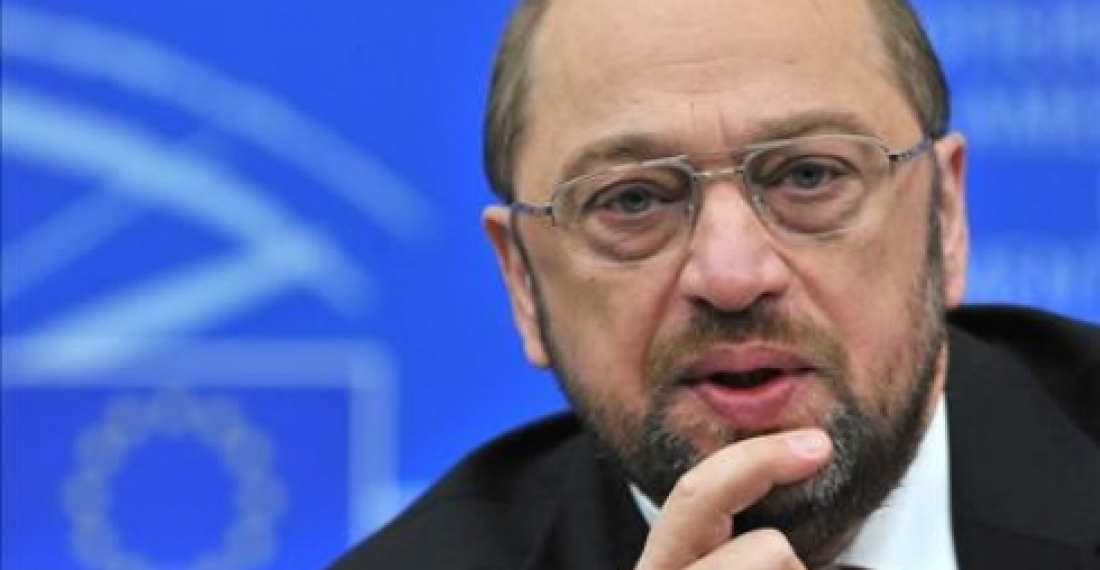
"The Strasbourg Convention on the Transfer of Sentenced People should not be abused for political purpose," European Parliament President Martin Schulz made the following statement after Ramil Safarov was pardoned by Azerbaijan's President. 
 
Safarov was convicted and sentenced to life in prison in Hungary for the murder of an Armenian army officer in Budapest in 2004.  Last month, Safarov was transferred to Azerbaijan following Azerbaijan's request under the convention on the transfer of sentenced people.  EP President Schulz stated:  "The convention on the transfer of sentenced people should not be abused for political purpose. I am disturbed by what appears to be a politically motivated pardon of Mr Safarov by the President of Azerbaijan.At the same time, I urge Azerbaijan and Armenia to avoid any moves and statements that might
exacerbate the situation."

Earlier on August 31 the Armenian authorities adopted a decision to suspend diplomatic relations and official contacts with Hungary.  President of Armenia Serzh Sargsyan made public the decision at a special meeting with the heads of diplomatic missions on Friday after the Hungarian authorities extradited Azeri officer Ramil Safarov, who was sentenced by a Hungarian court to life in jail for killing sleeping Armenian officer Gurgen Margaryan with an axe in Budapest in 2004. Both the officers were undergoing an English language course under the NATO PfP program. The same day after Safarov's extradition,
Azeri President Ilham Aliyev decreed to pardon the criminal.

Related articles

Editor's choice
News
Pope on Christmas Day: "Peace is a shared responsibility"

Pope on Christmas Day: "Peace is a shared responsibility"

In his Christmas address on St Peter's Square, Pope Leo XIV renewed his plea for peace, reminding the world that it is both God’s gift and humanity’s shared responsibility. Pope Leo XIV renewed his appeal for peace, dialogue, and responsibility, turning to those regions where violence and instability continue to claim innocent lives. The Pope prayed for “justice, peace, and stability for Lebanon, Palestine, Israel, and Syria,” and urged that the promise of peace rooted in righteousness be renewed. He appealed in a particular way for Ukraine, asking that “the clamor of weapons cease,” and that all those involved, with the support of the international community, find the courage to engage in “sincere, direct, and respectful dialogue.” Remembering conflicts that risk being forgotten, Pope Leo XIV expressed closeness to the victims of war and violence in Sudan, South Sudan, Mali, Burkina Faso, and the Democratic Republic of Congo, as well as to all those who suffer as a result of injustice, political instability, religious persecution, and terrorism. The Pope also prayed for Haiti, calling for an end to violence and progress along the path of peace and reconciliation. He also invoked peace for Myanmar, asking that the country be guided towards reconciliation and hope, especially for its younger generations. Turning to Latin America, he encouraged those with political responsibilities to give space to dialogue for the common good, rather than to ideological and partisan divisions. The Pope also prayed for the restoration of the "ancient friendship" between Thailand and Cambodia, and entrusted to God the peoples of South Asia and Oceania, who have been severely affected by recent natural disasters, calling for renewed commitment to assisting those who suffer.

Popular

Editor's choice
News
Pope on Christmas Day: "Peace is a shared responsibility"

Pope on Christmas Day: "Peace is a shared responsibility"

In his Christmas address on St Peter's Square, Pope Leo XIV renewed his plea for peace, reminding the world that it is both God’s gift and humanity’s shared responsibility. Pope Leo XIV renewed his appeal for peace, dialogue, and responsibility, turning to those regions where violence and instability continue to claim innocent lives. The Pope prayed for “justice, peace, and stability for Lebanon, Palestine, Israel, and Syria,” and urged that the promise of peace rooted in righteousness be renewed. He appealed in a particular way for Ukraine, asking that “the clamor of weapons cease,” and that all those involved, with the support of the international community, find the courage to engage in “sincere, direct, and respectful dialogue.” Remembering conflicts that risk being forgotten, Pope Leo XIV expressed closeness to the victims of war and violence in Sudan, South Sudan, Mali, Burkina Faso, and the Democratic Republic of Congo, as well as to all those who suffer as a result of injustice, political instability, religious persecution, and terrorism. The Pope also prayed for Haiti, calling for an end to violence and progress along the path of peace and reconciliation. He also invoked peace for Myanmar, asking that the country be guided towards reconciliation and hope, especially for its younger generations. Turning to Latin America, he encouraged those with political responsibilities to give space to dialogue for the common good, rather than to ideological and partisan divisions. The Pope also prayed for the restoration of the "ancient friendship" between Thailand and Cambodia, and entrusted to God the peoples of South Asia and Oceania, who have been severely affected by recent natural disasters, calling for renewed commitment to assisting those who suffer.