


Now entering its fourth week, the US-Israeli war on Iran has done something that years of regional tension and diplomatic manoeuvring failed to bring about: it has made the Gulf states' vulnerabilities visible to the world. Writing for the Arab Center in Washington, Kristian Coates Ulrichsen described the attacks on Gulf civilian and energy infrastructure as the most serious and sustained threats to the physical security of the GCC states since the Iraqi occupation of Kuwait in 1990–91. This is a measure of how quickly the regional order has been upended. On the first day of the war, Iranian missiles and drones struck not only military facilities hosting US forces but also hotels, energy infrastructure, and international airports across Abu Dhabi, Bahrain, Dubai, and Kuwait.
The economic consequences of the war have continued to multiply. Following QatarEnergy’s declaration of force majeure and its halt of LNG production in early March, Iranian missile strikes on Ras Laffan Industrial City on Wednesday (18 March) knocked out an estimated seventeen percent of Qatar's LNG export capacity. According to QatarEnergy’s Chief Executive, Saad Al-Kaabi, the damage could cost $20 billion annually in lost revenue and take years to repair. European gas prices spiked by up to 35% in the immediate aftermath, though analysts at Rystad Energy cautioned that traders appeared to be pricing in demand destruction and alternative supply rather than a sustained crisis. Jan-Eric Fahnrich, the firm’s senior gas and LNG research analyst, called it a structural turning point for the market. Meanwhile, Kuwait and Bahrain have been forced to cut oil production due to limited storage capacity and a lack of alternative export routes. Oil and gas prices have continued to rise as strikes and counterstrikes against key energy facilities in the Gulf persist, with the conflict, according to US President Trump's initial estimate, potentially only at its halfway point.
The toll on the UAE has been both physical and reputational. The country’s Ministry of Defence has confirmed the interception of 334 ballistic missiles, fifteen cruise missiles, and over 1,700 drones since the war began, with eight people killed and 158 injured. Analysts have observed that the strikes have inflicted a different kind of damage beyond the casualty figures. They have shaken the UAE’s carefully cultivated image as a haven of stability and global commerce insulated from regional turbulence. With panicked tourists and major American technology companies beginning to pull back from the region, the UAE has moved to defend its brand not only with missile interceptors but with a tightening grip on speech, arresting more than one hundred people for filming and sharing footage of Iranian attacks.
Diplomatic pressure has sharpened substantially this week. On Saturday (21 March), Saudi Arabia declared five members of Iran's diplomatic mission in Riyadh persona non grata, including the military attaché and his assistant, demanding that they leave the Kingdom within twenty-four hours. The Saudi foreign ministry cited Iran's ongoing targeting of Saudi sovereign territory, its civilian infrastructure, and diplomatic premises as a clear violation of international law. Dr. Bashayer Al-Majed, a professor of law at Kuwait University, argued that Kuwait’s response, grounded in clear restraint and the rule of law, reflects a deliberate application of Article 51 of the UN Charter, asserting the right to self-defence while upholding the principles of necessity and proportionality. The GCC’s posture has been one of sovereignty asserted through legal language rather than military action, a position that grows increasingly difficult to maintain as the war lingers.
Beneath the immediate crisis, a subtle realignment is taking shape. The meeting in Riyadh of the foreign ministers of Türkiye, Saudi Arabia, Egypt, and Pakistan on the sidelines of aan meeting of Arab and Islamic foreign ministers from countries affected by the conflict, points toward something more significant than a diplomatic courtesy call. Turkish Foreign Minister, Hakan Fidan, described the talks as an ongoing effort by countries with regional influence to combine their strengths, which could hint at the security pact Ankara has been seeking with Riyadh and Islamabad for over a year. Whether this amounts to the creation of a new regional architecture or remains a statement of intent will largely depend on how the war ends and on Washington’s posture in its aftermath.
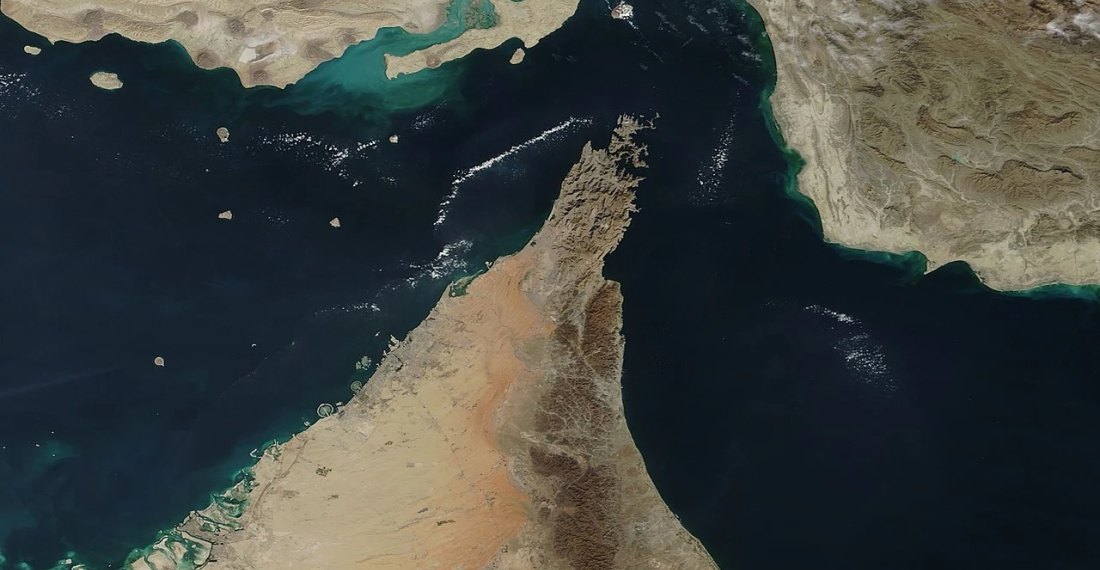
One of the most striking interventions of the past week came from Oman’s chief diplomat, Badr Albusaidi, who wrote that the US-Israeli strikes on Iran were unlawful, carried out just hours after what he described as the most substantive nuclear talks yet. Muscat’s public break with the silence typically maintained by Gulf states during American military action is a significant shift. As Giorgio Cafeiro argued in a report for The New Arab, the conflict will compel GCC members to reassess their relationships with both Tehran and Washington, with the likely aftermath of viewing each power differently than before. However, more detrimental may be the destabilization of the Gulf as a financial center, which could prove the greatest long-term risk, not only to the GCC itself but also to the many emerging market economies reliant on Gulf wealth, and to the investment calculus underpinning Gulf partnerships with the United States. This risk extends well beyond sovereign wealth flows. The effective closure of the Strait of Hormuz has led to a rethinking of global supply chain infrastructure, leading to elevated interest in Central Asia both as an agricultural supplier and as a transit hub, given that over seventy percent of Gulf food imports normally pass through the strait in a region that imports a majority of its food. The war has, in a matter of weeks, redrawn the map of supply chain risks in ways that will outlast the final strike. The Gulf will need to continue to weigh its options carefully in the coming weeks, with the margin of error narrowing.
Source: This briefing was first published in Arabia Concise on 24 March 2026. It was prepared by Santiago Ferbel-Azcarate, with support from the commonspace.eu editorial team, drawing on reporting from Arab News (Riyadh), The National (Abu Dhabi), AFP (Paris), and other agencies.
Note to readers: Due to unforeseen circumstances, Thursday Interview will return on 2 April, and will thereafter pause for Easter. It is set to resume on 16 April.



