In this commentary on commonspace.eu Ghia Abashidze says that tough early measures and national solidarity have helped Georgia keep the covid-19 virus under control.
In the last few weeks many leading international media outlets, diplomats and politicians have highlighted Georgia's unexpected success and effectiveness in the fight against the spread of the COVID-19 virus. In Georgia those who have been opposing the Georgian Dream (GD) government for previous mistakes and failures have unexpectedly started to praise actions implemented by the Giorgi Gakharia-led Cabinet. The exception remains ex-president Mikheil Saakashvili's, United National Movement and its media-sources, who have been accused of spreading disinformation and panic.
There were a number of steps and measures undertaken by the Georgian Dream government that help explain the unusual Georgian trajectory. There were early restrictive but necessary measure which turned out to be beneficial for Georgians. By April 13 data, Georgia has reported a total of 296 cases of the new Coronavirus. There have been three deaths - all were women, aged 79 to 86, with underlying health conditions.
The country introduced some travel restrictions as early as January 28, long before other European states. This included stopping all flights from China, and introducing medical checks at Tbilisi airport. Those decisive actions were praised by the World Health Organisation (WHO). Soon further restrictions were introduced, such as the early cancellation of major sporting and cultural events, and closing ski resorts, stadiums, restaurants and bars. Also early steps were taken in mid-March to shut down education institutions, with teaching replaced by online lectures and lessons, and restricting public gatherings.
Simultaneously, measures were put in place to cushion the economy, an economic rescue plan was launched, and the state budget was revised dramatically.
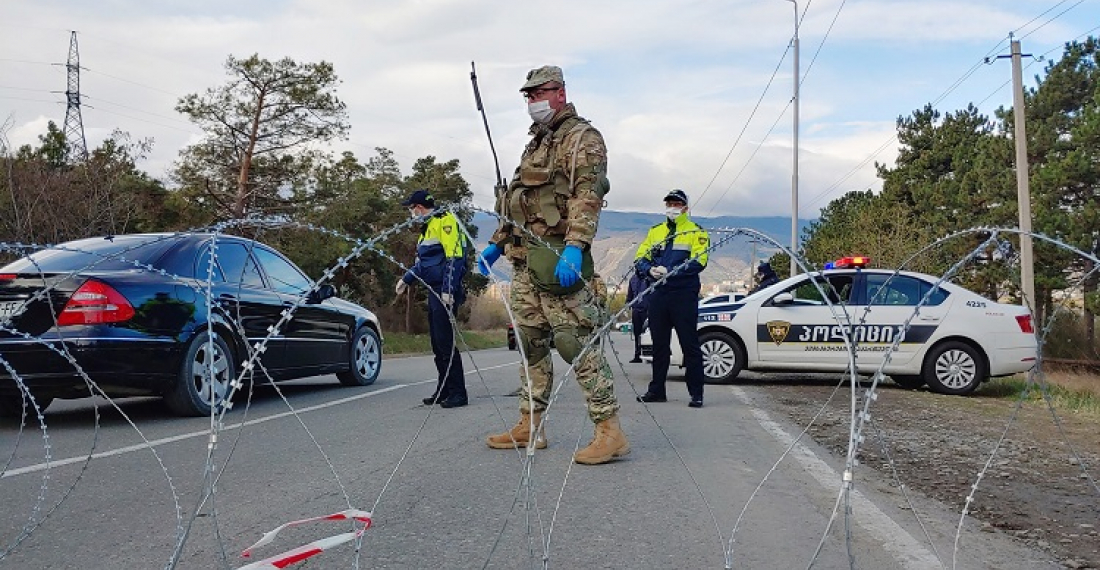
On March 31, new restrictions were introduced including a curfew between 21:00 - 06:00 , with heavy fines - up to $1000 for individuals and $5000 for entities - for those who violate the rules. Public transportation (both municipal and intercity) was suspended; gatherings of more than 3 people banned except for essential grocery stores and pharmacies, where citizens have to observe social distancing; people aged 70 and more were banned from leaving homes except for going to their closest groceries/pharmacies/hospitals; checkpoints for thermal screening of citizens were set up in major cities; and several municipalities are now under total lockdown, controlled by police and defence forces.
The government has been very careful in the way it has managed the message to the population. A dedicated multi-language website (StopCov.ge) was launched to communicate directly with citizens. Daily press briefings by government officials and senior medics' became an essential part of life for many Georgians. Additional to the local emergency centre, several free hotlines were launched by different agencies. Doctors and specialists are providing free online-consultation for those in Georgia, and they also assist compatriots abroad. Treatment for COVID-19 at hospitals is free in addition to emergency regular medical care, which the government had introduced years ago.
The founder of the ruling Georgian Dream party, former prime minister, Bidzina Ivanishvili, a billionaire with a long history of philanthropy in Georgia, transferred 100 million GEL (about $ 32 million) to the StopCov Fund which was created to cope with challenges sparked by the Coronavirus. Businesses and individuals are donating money to this fund. Also, the ruling party and few others from the opposition flank have provided daily help to needy segments of society. In these challenging times, special foreign assistance came in from USA, EU and international financial organizations, as well as other friendly countries.
The prominent role played by medical professionals has led many Georgians to say that since January, Georgia's de facto leaders are the heads of the Centre for Disease Control (CDC). A governmental task force was established in that month with the participation of the CDC and the country's top officials.
From April, within the framework of a joint project of the Education Ministry and the Public Broadcaster, School TV was launched with online lessons covering all the subjects that are included in the National Curriculum. Recently, the project was praised by European Broadcasters Union (EBU) and the Organisation for Economic Co-operation and Development (OECD) which stressed that the model of distance learning introduced in Georgia over the past month is one of the most successful projects in the world.
Since lockdown many Georgians stranded outside are being returned gradually by the national airline, following a strict protocol established by the WHO. The Ministry of Foreign Affairs managed to return more than 5000 Georgians and the process in ongoing. Returnees are checked and sent for a fortnight either to quarantined hotels and spa resorts, or if they have relevant self-isolation space - medics visit their residences prior to arrival - to their homes which are aslo strictly monitored. It is important to note the unique and comfortable Georgian model of hotel quarantine. Almost all big hotels in the country have voluntarily provided their buildings for returnees. Several rejected state subsidies for accommodation and meals, many others provide their rooms with generous discounts. The government pays 14-day stay at hotels.
Additionally, round 80 persons with suspicious symptoms were transferred from Russian-occupied breakaway territories to Georgia-proper in this period.
There is also an unusual situation in prisons. More than 800 Georgian penitentiary system staff members volunteered to confine themselves to the prison estates during the emergency, and over the last weeks they work and live in jails. The government provides them with tent accommodation and free meals. Court hearings are currently held online.
At the time of writing this article, the Georgian Orthodox Church unlike its Orthodox Sister churches, has resisted calls to restrict upcoming Holy Week services, and Easter which in Georgia is celebrated on April 19. On Palm Sunday (12 April), boxwood trees were not on sale this year, as was the usual tradition. However, in some churches they were available and police were enforcing social distancing rules. Later, the Government stated that lockdown "curfew" rules applies to everyone, and the state will not tolerate anyone ignoring them, This will be particularly pertinent this Saturday night when some parishoners will be tempted to ignore curfew rules and attend midnight church services.
In summary, the pace of the spread of COVID-19 in Georgia appears to be under control. The peak of the virus is expected to be in next two weeks. Let us hope and wish that the so-called Church-cluster will not occur, and common sense will prevail.
source: This commentary was prepared for commonspace.eu by Ghia Abashidze is a Tbilisi based and UK educated political analyst and opinion shaper. He previously worked with the European institutions in Georgia.
photo: Georgian security forces enforce a curfew as part of government measures to con tain the spread of covid-19
The views expressed in opinion pieces and commentaries do not necessarily reflect the position of commonspace.eu or its partners