ArmInfo: Iranian FM: Military cooperation of Israel and Azerbaijan threatening to region
December 25. ArmInfo. 

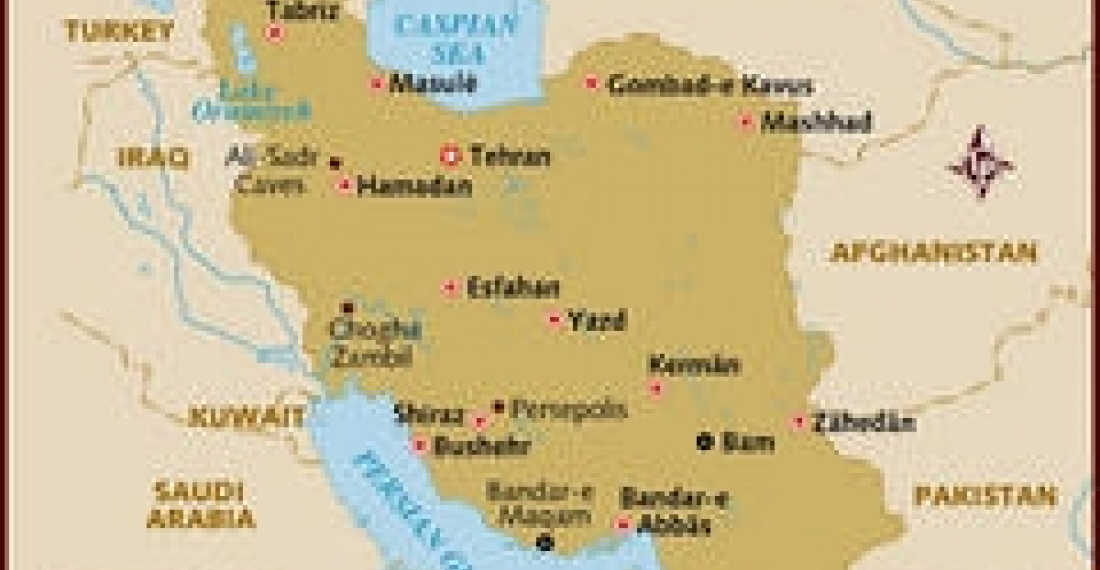
Senior expert for strategic issues of the Iranian Foreign Ministry believes that after the collapse of the USSR, Israel was trying to create an atmosphere of distrust and tension between Iran and the Caucasus states, and also affects the relations between Iran and Azerbaijan in the economy and energy sector.

Senior expert on strategic Iranian Foreign Ministry, former Ambassador to Armenia, Mohammad Farhad Culaini told in his interview  with Irdiplomacy.ir, that the increase in military-technical cooperation between Israel and Azerbaijan, causes danger in both Iran  and Armenia.

"Obviously, the main objective which the Israelis pursue in this situation is to affect Azerbaijan's relations with Iran. On the other  hand, Israel tries to create a springboard around Iran and increase its influence in the region," said Culaini.

According to the expert, the beginning of this collaboration was initiated after the Russian-Georgian armed conflict in South Ossetia in 2008. Earlier, Israel worked closely in the military field with Tbilisi, but armed conflict in South Ossetia refocused strategic policy of Israel in Baku.

Culaini noted that Israel takes into account the sensitivity of Russia on this issue, and conducted the necessary negotiations with  Moscow. He also noted that the Azerbaijani-Israeli cooperation is not a threat to Iran, but it can create problems and aggravate the  conflict in the region.

Related articles

Editor's choice
News
Aden under curfew, as problem in Yemen's south deepens

Aden under curfew, as problem in Yemen's south deepens

The port city of Aden, in Yemen's south, has been put under curfew, as the rift in the country between  the Saudi led coalition which  backs Yemen's presidential governing council, and the southern forces led by the Southern Transitional Council (STC), deepens. Abdul Rahman al-Mahrami, a member of the Yemeni Presidential Governing Council and commander of the al-Amalik brigades, has ordered a curfew in the temporary capital, Aden, "to maintain security". "A curfew has been imposed throughout Aden Governorate from 9:00 p.m. to 6:00 a.m., in accordance with the instructions of Commander Abdul Rahman al-Mahrami, a member of the Presidential Management Council," the statement said. It states that only security and military personnel, as well as medical and technical teams with approved permits, will be allowed to move in the area during these hours. Yemen's presidential council, which is backed by Saudi Arabia and which already is in a struggle with the Houthi Movement in the north of the country who also occupy the capital Sanaa, two days ago issued an order for the arrest of the head of the Southern Transitional Council (STC),, Aidarous al Zubaidi. The STC have wide support among people in the South, and advocate that South Yemen restores its independence. The coalition warned of further escalation in Aden, long regarded as an STC stronghold, as the Presidential Leadership Council (PLC) chief accused STC leader Aidarous Al Zubaidi of “high treason” and announced the revocation of his membership in the governing body. The moves mark a sharp escalation in tensions within the anti-Houthi camp, despite National Shield Forces, rivals of the STC and former allies, having recently retaken control of Hadhramaut and Mahra from southern fighters. The STC’s takeover of the two regions last month angered Saudi Arabia and contributed to igniting the current internal conflict. (click the picture to read more)

Popular

Editor's choice
Analysis
Analysis: Why what happens in Greenland matters

Analysis: Why what happens in Greenland matters

The snap elections for the parliament of Greenland last Tuesday (6 April 2021) attracted unusual interest from major powers who have been watching the political and economic impact of the election results on their interests in the Arctic region. Among them, the Chinese, who have invested in the Kvanefjeld mine on the island. Maximiliaan van Lange analyses the background to the recent Greenlandic general elections, and the Island's geostrategic position in the Arctic in this article for commonspace.eu.