Library


Filter archive

Publication date
Editor's choice
News
Syrian president al Sharaa at the White House

Syrian president al Sharaa at the White House

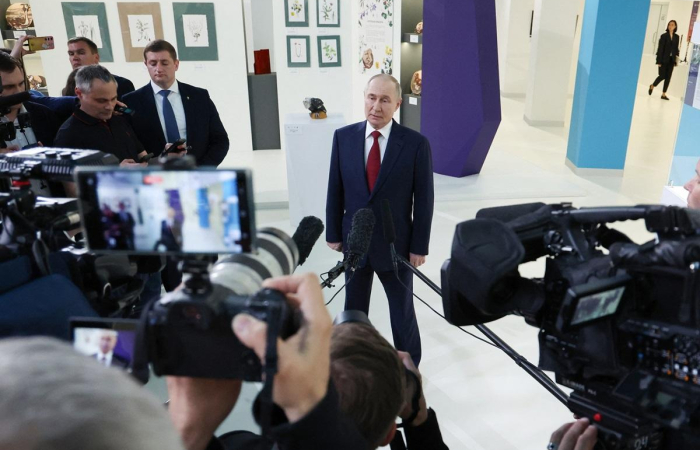
Syrian president, Mohammed al Sharaa met with US President Donald Trump at the White House on Monday (10 November). Trump met with Sharaa in the first-ever visit by a Syrian president to the White House, six months after the two first met in Saudi Arabia, and just days after Washington said that the Syrian leader, who once led an Al-Qaeda affiliate group, was no longer a "Specially Designated Global Terrorist." Washington suspended the imposition of Caesar Act sanctions on Syria in part for 180 days, the Treasury Department said as the meeting took place. The move replaces a previous waiver enacted on 23 May, it said On Friday, the US lifted sanctions on Sharaa and Interior Minister Anas Khattab, a day after the UN Security Council took the same step. Sharaa, 42, took power last year after his fighters launched a lightning offensive from their Idlib and overthrew longtime Syrian President Bashar al-Assad just days later on December 8. Syria's regional realignment has since moved  away from key allies of the former regime, Iran and Russia, and toward Turkey, the Gulf - and Washington. Syria's presidency said that Sharaa and Trump discussed the bilateral relationship, "the ways to strengthen and develop it, as well as a number of regional and international issues of common interest." After al Sharaa and Trump met in Riyadh in May, Trump announced he would lift all sanctions on Syria.
Editor's choice
Monday Commentary
Monday Commentary: Armenia and Azerbaijan are on the way to peace, but the process is far from complete or irreversible

Monday Commentary: Armenia and Azerbaijan are on the way to peace, but the process is far from complete or irreversible

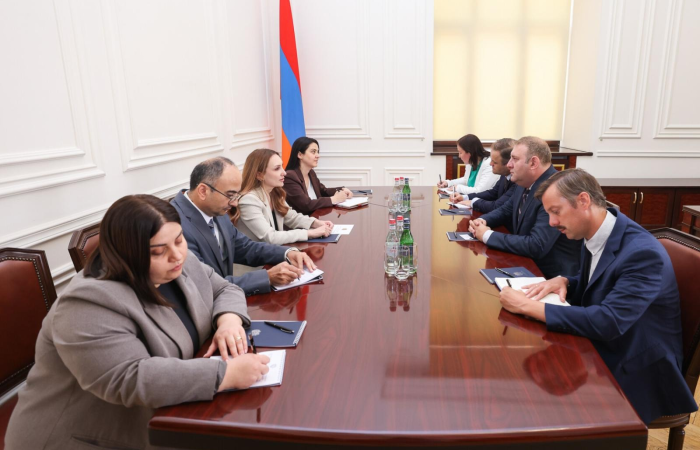
The long conflict between Armenia and Azerbaijan, which had been going on for three decades, appears to be coming to an end. After a short war which left many dead or injured, and a military operation which saw hundreds of thousands of Armenians leaving Azerbaijani territory, hundreds of thousands of displaced Azerbaijanis could start returning home. The sides engaged with discussions, first with mediators, and later, more successfully, alone. In March they agreed the text of a peace agreement. On 8 August, they initialed the agreement in Washington, in the presence of US President Donald Trump. The agreement has as yet to be signed. The meeting with Trump at the White House in August, was widely hailed as historic. It was. Not least because it tied Trump, the US, and the entire western world, to the peace process, and to the future of the South Caucasus. It was a game changer, with the potential of changing the reality on the ground. But now the hard work must start. But we must not be complacent, and think that from now onwards there will not be any problems. The peace process is incomplete and fragile. Below the top ten people on each side, whole populations, brought up with the vision of the other as enemy, have yet to be convinced of the new way forward. Lurking in the background, and sometimes, not so much in the background, are the enemies of peace, and the spoilers. The main enemies are external. Foremost is Russia. Russian policy in the South Caucasus over the last three decades has been built on the premise that Armenia and Azerbaijan were enemies that will never reconcile. The European Union in the South Caucasus is often doing catch up. It appears to have been taken by surprise by events in Georgia. It was not expecting Armenia-Azerbaijani peace and reconciliation. The European Union in the South Caucasus must catch-up, and step-up, fast. Easier said than done. The EU is set in its own ways, that were not invented, and developed for the fluid and fast changing situation that exists in the South Caucasus today. The EU must accept that in the South Caucasus it will have to lead. US involvement will be erratic, and can be counter-productive. But the EU does not have the luxury of time. If it wants to support the peace process between Armenia and Azerbaijan it must do so now. Armenia and Azerbaijan are on the way to peace, but the process is far from complete or irreversible. There are many enemies of peace, and spoilers, lurking, ready to pounce. click the headline to read more
Editor's choice
News
New Armenian-Azerbaijani Dialogue: 42 Armenians and Azerbaijanis set out vision until 2040 in four landmark reports

New Armenian-Azerbaijani Dialogue: 42 Armenians and Azerbaijanis set out vision until 2040 in four landmark reports

The Thematic Groups for a new Armenian-Azerbaijani Dialogue have produced four reports which set out a vision for relations between Armenia and Azerbaijan, and between Armenians and Azerbaijanis, over the next 15 years. The reports cover four key areas: (1) Peace and Security; (2) Regional Connectivity; (3) Good Governance; and (4) Environment. 42 Armenians and Azerbaijanis were directly involved in preparing the reports as part of the Thematic Groups. Another thirty Armenians and Azerbaijanis contributed to the process. The Thematic Groups were an initiative of LINKS Europe within the framework of EU4Peace 3, a programme supported by the European Union. An ACTION COMMITTEE FOR A NEW ARMENIAN AZERBAIJANI DIALOGUE has now been established, made up of the Chair and Deputy Chairs of the four groups that produced and agreed on the reports. The members of the Action Committee are: Murad Muradov, Leonid Nersisian, Narek Minasyan, Fidan Namazova, Sargis Kharatyunyan, Nigar Gurbanli, Aghavni Kharatyunyan, and Ramazan Samadov.  The first co-chairs of the Action Committee, for the 1st eight month semester are Murad Muradov and Leonid Nersisian. The Action Committee is responsible for the dissemination of the four reports, their eventual updating, and for contributing to the Armenian-Azerbaijani Dialogue and Peace and regional co-operation. LINKS Europe has appointed a Special Advisor to the Action Committee and will provide the Secretariat. The committee will work until December 2027. (click to title to read more or to download the reports)