Kazakhstan held parliamentary elections last week, under a new constitution. They were far from perfect, as international observers noted, but they heralded a new era in Kazakh politics. President Tokayev has to thread carefully, and balance various interests – not least Putin’s Russia, which considers Kazakhstan an artificial creation, that should always be under Russian control. China has been nibbling into Russian interests in Central Asia, but doing it in its own way, mainly through the many economic tools that it possesses. But Central Asia countries, particularly Kazakhstan and Uzbekistan, now also want to develop their relations with Europe and the west. And internally they are slowly reforming too. This process needs to be supported and encouraged.
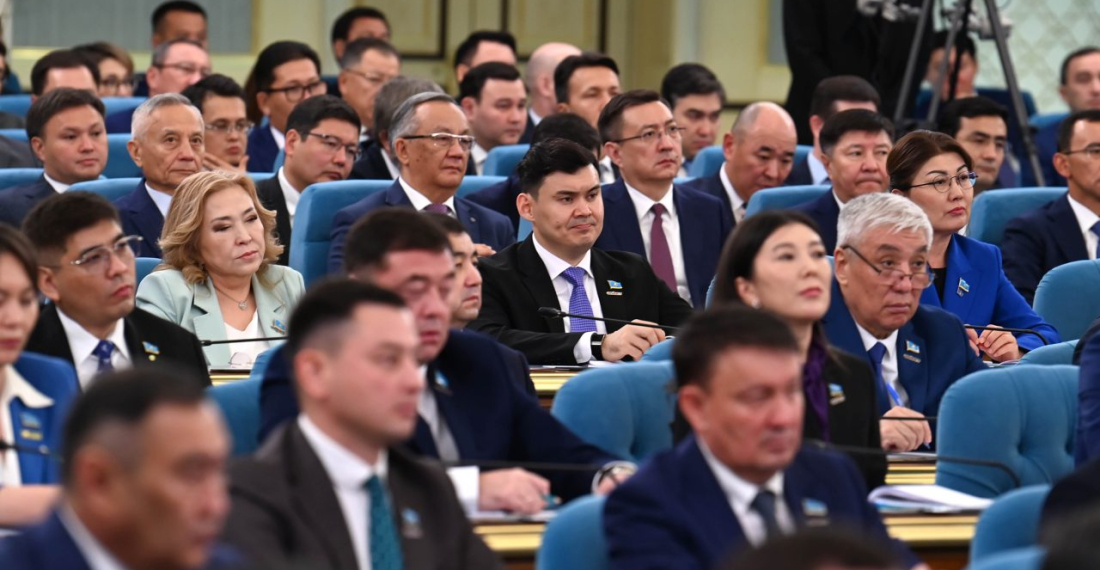
Kazakhstan’s first unicameral parliament, called Kurultai, began its work following the country’s constitutional reforms, and elections, replacing the former two-chamber Parliament. Of its 145 deputies, 111 are new members, while women now hold nearly one-third of the seats and youth representation has increased. President Kassym-Jomart Tokayev called on lawmakers to modernize legislation and bring existing laws into line with the new Constitution. Key priorities include digitalization, artificial intelligence, migration policy and social legislation.
Erlan Karin was elected Kazakhstan’s Vice President after receiving the support of 141 of the 145 members of the new Kurultai. President Tokayev nominated Karin, citing his “extensive experience in public administration and understanding of Kazakhstan’s strategic priorities”. The Kurultai also backed Olzhas Bektenov to continue serving as Prime Minister, with 137 votes in favor. The appointments fill two of the country’s most senior positions as the new unicameral parliament begins its work.
The elections held on 23 August “were technically well-prepared”, according to the OSCE Parliamentary Assembly, one of the organisations that observed the elections, “but took place in an environment lacking political pluralism”. Political choice was limited, as all contesting parties supported the incumbent President’s policies. The campaign was orderly with equal conditions, though the new Adilet party held an undue advantage. Laws revised shortly before the vote with limited consultation fall short of international standards on political participation.
“After undertaking a constitutional reset of its electoral framework, Kazakhstan has held elections that provided an opportunity to see whether these changes opened space for healthy political competition,” said OSCE Special Co-ordinator Gábor Hajdu. “Despite some positive aspects, however, there are few genuine opportunities for independent candidacies, limited space for civil society and independent media, and a lack of a level playing field consistent with OSCE commitments, including for women.”
The elimination of the right to stand independently and the rule that candidates for the new 145-member Kurultai could only be nominated by political parties from their members limited political participation. Women remain significantly under-represented in political and public life, observers noted.
“While the electoral law contains a cumulative 30-per cent candidate quota for women, youth and persons with disabilities, unfortunately it still falls short of international standards and doesn’t effectively address the underlying issue,” said Lucija Tacer Perlin, Head of the OSCE PA delegation. “Meaningful inclusion means real influence over the allocation of mandates and genuine opportunities to compete.”
Source: commonspace.eu with Embassy of Kazakhstan (Brussels); OSCE Parliamentary Assembly (Copenhagen); and agencies.
Picture: New Kazakh Parliament