Vox populi or Vox dei? Media personalities ask President to change his foreign policy. The voice of the people or the voice of the gods?

Ilham Aliev was on Saturday sworn in as president of Azerbaijan for the third term at a ceremony attended by Government Ministers, officials and diplomats from foreign countries. This followed Presidential elections on 9 October which have been criticised by opposition activists and a number of international observers.

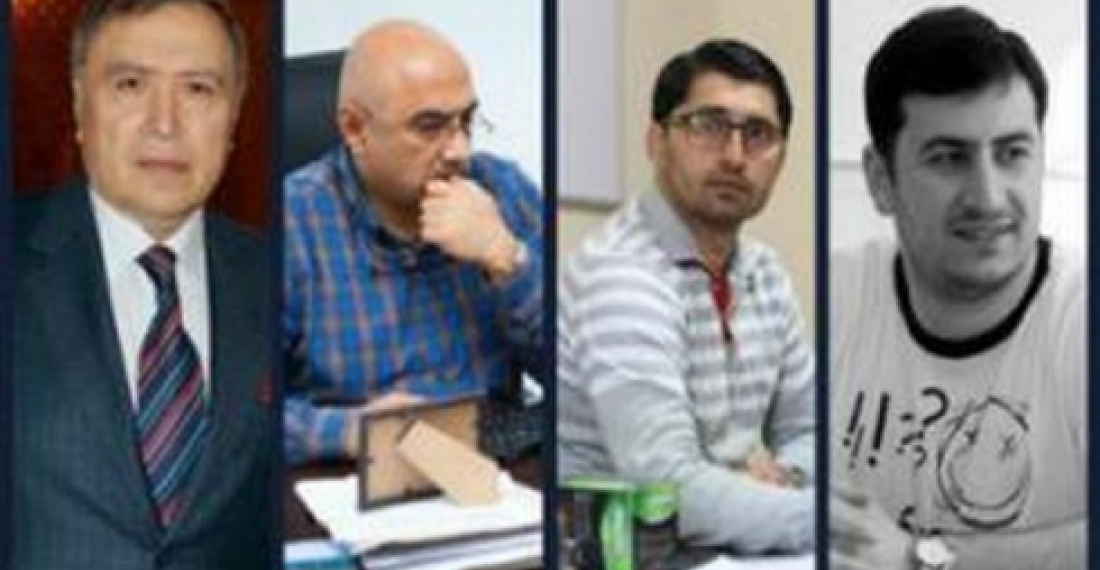
Ahead of the swearing in ceremony four leading Azerbaijani media personalities with views close to that of the Azerbaijani leadership, published an unprecedented open-letter in whch they called on the Azerbaijani President to rethink his foreign policy. In the tightly managed political environment in Azerbaijan such initiatives often have wider significance. In the letter the editors of 1news.az Rahman Haji and of ‘New Baku Post' newspaper Tofig Abbasov, an independent journalist Hamid Hamidov,and prominent artist Akif Melikov, urge President Aliev to reanalyse the directions of Azerbaijan's foreign policy before making any crucial decisions before the Vilnius Summit of Eastern Partnership which is to be held this year.

"We are addressing you this open letter as Azerbaijan received official invitation to the Summit of Eastern Partnership, which is to be held in November in Vilnius as a part of the next meeting of the heads of states of the European Union.There is no doubt that this news triggered some excitement amongst some of our compatriots. However, there are also opposite attitudes related this event as well. Some of our citizens still feel misunderstanding, and even reasonable concerns on the issue."
First of all we need to find an answer to the following question: if we are going to get that close to Brussels, we need to understand - for the sake of what we are going to do that?"

The authors of the open letter question if Europe with its "systematic burden of economic and social problems can really offer Azerbaijan effective ways for further political and economic development."

The letter makes it clear that it has been triggered by the developments of the last weeks.

"The urgency of the issue has increased after the publication of several statements of European officials and institutions that are using didactic tones, gradually increasing the pressure". According to the open letter, real partnership, if it is sound and equitable, requires all parties to respect each other's positions. ‘But the mentoring and didactic tone in the EU - Azerbaijan dialogue, apparently, is transforming into a negative trend that causes concerns and to be blamed on Europe', the letter states. "Europeans, advocating equal partnership, the rule of democratic principles and respect for the rights of all, in practice too often show inexplicable arrogance and unpredictability. It is well known that EU program Eastern Partnership, that we also participate, sets the goals to develop integration ties between the EU and six countries of the former Soviet Union. According to their commitments, Europeans, who initiated the process, have to contribute to 'the creation of the necessary conditions to accelerate political and economic integration between the European Union and interested partner countries' by promoting political and socio-economic reforms in the member states.The priority areas were identified as democracy and stability, economic integration, energy security and the development of contacts between people, including the liberalization of the visa regime. All this would allow Europe to expand their influence to a big part of the former Soviet Union. However, in almost each of the above areas Europeans demonstrate a selective approach, focusing only on aspects of their interest", the letter says.  

The Azerbaijani media personalities say that while the EU does not show the necessary political will in ensuring stability, energy security (e.g. postponing the final decisions of Shah Daniz Phase II agreements) and the development of contacts between peoples, they selectively focus on the issues of democratic development, using inappropriate rhetoric and ignoring positive aspects of the issue.It should be noted that without Azerbaijan, which is the central actor of the Eastern Partnership (EP) initiative, this process will be essentially doomed to oblivion. Azerbaijan's decision to leave Eastern Partnership would provoke a domino effect, which eventually would seriously narrow the scope of European influence in the Eurasian area".

You can read the full report of the open letter in english on the website of news.az here

Commonspace.eu political editor made the following comment

"The open letter of the four Azerbaijani opinion formers looks more like "vox dei" rather than "vox populi" but whatever it is it reflects a view within Azerbaijani ruling circles that has become more acute over the last days as the Azerbaijani leadership deals with criticism of the way it handled the 9 October Presidential election. The message to Europe and the west in general is clear "Shut up or you will lose us".

The major shift in Azerbaijani foreign policy that the four opinion-formers are making in their open letter to President Aliev is unlikely to happen, certainly not in the immediate future, although some unfriendly gesture by Baku towards Europe can be expected. A major change will not happen for three reasons:

First, the present foreign policy is closely linked with Baku's energy policy and despite the occasional glitch this has worked well for Azerbaijan. A major shift in both will take time to implement and is highly risky.

Second, A balanced foreign policy cannot work if there is a sharp swerve in one direction

Third, There are few alternatives for Baku but to pursue its present policies, despite all the posturing. Azerbaijan,and more importantly Azerbaijanis, are not ready for the hug of the bear. The events of recent days in Moscow have reminded Azerbaijanis of many memories, if ever they needed to be reminded.

The letter of the four Azerbaijani opinion formers is unlikely to cause crisis meetings in Brussels over the weekend. But it does reflect a certain view in Baku that needs considering. The EU and the US now need to consider how they are going to engage with the administration of President Aliev in its third term, a re-engagement that needs to be done without compromising principles and values. In the end these relations are of mutual interest, and so both sides are going to have to make the effort. Much will depend on how President Aliev sets out to implement his programme for the third term over the next weeks and months. Further crackdowns by Baku on dissent may prove to be the straw that breaks the camel's back. On the other hand tangible reforms, including long overdue political and constitutional reforms may help both sides turn the page."

source: commonspace.eu with news,az

photo: Four Azerbaijani opinion-formers who sent an open letter to President Aliev.
 

Related articles

Editor's choice
News
Russia adds pressure on Armenia ahead of key elections; recalls Ambassador in Yerevan for consultations

Russia adds pressure on Armenia ahead of key elections; recalls Ambassador in Yerevan for consultations

Ahead of key parliamentary elections,scheduled to be held in Armenia on Sunday, 7 June, Russia continues to attempt to put pressure on the Armenian Government led by prime minister Nikol Pashinyan. On 30 May, Russia recalled its Ambassador to Yerevan for consultations. A terse statement, published on the website of the Russian Foreign Ministry, said, "The Ambassador of the Russian Federation to the Republic of Armenia , S.P. Kopyrkin, has been summoned to Moscow for consultations in connection with the steps taken by the Armenian leadership to move closer to the European Union, which are detrimental to cooperation within the EAEU." This followed a statement issued the day before, by the leaders of the Eurasian Economic Union (EAEU) that challenges the Armenian trajectory towards approximating to the European Union. Vladimir Putin is undertood to have personally pushed the other four EAEU leaders to issue the statement, which said: "Taking into account the significant risks to the economic security of the member states of the Eurasian Economic Union (hereinafter referred to as the Union) arising in connection with the preparation of the Republic of Armenia for accession to the European Union, as well as the need to prevent the associated damage to the member states of the Union: decided that the members of the Eurasian Intergovernmental Council from the Republic of Belarus, the Republic of Kazakhstan, the Kyrgyz Republic and the Russian Federation will report at the next meeting of the Supreme Eurasian Economic Council in December 2026 on the possible consequences of the suspension of the Treaty on the Eurasian Economic Union with respect to the Republic of Armenia. We share the position on the need to hold a national referendum in the Republic of Armenia as soon as possible on joining the European Union or continuing to be part of the Eurasian Economic Union."
Editor's choice
News
The leaders of the states of the Eurasian Economic Union issued a tough statement warning fellow-member state Armenia of the consequences of its desire to join the European Union.

The leaders of the states of the Eurasian Economic Union issued a tough statement warning fellow-member state Armenia of the consequences of its desire to join the European Union.

The leaders of the states of the Eurasian Economic Union (EEAS) issued a tough statement warning fellow-member state Armenia of the consequences of its desire to join the European Union. The stark, sharply worded,  warning, comes days before crucial parliamentary elections in Armenia, scheduled for 7 June. The full statement said, “We, the Presidents of the Republic of Belarus, the Republic of Kazakhstan, the Kyrgyz Republic and the Russian Federation, Taking into account the actions of the Republic of Armenia aimed at joining the European Union, including the approval in 2025 by the National Assembly of the Republic of Armenia and the signing by the President of the Republic of Armenia of the Law of the Republic of Armenia "On the Start of the Process of Accession of the Republic of Armenia to the European Union", as well as the confirmation by the European Union of the European aspirations of the Government of the Republic of Armenia, expressed in the joint declaration following the first Armenia-European Union summit, adopted on 5 May 2026, Taking into account the significant risks to the economic security of the member states of the Eurasian Economic Union (hereinafter referred to as the Union) arising in connection with the preparation of the Republic of Armenia for accession to the European Union, as well as the need to prevent the associated damage to the member states of the Union: decided that the members of the Eurasian Intergovernmental Council from the Republic of Belarus, the Republic of Kazakhstan, the Kyrgyz Republic and the Russian Federation will report at the next meeting of the Supreme Eurasian Economic Council in December 2026 on the possible consequences of the suspension of the Treaty on the Eurasian Economic Union with respect to the Republic of Armenia. We share the position on the need to hold a national referendum in the Republic of Armenia as soon as possible on joining the European Union or continuing to be part of the Eurasian Economic Union. Astana, May 29, 2026” A meeting of the Supreme Eurasian Economic Council was held in Astana, Kazakhstan, on May 29, 2026. The meeting of the Supreme Eurasian Economic Council in a restricted format was attended by Russian President Vladimir Putin, Belarusian President Alexander Lukashenko , Kazakh President Kassym-Jomart Tokayev , Kyrgyz President Sadyr Japarov , Armenian Deputy Prime Minister Mher Grigoryan, and Chairman of the Board of the Eurasian Economic Commission Bakytzhan Sagintayev. From the Russian side, the meeting was also attended by Deputy Prime Minister and member of the Council of the Eurasian Economic Commission Alexey Overchuk and Presidential Aide Yury Ushakov . The heads of delegations from EAEU observer states, including President of Uzbekistan Shavkat Mirziyoyev , Vice President of Cuba Salvador Valdés Mesa, Minister of Industry, Mines, and Trade of Iran Mohammad Atabak, and CIS Secretary General Sergei Lebedev, joined the expanded meeting . Following the meeting of the Supreme Eurasian Economic Council, a number of documents were signed .

Popular

Editor's choice
Interview
Thursday Interview: Murad Muradov

Thursday Interview: Murad Muradov

Today, commonspace.eu starts a new regular weekly series. THURSDAY INTERVIEW, conducted by Lauri Nikulainen, will host  persons who are thinkers, opinion shapers, and implementors in their countries and spheres. We start the series with an interview with Murad Muradov, a leading person in Azerbaijan's think tank community. He is also the first co-chair of the Action Committee for a new Armenian-Azerbaijani Dialogue. Last September he made history by being the first Azerbaijani civil society activist to visit Armenia after the 44 day war, and the start of the peace process. Speaking about this visit Murad Muradov said: "My experience was largely positive. My negative expectations luckily didn’t play out. The discussions were respectful, the panel format bringing together experts from Armenia, Azerbaijan, and Turkey was particularly valuable during the NATO Rose-Roth Seminar in Yerevan, and media coverage, while varied in tone, remained largely constructive. Some media outlets though attempted to represent me as more of a government mouthpiece than an independent expert, which was totally misleading.  Overall, I see these initiatives as important steps in rebuilding trust and normalising professional engagement. The fact that soon a larger Azerbaijani civil society visits to Armenia followed, reinforces the sense that this process is moving in the right direction." (click the image to read the interview in full)