

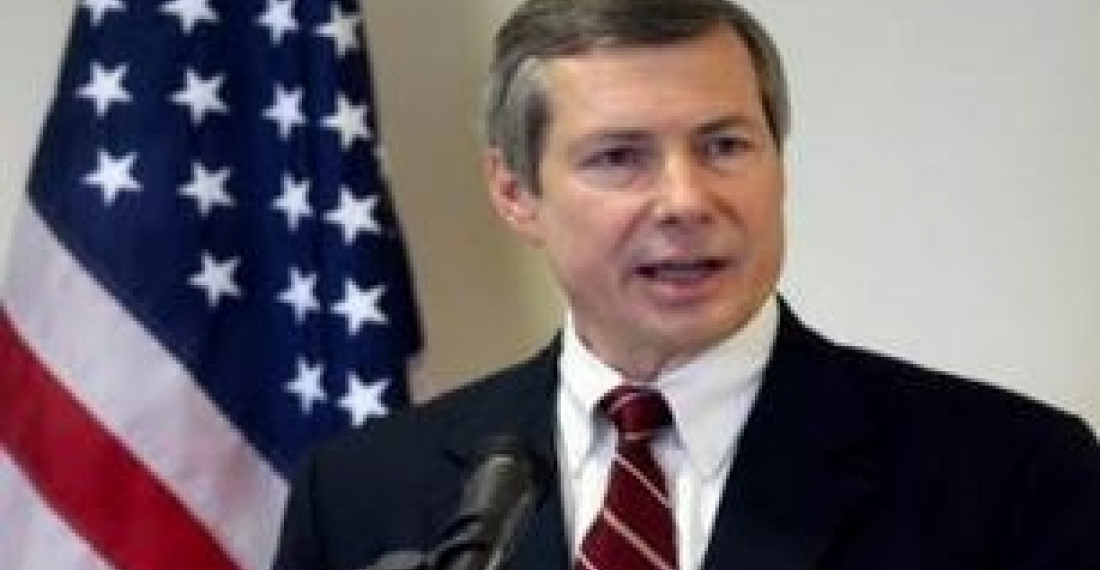
Speech of Ambassador James Warlick, US Co-Chair of the OSCE Minsk Process at the Carnegie Endowment for International Peace on Wednesday, 7 May 2014
Distinguished guests, ladies and gentlemen:
Thank you for joining me this morning. I recognize a number of you who have served as counsel or sounding-board for me over the past eight months and I want to extend a special thanks to you.
Let me start by saying that I do not want to revisit the history of the conflict. Our goal should be to find a pragmatic way forward to bring about a lasting settlement.
Although I speak to you today as the U.S. co-chairman of the OSCE Minsk Group, I do not speak for the co-chairs. My message to you is a statement of official U.S. government policy that guides our engagement as we help the parties find peace.
And peace is within reach. The sides have come to a point where their positions on the way forward are not that far apart. They have almost reached agreement on several occasions - most recently in 2011. And when they inevitably returned to the negotiating table after each failed round, the building blocks of the next "big idea" were similar to the last time.
There is a body of principles, understandings, and documents already on the table that lay out a deal, and no one has suggested we abandon them. The challenge is to find a way to help the sides take that last, bold step forward to bridge their remaining differences and deliver the peace and stability that their populations deserve.
For two decades, however, peace has been elusive. All parties distrust each other and a generation of young people has grown up in Armenia and Azerbaijan with no first-hand experience of each other. As many have noted, older generations remember a time when Armenians and Azerbaijanis lived side-by-side and differences did not need to be resolved through the barrel of a gun.
As Churchill once reminded us, "you negotiate peace with your enemies, not with your friends." The key to any successful negotiation is for all parties to conclude that they have won something, and in the case of the Armenians and Azerbaijanis there is no question that a deal will unlock a new era of prosperity across the region. The benefits of peace far outweigh the costs of continued stalemate, and avoid the catastrophic consequences of renewed hostilities.
Armenia would immediately benefit from open borders, greater security, and new opportunities to trade, travel, and engage with all its neighbors.
Azerbaijan would eliminate a key impediment to its growth as a player on the world stage, regional trade hub, and strong security partner, while giving hundreds of thousands of refugees and internally displaced persons a prospect for reconciliation and return.
The thousands of people living in Nagorno-Karabakh would be freed from the prison of isolation and dependence.
A peace agreement, properly designed and implemented, would also eliminate the tragic, steady stream of casualties - both military and civilian - along the border and the Line of Contact. Numbers are hard to pin down, but there have already been at least a dozen killed and even more injured on the front lines this year so far. This is unacceptable.
No less significant is the huge financial burden that military readiness and a growing arms race imposes on national budgets - a peace dividend that, used more productively, could itself be a game changer for both Armenia and Azerbaijan.
Next week will mark 20 years since a ceasefire agreement was signed. While we can take some pride in having avoided a return to outright war, we must also agree that the current state of affairs is unacceptable, and unsustainable.
Perpetual negotiations, periodic outbreaks of violence, the isolation of Armenia and the people living in Nagorno-Karabakh, frustration in Azerbaijan and anger among its populations of IDPs - this is not a recipe for peace or stability and it is certainly not the path to prosperity.
The people of the region deserve better.
----
I began this job last September with a trip to the region, with visits to Baku and Yerevan to meet the two presidents and their foreign ministers. I also made a side trip to Nagorno-Karabakh to join Ambassador Andrzej Kasprzyk's team for an OSCE monitoring mission along the Line of Contact on the road between Agdam and Gindarkh.
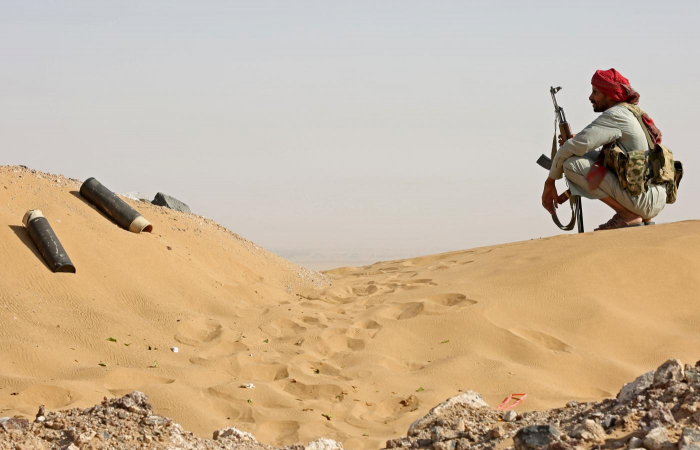
I joined the team on the west side of the Line of Contact, and got my first glimpse of the front lines. I saw the bleak reality faced by young soldiers on both sides of this Line, who live and work behind trenches and berms, with nothing but barbed wire and land mines keeping them apart.
The sides live under threat from sniper fire and landmines. They are concerned for the lives of their civilian populations and their access to farmland, cemeteries, and buildings that happen to fall "too close" to the Line of Contact or the international border between Armenia and Azerbaijan.
OSCE monitors have been working for two decades to keep an eye on this fragile peace, but have neither the mandate nor the resources to put a stop to the frequent casualties, or even to identify responsibility.
The sides themselves report thousands of ceasefire violations every year, but have been unable to reach agreement on any means of reducing that tally.
I have also traveled throughout Nagorno-Karabakh itself, where I have met with the de facto authorities to hear their views. I plan to do so again next week with the other co-chairs. There is no question that any enduring peace agreement must reflect the views of all affected parties if it is to succeed.
In the capitals, I have heard a more reassuring message. Both presidents want to make progress. Both agree that the series of documents negotiated over the past several years contains the outlines of a deal.
The co-chairs hosted the presidents in Vienna last November. This was their first meeting since January 2012 - and the first time since 2009 for them to meet one-on-one. We were encouraged by their conversation, and by their stated commitment to find a way forward. Since that time, we have met on ten separate occasions with one or both foreign ministers to keep the discussion alive.
It is clear, however, that only the presidents have the ability to conclude a deal with such transformative consequences for their countries. It is the presidents who must take the bold steps needed to make peace. The United States has pressed both leaders to meet again soon and take advantage of this window of opportunity when peace is possible.
----
When I made that first trip to Baku and Yerevan last fall, I carried with me President Obama's endorsement and reaffirmation of the U.S. commitment to working for peace as a Minsk Group co-chair and a close partner with both countries. The outlines of a compromise were already well established by that point, and my message was that the time had come for a renewed effort to bring peace to the region.
Let me walk you through the key elements of that "well-established" compromise, all of which have been in the public domain since appearing in joint statements by Presidents Obama, Medvedev, and Sarkozy in L'Aquila in 2009 and Muskoka in 2010. These principles and elements form the basis of U.S. policy toward the Minsk Group and the Nagorno-Karabakh conflict.
At the heart of a deal are the UN Charter and relevant documents and the core principles of the Helsinki Final Act. In particular, we focus on those principles and commitments that pertain to the non-use or threat of force, territorial integrity, and equal rights and self-determination of peoples.
Building on that foundation, there are six elements that will have to be part of any peace agreement if it is to endure. While the sequencing and details of these elements remains the subject of negotiations, they must be seen as an integrated whole. Any attempt to select some elements over others will make it impossible to achieve a balanced solution.
In no particular order, these elements are:
First, in light of Nagorno-Karabakh's complex history, the sides should commit to determining its final legal status through a mutually agreed and legally binding expression of will in the future. This is not optional. Interim status will be temporary.
Second, the area within the boundaries of the former Nagorno-Karabakh Autonomous Region that is not controlled by Baku should be granted an interim status that, at a minimum, provides guarantees for security and self-governance.
Third, the occupied territories surrounding Nagorno-Karabakh should be returned to Azerbaijani control. There can be no settlement without respect for Azerbaijan's sovereignty, and the recognition that its sovereignty over these territories must be restored.
Fourth, there should be a corridor linking Armenia to Nagorno-Karabakh. It must be wide enough to provide secure passage, but it cannot encompass the whole of Lachin district.
Fifth, an enduring settlement will have to recognize the right of all IDPs and refugees to return to their former places of residence.
Sixth and finally, a settlement must include international security guarantees that would include a peacekeeping operation. There is no scenario in which peace can be assured without a well-designed peacekeeping operation that enjoys the confidence of all sides.
----
The time has come for the sides to commit themselves to peace negotiations, building on the foundation of work done so far. It is not realistic to conclude that occasional meetings are sufficient by themselves to bring about a lasting peace.
When such negotiations commence, the parties should not only reconfirm their commitment to the ceasefire but also undertake much-needed and long-sought security confidence-building measures.
Once we get into such peace negotiations, there is a much broader range of practical issues that we can put on the table to benefit all sides. There are economic and commercial incentives to develop; energy, transportation, and communications links to rebuild; and travel and people-to-people programs that can begin to counter the dangerously one-sided narratives that currently prevail.
The co-chairs of the Minsk Group share a common interest in helping the sides reach a peaceful resolution. We intend to continue working through the Minsk Group as the primary channel for resolving this conflict. Together with France, the United States and Russia share a common commitment to peace and security in Nagorno-Karabakh. The United States stands ready to help in any way we can. I would also call on the diaspora communities in the United States and around the world to speak out for peace and to help bring an end to this conflict.
Of course, it is up to the governments of Armenia and Azerbaijan to take the first step. They should consider measures, even unilateral ones, that will demonstrate their stated commitment to making progress, reducing tensions, and improving the atmosphere for negotiations. They should reduce the hostile rhetoric, and prepare their populations for peace, not war.
Track II efforts to build people-to-people contacts between Azerbaijanis and Armenians are no less integral to a lasting settlement. Programs of this kind can help citizens of both countries prepare for peace and find reconciliation with the pain of the past. We expect the sides to support organizations and individuals which are committed to Track II and people-to-people programs.
I hope that you will work with us to make the case for a lasting peace. The co-chairs have the mandate to facilitate negotiations, but we should all be supporting engaged citizens, secular and religious leaders, NGOs, media outlets, and others working toward these goals. A lasting peace must be built not on a piece of paper, but on the trust, confidence, and participation of the people of both countries.
Let's work together to build the demand for peace. Let's demand the benefits that a peaceful settlement will bring to people across the region.
Thank you.
source: This is the official text of the speech as distributed by the Embassy of the United States in Yerevan