


Theme

Diplomacy

Editor's choice
Monday Commentary
Monday Commentary: Multilateralism remains the best option, but the rules have changed

Monday Commentary: Multilateralism remains the best option, but the rules have changed

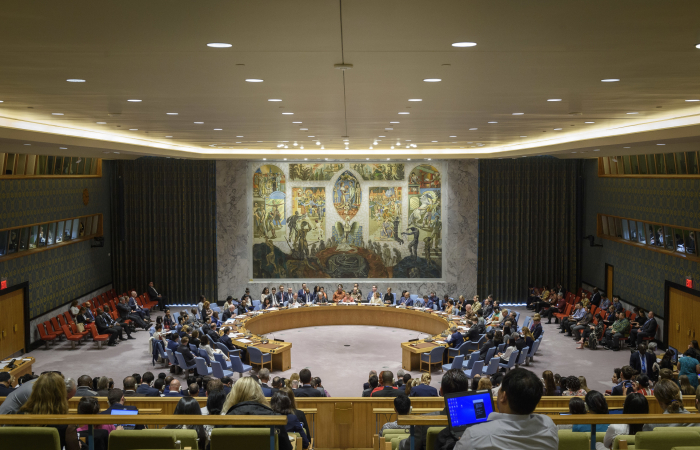
To listen to world leaders speaking these days, one would think that the world has embraced multilateralism, as the guiding principle in international relations. From Brussels to Beijing the concept is lauded, often to distinguish countries or groups of countries from Trumpian America, which has turned multilateralism into a bogey, and often a punching bag. But a closer look indicates that many countries are talking at cross-purposes.  At one end you have the European Union, itself a quintessential multilateralist project grouping 27  member states, some of whom had spent the last century fighting each other. At the other extreme, there is China, a country with great ambitions, and a great discourse that accompanies these ambitions, who however presents itself as the self-proclaimed leader of the global south. Put simply, multilateralism is when a group of countries agree to pursue a common goal in cooperation, and based on equality. On the European continent, multilateralism was for fifty years the way the continent conducted business, and two organisations became a clear expression of this multilateralist path: the European Union (EU), and the Organisation for Security and Co-operation in Europe (OSCE). They both operate by consensus. Beyond the continent, on a global level, the UN is in crisis. It will take a lot of time, effort, and money, to fix it. Three countries can help, or they can make matters worse: the US, Russia, and China. Trumpian America does not like the UN and has turned its back on multilateralism. The shameful US national security strategy creates a wedge between the US and Europe and sets a narrow vision of the world. Trump described the document as a "roadmap" to ensure the US remains "the greatest and most successful nation in human history". Russia is today in no position to counterbalance the US position, even if it wants to. So, its role in the future world order will be one of an opportunistic spoiler. China is another matter. It has the ambition to be a superpower and global player. It has good connections with the global south, although its claim of leadership is often overstated, and it pays lip service to multilateralism. It needs to be engaged, but with caution. Attempts at multilateral initiatives in the South, for example BRICS, are increasingly dysfunctional. Yet, multilateralism remains the best option for addressing the future. Some of the world's problems, such as climate change, simply cannot be tackled by one country, or one country working alone. But most of the institutions are greatly in need of an overhaul. The European Union must take the lead. It must also engage with China on a case-by-case, topic-by-topic basis. This will be a long and laborious process. But the rules of the game, and the assumptions that underpinned them, have changed, or at best are being challenged. It is time for a global rethink. (Click the image to read the full Monday Commentary).

Filter archive

Publication date
Editor's choice
News
Is the Negev Forum about to become something bigger?

Is the Negev Forum about to become something bigger?

On 27–28 March 2022 in Sde Boker, Israel hosted the foreign ministers of four Arab states – Bahrain, UAE, Egypt and Morocco, as well as US Secretary of State Antony Blinken for an unusual summit aimed at putting together a united front of countries concerned with Iran’s destabilising role in the Middle East. By all accounts the meeting appeared to be hastily prepared, and lacking proper focus. A lot of the serious fault-lines of the region emerged in the meeting too, including different perspectives on the Palestinian question and relations with Russia. But the participants did agree that they want to turn their meeting into a permanent process, and so the creation of the Negev Forum was announced. Now, it seems, the six countries have taken the first step to making this platform a regional player. On Monday (27 June) senior officials from the foreign ministries of Bahrain, Egypt, Israel, Morocco, the United Arab Emirates, and the United States held the inaugural meeting of the Negev Forum Steering Committee in Manama, Bahrain. The Committee’s main objective is to further coordinate collective efforts and advance a common vision for the region. In this context, they outlined a framework document for the Negev Forum, setting out the objectives of the Forum, and the working methods of its four-part structure: the Foreign Ministers’ Ministerial, the Presidency, the Steering Committee, and the Working Groups.
Editor's choice
News
A busy week for western leaders as they prepare the next steps in response to Russian aggression in Ukraine

A busy week for western leaders as they prepare the next steps in response to Russian aggression in Ukraine

It is a busy week for Western leaders, as they prepare the next steps in response to Russian aggression in Ukraine. The leaders of the G7 - Canada, France, Germany, Italy, Japan, the United States and the Untied Kingdom, together with the European Union - started a summit meeting in Germany on Sunday. Later this week they will travel to Madrid for a summit meeting of NATO countries. The G7 meeting is taking place at a Castle in Germany’s Bavarian Alps were leaders went out of their way on Sunday (26 June), to show that they are united against Russian President Vladimir Putin’s invasion of Ukraine while discussing ways to minimize the war’s effect on rising global food and energy costs. U.S. President Joe Biden and German Chancellor Olaf Scholz met ahead of formal talks that also included the leaders of Britain, France, Canada, Italy, Japan and the European Union. Scholz said, "Germany and the U.S. will always act together when it comes to questions of Ukraine's security, and we made that clear once more." In a pre-summit show of force, Russia launched new missile attacks Sunday on Ukraine’s two biggest cities, the capital of Kyiv and Kharkiv, even as the G-7 leaders held talks to determine new ways to isolate Moscow. Biden announced the G-7 nations would ban new imports of Russian gold, the latest in an array of sanctions Western nations have imposed on Russia in an attempt punish it for Putin’s invasion of Ukraine, now in its fifth month.
Editor's choice
Commentary
Commentary: A historic decision leaves Ukrainians delighted, Moldovans ecstatic and Georgians grumpy

Commentary: A historic decision leaves Ukrainians delighted, Moldovans ecstatic and Georgians grumpy

the European Council which gathers the 27 EU member states and the institutions, agreed to give Ukraine and Moldova candidate status with immediate effect. It gave Georgia "a membership perspective", with candidate status in the future if they can get their act together quickly. The Ukrainians were delighted. President Zelensky described it as a victory and promised not to rest until Russia’s defeat and full membership had been secured. In Moldova, the pro European government was ecstatic. Things had moved much faster than they had anticipated. In Georgia the situation is different, and the country is somewhat grumpy. Georgians do not  like to be last, and in a sense in this process at which they were until last year at the centre, they find themselves lagging behind the other two trio countries. The government has tried to put on a brave face saying that being given a membership perspective was a victory for Georgia too. The opposition accuses the government of squandering a historic opportunity which will have long lasting impact. In many ways both are right. An EU membership perspective is important for Georgia, even if it is largely an abstract term. It consolidates the relationship. But it would have been much better for Georgia if they had been given candidate status with the others. The ball is now in the court of the Georgian politicians, and the world will be watching.
Editor's choice
Opinion
Opinion: Israel and Lebanon move towards resolving a long standing dispute on their maritime border

Opinion: Israel and Lebanon move towards resolving a long standing dispute on their maritime border

There are reports that the US may be about to broker a deal between Israel and Lebanon, resolving a long-standing dispute about their maritime border and the exploitation of two large oil and gas fields in the Levantine Basin. Amos Hochstein, the US Senior Advisor for Energy Security, this month mediated indirect talks between the two countries, who technically are still at war with each other, and have no formal diplomatic relations in an attempt to resolve the issue. After his meetings in Lebanon last week, it seemed that a breakthrough had finally been reached, when the Lebanese president, Michel Aoun, reportedly presented a unified position on behalf of the government, which offered the prospect for a compromise This new proposal would create an S shaped maritime border, granting Lebanon access to the whole of the Qana field, while leaving Israel the entirety of Karish. In the past, the lack of agreement within the Lebanese government, and its unwillingness to compromise had been the key factors holding back negotiations, and this new approach led Hochstein to strike an optimistic note, saying that Lebanon had taken “a very strong step forward”. The US Energy advisor will now relay the offer to Israel and await a response. Both countries stand to gain from a swift and peaceful resolution to this decade long problem which has prevented them from extracting any value out of the fields. 
Editor's choice
News
The great Saudi-Turkish restart

The great Saudi-Turkish restart

After years of dispute during which relations fell to a historical low, Turkey and Saudi Arabia on Wednesday sealed a restart in their relations during a state visit to Turkey by the Kingdom's Crown Prince, Mohamed bin Salman. The turquoise carpet was laid out at the presidential palace in Ankara as the Crown prince arrived to be greeted by Turkey's president, Recip Tayip Erdogan. The two men held discussions on bilateral relations and regional and international issues. But this visit was mainly about symbolism. The substance had already been sorted over weeks and months of discussions involving senior officials from the two countries. President Erdogan was himself in Saudi Arabia only a month ago. But the visit of Mohammad bin Salman to Ankara had huge symbolic significance and it marked the final act in a process that saw the two countries draw back from years of animosity, rooted mainly in different perspectives on the future of the Middle East and the broader Islamic world. Both countries see themselves as leaders in the region, as well as a beacon for Muslims worldwide. Prior to visiting Turkey, the Saudi Crown Prince also visited Egypt and Jordan. In a few weeks time he will welcome in Riyadh US President Joe Biden, in a final act that will see the complete rehabilitation of the heir to the Saudi throne who had been caught in international controversy.
Editor's choice
News
Tens of thousands in pro European rally in Tbilisi

Tens of thousands in pro European rally in Tbilisi

Tens of thousands of Georgians attended a pro European rally in Tbilisi on Monday (20 June) amid continuing controversy about the country's European asspirations. On Friday, the European Commission recommended to EU leaders to give Georgia a membership perspective, but stopped short of granting the country the same candidate status as it recommended for Ukraine and Moldova. The three countries, sometimes referred to as the "Trio" countries recently submitted an application for full membership of the European Union. The EU on its part has dealt with the applications with unusual speed, motivated primarily by a wish to send a positive signal to Ukraine as it continues to resist a Russian military invasion. The Commission has recommended to give candidate status to Ukraine and Moldova but stopped short of doing so as regards Georgia. "It is up to Georgia to accelerate (the reforms) and move towards this open door," commented Commission President Ursula von der Leyen. "Georgia must now come together politically to design a clear path towards structural reform and the EU,"  Commission President Ursula von der Leyen said on twitter. "So we recommend to grant Georgia the European perspective, but to come back and assess how it meets a number of conditions before granting it candidate status."
Editor's choice
News
European Commission recommends to give candidate status to Ukraine and Moldova, and a membership perspective to Georgia

European Commission recommends to give candidate status to Ukraine and Moldova, and a membership perspective to Georgia

The EU should grant candidate status to Ukraine and Moldova, bringing them a step closer to bloc membership, while Georgia still has some work to do, but is given a membership perspective, the European Commission said on Friday (17 June). Ursula von der Leyen, President of the European Commission, said: “Ukraine, Moldova and Georgia share the strong and legitimate aspiration of joining the European Union. Today, we are sending them a clear signal of support in their aspirations, even as they face challenging circumstances. And we do so standing firm on our European values and standards, setting out the path they need to follow in order to join the EU. The Commission's opinions mark an inflection point in our relations. Indeed, this is a historic day for the people of Ukraine, Moldova and Georgia. We are confirming that they belong, in due time, in the European Union. The next steps are now in the hands of our Member States.”
Editor's choice
News
Yemen ceasefire holds amid report of talks between Saudis and Houthis and despite ongoing problems in Taiz

Yemen ceasefire holds amid report of talks between Saudis and Houthis and despite ongoing problems in Taiz

Saudi Arabia and Yemen's Houthi movement (also known as Ansar Allah) have resumed direct talks to discuss security along the kingdom's border and future relations under any peace deal with Yemen, two sources familiar with the matter said on Tuesday, according to a report by Reuters news agency. The virtual talks between senior Saudi and Houthi officials were facilitated by Oman, both sources said, with one adding that there were also plans for a face-to-face meeting in Muscat if there is enough progress. Meanwhile, speaking at a UN Security Council meeting on Yemen, the UN Special Envoy for Yemen, Hans Grundberg welcomed the fact that the truce between the Houthi rebels and the Yemeni government has held, but called for action to open road communications with the city of Taiz.
