Theme

Diplomacy

Editor's choice
News
Council of Europe launches new International Claims Commission for Ukraine

Council of Europe launches new International Claims Commission for Ukraine

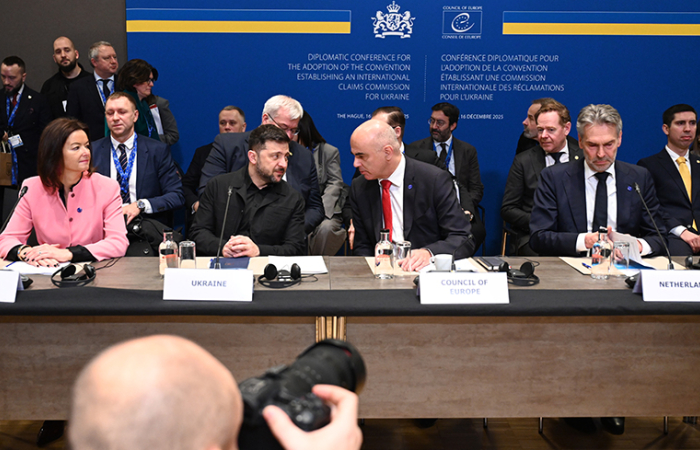
Thirty-four countries and the European Union have signed a new convention establishing an International Claims Commission for Ukraine at a diplomatic conference co-hosted by the 46-nation Council of Europe and the Netherlands in the Hague. The diplomatic conference was attended by leaders and high-level representatives from over 50 states, including the President of Ukraine, Volodymyr Zelenskyy, the President of the Republic of Moldova, Maia Sandu, and the Prime Minister of the Netherlands, Dick Schoof.  “Today marks a major step forward in ensuring accountability for Ukraine. The International Claims Commission represents justice and hope for tens of thousands of victims—our determination that those who have suffered will not be forgotten. I call for quick ratifications so we can get the commission rapidly up and running for the people of Ukraine,” said Council of Europe Secretary General Alain Berset. Ukrainian President Volodymyr Zelenskyy said: “We expect that every mechanism for compensation from the Register of Damage and Claims Commission to the actual payments – will start working and receive strong and sufficient international support, so that people can truly feel that any kind of damage caused by the war can be compensated. This war, and Russia’s responsibility for it, MUST become a clear example – so that others learn not to choose aggression.” “Accountability is about creating the conditions for peace that endures. And therefore, accountability is a condition of security – today and for the future. But accountability is not only about Ukraine. And it is not only about one aggressor and one victim. Accountability is about Europe. About every country in Europe. It is about whether Europe, as a whole, is willing to defend its peace,” said Maia Sandu, President of the Republic of Moldova, which currently holds the Presidency of the Council of Europe’s Committee of Ministers. The Prime Minister of the Netherlands, Dick Schoof, said: “Every day Russia is deliberately bombarding homes, destroying businesses and damaging infrastructure in Ukraine. Russia must compensate Ukraine for the damage caused. That is why we have launched the International Claims Commission for Ukraine and we are honoured to host it.” The International Claims Commission will be the second part of a comprehensive compensation mechanism related to Russia’s war of aggression, building on the existing Register of Damage for Ukraine. The claims commission will be established within the framework of the Council of Europe and will also be open to other countries. The Register of Damage for Ukraine, created in 2023, collects and records compensation claims submitted by individuals, organisations and public bodies in Ukraine. Forty-four states and the European Union have so far joined the Register, which has already received 86,000 claims. The International Claims Commission will review, assess and decide upon claims submitted to the Register of Damage for Ukraine and determine the amount of compensation, if any, which is due in each case. The convention establishing the commission will enter into force once it has been ratified by 25 signatories, as long as sufficient funds have been secured to support its initial work.

Filter archive

Publication date
Editor's choice
News
EU to integrate financial contributions to Ukraine into its 2023 budget

EU to integrate financial contributions to Ukraine into its 2023 budget

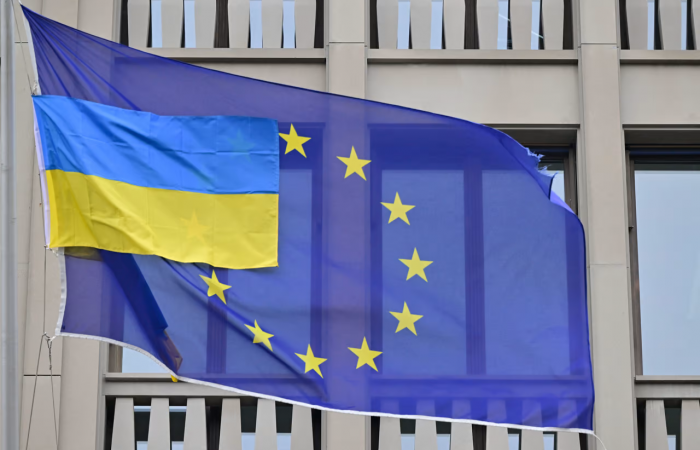
On Tuesday (4 October), the European Union announced that it will integrate financial support to Ukraine into its 2023 budget, making its monetary contributions more structured and predictable, thus easing the economic pressures on war-torn Ukraine. The support payments will tighten the links between the EU and Ukraine, which got one step closer to achieving full EU membership after being granted candidate status earlier this year.  The decision to formalise the financial support was taken after criticism from the United States and others, who have accused the EU of delaying current support payments, and thereby raising doubts on how committed the EU is to Ukraine’s reconstruction after the war’s conclusion.  Out of the €9 billion promised in May this year, only €1 billion has so far been paid out, while the next payment of €5 billion is expected to reach Kyiv before the end of the year. Meanwhile, the United States has contributed over €10 billion in financial support, and over €25 billion in military aid to Ukraine since the beginning of the full-scale Russian invasion in late February. Financially, Ukraine is struggling significantly as a result of the ongoing war with Russia. Reports estimate that monthly foreign aid of approximately €5 billion is required for the Ukrainian economy to stay afloat. Oleg Ustenko, the economic adviser to Ukrainian President Volodymyr Zelensky, predicts that Ukraine’s deficit will shrink in the coming year to approximately €3.5 billion per month, as Ukraine has managed to resume initially disrupted economic activities in its western regions.
Editor's choice
News
CICA set to become an international organisation at this month's Astana summit

CICA set to become an international organisation at this month's Astana summit

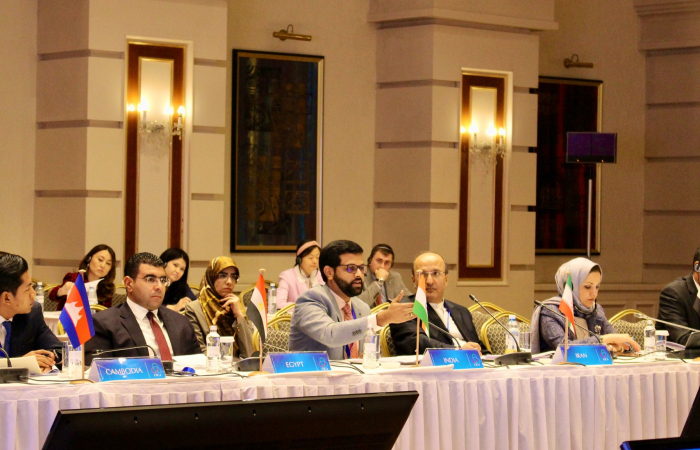
The Conference on Interaction and Confidence Building Measures in Asia (CICA) is set to become a fully fledged international organisation during a summit of leaders of its members to be held in Astana, Kazakhstan on 12-13 October. A Special Working Group (SWG) meeting held on 28-29 September, has made a major advance in preparing draft documents to be adopted at the upcoming sixth CICA Summit. The main document includes a draft Astana Statement on CICA Transformation, which is designed to transform CICA into a full-fledged international organization. Other draft documents include a draft of the CICA Leaders’ Statement on Cooperation in the Field of Security and in the Use of Information and Communications Technologies and draft the CICA Plan of Action on the Implementation of the United Nations (UN) Global Counter-Terrorism Strategy.
Editor's choice
News
Macron hosts Pashinyan at the Elysee to discuss situation in the South Caucasus

Macron hosts Pashinyan at the Elysee to discuss situation in the South Caucasus

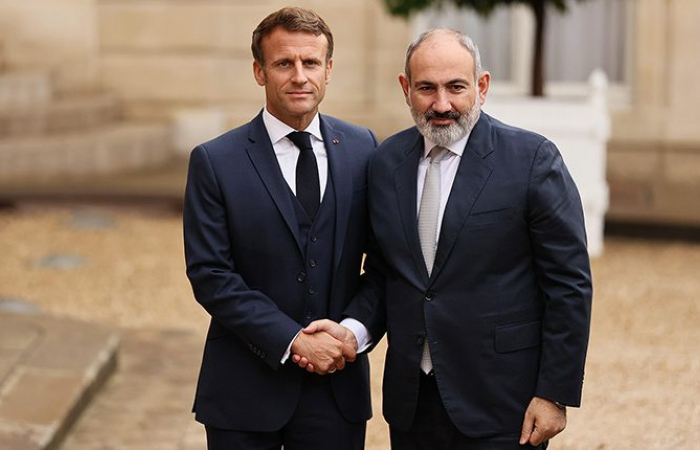
French president. Emanuel Macron on Monday (26 September) hosted Armenian prime minister Nikol Pashinyan at the Elysee Palace to discuss the current situation in the South Caucasus, and particularly Armenian-Azerbaijani relations. Macron described the situation following the recent armned clashes on 13-14 September as "critical". President Macron said France will do everything to pursue its goal, which is a stable, safe and prosperous South Caucasus." Macron also discussed the issue of relations between Armenia and Turkey. "This is a difficult but very necessary process and you know that France is also committed to this issue. This process is very important for the region", he said. In conclusion, Macron reiterated France's commitment to achieving peace and stability for Armenia and the entire region. "I welcome your sense of responsibility and your position to do everything to establish peace.  I want your country to have calm and peaceful borders", Macron told Pashinyan in his opening remarks.
Editor's choice
News
Germany seals major energy deal with the UAE

Germany seals major energy deal with the UAE

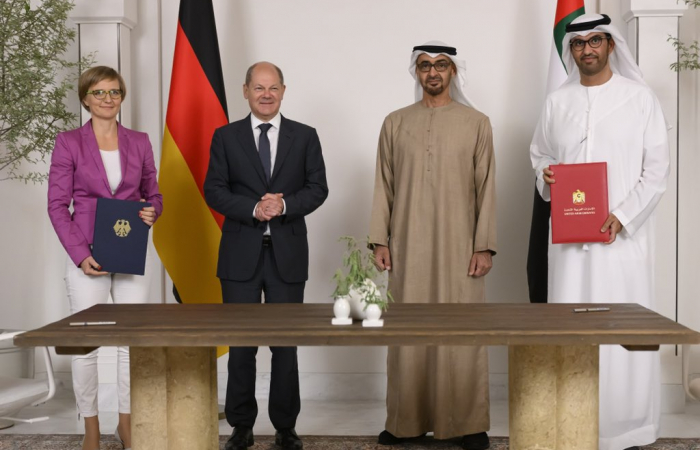
The United Arab Emirates (UAE) and Germany signed a "landmark agreement" on Sunday (25 September) aimed at accelerating joint efforts to boost energy security, decarbonisation and combat climate change. The major deal was struck in the presence of UAE President, Sheikh Mohammed bin Zayed, and German Chancellor Olaf Scholz, who is currently visiting the Emirates. The deal secures the delivery of 137,000 cubic meters of LNG to be sent to the new LNG terminal in Brunsbüttel near Hamburg in December. According to the dpa news agency, the amount included in the first delivery equates to around 0.95 billion kilowatt hours of electricity. However, the LNG deal can only make up for a small part of the 56.3 billion cubic meters of gas that Germany received from Russia in 2020.
Editor's choice
Opinion
Opinion: Macron's 'European Political Community' offers an opportunity for a continent-wide approach to critical security issues

Opinion: Macron's 'European Political Community' offers an opportunity for a continent-wide approach to critical security issues

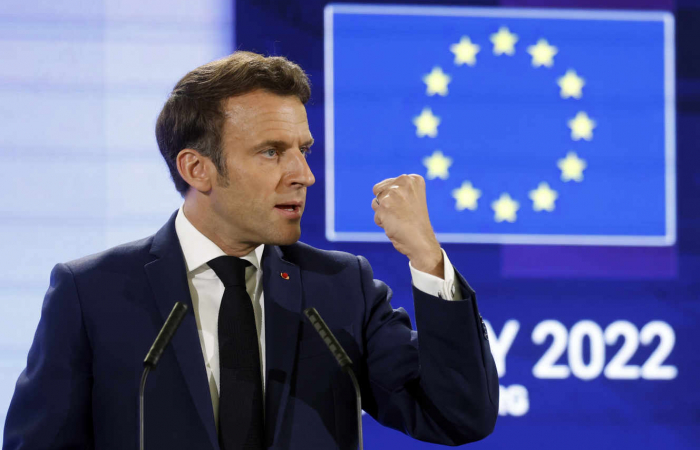
French President Emmanuel Macron's proposal to create a "European Political Community" can, if handled correctly, provide a permanent framework where EU countries and other European states can interact on critical political and security issues. However, for the community to succeed it must not simply become an extension of the EU. It must be designed to ensure that all countries involved have a voice in fostering political dialogue and cooperation in order to address issues of common interest, writes Maximiliaan van Lange in this op-ed for commonspace.eu. Overall the idea of a European Political Community is a positive one. Ensuring that countries like Türkiye and the UK can be equal partners in the discussion on the future of Europe's security, is an important and positive step. Making sure that smaller countries in the Balkans and the Caucasus can also be part of the conversation is equally relevant. But for the Community to succeed it must quickly carve a niche for itself in the crowded field of European institutions, which apart from NATO and the EU, also includes the Council of Europe, the OSCE, the Western European Union, not to mention multiple sub regional entities. The best option for the new community is to focus on security, and the security threats poised by the new Russian and Chinese assertivness.