Theme

Diplomacy

Editor's choice
News
European leaders set out their plan for Ukraine

European leaders set out their plan for Ukraine

The leaders of Germany, Denmark, Finland, France, Italy, Netherlands, Norway, Poland, Sweden, and United Kingdom, together with the President of the European Council, and the President of the European Commission, o  Monday (15 December) issued a statement, outlining their plan for Ukraine. In their statement, Chancellor Merz, Prime Minister Frederiksen, President Stubb, President Macron, Prime Minister Meloni, Prime Minister Schoof, Prime Minister Støre, Prime Minister Tusk, Prime Minister Kristersson, Prime Minister Starmer, as well as President Costa and President von der Leyen spoke about "Peace for Ukraine". The Leaders welcomed significant progress on President Trump’s efforts to secure a just and lasting peace in Ukraine. They also welcomed the close work between President Zelenskyy’s and President Trump’s teams as well as European teams over the recent days and weeks. They agreed to work together with President Trump and President Zelenskyy to get to a lasting peace which preserves Ukrainian sovereignty and European security. Leaders appreciated the strong convergence between the United States, Ukraine and Europe. Leaders agreed that ensuring the security, sovereignty, and prosperity of Ukraine was integral for wider Euro-Atlantic security. They were clear that Ukraine and its people deserved a prosperous, independent, and sovereign future, free from fear of future Russian aggression. Both the US and European leaders committed to work together to provide robust security guarantees and economic recovery support measures for Ukraine in the context of an agreement on ending the war. This would include commitments to: Provide sustained and significant support to Ukraine to build its armed forces, which should remain at a peacetime level of 800,000 to be able to deter conflict and defend Ukraine’s territory. A European-led ‘multinational force Ukraine’ made up from contributions from willing nations within the framework of the Coalition of the Willing and supported by the US. It will assist in the regeneration of Ukraine’s forces, in securing Ukraine’s skies, and in supporting safer seas, including through operating inside Ukraine. (Click the image to read the statement in full).


Filter archive

Publication date
Editor's choice
Monday Commentary
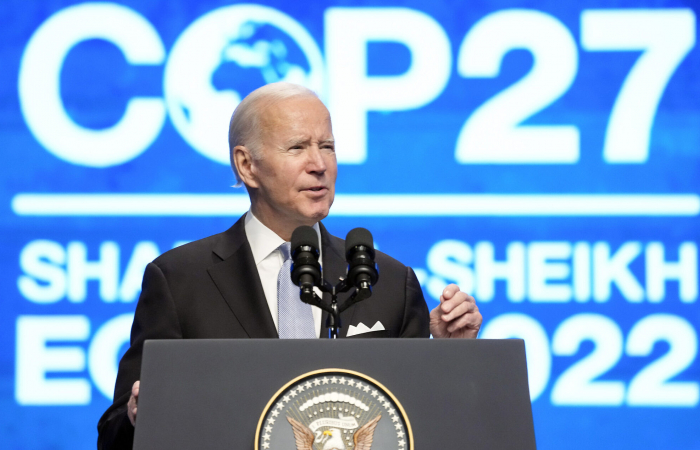
Commentary: American mid-term elections enable continued strong US leadership at a time of global turmoil

Commentary: American mid-term elections enable continued strong US leadership at a time of global turmoil

The US mid-term elections held last week were expected to be a disaster for US president Joe Biden and his Democratic administration. A Republican surge was expected to sweep the party to comfortable majorities in both the Senate and the House of Representatives. In the end none of this happened. The outcome of the election means that the gridlock that some had been predicting between President and Congress on many issues, including foreign and security policy is now not likely to happen, or in any case not on a scale to be a concern. In this Monday Commentary for commonspace.eu Dennis Sammut says that this is important not only for the United States, but also for the world. The current global situation is complicated and challenging, and US leadership is needed more than ever. Leadership is not hegemony. Nobody wants the US to dictate and impose its views on the world. Multipolarity, which some speak so enthusiastically about, should not be about how many nuclear missiles countries can point on each other, but rather on a competition of ideas and models. In this the world needs diversity. Yes, there are universal values, and these are already recognised in a number of documents adopted by nearly all countries, but on many issues there is room, and even need, for diversity.
Editor's choice
Opinion
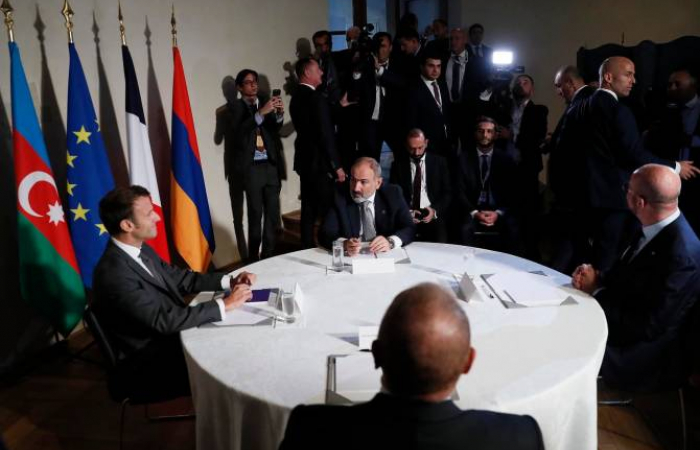
Opinion: Harmonising the different formats in Armenia-Azerbaijan negotiations

Opinion: Harmonising the different formats in Armenia-Azerbaijan negotiations

Over the last year multiple formats have emerged in Armenia-Azerbaijan negotiations, and three main external players: Russia, the EU and the US are involved in the mediation process. This may lead to some confusion, says Benyamin Poghosyan in this op-ed for commonspace.eu. Big power rivalry may also negatively impact the process. Poghosyan argues some co-ordinating mechanism is necessary, and a format, at least involving Russia and the EU, could also help to combine their efforts.
Editor's choice
News
Blinken hosts Armenian and Azerbaijan counterparts for talks about peace

Blinken hosts Armenian and Azerbaijan counterparts for talks about peace

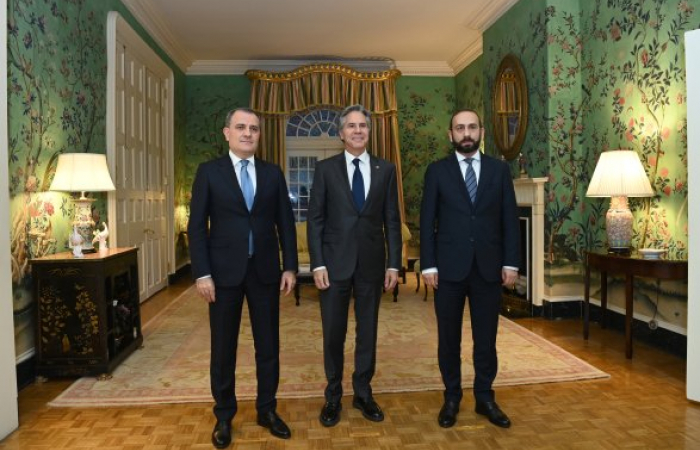
US Secretary of State, Antony Blinken, on Monday hosted at Blair House in Washington DC, talks with his Armenian and Azerbaijani counterparts, foreign minister Ararat Mirzoyan and foreign minister Bayramov. The ministers exchanged views on the elements of a possible peace agreement, noting that there were a number of outstanding issues. Both sides reaffirmed the commitments made by the leaders of Azerbaijan and Armenia at the meetings held on October 6 in Prague and October 31 in Sochi. Bayramov and Mirzoyan also agreed to speed up negotiations and hold another meeting in the coming weeks. Both ministers thanked the American side for hosting the peace talks between Azerbaijan and Armenia.
Editor's choice
News
EU concerned at situation in the Balkans amid tension between Kosovo and Serbia

EU concerned at situation in the Balkans amid tension between Kosovo and Serbia

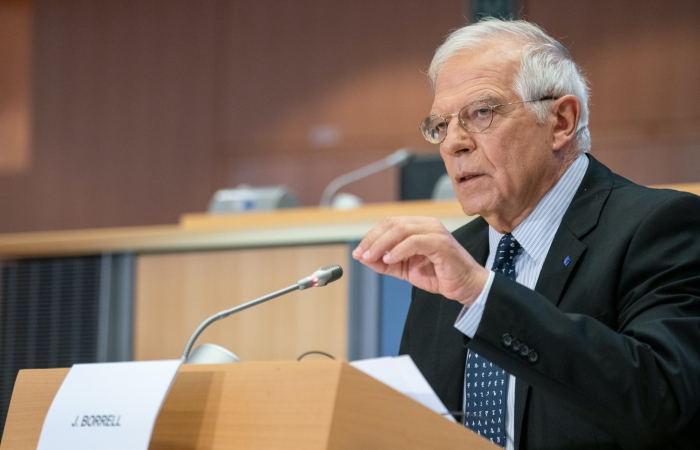
EU High Representative for Foreign and Security Policy, Josep Borrell, has expressed concern at recent developments in the Balkans amid increasing tensions between Kosovo and Serbia. Borrell, who is currently on an official visit to Abu Dhabi where he is participating in the 2022 Sir Bani Yas Forum, on Saturday (5 November) spoke with Serbian president Alexander Vucic and Kosovar Prime Minister, Albin Kurti. A statement issued later by the European Extern Action Service, said: "The recent developments in the relations between Kosovo and Serbia put years of hard work and achievements reached under the EU-facilitated Dialogue between Belgrade and Pristina at risk and hamper the security situation in the region and beyond. The European Union calls both sides to refrain from any unilateral actions, which might lead to further tensions.
Editor's choice
News
Scholz manoevres a tricky visit to Beijing

Scholz manoevres a tricky visit to Beijing

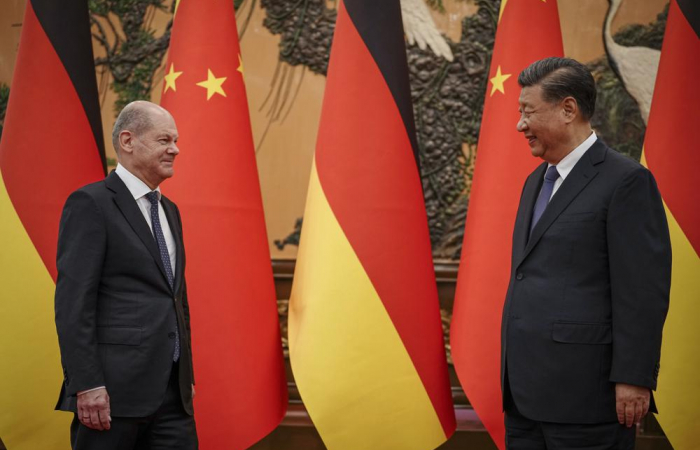
German Chancellor Olaf Scholz travelled to Beijing on Friday for a one-day visit, which included a meeting with China's leader President Xi Jinping. The visit has been criticised in some quarters but has been welcomed by German business leaders, some of who accompanied Scholz on the trip. Scholz’s visit reflects the importance of Germany’s trade ties with China, the world’s second-largest economy, particularly in the auto and manufacturing sectors. Mercedes Benz alone sold 758,863 cars in China last year, more than in any other country, according to company figures. The visit is the first by a European leader to China following the Russian invasion of Ukraine in November. China has given diplomatic cover to Russia but has stopped short of actively supporting the Russian invasion. Scholz received a formal welcome from Xi, who was recently reappointed head of the ruling Communist Party, at the Great Hall of the People in the heart of Beijing. Xi noted that Scholz’s visit comes as the two countries mark more than 50 years of diplomatic relations dating back to when they relaunched economic exchanges, despite their Cold War rivalry, that remain a key part of the relationship to this day. “At present, the international situation is complex and changeable,” Xi was quoted as saying by state broadcaster CCTV. “As influential powers, China and Germany should work together in times of change and chaos to make more contributions to world peace and development.”
Editor's choice
Interview
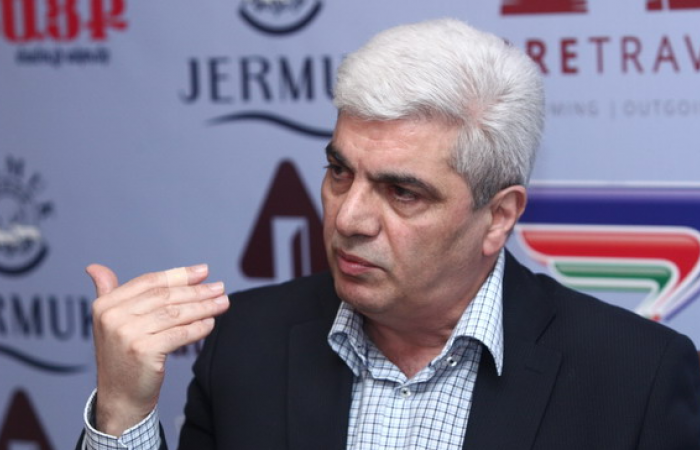
Stepan Grigoryan: "The current Armenian government really wants peace"

Stepan Grigoryan: "The current Armenian government really wants peace"

Dr Stepan Grigoryan, the Chairman of the Board of the Analytical Centre on Globalization and Regional Cooperation, is a respected analyst and opinion-shaper in Yerevan who has over many years been a moderate voice in what has often been a toxic inter-Armenian debate on the prospects for peace between Armenia and Azerbaijan and in the wider region. He spoke to commonspace.eu in Tbilisi on 22 October 2022 about the current state of the Armenia-Azerbaijan peace process, recent events surrounding it, and prospects for the future. Speaking about the current political situation in Armenia Stepan Grigoryan said "We have a strong civil society, active NGOs and active experts, and they act like pillars of independence in Armenia. And this civil society also criticises Nikol Pashinyan, but they are trying to help him. Yes, I myself am sometimes not happy with what Nikol Pashinyan is doing, but I try to help him with my advice, with my publications, with my speeches. So in Armenia one should not only look at the political field - which is polarised - but civil society too. We shouldn’t think that we have an ideal government, they have made many mistakes, but they really want peace."