Denmark takes over EU Presidency with a focus on Security, Migration and Enlargement

On July 1, Denmark takes over the Presidency of the Council of the European Union for the eighth time. Under the motto ‘A Strong Europe in a Changing World’, the Danish Presidency said its programme of work will ensure that the EU takes responsibility for its own security, while also strengthening its competitiveness. Prime Minister Mette Frederiksen said that priority will be given to boosting defence capabilities in Europe amid Russia's war in Ukraine and US threats to Greenland, a Danish autonomous territory. Pushing countries to keep promises to boost defence spending and bolstering Europe's "dangerous" security will top Denmark’s agenda as it takes over the rotating presidency on Tuesday, according to Prime Minister Mette Frederiksen.

Denmark has been increasing military spending since Russia’s  2022 invasion of Ukraine.  "We want something with our presidency. Security is clearly defined as the top priority," Frederiksen said in an interview with the Politiken daily published on Sunday and quoted by France 24 and AFP. "We have a new NATO goal that has been adopted. For that to happen, we need to rearm Europe. Once the NATO goal is in place, most other things come down to EU policy," she said.

NATO members agreed last week to invest 3.5 percent of their gross domestic product (GDP) on core military spending and 1.5 percent on broader security-related areas such as infrastructure by 2035. Spain has called the goal "unreasonable" and asked for flexibility.

During its six month turn as EU president, Denmark wants to push ahead with EU plans presented in March to increase EU defence capabilities by simplifying procedures and offering countries loans to finance investment in Europe's defence industry. Europe's security situation is "unstable, and because it's unstable, it's dangerous", Frederiksen told Politiken. "If we look at the history of Europe, we know that conflicts tend to spread. There is so much tension today and that on its own can generate more tension," she added.

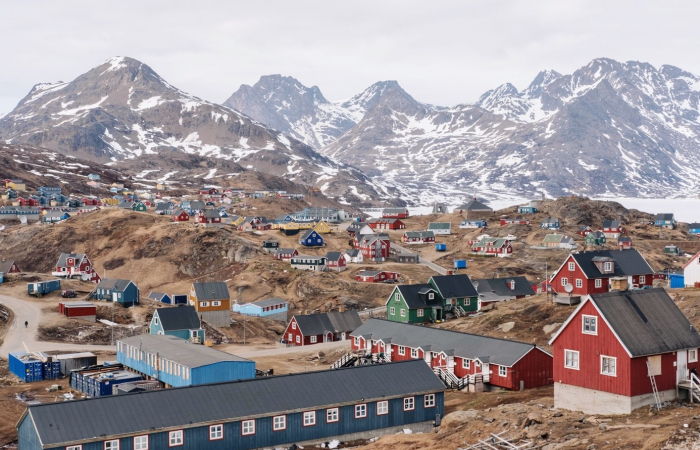
Denmark is one of Europe's biggest donors of aid to Ukraine. In power since 2019, Frederiksen has significantly increased Denmark's defence spending to more than three percent of GDP. Copenhagen has been a staunch US ally but has increasingly switched its focus to European security after US President Donald Trump’s threats to annex Greenland, a Danish autonomous territory.

In its programme for "A Secure Europe", the Danish EU presidency has also prioritised the fight against illegal migration, vowing to come up with "new and innovative solutions". Denmark's strict migration policies have spread across Europe, and the country hopes to build EU consensus on externalising asylum procedures outside Europe, and restricting the scope of rulings from the European Court of Human Rights.

"Irregular migration cannot be allowed to threaten European cohesion," Denmark said in its official EU presidency programme.

The Scandinavian country recently joined Italy and seven other nations to seek a reinterpretation of the European Convention on Human Rights to allow for changes to migration policy, arguing that the text sometimes protects "the wrong people".

The Danish presidency also said that further EU enlargement is a geopolitical necessity, and has pledged to advance enlargement negotiations with the Western Balkans, as well as Ukraine and Moldova.

"This is the only way for the EU to effectively contribute to the stabilisation of the European continent and to strengthening the resilience of countries vulnerable to unwanted external influence. The Danish Presidency will therefore work with ambition to promote a merit-based enlargement of the Union and to prepare the EU for enlargement through internal reforms. In this regard, the Danish Presidency will take forward the enlargement negotiations with Ukraine, Moldova and the Western Balkans," the Danish Government stated.

“Enlargement is closely linked to efforts to uphold the EU’s fundamental values, democracy and the rule of law. Strengthening the EU’s resilience to face current and future crises will also be a central focus for the Presidency. To reinforce the EU’s competitiveness, the Presidency will focus on the simplification agenda and the need for better and simpler EU legislation. It will also work to strengthen and deepen the EU’s relationship with the United Kingdom and other non-EU Western European countries,” the Danish EU Presidency added in its statement.
Source: commonspace.eu with Politiken, France 24 , AFP and agencies. Photo: © Mads Claus Rasmussen, Ritzau Scanpix, AFP

Related articles

Editor's choice
News
Council of Europe launches new International Claims Commission for Ukraine

Council of Europe launches new International Claims Commission for Ukraine

Thirty-four countries and the European Union have signed a new convention establishing an International Claims Commission for Ukraine at a diplomatic conference co-hosted by the 46-nation Council of Europe and the Netherlands in the Hague. The diplomatic conference was attended by leaders and high-level representatives from over 50 states, including the President of Ukraine, Volodymyr Zelenskyy, the President of the Republic of Moldova, Maia Sandu, and the Prime Minister of the Netherlands, Dick Schoof.  “Today marks a major step forward in ensuring accountability for Ukraine. The International Claims Commission represents justice and hope for tens of thousands of victims—our determination that those who have suffered will not be forgotten. I call for quick ratifications so we can get the commission rapidly up and running for the people of Ukraine,” said Council of Europe Secretary General Alain Berset. Ukrainian President Volodymyr Zelenskyy said: “We expect that every mechanism for compensation from the Register of Damage and Claims Commission to the actual payments – will start working and receive strong and sufficient international support, so that people can truly feel that any kind of damage caused by the war can be compensated. This war, and Russia’s responsibility for it, MUST become a clear example – so that others learn not to choose aggression.” “Accountability is about creating the conditions for peace that endures. And therefore, accountability is a condition of security – today and for the future. But accountability is not only about Ukraine. And it is not only about one aggressor and one victim. Accountability is about Europe. About every country in Europe. It is about whether Europe, as a whole, is willing to defend its peace,” said Maia Sandu, President of the Republic of Moldova, which currently holds the Presidency of the Council of Europe’s Committee of Ministers. The Prime Minister of the Netherlands, Dick Schoof, said: “Every day Russia is deliberately bombarding homes, destroying businesses and damaging infrastructure in Ukraine. Russia must compensate Ukraine for the damage caused. That is why we have launched the International Claims Commission for Ukraine and we are honoured to host it.” The International Claims Commission will be the second part of a comprehensive compensation mechanism related to Russia’s war of aggression, building on the existing Register of Damage for Ukraine. The claims commission will be established within the framework of the Council of Europe and will also be open to other countries. The Register of Damage for Ukraine, created in 2023, collects and records compensation claims submitted by individuals, organisations and public bodies in Ukraine. Forty-four states and the European Union have so far joined the Register, which has already received 86,000 claims. The International Claims Commission will review, assess and decide upon claims submitted to the Register of Damage for Ukraine and determine the amount of compensation, if any, which is due in each case. The convention establishing the commission will enter into force once it has been ratified by 25 signatories, as long as sufficient funds have been secured to support its initial work.

Popular

Editor's choice
News
Council of Europe launches new International Claims Commission for Ukraine

Council of Europe launches new International Claims Commission for Ukraine

Thirty-four countries and the European Union have signed a new convention establishing an International Claims Commission for Ukraine at a diplomatic conference co-hosted by the 46-nation Council of Europe and the Netherlands in the Hague. The diplomatic conference was attended by leaders and high-level representatives from over 50 states, including the President of Ukraine, Volodymyr Zelenskyy, the President of the Republic of Moldova, Maia Sandu, and the Prime Minister of the Netherlands, Dick Schoof.  “Today marks a major step forward in ensuring accountability for Ukraine. The International Claims Commission represents justice and hope for tens of thousands of victims—our determination that those who have suffered will not be forgotten. I call for quick ratifications so we can get the commission rapidly up and running for the people of Ukraine,” said Council of Europe Secretary General Alain Berset. Ukrainian President Volodymyr Zelenskyy said: “We expect that every mechanism for compensation from the Register of Damage and Claims Commission to the actual payments – will start working and receive strong and sufficient international support, so that people can truly feel that any kind of damage caused by the war can be compensated. This war, and Russia’s responsibility for it, MUST become a clear example – so that others learn not to choose aggression.” “Accountability is about creating the conditions for peace that endures. And therefore, accountability is a condition of security – today and for the future. But accountability is not only about Ukraine. And it is not only about one aggressor and one victim. Accountability is about Europe. About every country in Europe. It is about whether Europe, as a whole, is willing to defend its peace,” said Maia Sandu, President of the Republic of Moldova, which currently holds the Presidency of the Council of Europe’s Committee of Ministers. The Prime Minister of the Netherlands, Dick Schoof, said: “Every day Russia is deliberately bombarding homes, destroying businesses and damaging infrastructure in Ukraine. Russia must compensate Ukraine for the damage caused. That is why we have launched the International Claims Commission for Ukraine and we are honoured to host it.” The International Claims Commission will be the second part of a comprehensive compensation mechanism related to Russia’s war of aggression, building on the existing Register of Damage for Ukraine. The claims commission will be established within the framework of the Council of Europe and will also be open to other countries. The Register of Damage for Ukraine, created in 2023, collects and records compensation claims submitted by individuals, organisations and public bodies in Ukraine. Forty-four states and the European Union have so far joined the Register, which has already received 86,000 claims. The International Claims Commission will review, assess and decide upon claims submitted to the Register of Damage for Ukraine and determine the amount of compensation, if any, which is due in each case. The convention establishing the commission will enter into force once it has been ratified by 25 signatories, as long as sufficient funds have been secured to support its initial work.