Theme

Diplomacy

Editor's choice
News
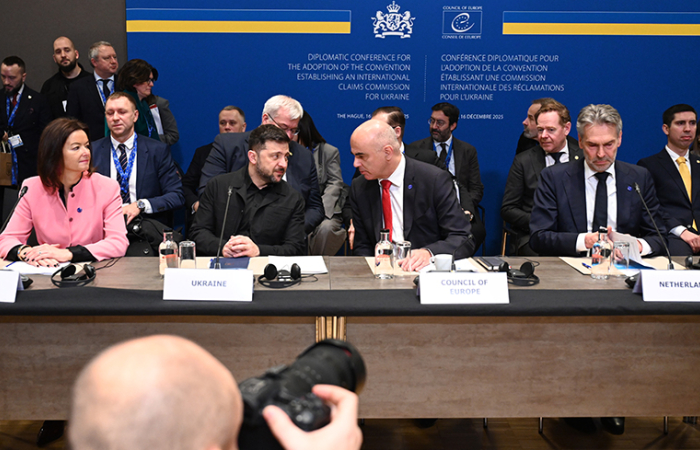
Council of Europe launches new International Claims Commission for Ukraine

Council of Europe launches new International Claims Commission for Ukraine

Thirty-four countries and the European Union have signed a new convention establishing an International Claims Commission for Ukraine at a diplomatic conference co-hosted by the 46-nation Council of Europe and the Netherlands in the Hague. The diplomatic conference was attended by leaders and high-level representatives from over 50 states, including the President of Ukraine, Volodymyr Zelenskyy, the President of the Republic of Moldova, Maia Sandu, and the Prime Minister of the Netherlands, Dick Schoof.  “Today marks a major step forward in ensuring accountability for Ukraine. The International Claims Commission represents justice and hope for tens of thousands of victims—our determination that those who have suffered will not be forgotten. I call for quick ratifications so we can get the commission rapidly up and running for the people of Ukraine,” said Council of Europe Secretary General Alain Berset. Ukrainian President Volodymyr Zelenskyy said: “We expect that every mechanism for compensation from the Register of Damage and Claims Commission to the actual payments – will start working and receive strong and sufficient international support, so that people can truly feel that any kind of damage caused by the war can be compensated. This war, and Russia’s responsibility for it, MUST become a clear example – so that others learn not to choose aggression.” “Accountability is about creating the conditions for peace that endures. And therefore, accountability is a condition of security – today and for the future. But accountability is not only about Ukraine. And it is not only about one aggressor and one victim. Accountability is about Europe. About every country in Europe. It is about whether Europe, as a whole, is willing to defend its peace,” said Maia Sandu, President of the Republic of Moldova, which currently holds the Presidency of the Council of Europe’s Committee of Ministers. The Prime Minister of the Netherlands, Dick Schoof, said: “Every day Russia is deliberately bombarding homes, destroying businesses and damaging infrastructure in Ukraine. Russia must compensate Ukraine for the damage caused. That is why we have launched the International Claims Commission for Ukraine and we are honoured to host it.” The International Claims Commission will be the second part of a comprehensive compensation mechanism related to Russia’s war of aggression, building on the existing Register of Damage for Ukraine. The claims commission will be established within the framework of the Council of Europe and will also be open to other countries. The Register of Damage for Ukraine, created in 2023, collects and records compensation claims submitted by individuals, organisations and public bodies in Ukraine. Forty-four states and the European Union have so far joined the Register, which has already received 86,000 claims. The International Claims Commission will review, assess and decide upon claims submitted to the Register of Damage for Ukraine and determine the amount of compensation, if any, which is due in each case. The convention establishing the commission will enter into force once it has been ratified by 25 signatories, as long as sufficient funds have been secured to support its initial work.

Filter archive

Publication date
Editor's choice
Editorial
Editorial: Give Georgia EU candidate status before the end of the year

Editorial: Give Georgia EU candidate status before the end of the year

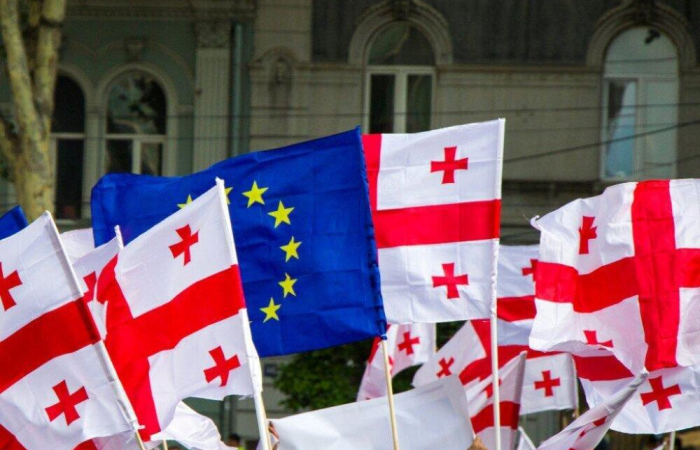
"These are difficult times for Georgia, for Europe, and for the whole world. Yet from every crisis, an opportunity arises. The Ukraine crisis has created conditions that open Georgia’s door for EU membership. Regardless of the rather unorthodox path this endeavour has taken, future generations of both Georgians and Europeans will look back at this historic moment, and say that the right thing was done," writes commonspace.eu in this editorial. "But before that, there is much work to be done. Candidate status will only be the beginning of a long, laborious and difficult process. And as a priority, the EU needs to develop a much more sophisticated communication strategy for dealing with Georgia and the Georgian people. It's useless preaching values or stating hard truths unless you can explain them in the way that your audience can understand them. Those that wanted to drive a wedge between Georgia and the EU have played on this weakness. If Georgia becomes a candidate country, dealing with this issue will become easier to deliver, even if achieving the objective will still be difficult."
Editor's choice
News
Georgian PM visits Brussels, says government "spares no effort to obtain EU candidate status"

Georgian PM visits Brussels, says government "spares no effort to obtain EU candidate status"

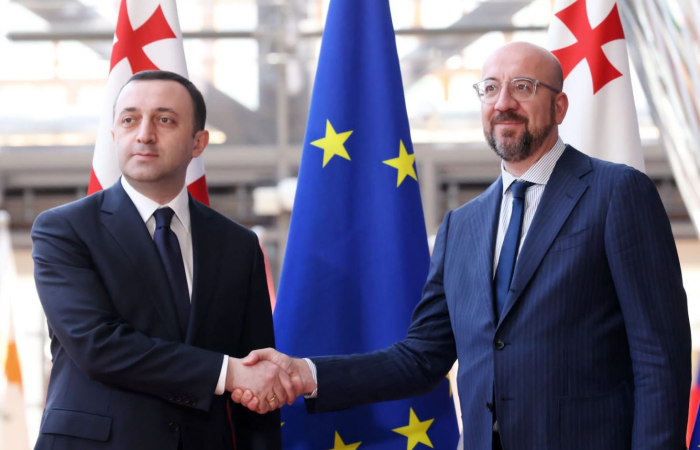
The Prime Minister of Georgia Irakli Garibashvili paid an official visit to Brussels yesterday Wednesday (14 June), in which he met with the European Council President, Charles Michel, and addressed this year’s Europalia biennial multidisciplinary arts festival, which is showcasing Georgian arts and culture. In a statement posted on the website of the Georgian PM, it was announced that Garibashvili held a business lunch at the invitation of President Michel, in which the process of Georgia's accession to the EU was the main topic of discussion. "Dignitaries reviewed the progress achieved by Georgia towards the implementation of 12 priorities defined by the European Commission. Leaders noted that recognition of the European Perspective of the country is a historic decision, thereby highlighting that granting the status of an EU Candidate Country to Georgia by the end of the year is critical, inter alia for ending the polarization in the country. Special attention was paid during the discussion to the security architecture in the region, along with the grave humanitarian and security position in the occupied territories of Georgia," the statement added.
Editor's choice
News
Swedish negotiators head to Ankara for renewed talks on NATO membership

Swedish negotiators head to Ankara for renewed talks on NATO membership

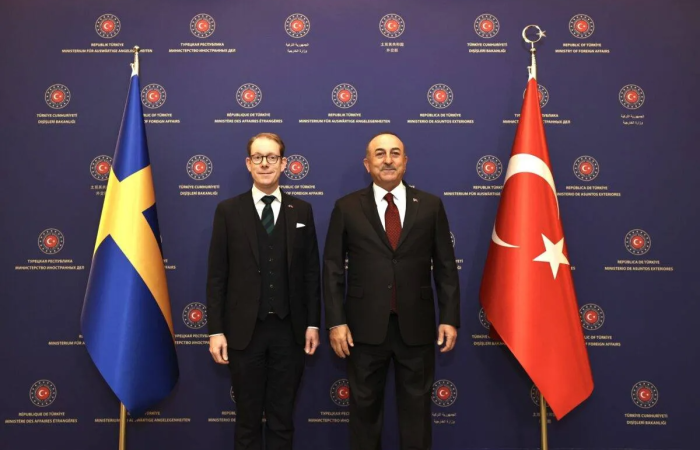
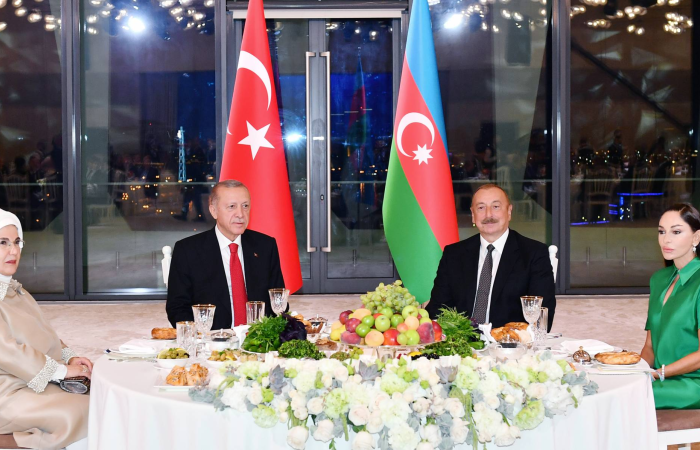
Swedish negotiators are in the Turkish capital city of Ankara today, on Wednesday (14 June), for the first set of talks with Turkey on its NATO membership bid since President Erdogan's election victory on 28 May. Sweden applied for NATO membership alongside Finland on 18 May 2022, almost three months after Russia launched its full-scale invasion of Ukraine on 24 February. While Finland joined the military alliance on 4 April, Sweden's bid continues to be held up by objections from Turkey and Hungary. Sweden's chief NATO negotiator Oscar Stenström and top civil servant in the Swedish foreign ministry, Jan Knutsson, are expected to meet Akif Cagatay Kilic, the new security advisor appointed by President Erdogan following his 28 May victory. The two sides will discuss Sweden's membership of NATO, and the extent to which the country has fulfilled its promises in the so-called "trilateral memorandum" between Turkey, Sweden and Finland signed at NATO's summit in Madrid on 28 June last year. Last Sunday (4 June), NATO Secretary-General Jens Stoltenberg urged Turkey to approve Sweden's membership ahead of the bloc's summit in Vilnius, Lithuania, on 11-12 July.
Editor's choice
News
Liechtenstein FM makes first official visit to Georgia

Liechtenstein FM makes first official visit to Georgia

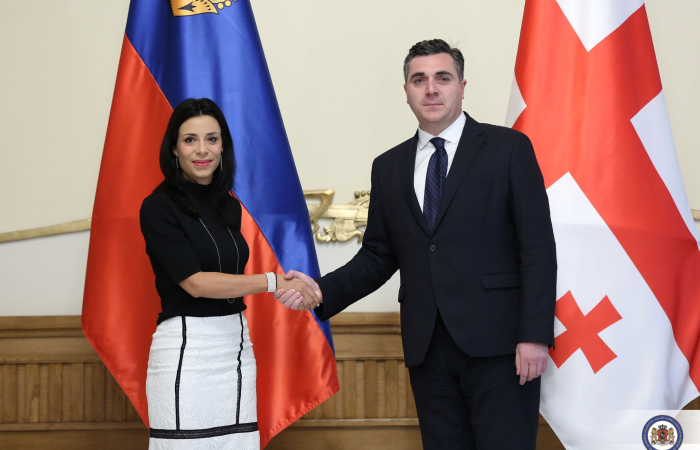
Liechtenstein's Minister for Foreign Affairs, Education and Sports Dominique Hasler is making her first official visit to Georgia from Sunday (11 June) to Tuesday (13 June). Immediately after arriving on Sunday, Hasler visited Odzisi, the closest village to the administrative line separating Russian-occupied South Ossetia from the rest of Georgia "to get acquainted with the ongoing situation in areas adjacent to the line", according to agenda.ge. The First Deputy Minister of Foreign Affairs of Georgia, Lasha Darsalia, accompanied Hasler to the occupation line. On Monday (12 June), Hasler also met with her Georgian counterpart Ilia Darchiashvili, as well as with the Speaker of the Georgian Parliament, Shalva Papuashvili, and the Georgian Prime Minister, Irakli Garibashvili. Describing Hasler's first official visit to Georgia as "historic", Darchiashvili highlighted the two states had potential to further strengthen economic ties through Georgia’s agreements via the European Free Trade Association, of which Liechtenstein - the six smallest country in the world - is a member. 
Editor's choice
Analysis
Briefing: intensive diplomatic efforts around the Armenia-Azerbaijan peace process

Briefing: intensive diplomatic efforts around the Armenia-Azerbaijan peace process

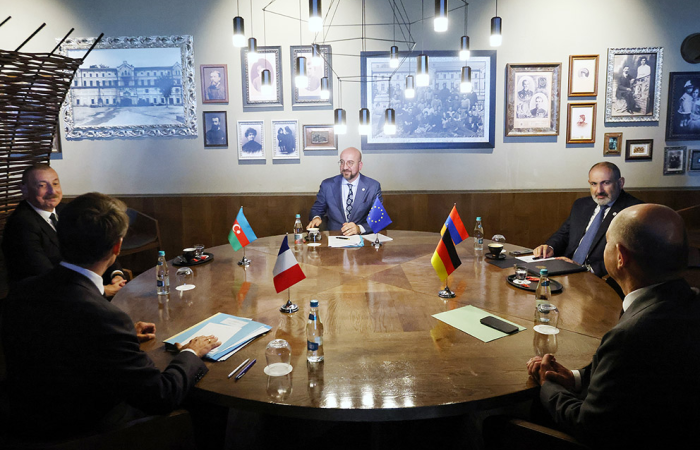
Intense diplomatic efforts over the last month are a good reflection of a sustained determination on the part of Armenia and Azerbaijan to bring their decades-old conflict to an end, and sign a peace agreement, writes commonspace.eu. Meetings between president Ilham Aliyev of Azerbaijan and prime minister Nikol Pashinyan of Armenia were held in Brussels on 15 May, with the mediation of EU Council president Charles Michel. The three leaders met again on 1 June in Chisinau, this time also with the participation of French President Emmanuel Macron and German Chancellor Olaf Scholz. Aliyev and Pashinyan met, together with president Putin of Russia, in Moscow on 25 May. And on 4 June the leaders of both Armenia and Azerbaijan were in Ankara for the inauguration of President Recep Tayyip Erdogan’s new term in office, where they also met informally. The next formal meeting is now set to be held in July in Brussels. A lot is also going on behind the scenes with European and American envoys travelling in the region.
Editor's choice
News
EU interior ministers reach "historic" agreement on migration, but significant opposition remains

EU interior ministers reach "historic" agreement on migration, but significant opposition remains

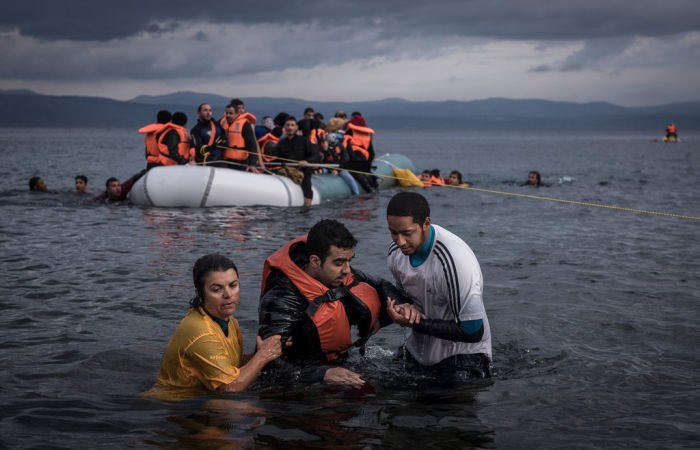
Interior ministers from the European Union's 27 member states reached a deal on the bloc's migration policy yesterday (8 June) after some 12 hours of negotiations at a meeting in Luxembourg. The agreement outlines how responsibility for looking after migrants and refugees who arrive in the EU without authorisation is shared out among member states, a topic which has been the source of much disagreement since 2015, when well over 1 million migrants and refugees entered the EU, many of them fleeing the war in Syria. Under the deal agreed yesterday and set to be finalised ahead of a 2024 EU election, each country would be responsible for a set number of people, but would not necessarily have to take them in. Countries unwilling to receive irregular migrants and refugees arriving ad hoc to the EU would be able to help their hosting peers through cash - around 20,000 euros per person - equipment or personnel, reports Reuters. The agreement would introduce a new expedited border procedure for those deemed unlikely to win asylum to prevent them from lingering inside the bloc for years.