Theme

Diplomacy

Editor's choice
News
Germany accuses Russia of cyberattacks and disinformation campaign

Germany accuses Russia of cyberattacks and disinformation campaign

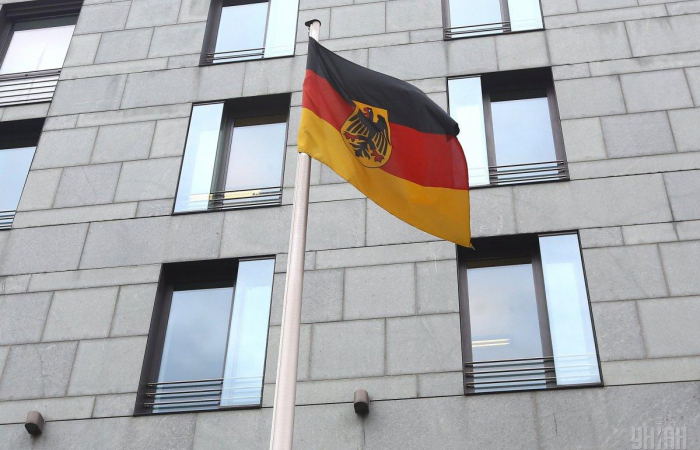
The German government holds Russia responsible for a cyberattack on German air traffic control, and for targeted disinformation campaigns before the last federal election. According to the German Foreign Office in Berlin, the incidents could be clearly attributed to the Russian military intelligence service, the GRU. In response, the Russian ambassador to Berlin was summoned to the Foreign Ministry. "We have been observing a massive increase in threatening hybrid activities by Russia for some time now," a spokesperson for the Foreign Ministry stated. These range from disinformation campaigns and espionage to cyberattacks and sabotage attempts. The aim is to divide society, sow distrust, and undermine confidence in democratic institutions. The spokesperson added that with these actions, Russia is "very concretely threatening our security, not only through its war of aggression against Ukraine, but also here in Germany."  The Foreign Ministry spokesperson explained that the cyberattack on air traffic control in August 2024 was clearly attributed to the hacker collective "APT28," known as "Fancy Bear," and to the responsibility of the Russian military intelligence service, the GRU. Furthermore, it could now be "conclusively stated" that Russia had attempted "to influence and destabilize both the last Federal election and the ongoing internal affairs of the Federal Republic of Germany." There was "absolutely irrefutable evidence" for this". The so-called "Storm 1516" campaign, which has been running since 2024, is allegedly backed by "reliable information" that the Moscow-based think tank "Center for Geopolitical Expertise" is behind it. The Center is also said to be supported by Russian military intelligence. Its primary aim is to influence democratic elections in the West. (Click the image to read more).
Editor's choice
Opinion
Opinion: A sustainable peace requires consistent long-term European involvement

Opinion: A sustainable peace requires consistent long-term European involvement

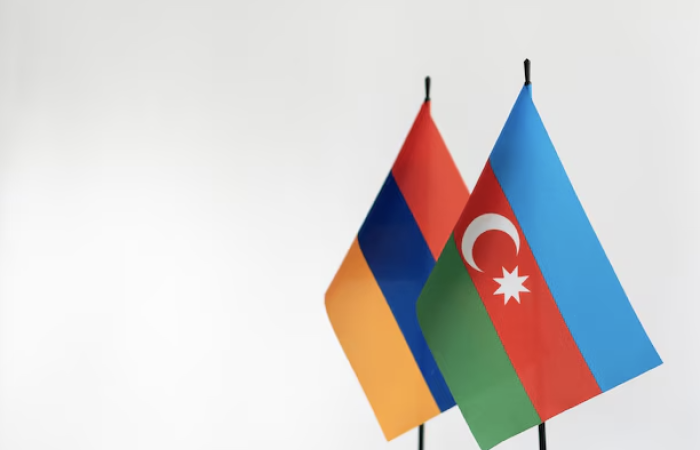
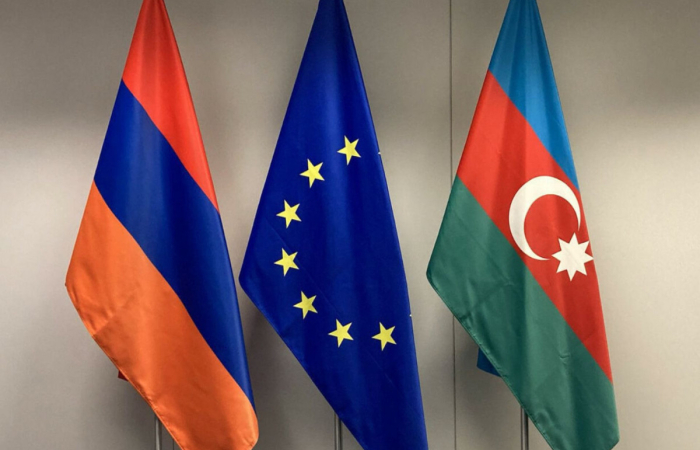
There is no denying that the EU, especially key member states acting in support, helped bring Baku and Yerevan closer to the Washington Declaration of August 8, 2025. But a declaration is not a treaty. Turning principles into a peace deal and eventually to a sustainable peace requires consistent long-term European involvement, writes Yalchin Mammadov in this-op-ed for commonspace.eu Before facilitating trust between Armenia and Azerbaijan, the EU is first expected to address its own credibility gap with Baku. A more balanced approach—such as including Azerbaijan, alongside Armenia, in the European Peace Facility—could be a useful first step. Diplomats can negotiate peace; societies must build peace. In this context, the EU can do what it does the best: long-term societal engagement. By expanding youth and academic exchange programmes, investing in cross-border civil society initiatives, and fostering people-to-people cooperation, Brussels can help shape a new generation equipped to sustain peace beyond political cycles. Such tools are slow and unglamorous, but if ignored, even the strongest treaty risks collapse. And obviously, these aspects require two-way engagement and genuine willingness by both governments to facilitate contact. If Brussels wants to remain influential, it needs to replace outdated one-size-fits-all policies with ambitious, interest-driven and differentiated approaches. Without a clear regional strategy, which appears to be the current situation, the South Caucasus will continue to sit at the margins of Europe’s security architecture—leaving space for other powers to take the lead. (You can read the op-ed in full by clicking the image.)

Filter archive

Publication date
Editor's choice
News
Leaders of Armenia and Azerbaijan meet in Abu Dhabi to finalise peace agreement

Leaders of Armenia and Azerbaijan meet in Abu Dhabi to finalise peace agreement

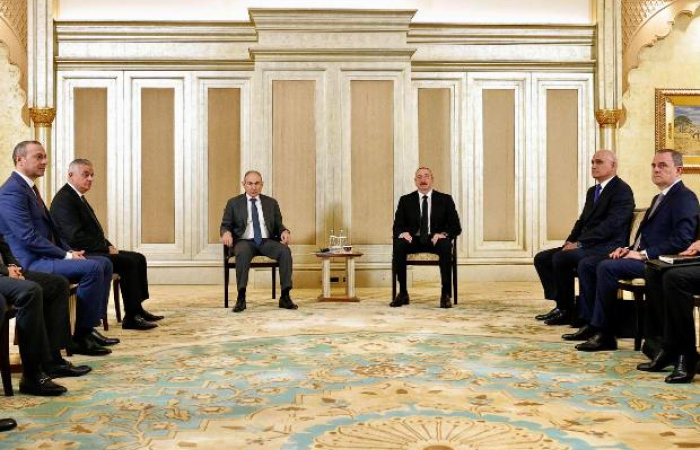
Armenian Prime Minister Nikol Pashinyan and Azerbaijani President Ilham Aliyev are meeting on Thursday 10 July in Abu Dhabi, United Arab Emirates, to discuss the next steps in finalising the peace agreement, their offices have confirmed to international news agencies. This is the first formal bilateral meeting between the leaders of Armenia and Azerbaijan since they agreed on the draft text of the peace agreement, following nearly four decades of conflict. The results of this meeting will shape the future of the South Caucasus and how the two countries can live peacefully next to each other after decades of conflict.
Editor's choice
News
The European Commissioner for Internal Affairs and Migration was expelled from eastern Libya immediately upon arrival

The European Commissioner for Internal Affairs and Migration was expelled from eastern Libya immediately upon arrival

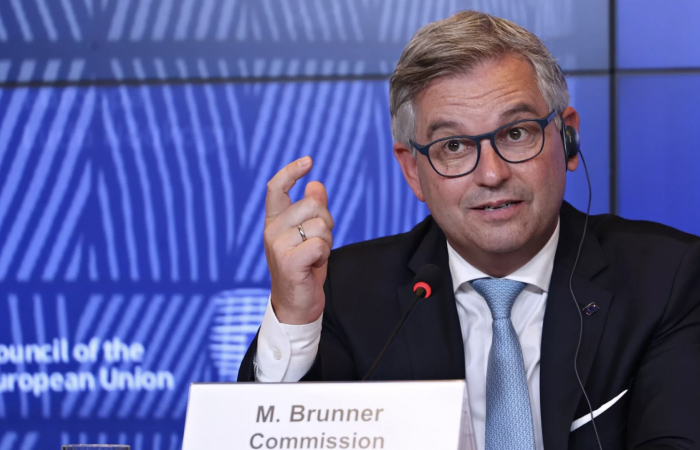
On Tuesday (8 July), Magnus Brunner, the European Commissioner for Internal Affairs and Migration, was expelled from the country by the internationally unrecognised government of eastern Libya, along with three European ministers. The delegation had hoped to reach an agreement with the government of army leader Khalifa Haftar to stop migrants leaving the country.
Editor's choice
Monday Commentary
Monday Commentary: Dialogue between Armenians and Azerbaijanis now more important than ever

Monday Commentary: Dialogue between Armenians and Azerbaijanis now more important than ever

The animosity between Armenians and Azerbaijanis runs deep. The two nations fought many battles against each other. In the wars of the last forty years, tens of thousands of people were killed, hundreds of thousands displaced, and billions of euros were lost in economic harm. On Thursday, 13 March 2025, the two sides finally announced that they had agreed on the text of a peace agreement. The agreement will be signed soon. Within societies, on both sides, there are expectations of what this peace will bring. There is also a sense of uncertainty and confusion, which is being used by spoilers, internal and external. A dialogue involving different segments of society, is now more important than ever. But this dialogue needs to have new characteristics to respond to new realities. LINKS Europe, an organisation that has been involved in many peace initiatives in the South Caucasus in the past, is currently engaged in such a process. It recently launched a new Armenia-Azerbaijan dialogue format in the framework of the European Union's EU4Peace initiative. In the last two weeks, dozens of Armenians and Azerbaijanis, including academics, students, civil society activists, journalists and other professionals, many of them young, were involved. The work is organised in five thematic groups focusing on peace and security, connectivity, environment, governance and gender and equality and in phase 2 of the project, which has just ended, around fifty participants took part in in-person and online meetings, and more than twenty others were involved indirectly. The Chairpersons of the five thematic groups met in Vilnius, 3-6 July to launch the third phase of the program.
Editor's choice
News
Russia is the first country to recognise the Taliban government in Afghanistan

Russia is the first country to recognise the Taliban government in Afghanistan

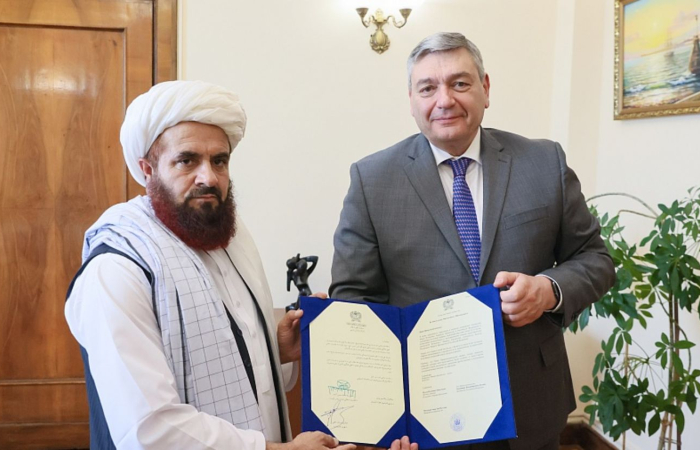
On Thursday (3 July), Russia formally recognised the Taliban government in Afghanistan by accepting credentials from its new ambassador, Gul Hassan Hassan. In April, Russia removed the Taliban from its list of terrorist organisations. On Thursday, the Russian Foreign Ministry welcomed this decision, stating that diplomatic ties would promote "productive bilateral cooperation" in areas such as trade, energy, transport, agriculture, and security. Afghanistan’s foreign minister, Amir Khan Muttaqi, welcomed Russia’s move, calling it 'historic' and expressing hope that other countries would follow suit. This reflects the Taliban's growing efforts to gain international legitimacy since seizing power in August 2021 following the US withdrawal from the country.
Editor's choice
News
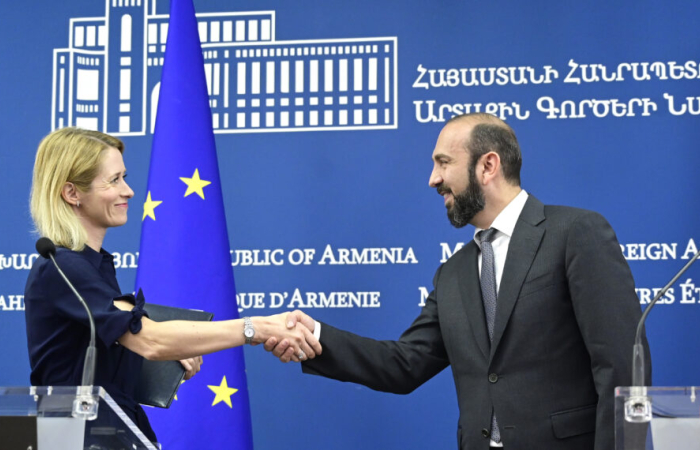
EU Foreign Policy Chief Kaja Kallas ends visit to Yerevan aimed at strengthening partnership with Armenia

EU Foreign Policy Chief Kaja Kallas ends visit to Yerevan aimed at strengthening partnership with Armenia

EU High Representative for Foreign Affairs and Security Policy Kaja Kallas has ended her official visit to Armenia after signing a partnership agreement with authorities in Yerevan. Following talks with Armenian Foreign Minister Ararat Mirzoyan, a joint press conference was held in which the media was briefed about an agreement outlining Armenia’s participation in the European Union’s Common Security and Defence Policy crisis management operations. According to Kallas, the document envisions Armenia’s participation in EU missions around the world.
Editor's choice
News
US halts delivery of promised ammunition to Ukraine

US halts delivery of promised ammunition to Ukraine

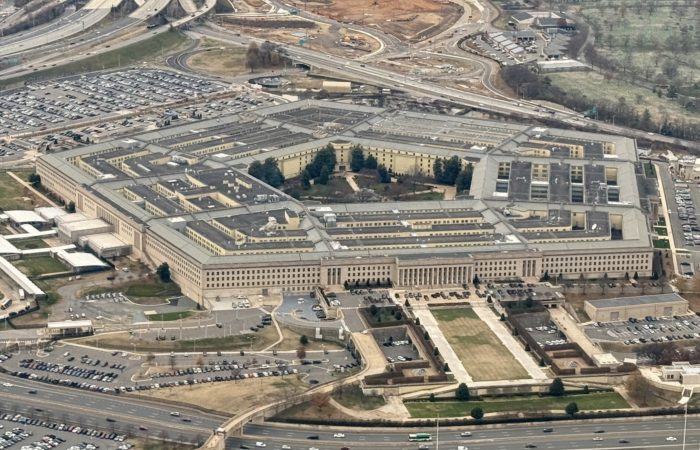
The United States has halted deliveries of certain anti-aircraft missiles and other precision munitions to Ukraine promised by the Biden administration due to fears of dwindling supplies. This was reported by political news site Politico on Tuesday night (1 July), citing three anonymous sources within the US Department of Defence, and was confirmed by the White House after publication.
Editor's choice
News
Luhansk the first Ukrainian region fully occupied by Russia

Luhansk the first Ukrainian region fully occupied by Russia

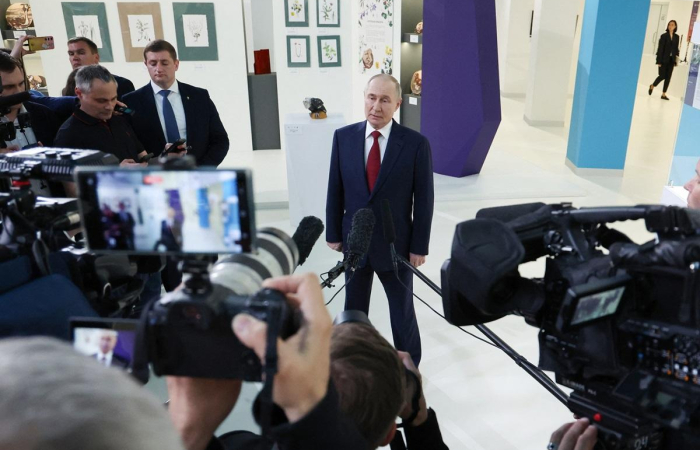
A Russia-appointed official in Ukraine’s occupied Luhansk region was quoted by AP on Monday saying that Moscow’s forces have overrun all of it, one of four regions Russia annexed from Ukraine in September 2022. If confirmed, it would make Luhansk the first Ukrainian region fully occupied by Russia after more than three years of war with international peace efforts led by the US failing to make progress on halting the fighting. Russian President Vladimir Putin has effectively rejected a ceasefire and hasn’t budged from his demands, which include Moscow’s control over the four illegally annexed regions.