Theme

Connectivity

Stories related to telecommunications and transport links. 

Editor's choice
Opinion
Opinion: The European Union must recognise that the C5 have now become the C6

Opinion: The European Union must recognise that the C5 have now become the C6

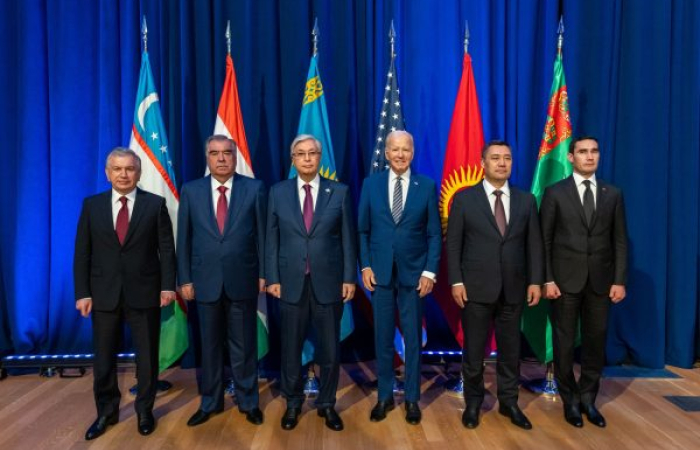
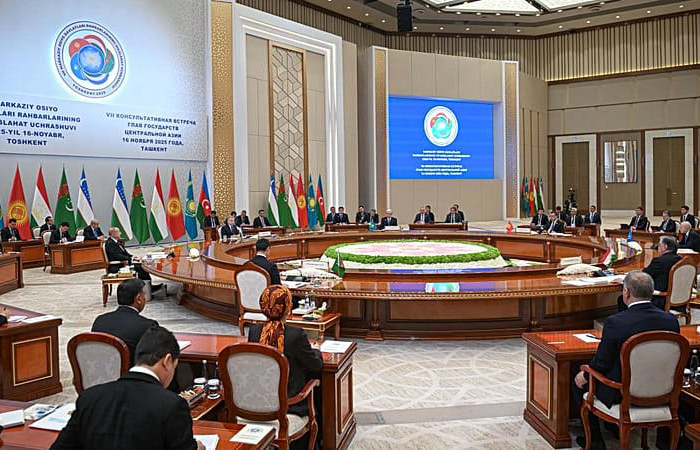
In recent years, Eurasia has undergone a structural transformation in how regions connect, trade, and cooperate. The combination of geopolitical shocks, disrupted supply chains, and the search for secure east–west routes has elevated the importance of the Trans-Caspian space. The states of Central Asia, once constrained by geography, have taken unprecedented steps to strengthen regional coordination, modernize infrastructure, and integrate more closely with Europe. Meanwhile, Azerbaijan has rapidly emerged as an indispensable connector linking Central Asia with the South Caucasus, Türkiye, and European markets. This new reality was formally acknowledged in November 2025 when Azerbaijan was unanimously welcomed as a full participant in the Consultative Meeting of Central Asian Heads of State in Tashkent. What had long been a C5 grouping transformed into a C6, marking a historic moment: the Caspian was no longer a frontier separating two regions but the center of a unified geopolitical and geo-economic space. President Ilham Aliyev described this alignment as the emergence of “a single geopolitical and geo-economic region,” while President Shavkat Mirziyoyev called Azerbaijan’s inclusion “historic” and proposed transforming the consultative platform into a structured regional institution capable of shaping security, economic, environmental, and digital policy. The Caspian is no longer a boundary; it is the heart of an integrated region. The transformation of the EU and U.S. C5+1 formats into C6+1 is the logical next step to ensure that both sides of the Caspian advance together – coherently, strategically, and with shared purpose. (click the image to read the full op-ed).
Editor's choice
Commentary
Central Asia on the march, but challenges ahead

Central Asia on the march, but challenges ahead

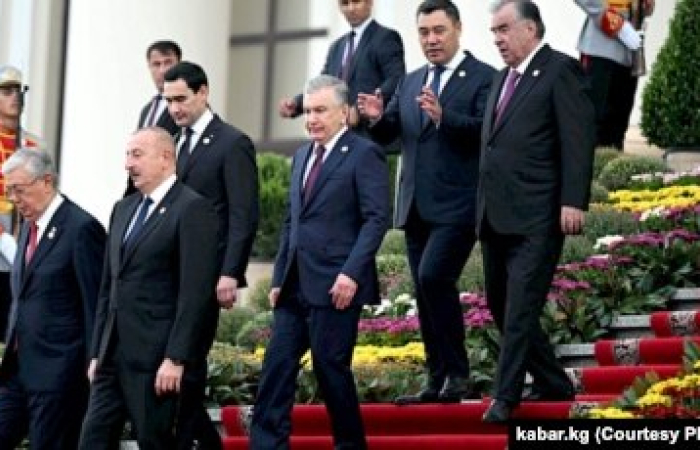
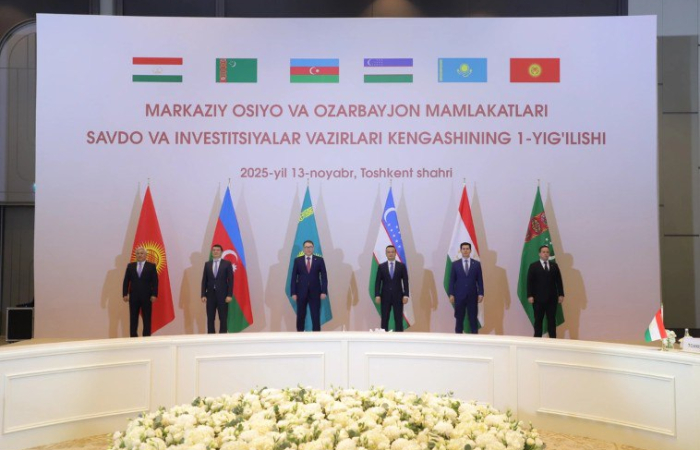
Central Asian leaders have been busy the last month, forging new ties in a changing geopolitical landscape. The presidents of Kazakhstan, Kyrgyzstan, Tajikistan, Turkmenistan, and Uzbekistan travelled to the White House to meet with U.S. President Donald Trump in the C5+1 format. The format, established in 2015, aims to deepen U.S. collaboration with Central Asia, emphasising security and economic cooperation. The U.S. is not the only power looking to maintain its influence in the region. The European Union, Russia, China, and increasingly, India, have all shown their interest in securing economic cooperation and inking energy and trade deals, recognising Central Asia’s strategic position as a key energy and transfer hub situated between East and West. Central Asian states are keenly aware of their leverage and have not only engaged in multi-lateral diplomacy with all of the aforementioned external actors but also adopted a pragmatic regional approach to increase cooperation amongst themselves and taken concrete steps to foster a more unified ‘Central Asian Community’. This was evident by last weekend’s Seventh Consultative Meeting of Heads of State, also known as the C5, where Central Asian leaders officially admitted Azerbaijan as a full member, effectively transforming it into the C6. However, although Central Asia has the unique opportunity to multilaterally engage with all of the world’s biggest economic and security powers, while continuing to shape regional politics and cooperation on its own terms, new security and economic issues are arising that may well reshape Central Asian states’ connections to external actors and potentially strain intra-regional relations. (Read the full commentary by clicking on the picture).

Filter archive

Publication date
Editor's choice
News
EU adopts 14th package of sanctions against Russia

EU adopts 14th package of sanctions against Russia

The Council of the European Union on Monday (24 June) adopted a 14th package of economic and individual restrictive measures against Russia, "dealing a further blow to the Putin regime and those who perpetuate its illegal, unprovoked and unjustified war of aggression against Ukraine". These measures are designed to target high-value sectors of the Russian economy, such as energy, finance and trade, and make it increasingly difficult to evade EU sanctions.
Editor's choice
News
Sharp drop in Suez Canal revenues adds to Egypt's woes

Sharp drop in Suez Canal revenues adds to Egypt's woes

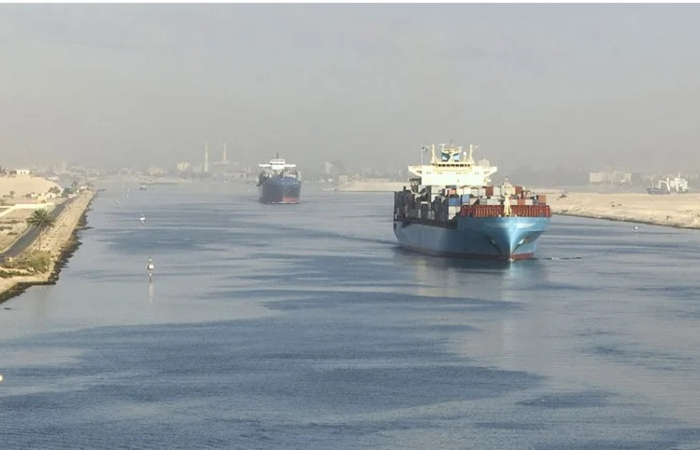
Egypt's already considerable economic problems took a turn for the worse last month as revenues from transit of shipping through the Suez Canal dropped by half as a result of security problems in  the Red Sea and the Gulf of Aden. Attacks by Houthi rebels on commercial vessels forced major shipping companies to divert away from the key global trade artery. Income from the international strategic waterway last month dropped to $428 million, compared to $804 million in January 2023, Osama Rabie, chairman of the Suez Canal Authority, said in an interview with Egyptian television channel ON TV. The total number of ships through the Suez Canal last month fell to 1,362 vessels, down 36 per cent from the 2,155 vessels navigating the canal during January 2023, he said. Houthi militants in Yemen began attacking commercial vessels in October in solidarity with the Palestinians in the Israel-Gaza war, and show no signs of retreating despite the US and Western allies attempting to deter the Iran-backed group with air strikes, which began on January 12.  Many shipping companies have rerouted their vessels away from the Red Sea to avoid the attacks, opting instead for the longer and more expensive route around the Cape of Good Hope at the southern tip of Africa. The Suez Canal is the shortest sea route between Asia and Europe. With about 12 per cent of the world's shipping traffic passing through it, the waterway is a major facilitator of global trade. The canal is also a crucial source of foreign currency for Egypt. The North African economy, already grappling with record inflation and a heavy debt burden was further impacted by the Israel-Gaza war, which has slowed tourism and decreased shipping through the Suez Canal. Egypt is "particularly exposed" to the Red Sea shipping crisis as the country generates about 2.2 per cent of its gross domestic product in annual balance-of-payment receipts and 1.2 per cent of GDP in fiscal revenue from Suez Canal dues, the International Monetary Fund said in its regional economic outlook in January.
Editor's choice
Opinion
Opinion: Roadblock to peace: the geopolitical quagmire of the "Zangezur Corridor"

Opinion: Roadblock to peace: the geopolitical quagmire of the "Zangezur Corridor"

This year marks the 30th anniversary of the 1994 ceasefire agreement that put fighting between Armenian and Azerbaijani forces over the Soviet-era mainly ethnic Armenian Nagorno Karabakh Autonomous Oblast (NKAO) on hold – or at least until it escalated into war in 2016 and more devastatingly in 2020. Despite the involvement of international mediators, peace remained elusive despite occasional claims to the contrary. The sides were said to have gotten close, but never enough to prevent tens of thousands dying in over three decades of conflict.
Editor's choice
News
Maersk and Hapag Lloyd re-route shipping away from Red Sea

Maersk and Hapag Lloyd re-route shipping away from Red Sea

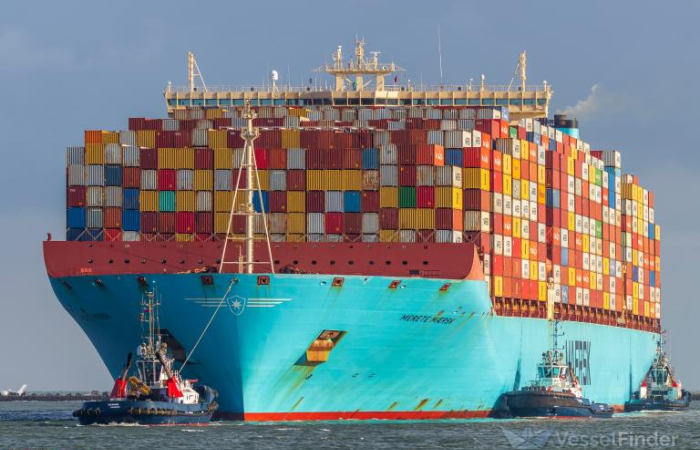
Denmark's Maersk and German rival Hapag-Lloyd said their container ships would continue to avoid the Red Sea route that gives access to the Suez Canal following a weekend attack on one of Maersk's vessels. Both shipping giants have been rerouting some sailings via Africa's southern Cape of Good Hope as Yemen-based Houthi militants attack cargo vessels in the Red Sea. The disruption threatens to drive up delivery costs for goods, raising fears it could trigger a fresh bout of global inflation. Maersk had on Sunday paused all Red Sea sailings for 48 hours following attempts by Houthi militants to board the Maersk Hangzhou. U.S. military helicopters repelled the assault and killed 10 of the attackers. "An investigation into the incident is ongoing, and we will continue to pause all cargo movement through the area while we further assess the constantly evolving situation," Maersk said in a statement. "In cases where it makes most sense for our customers, vessels will be rerouted and continue their journey around the Cape of Good Hope." Maersk had more than 30 container vessels set to sail through Suez via the Red Sea, an advisory on Monday showed, while 17 other voyages were put on hold. Hapag-Lloyd said its vessels would continue to divert away from the Red Sea — sailing instead via Africa's southern tip — until at least January 9, when it will decide whether to continue rerouting its ships. The Suez Canal is used by roughly one-third of global container ship cargo. Redirecting ships around the southern tip of Africa is expected to cost up to $1 million extra in fuel for every round trip between Asia and northern Europe.