Theme

Conflict and Peace

Stories related to violent conflicts, diplomatic tensions, and conflict prevention, mediation and resolution.

Editor's choice
News
NATO Chief says war is on Europe's doorstep, and warns against complacency

NATO Chief says war is on Europe's doorstep, and warns against complacency

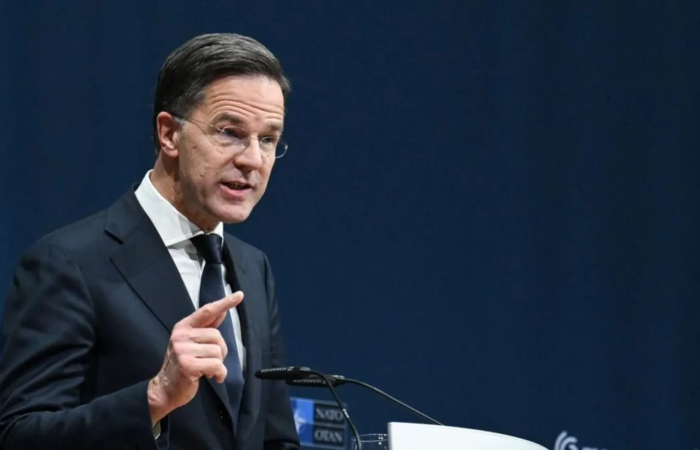
Russia could attack a NATO country within the next five years, the Secretary General of NATO, Mark Rutte, said in a stark new warning. "NATO's own defences can hold for now," Rutte warned in Berlin, but conflict was "next door" to Europe, and he feared "too many are quietly complacent, and too many don't feel the urgency, too many believe that time is on our side. "Russia is already escalating its covert campaign against our societies," Rutte said in a speech in Germany. "We must be prepared for the scale of war our grandparents or great-grandparents endured." Earlier this month, Russia's President Vladimir Putin said his country was not planning to go to war with Europe, but it was ready "right now" if Europe wanted to - or started a war. But similar reassurances were given by Moscow in 2022, just before 200,000 Russian troops crossed the border and invaded Ukraine. Putin has accused European countries of hindering US efforts to bring peace in Ukraine - a reference to the role Ukraine's European allies have recently played in trying to change a US peace plan to end the war, whose initial draft was seen as favouring Russia. But Putin was not sincere, Nato's secretary-general said in the German capital, Berlin. Supporting Ukraine, he added, was a guarantee for European security. "Just imagine if Putin got his way; Ukraine under the boot of Russian occupation, his forces pressing against a longer border with Nato, and the significantly increased risk of an armed attack against us." Russia's economy has been on a war footing for more than three years now - its factories churn out ever more supplies of drones, missiles and artillery shells. According to a recent report by the Kiel Institute for the World Economy, Russia has been producing each month around 150 tanks, 550 infantry fighting vehicles, 120 Lancet drones and more than 50 artillery pieces. The UK, and most of its Western allies, are simply not anywhere near this point. Analysts say it would take years for Western Europe's factories to come close to matching Russia's mass-production of weapons. "Allied defence spending and production must rise rapidly, our armed forces must have what they need to keep us safe," the Nato chief said.
Editor's choice
News
Thai-Cambodia border clashes enter fourth day

Thai-Cambodia border clashes enter fourth day

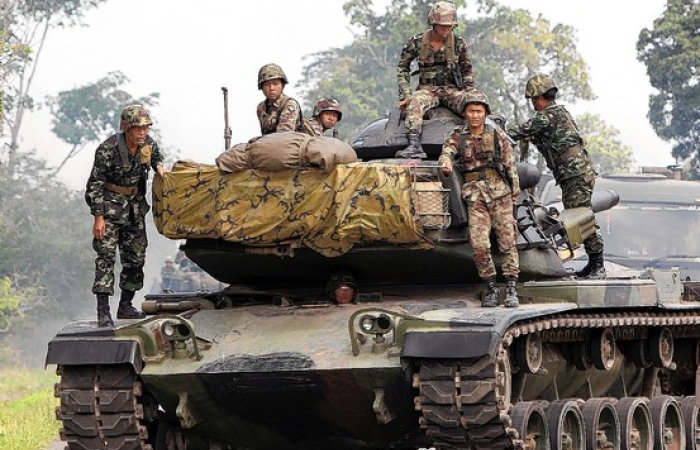
Renewed fighting between Thailand and Cambodia has entered its fourth day, with both sides accusing one another of violating international law, as they await a promised phone call from United States President Donald Trump. Cambodia’s Ministry of Defence accused Thailand’s military of carrying out numerous attacks within the country in the early hours of Thursday morning, including deploying tanks and artillery to strike targets in the country’s Pursat, Banteay Meanchey, and Oddar Meanchey provinces. In one such attack, Cambodia accused Thai soldiers of violating international humanitarian law by firing on civilians in Prey Chan village in Banteay Meanchey province. In another, it accused Thai forces of shelling “into Khnar Temple area”, and said Thai forces had also “fired artillery and support fire into the O’Smach area”. “Cambodia urges that Thailand immediately stop all hostile activities and withdraw its forces from Cambodia’s territorial integrity, and avoid acts of aggression that threaten peace and stability in the region,” the Defence Ministry said. Clashes took place on Wednesday at more than a dozen locations along the contested colonial-era demarcated 817-kilometre (508-mile) Thai-Cambodian border, with some of the most intense fighting being reported since a five-day battle in July, which saw dozens killed on both sides. Cambodia’s Ministry of the Interior said homes, schools, roads, Buddhist pagodas and ancient temples had been damaged by “Thailand’s intensified shelling and F-16 air strikes targeting villages and civilian population centres up to 30km [18.6 miles] inside Cambodian territory”. (click the image to read the full story).

Filter archive

Publication date
Editor's choice
Opinion
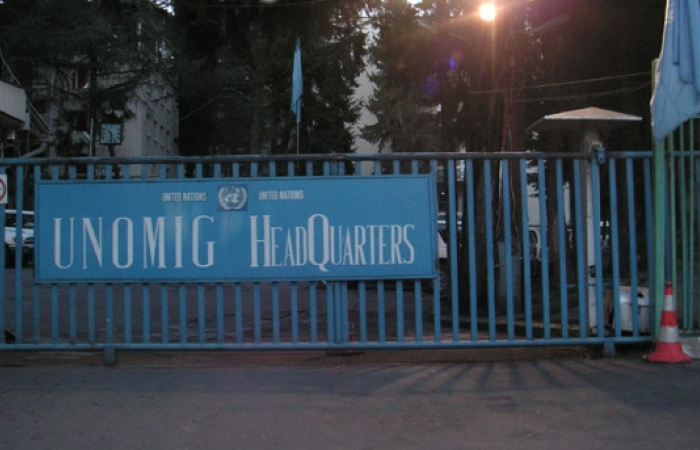
Opinion: Peacekeeping in Karabakh can learn from the UNOMIG experience

Opinion: Peacekeeping in Karabakh can learn from the UNOMIG experience

As Armenia and Azerbaijan come closer to launching bilateral negotiations over the normalisation of relations, many issues are yet to be resolved. One of them is the future of the Russian force deployed to Karabakh after the 10 November 2020 trilateral declaration. In this op-ed for commonspace.eu, Benyamin Poghosyan says that "according to the Russian expert community, the Kremlin has no intention to withdraw them after November 2025", but others think a multinational force under an international mandate may be the solution. "All actors understand that a foreign military presence in Nagorno-Karabakh is necessary to prevent new hostilities. Russia will not remove its troops from the region but would like to have some international mandate. The US is not satisfied to see Russian troops in Nagorno Karabakh and would like to replace them with other forces under an international mandate. Azerbaijan would like to see Russian troops leaving Nagorno Karabakh but understands that this will not happen. Probably from the Azerbaijani point of view, supplementing Russian troops with forces of other countries under an international mandate could be a solution. In this context, the experience of the United Nations Observer Mission in Georgia (UNOMIG), deployed between 1993-2009, may be helpful."
Editor's choice
Opinion
Opinion: Safe passage for Ukrainian grain exports through the Black Sea is a humanitarian necessity

Opinion: Safe passage for Ukrainian grain exports through the Black Sea is a humanitarian necessity

Disruption of Ukrainian grain exports is causing a global humanitarian food crisis. Measures need to be taken to create a humanitarian task force to ensure safe passage for export of Ukrainian grain to the rest of the world through the Black Sea and the Turkish Straits, argues Maximiliaan van Lange in this op-ed for commonspace.eu. Russia's blackmailing of the world with global hunger and food shortages among the world's poorest people must also be severely condemned by the international community. The current circumstances, in many ways, resemble the Holodomor, the Stalin-created famine in Ukraine in 1932-1933, that killed millions. The fact that Moscow is using grain as a weapon again in the twenty-first century is despicable and abhorrent. Global cooperation is therefore necessary to resolve this crisis, beginning with an internationally agreed humanitarian escort mission in the Black Sea, otherwise the consequences will be unforeseen.
Editor's choice
Interview
Interview with Ukrainian politician and activist Hanna Hopko: "Russia will not break us"

Interview with Ukrainian politician and activist Hanna Hopko: "Russia will not break us"

One hundred days ago, on 24 February, Russia invaded Ukraine in an attempt to overthrow the country's democratic government and install a puppet regime. This objective failed, but the war goes on, especially in the Donbass region where heavy fighting is taking place. Commonspace.eu interviewed Hanna Hopko, a Ukrainian politician and activist, who previously served as Chairman of the Foreign Affairs Committee of the Ukrainian Parliament and is today at the forefront of several important humanitarian initiatives. Hopko  speaks about Ukraine's frustration with Europe's long standing failure to appreciate Ukraine properly. She speaks about the heroism of young Ukrainians who are fighting off current Russian aggression, and recalls the loss of some of her own friends who have died in battle or have been imprisoned. Hopko however remains optimistic about the future, referring to the Ukraine Recovery Plan that is already being prepared. She speaks about the country's hopes to be granted EU candidate status later this month: "Ukraine will not except any plan B. Only candidate status.  Our aspiration to apply to EU membership is a result of the long fight of Ukrainians for the right to be part of a free European family. It is based on our achievements in transformations of the country despite Russian continues efforts to break us." Read the interview in full.
Editor's choice
News
Yerevan meeting welcomes recommendations on confidence-building measures proposed by joint expert group

Yerevan meeting welcomes recommendations on confidence-building measures proposed by joint expert group

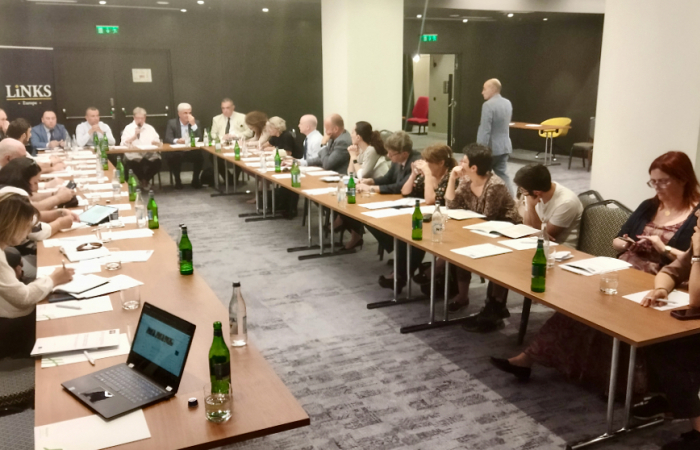
The conclusions of the report “The South Caucasus from War to Peace: 30 measures between now and 2030”, recently published by the Joint Armenian-Azerbaijani Working group on Confidence-Building Measures in support of lasting peace in the South Caucasus (JOLIG), were presented in Yerevan on Monday, 30 May to an audience of diplomats, officials and civil society representatives. Armenian members of the Joint Liaison Group: Stepan Grigoryan, Benyamin Poghosyan and Johnny Melikyan, spoke about the process of dialogue with Azerbaijani counterparts in the preparation of the report, and highlighted the report’s conclusions, including thirty recommendations to help the process of building trust and confidence between Armenia and Azerbaijan and Armenians and Azerbaijanis. Addressing the event, the Head of the EU Delegation to Armenia, Ambassador Andrea Wiktorin, congratulated the joint Liaison Group for its successful work. She said the report was important and timely and  offered many useful ideas that could be implemented in the short, medium and long term in support of peace in the South Caucasus.
Editor's choice
News
Yemeni civil society pushes for opening of roads to the city of Taiz despite Houthi reluctance

Yemeni civil society pushes for opening of roads to the city of Taiz despite Houthi reluctance

Yemeni civil society groups are campaigning actively for the opening of roads connecting the Yemeni city of Taiz with other major urban centres despite reluctance by the Houthi rebel group. UN Special Envoy, Hans Grundberg, on Saturday  (28 May) concluded an initial round of discussions in Amman, Jordan, attended by representatives of government and rebels on options to open key roads in Taiz and other governorates, as per the UN-mediated truce agreement signed in April. A proposal for the phased re-opening of roads, including an implementation mechanism and guarantees for the safety of civilian travelers was drawn up based on the three-day discussions and options presented by both sides. Civil society actors and local mediators, many of whom are from Taiz, also took part in the discussions by offering their insights and expertise as well as practical options for road openings. Dozens of human rights groups, activists, government officials and Taiz residents have launched a new campaign on social media, using hashtag #Siege_of_Taiz_crime, calling for the opening of roads to the city. Yemenis widely circulated images of cars loaded with goods and fuel overturning on the steep and unpaved slopes drivers were forced to turn to after the Houthis blocked the city’s main entrances.
Editor's choice
Opinion
Opinion: Historic developments are taking place in Armenia-Azerbaijan relations, but the signing of a peace treaty will likely take a longer time

Opinion: Historic developments are taking place in Armenia-Azerbaijan relations, but the signing of a peace treaty will likely take a longer time

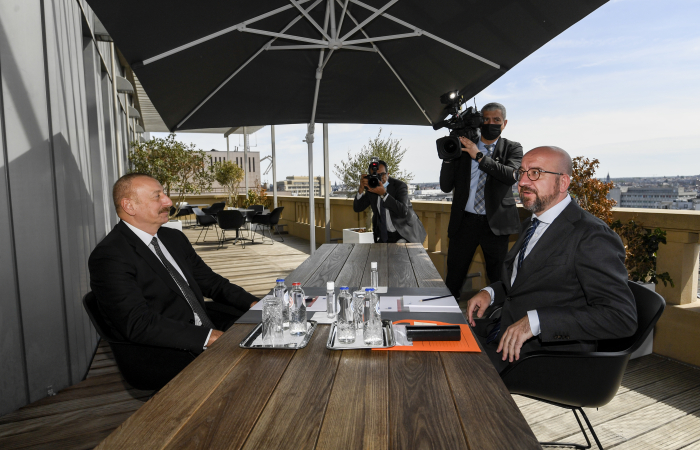
On May 22, the leaders of Armenia and Azerbaijan met in Brussels with the mediation of European Council President Charles Michel to discuss the peace process. It is worth noting that since the beginning of this year, the representatives of the two South Caucasian republics have met exclusively via the mediation of the EU, while the only Russia-mediated meeting – that of the foreign ministers held on May 12 –  took place on the sidelines of another major event and brought about no novelty in the negotiations. The Brussels summit, however, delivered some very important outcomes which, if implemented, will constitute a critical breakthrough in the peace process. The quick implementation of some of the issues agreed by president Aliyev and prime minister Pashinyan at their meeting in Brussels, can be described as truly historic, writes Vasif Huseynov in this op-ed. "But the signing of a peace treaty will likely take a longer time, and necessitate an agreement not only between Baku and Yerevan, but also between Moscow and Brussels", he adds.
Editor's choice
News
South Ossetia gets a young leader, but his message is old and rusty

South Ossetia gets a young leader, but his message is old and rusty

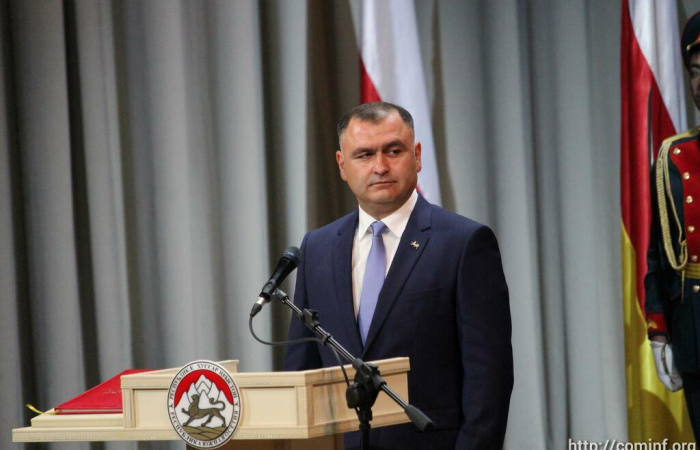
It was a piece of surreal political theatre of the sort that have become increasingly popular with the choreographers of the Kremlin. On Tuesday (24 May ) the liliputian self-declared Republic of South Ossetia, a de facto Russian protectorate, got a new president. Alan Gagloev was sworn-in at the theatre on Tskhinvali's main square. The choreography was perfect: a military guard of honour, a swearing in ceremony, and delegations of "foreign countries", except they represented other self declared entities such as Abkhazia, Lugansk, Donetsk, Nagorno-Karabakh etc. Most of the world still recognise South Ossetia as part of Georgia. Gagloev came to power unexpectedly, having defeated the incumbent Anatoly Bibilov in elections on May 17. The number of people who voted for him was 16,134 (representing 56.09% of the electorate). Bibilov left his successor a time bomb, due to go off on 17 July, in the form of a referendum calling for South Ossetia's unification with Russia. The Kremlin does not seem to be impressed. Gagloev made no reference to the referendum in his inauguration speech today, but he did heap praise on Russia and promised eternal friendship.