Theme

Conflict and Peace

Stories related to violent conflicts, diplomatic tensions, and conflict prevention, mediation and resolution.

Editor's choice
News
European leaders set out their plan for Ukraine

European leaders set out their plan for Ukraine

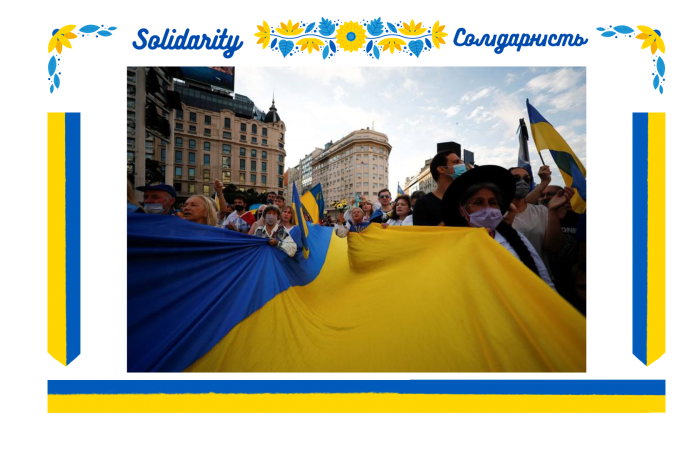
The leaders of Germany, Denmark, Finland, France, Italy, Netherlands, Norway, Poland, Sweden, and United Kingdom, together with the President of the European Council, and the President of the European Commission, o  Monday (15 December) issued a statement, outlining their plan for Ukraine. In their statement, Chancellor Merz, Prime Minister Frederiksen, President Stubb, President Macron, Prime Minister Meloni, Prime Minister Schoof, Prime Minister Støre, Prime Minister Tusk, Prime Minister Kristersson, Prime Minister Starmer, as well as President Costa and President von der Leyen spoke about "Peace for Ukraine". The Leaders welcomed significant progress on President Trump’s efforts to secure a just and lasting peace in Ukraine. They also welcomed the close work between President Zelenskyy’s and President Trump’s teams as well as European teams over the recent days and weeks. They agreed to work together with President Trump and President Zelenskyy to get to a lasting peace which preserves Ukrainian sovereignty and European security. Leaders appreciated the strong convergence between the United States, Ukraine and Europe. Leaders agreed that ensuring the security, sovereignty, and prosperity of Ukraine was integral for wider Euro-Atlantic security. They were clear that Ukraine and its people deserved a prosperous, independent, and sovereign future, free from fear of future Russian aggression. Both the US and European leaders committed to work together to provide robust security guarantees and economic recovery support measures for Ukraine in the context of an agreement on ending the war. This would include commitments to: Provide sustained and significant support to Ukraine to build its armed forces, which should remain at a peacetime level of 800,000 to be able to deter conflict and defend Ukraine’s territory. A European-led ‘multinational force Ukraine’ made up from contributions from willing nations within the framework of the Coalition of the Willing and supported by the US. It will assist in the regeneration of Ukraine’s forces, in securing Ukraine’s skies, and in supporting safer seas, including through operating inside Ukraine. (Click the image to read the statement in full).
Editor's choice
News
NATO Chief says war is on Europe's doorstep, and warns against complacency

NATO Chief says war is on Europe's doorstep, and warns against complacency

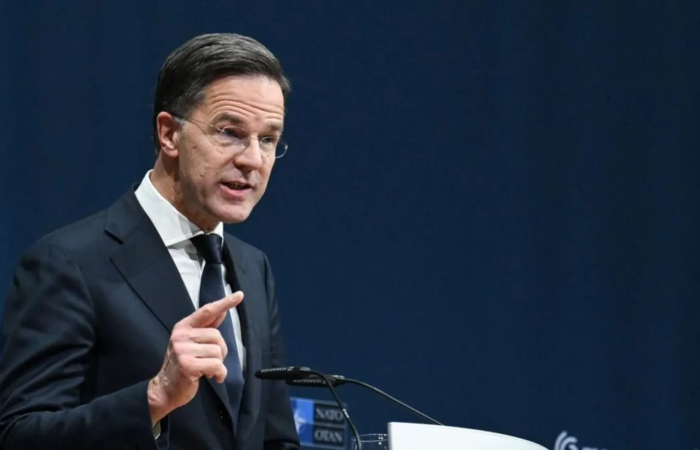
Russia could attack a NATO country within the next five years, the Secretary General of NATO, Mark Rutte, said in a stark new warning. "NATO's own defences can hold for now," Rutte warned in Berlin, but conflict was "next door" to Europe, and he feared "too many are quietly complacent, and too many don't feel the urgency, too many believe that time is on our side. "Russia is already escalating its covert campaign against our societies," Rutte said in a speech in Germany. "We must be prepared for the scale of war our grandparents or great-grandparents endured." Earlier this month, Russia's President Vladimir Putin said his country was not planning to go to war with Europe, but it was ready "right now" if Europe wanted to - or started a war. But similar reassurances were given by Moscow in 2022, just before 200,000 Russian troops crossed the border and invaded Ukraine. Putin has accused European countries of hindering US efforts to bring peace in Ukraine - a reference to the role Ukraine's European allies have recently played in trying to change a US peace plan to end the war, whose initial draft was seen as favouring Russia. But Putin was not sincere, Nato's secretary-general said in the German capital, Berlin. Supporting Ukraine, he added, was a guarantee for European security. "Just imagine if Putin got his way; Ukraine under the boot of Russian occupation, his forces pressing against a longer border with Nato, and the significantly increased risk of an armed attack against us." Russia's economy has been on a war footing for more than three years now - its factories churn out ever more supplies of drones, missiles and artillery shells. According to a recent report by the Kiel Institute for the World Economy, Russia has been producing each month around 150 tanks, 550 infantry fighting vehicles, 120 Lancet drones and more than 50 artillery pieces. The UK, and most of its Western allies, are simply not anywhere near this point. Analysts say it would take years for Western Europe's factories to come close to matching Russia's mass-production of weapons. "Allied defence spending and production must rise rapidly, our armed forces must have what they need to keep us safe," the Nato chief said.

Filter archive

Publication date
Editor's choice
Commentary
A convergence of factors and developments make a spring breakthrough in Armenia-Azerbaijan relations possible

A convergence of factors and developments make a spring breakthrough in Armenia-Azerbaijan relations possible

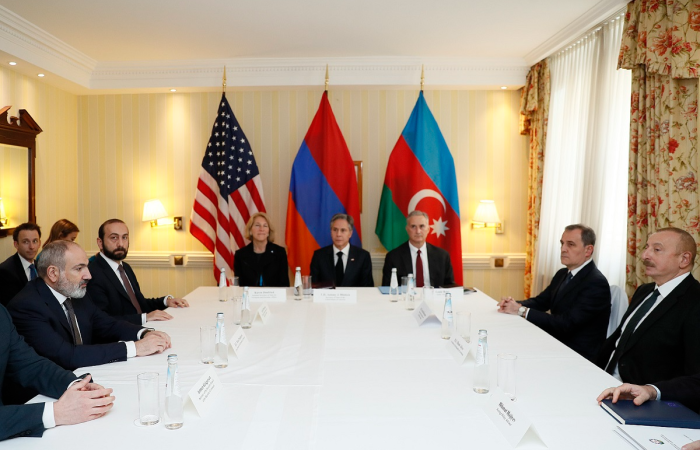
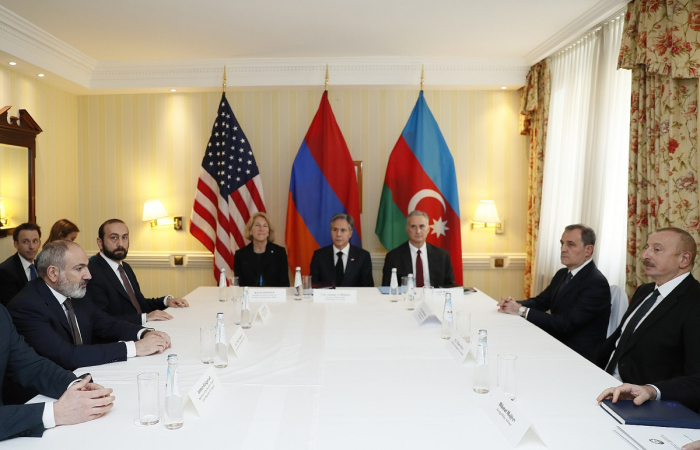
After an erratic 2022, which saw prospects for peace and normalisation of relations between Armenia and Azerbaijan, and between Armenia and Turkey, swing between unprecedented new heights and familiar lows, and after a rather pessimistic start for 2023 when diplomacy appeared to have to come to dead end, March has started with cautious optimism in the air, and the prospect of a historic Spring breakthrough appears within reach. This is due to the convergence of a number of factors and developments, some anticipated and some not. The ten developments that offer cause for optimism are: US brokered talks between Aliyev and Pashinyan in Munich; the deployment of an EU Monitoring Mission; the revival of the Brussels format; internet diplomacy; the ruling of the International Court of Justice; a fluid political situation in Stepanakert; Baku and Stepanakert holding direct talks; earthquake diplomacy between Armenia and Turkey; the limitations of Russia’s power and influence have been exposed; and more confident leaderships in both Baku and Yerevan.
Editor's choice
News
Warmer weather could help Ukraine in Bakhmut as Kyiv claims 150,000 Russian troop losses

Warmer weather could help Ukraine in Bakhmut as Kyiv claims 150,000 Russian troop losses

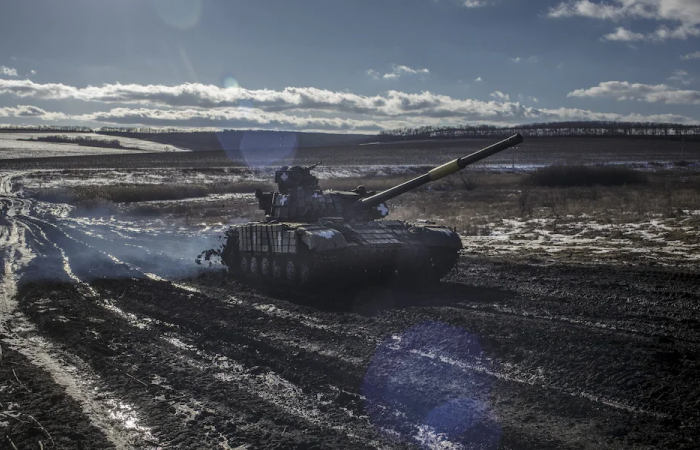
In its latest intelligence briefing on the Russian invasion of Ukraine on Thursday (2 March), the UK Ministry of Defence has suggested that warmer weather around Bakhmut - the eastern Ukrainian town with a pre-war population of 70,000 that Russia has been trying to capture for months - may help the Ukrainians in their defence. In the briefing, the UK Ministry of Defence wrote, "as Ukrainian forces continue their defence of Bakhmut, Donetsk Oblast, rising temperatures are now creating the muddy conditions [...] limiting cross country movement (CCM)." "Poor CCM typically provides some military advantage to defending forces," the briefing adds. The UK Ministry of Defence also note that daytime temperatures around Bakhmut have risen to above freezing, and warmer than average forecasts over the next weeks will also likely decrease CCM. "It is almost certain that by late-March, CCM will be at its worst following the final thaw. This will add further friction to ground operations and hamper the off-road movement of heavier armoured vehicles, especially over churned-up ground in the Bakhmut sector."
Editor's choice
Commentary
Gulf States' position on the war in Ukraine is a work in progress

Gulf States' position on the war in Ukraine is a work in progress

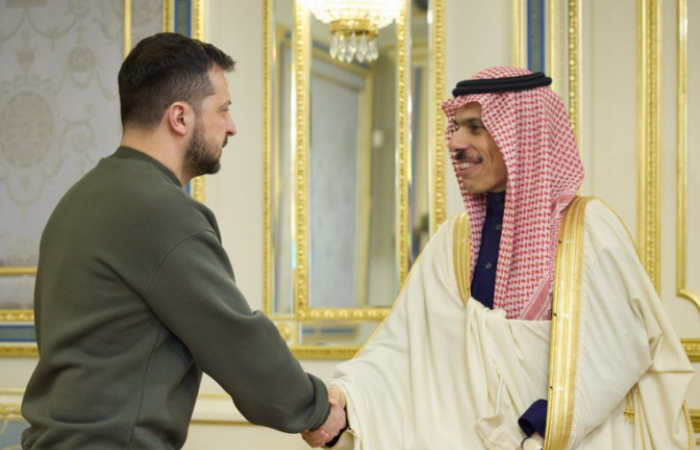
When Russia launched its full-scale invasion of Ukraine one year ago the prevalent feeling among the Arab Gulf states was that they did not want to get involved.  Some thought the best policy was to ignore it, others that they should at the very least dodge it, and some even saw in it some opportunity to extend relations with Russia and China.  There were a number of reasons for this. The region was frustrated with how the west dealt with it. It expected a more equal relationship that never properly materialised. There was fatigue at western attempts – some clearly ill-judged – at interfering in the Arab region, and conversely, disappointment at western failure to stand up to Iran. The unsightly US departure from Afghanistan, and talk of American strategic re-positioning, convinced some that the American moment in the Gulf had passed.
Editor's choice
News
Ukraine repels 60 Russian attacks in 24 hours as Bakhmut situation deteriorates

Ukraine repels 60 Russian attacks in 24 hours as Bakhmut situation deteriorates

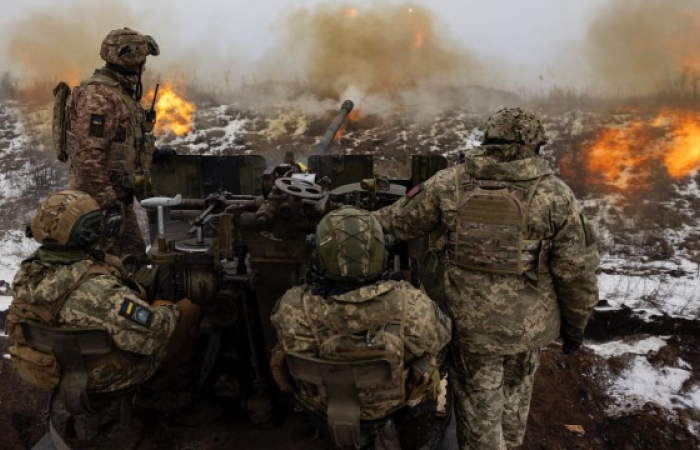
The Ukrainian military repelled 60 Russian attacks in five areas over the past 24 hours in northeastern and eastern Ukraine, the General Staff of Ukraine's Armed Forces reported in its morning update on Tuesday (28 February). Ukraine repelled the attacks near Kupyansk in eastern Kharkiv Oblast as well as Lyman, Bakhmut, Adviika, and Shakhtarsk in Donetsk Oblast, where Russia is concentrating its main offensive efforts, according to the General Staff. Russian troops reportedly carried out eight missile attacks, 32 air strikes, and launched more than 85 attacks using multiple launch rocket systems  between 27 and 28 February, the statement said. Meanwhile, in his daily address on the evening of 27 February, Ukrainian President Volodymyr Zelensky said that the situation in the Bakhmut direction is "getting more and more difficult". He added that Russia "is constantly destroying everything that can be used to protect our positions, to gain a foothold and ensure defense". The commander of Ukraine's ground forces, Col Gen Oleksandr Syrskyi, has said the situation around Bakhmut is "extremely tense". Russia has been trying to take the medium-sized industrial town with a pre-war population of roughly 70,000 for over six months, and has long been a location where the front line has been the most active. 
Editor's choice
News
Intense diplomatic activity as Armenia-Azerbaijan negotiations set to resume

Intense diplomatic activity as Armenia-Azerbaijan negotiations set to resume

There is intense diplomatic activity in the South Caucasus ahead of a likely resumption in direct negotiations between Armenia and Azerbaijan in an effort to normalise relations between them after decades of war. commonspace.eu political editor said in a comment that synchronising the various elements that are part of the Armenia-Azerbaijan settlement process is always difficult, and the international context also continues to complicate matters. But there is a new sense of expectation in the air that the next days and weeks can bring about the long expected breakthrough.
Editor's choice
Editorial
Our War

Our War

One year has passed since Vladimir Putin’s Russia attacked Ukraine, plunging Europe into a war that has already claimed the lives of tens of thousands, and devastated a whole country. Putin expected Ukraine to fall into his lap within hours. It didn’t. It resisted heroically. He also expected Europe, the United States and the rest of the international community to give a muddled response, and for things to be back to business as usual within weeks. It did not happen. The response of Europe, the United States and similarly minded countries was fast, resolute and robust. Having grossly miscalculated, Putin had two choices: to admit his mistake and recalibrate, or, to persist, and to keep digging despite the fact that he was clearly in a hole. Most countries have internal corrective systems that in such situations keep leaders in check. In Russia no such systems exist. So Putin keeps digging himself into a hole by threatening to escalate. What has been clear from day one, is that this is not simply Ukraine’s war. Countries can have disputes, and sometimes they also go to war with each other. Usually the world stands by and tries to bring the belligerents to the negotiating table and to restore peace.