Theme

Conflict and Peace

Stories related to violent conflicts, diplomatic tensions, and conflict prevention, mediation and resolution.

Editor's choice
Young voices
Opinion: The children of Sudan that the world forgot to see

Opinion: The children of Sudan that the world forgot to see

Sudan’s latest war began in April 2023, though the seeds of its violence were planted long before. The Sudanese Armed Forces and the Rapid Support Forces did not collide out of nowhere; they emerged from decades of political rot, unaddressed grievances, ethnic persecution, and military rule that carved deep fractures into the country’s social fabric. When fighting exploded across Khartoum and later consumed Darfur, Kordofan, and the east, it unleashed one of the worst humanitarian catastrophes of the 21st century. In this op-ed, Ioana-Maria Ungureanu, Junior Research Assistant at LINKS Europe, takes a heartfelt look at the plight of Sudan, and its children. When the latest war started, whole cities emptied. Markets burned. Families fled on foot. And a famine began tightening its grip, slow and suffocating. And yet, the world remained mostly silent. Sudanese death is too often framed as an unfortunate feature of the region, a tragedy that feels expected rather than outrageous. Even when evidence of atrocity is abundant, it fails to command the same emotional weight. Sudan should not have to beg for visibility. It deserves it. Because its people deserve to live. And their lives deserve the same respect, safety, and hope that we demand for our own. (read the op-ed in full by clicking the image above)
Editor's choice
News
Egypt rejects Israeli "offer" for an exit only Rafah checkpoint in Gaza

Egypt rejects Israeli "offer" for an exit only Rafah checkpoint in Gaza

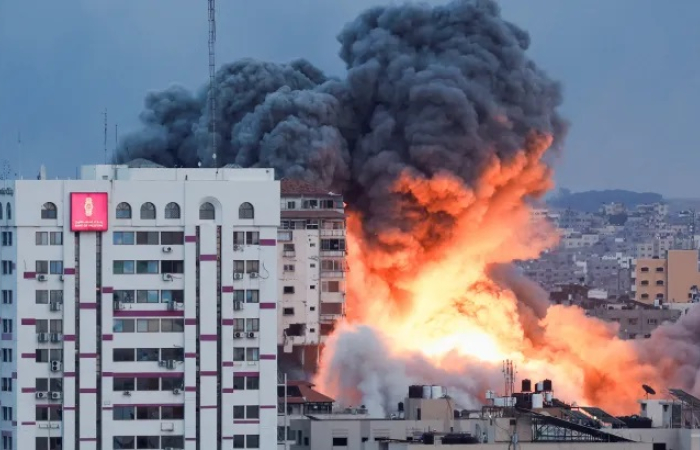
Egypt has rejected an Israeli "offer" for opening for exit only the Rafah checkpoint in Gaza. According to the Egyptian State Information Service, Egyptian authorities refuted on Wednesday afternoon reports that Israel claims it will open the Rafah crossing, the only lifeline for Gaza to the outside world, but only for those wishing to leave the besieged coastal enclave.  Citing an Egyptian official, the service stated that ''any agreement to open the crossing will cover both entry and exit, in line with US President Donald Trump's plan for humanitarian and political arrangements following the ceasefire.'' Cairo reaffirmed its adherence to the plan and UN Security Council Resolution 2803, including the right of return for Palestinians and maintaining two-way operations at the crossing. Earlier in the day, Israel's Coordinator of Government Activities in the Territories (COGAT) announced that the Rafah crossing would reopen ''within the next few days,'' marking the first such move since February 2025. According to the statement, departures would require prior Israeli security approval and would follow mechanisms previously implemented under EU supervision. Notably, the statement made no mention of the entry of humanitarian aid, which continues to flow through the Kerem Shalom crossing. A Palestinian official also echoed the Egyptian denial of Israel's claim. The announced agreements stress that no Palestinians will be forced to leave Gaza. Those who choose to travel will have the right to return, while humanitarian aid will continue through UN agencies, the International Red Cross and Crescent, and other independent organisations. A European Union official, who requested anonymity and is familiar with the matter, told TNA that the EU has received no official notification from Israel regarding new arrangements, stressing that "no changes exist beyond the January agreements, and we await Israel's formal approval for crossing operations under the Trump plan. "Reopening the crossing will follow mechanisms jointly supervised by the EU and the Palestinian Authority to ensure oversight and transparency, according to the EU official.

Filter archive

Publication date
Editor's choice
News
China dabbles in Horn of Africa but its ability to bring peace to the region is minimal

China dabbles in Horn of Africa but its ability to bring peace to the region is minimal

Beijing’s special envoy for the Horn of Africa, Xue Bing, told a regional conference attended by eight governments from the region that ‘all parties should engage in dialogue’ to achieve common prosperity. In the meeting China reaffirmed its support for peaceful development in the Horn of Africa, saying it would “actively engage” in regional initiatives to promote the concept. But analysts and observers are very skeptical. Whilst China might dabble with the region and its many problems, it ability to impact the situation, and particularly contribute to resolving the conflicts that plague the region is minimal. In his speech at the Kampala Conference, Xue said Beijing would offer military assistance and training, as well as helping to develop the region’s infrastructure and boosting trade. “The world today faces overlapping risks and challenges that threaten peace and development in the Horn of Africa, and all parties should engage in dialogue and cooperation to maintain universal security and achieve common prosperity,” Xue told the event, according to the Chinese foreign ministry. Xue outlined further areas of cooperation, including counterterrorism and landmine eradication, while stressing China’s support for “African-led solutions” through platforms such as the African Union and the Intergovernmental Authority on Development.
Editor's choice
Opinion
Opinion: Saudi diplomacy believes it has achieved what half a century of summitry and rhetoric failed to deliver

Opinion: Saudi diplomacy believes it has achieved what half a century of summitry and rhetoric failed to deliver

"Saudi diplomacy has achieved in 18 months what half a century of summitry and rhetoric failed to deliver'' writes Ali Shihabi in the influential Saudi newspaper, Arab News. "Over the past 18 months, Riyadh has quietly delivered a masterclass in diplomacy, steadily reshaping how Western capitals approach the Palestinian file", the writer says. "The Kingdom has pursued a strategy rooted in hard-nosed pragmatism: Washington’s strategic umbrella over Israel will not fold under fiery speeches or social media storms. Rather than waste energy on theatrics, Saudi Arabia has opted for a patient, cumulative approach — chipping away at Israel’s aura of effortless Western legitimacy until the political calculus inside G7 capitals begins to shift. It may feel slow to the impatient observer, but in a world that rewards persistence over noise, this is how real influence is built." We republish the article in full here.
Editor's choice
News
Report speaks of resurgence of Al Qaida and ISIS in Sahel and Syria

Report speaks of resurgence of Al Qaida and ISIS in Sahel and Syria

A new UN expert report to the Security Council released Wednesday (30 July) highlights the escalating threat posed by Islamic State (ISIS) and al‑Qaida affiliates across Africa, with risks also rising in Syria. The report claims that Africa has now become the centre of extremist activity as groups exploit weakened governance and regional instability. In Syria, the post‑Assad transition remains volatile. The report warns that both ISIS and al‑Qaida perceive Syria as a strategic base for international operations. Over 5,000 foreign fighters are believed to have participated in the December 2024 offensive in Damascus, raising fears of ideological spread and extremist infiltration across borders. The report also notes the dangers of online radicalisation. Groups such as ISIS continue to radicalise individuals and orchestrate attacks in Europe, America and beyond via secure messaging networks.
Editor's choice
Opinion
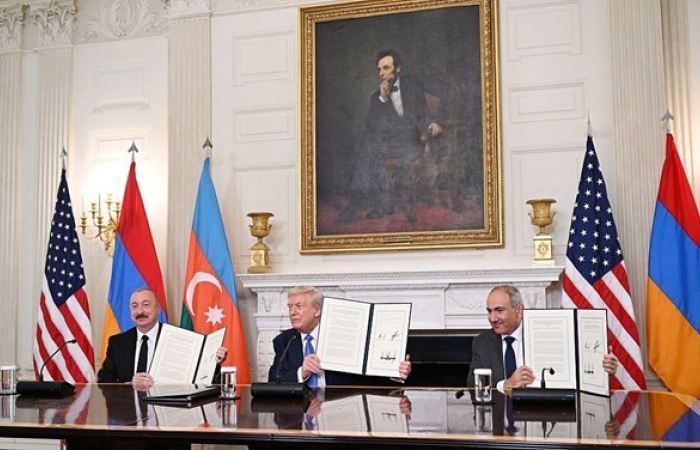
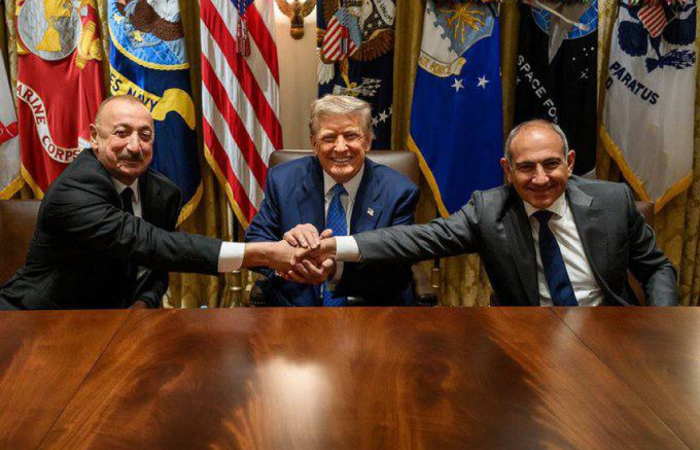
Armenia-Azerbaijan Transit Requires Bilateral and Regional Dialogue

Armenia-Azerbaijan Transit Requires Bilateral and Regional Dialogue

Uncertainty has again emerged along the Armenia-Iran border as the risk of the long-standing conflict between Armenia and Azerbaijan turning into further geopolitical competition continues. What was once a post-war localised disagreement over territory and sovereignty is now entangled in a web of regional interests and strategic manoeuvring. Increasingly, peace risks being shaped less by the needs of local populations but more by the calculations of distant capitals. External interference has rather delayed progress almost five years since the 2020 war. If peace is the objective, then the region needs inclusive not selective diplomacy and definitely not new geopolitical fault lines.
Editor's choice
News
Azerbaijan hosts Syrian-Israeli ministerial meeting to discuss security situation in Southern Syria

Azerbaijan hosts Syrian-Israeli ministerial meeting to discuss security situation in Southern Syria

A Syrian-Israeli ministerial meeting is taking place on Thursday 31 July in Baku to discuss security matters in southern Syria, a diplomat told AFP. The meeting between Syrian Foreign Minister Asaad al-Shaibani and Israeli Minister of Strategic Affairs Ron Dermer follows a similar meeting between the two ministers in Paris last week. It will take place after an unprecedented visit by al-Shaibani to Moscow on Thursday, added the diplomat, who requested anonymity due to the sensitivity of the matter. Israel and Syria have technically been at war since 1948.
Editor's choice
News
Russia remains defiant over Trump threats

Russia remains defiant over Trump threats

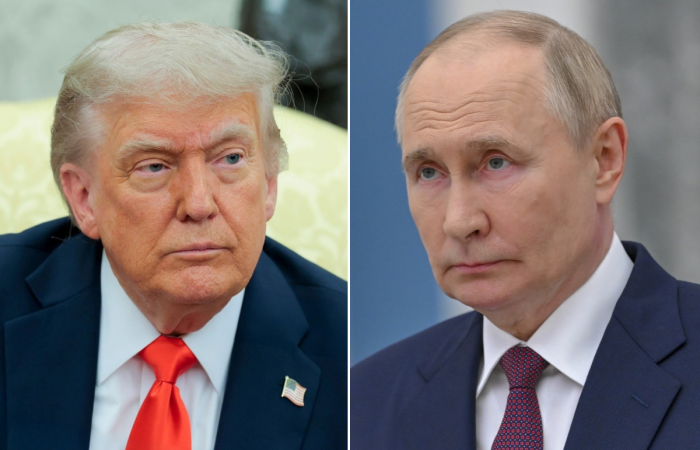
Russian glide bombs and ballistic missiles struck a Ukrainian prison and a medical facility overnight as Russia’s relentless strikes killed at least 22 people across the country, officials said on Tuesday 29 July, despite U.S. President Donald Trump’s threat to punish Russia with sanctions and tariffs unless it stops. Trump said on Monday he is giving Russian President Vladimir Putin 10 to 12 days to stop the killing in Ukraine after three years of war, moving up a 50-day deadline he had given the Russian leader two weeks ago. “I’m disappointed in President Putin,” Trump said during a visit to Scotland.
Editor's choice
News
Guterres Condemns the obliteration of Gaza as High-Level Conference on Palestine meets at UN Headquarters

Guterres Condemns the obliteration of Gaza as High-Level Conference on Palestine meets at UN Headquarters

United Nations Secretary-General António Guterres has condemned both the 7 October Hamas attacks and what he described as the “obliteration” of Gaza, including mass civilian casualties, starvation and destruction of infrastructure. Guterres was addressing the  High-Level International Conference for the Peaceful Settlement of the Question of Palestine and the Implementation of the Two-State Solution that is being convened at the UN Headquarters in New York between 28 and 30 July. The UN chief urged world leaders to ensure the conference becomes a turning point for irreversible progress toward a two-State solution, calling it the only credible path to peace based on international law. Mandated by the General Assembly of the UN, the meeting features plenaries, working groups and interventions from senior UN officials and Member States.
Editor's choice
Monday Commentary
Monday Commentary: The world is in a mess, but it is not the time to despair or give up

Monday Commentary: The world is in a mess, but it is not the time to despair or give up

The UN Secretary General, Antonio Guterres, is the world’s most senior civil servant. His words, especially in the last year, have been tense, terse and delivered with a sense of urgency, as he tries to convey to world statesmen, and the world public, the need for urgent, large-scale action to deal with the global problems that seem to be overwhelming the world body. The challenges are enormous, and the response, if it is to be effective, has to be proportionate in size and scope.