Region

South Caucasus

The South Caucasus – a region encompassing Armenia, Azerbaijan and Georgia - is one of strategic importance, not only for adjacent countries, such as Turkiye, Russia, Iran and the Central Asian states, but also for neighbours such as the European Union and the GCC states, and globally for the United States, India, China, Pakistan and Japan.

commonspace.eu team brings decades of experience of working in the South Caucasus and we are pleased to share our insights with our loyal readers through the website, and the sister newsletter, Caucasus Concise.

Filter archive

Publication date
Editor's choice
Analysis
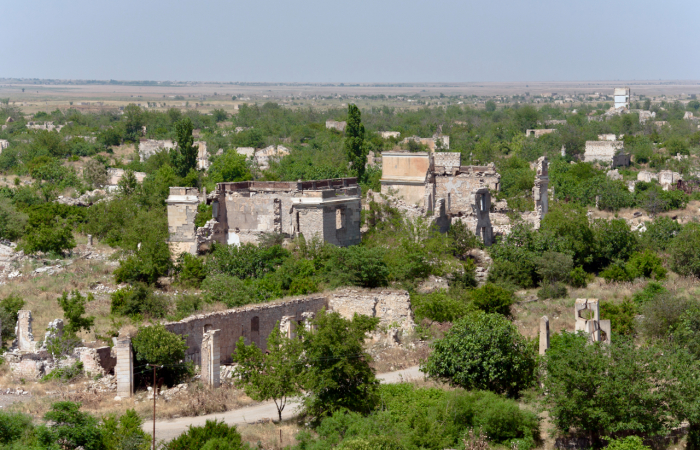
Analysis: Landmine contamination in Azerbaijan’s Aghdam region prevents tens of thousands of displaced persons from returning to their homes

Analysis: Landmine contamination in Azerbaijan’s Aghdam region prevents tens of thousands of displaced persons from returning to their homes

The dust of war from the decades-long conflict between Armenia and Azerbaijan has started to settle, and although peace remains elusive, there is hope across the region for a better future. No-one has waited for this moment more than the hundreds of thousands of Azerbaijanis who were displaced by the First Karabakh War in the early 1990s.
Editor's choice
Analysis
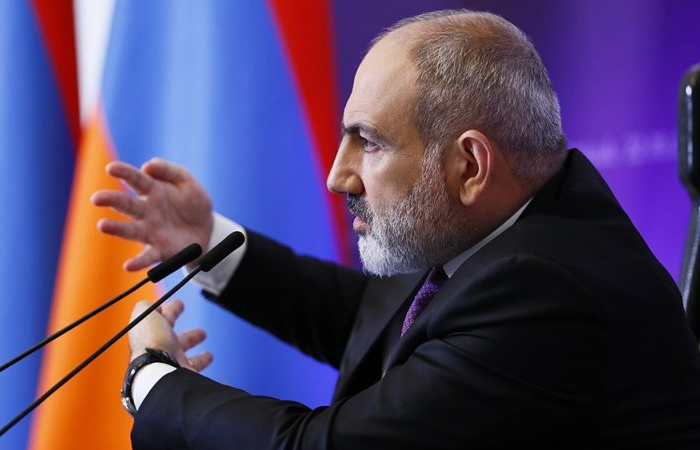
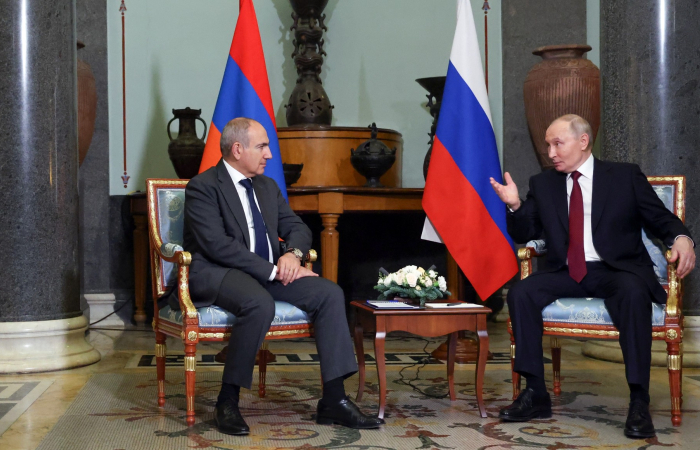
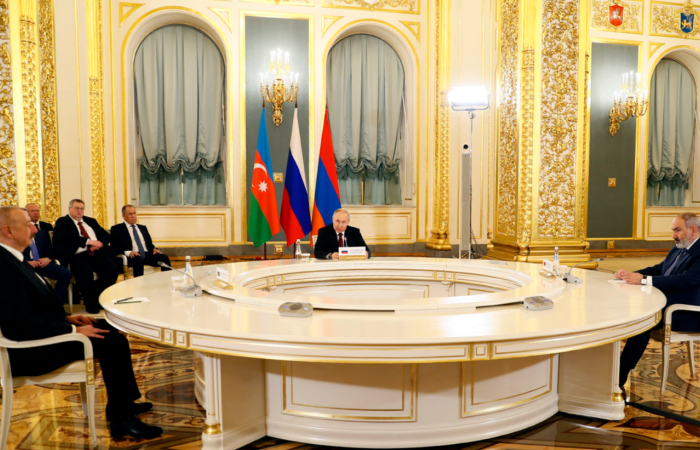
Briefing: Pashinyan ready to sign, not everyone in Stepanakert is happy, Baku hopeful but keeping up pressure

Briefing: Pashinyan ready to sign, not everyone in Stepanakert is happy, Baku hopeful but keeping up pressure

As Armenia and Azerbaijan edge closer to signing an agreement ending decades of conflict between them, the future of the Armenian population in Nagorno-Karabakh remains one of the most crucial outstanding issues, writes commonspace.eu. Intense discussions and negotiations have been ongoing throughout May, with meetings in Washington, Brussels and Moscow involving the leaders of the two countries, their foreign ministers, and other senior officials. In a lengthy press conference on 22 May, Armenian Prime Minister Nikol Pashinyan said that he wants to reach an agreement "as soon as possible". The international community's perception of the negotiations is that Armenia and Azerbaijan should, without reservations, recognise each other's territorial integrity of 29,800 square kilometers and 86,600 square kilometers, respectively, said Pashinyan.
Editor's choice
News
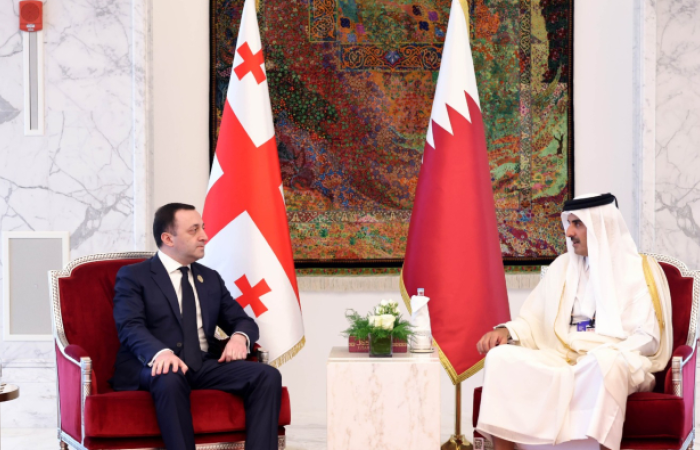
Georgia and Qatar to sign agreement on innovation and technology cooperation after leaders meet in Doha

Georgia and Qatar to sign agreement on innovation and technology cooperation after leaders meet in Doha

Georgia and Qatar are to sign an agreement on innovation and technology cooperation, the Georgian Economy Minister Levan Davitashvili announced on Tuesday (23 May). The announcement came after the Georgian Prime Minister Irakli Garibashvili and the Emir of Qatar Sheikh Tamim bin Hamad bin Khalifa Al Thani met in Doha on the sidelines of the Qatar Economic Forum that is running from 23-25 May. Davitashvili said that the Georgian delegation had meetings with a number of sectoral ministries in which they discussed opportunities for cooperation between Georgia and Qatar. Transport, logistics, and Georgia's key role in the Middle Corridor facilitating east-west trade were emphasised in the meetings, according to Davitashvili, who said that there is an increased interest in the country from "many states of the world, including Qatari investors", amid geopolitical challenges. The meetings also touched on trade and economic issues, as well as the the agreements on Mutual Support and Protection of Investments and on Economic, Trade and Technical Cooperation, signed last year between Georgia and Qatar.
Editor's choice
Opinion
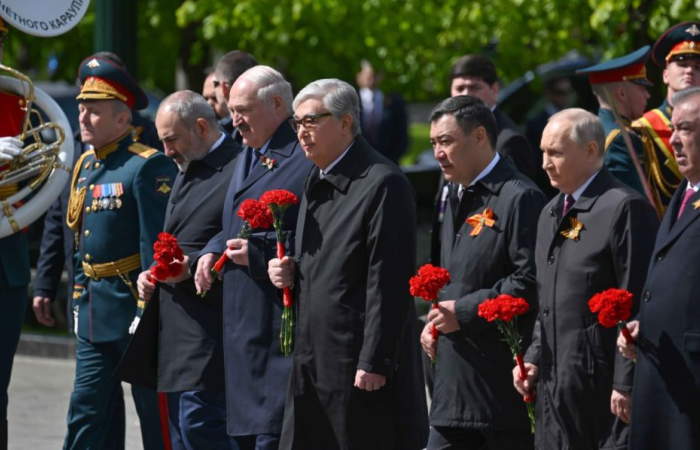
Opinion: Pushing Armenia to make further concessions will spoil any chance for peace

Opinion: Pushing Armenia to make further concessions will spoil any chance for peace

"The Armenian government and Armenian society have reached the limits of concessions on Nagorno Karabakh, and any agreement which will not explicitly secure a long-term and solid international presence in Nagorno Karabakh (either through the deployment of peacekeeping forces or a large-size mission) will be rejected by the majority of the population", writes Benyamin Poghosyan in this op-ed for commonspace.eu. He adds that "it should be clear to the international community that any new government in Armenia will pursue a tougher policy on the issues related to Nagorno Karabakh and relations with Azerbaijan. Thus, all those external actors, who are interested in the stability of the region, should understand that any additional pressure on the Armenian government to drop its demands for a solid international presence in Nagorno Karabakh, and failure to explicitly secure that presence in the peace agreement, is a recipe for significant political destabilization in Armenia, and has the potential of ruining the ongoing Armenia – Azerbaijan negotiation process, and bring the region back to a renewed cycle of violence."