Region

Russia

Stories under this heading cover Russia, as well as countries in the eastern part of the European continent, such as Belarus, Ukraine, and Moldova.

Editor's choice
News
UN General Assembly demands that Russia returns Ukrainian children

UN General Assembly demands that Russia returns Ukrainian children

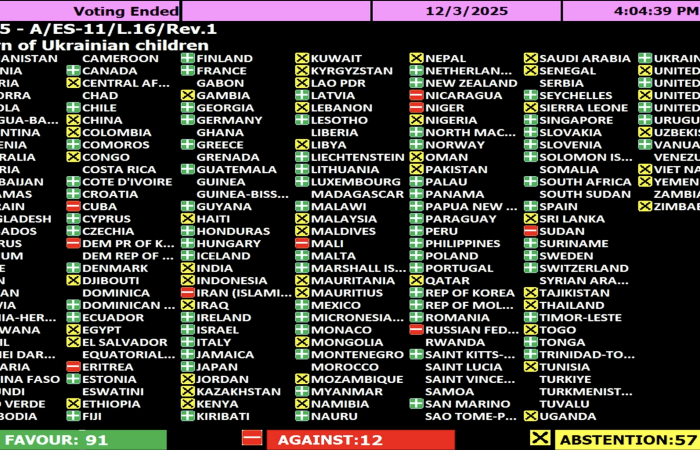
The UN General Assembly, in a vote on Wednesday (3 December) overwhelmingly voted in favour of a resolution demanding that Russia returns Ukrainian children kidnapped since the start of the Russian invasion in February 2022. 91 countries voted in favour of the resolution, 12 voted against, and 57 countries abstained or were not present. Russia and Belarus were joined by ten countries in voting against the resolution, namely, Iran, Cuba, Nicaragua, Burundi, Burkina Faso, Niger, Mali, Democratic Republic of Congo, Sudan, and Eritrea. From the South Caucasus, Georgia voted in favour of the resolution, but Armenia and Azerbaijan abstained, as did Turkiye and the five Central Asian republics. Also abstaining were the six Gulf monarchies and most Arab countries. The resolution calls for the immediate return of Ukrainian children who were deported to Russia. The Ukrainian government says more than 19,000 children have been taken away from Russian-occupied areas and elsewhere since Moscow's invasion began in February of 2022. The draft resolution submitted on Wednesday demands that Russia "ensure the immediate, safe and unconditional return" of the children. (Read more by clicking the image)
Editor's choice
News
EU imposes more sanctions on Russia but fails to reach agreement on using Russian assets

EU imposes more sanctions on Russia but fails to reach agreement on using Russian assets

The European Union on Thursday 23 October applied more economic sanctions on Russia, adding to U.S. President Donald Trump’s new punitive measures the previous day against the Russian oil industry. However, EU leaders meeting in Brussels have so far failed to reach a deal on using Russian frozen assets. European capitals were hoping to convince Belgium, which houses the international deposit organisation Euroclear and is worried about legal repercussions, that a reparation loan from the funds is workable. Most of the €200 billion in Russian central bank assets frozen by the EU are held in Euroclear. However, Belgian Prime Minister Bart De Wever has so far been skeptical, reiterating during the European Council meeting on Thursday that certain conditions must first be met before a €140 billion loan can be given to Ukraine using Russia’s frozen assets. Russian officials and state media dismissed the new Western measures, saying they are largely ineffective.

Filter archive

Publication date
Editor's choice
News
Leaders of “Caspian Five” hold their sixth summit in Ashgabat

Leaders of “Caspian Five” hold their sixth summit in Ashgabat

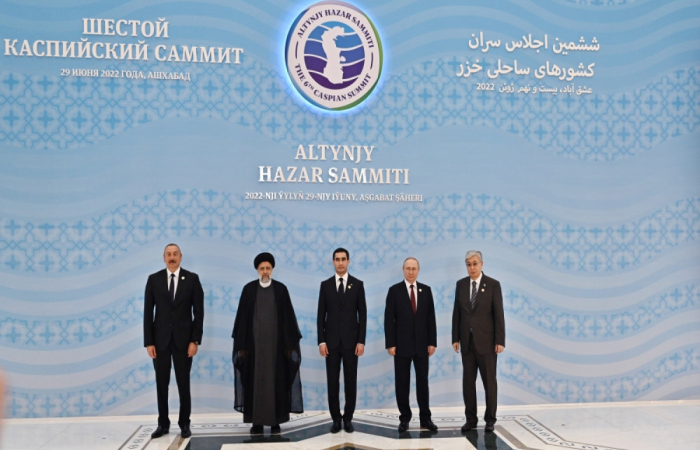
The leaders of the five Caspian littoral states, participated in a summit meeting in the capital of Turkmenistan, Ashgabat on Wednesday (29 June). The Caspian “five” are Azerbaijan, Iran, Kazakhstan, Russia and Turkmenistan. Addressing the gathering, Russian president Vladimir Putin said: “Russia unfailingly supports expanding partnerships within the Caspian “five” – in politics, security, the economy and nature conservation, as well as many other items on the humanitarian agenda.” Putin quickly reminded his four colleagues of Russia’s first priority when it comes to the Caspian, namely the exclusion of anyone else apart from the littoral states: “At the same time, we believe that prosperity in our shared region can only be guaranteed by an unfailing commitment to the principles enshrined in the Convention on the Legal Status of the Caspian Sea. The Convention stipulates the crucial provision, which is that the countries of the Caspian “five” are responsible for the Caspian region’s preservation and its sustainable development for current and future generations.”
Editor's choice
News
Lavrov on diplomatic offensive in the Gulf, as poll results suggest Arab street is indifferent to Ukraine situation

Lavrov on diplomatic offensive in the Gulf, as poll results suggest Arab street is indifferent to Ukraine situation

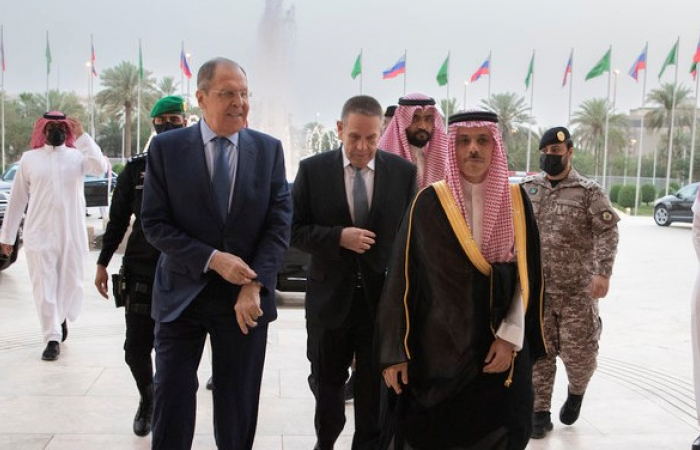
Russian Foreign Minister Sergei Lavrov visited Bahrain and Saudi Arabia this week as part of efforts to consolidate relations with the region, despite the international outcry over the Russian invasion of Ukraine. The visit comes amid finding in a poll by YOUGOV that show that the Arab street is largely indifferent to the events in Ukraine. Faisal Abbas, the Editor in Chief of Arab News which commissioned the poll, in an article on 30 May, said that "most strikingly, perhaps, the findings lay bare the extent of the distrust of the West across all 14 of the countries covered in the survey. Almost a quarter of the 7,835 people surveyed (24 percent) pointed the finger of blame for the conflict squarely at NATO, while more than one in ten (13 percent) said US President Joe Biden was responsible. Only 16 percent blamed Russia." Abbas says that "this can be attributed in part to Russia’s massive investment in its own news channels in Arabic, and to a massive online outreach effort. But underpinning the widespread Arab skepticism on this issue is not so much the success of Russian propaganda, but rather the steady ebbing away of trust in the West over the past two decades."
Editor's choice
News
South Ossetia gets a young leader, but his message is old and rusty

South Ossetia gets a young leader, but his message is old and rusty

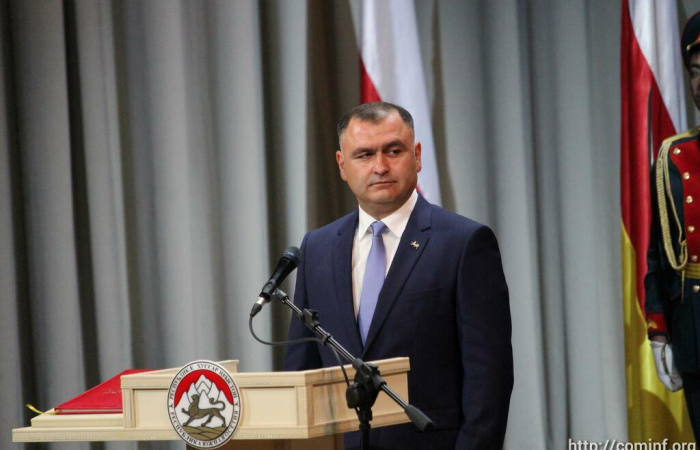
It was a piece of surreal political theatre of the sort that have become increasingly popular with the choreographers of the Kremlin. On Tuesday (24 May ) the liliputian self-declared Republic of South Ossetia, a de facto Russian protectorate, got a new president. Alan Gagloev was sworn-in at the theatre on Tskhinvali's main square. The choreography was perfect: a military guard of honour, a swearing in ceremony, and delegations of "foreign countries", except they represented other self declared entities such as Abkhazia, Lugansk, Donetsk, Nagorno-Karabakh etc. Most of the world still recognise South Ossetia as part of Georgia. Gagloev came to power unexpectedly, having defeated the incumbent Anatoly Bibilov in elections on May 17. The number of people who voted for him was 16,134 (representing 56.09% of the electorate). Bibilov left his successor a time bomb, due to go off on 17 July, in the form of a referendum calling for South Ossetia's unification with Russia. The Kremlin does not seem to be impressed. Gagloev made no reference to the referendum in his inauguration speech today, but he did heap praise on Russia and promised eternal friendship.
Editor's choice
News
Kyiv says it will not give up territory in return for a cease fire

Kyiv says it will not give up territory in return for a cease fire

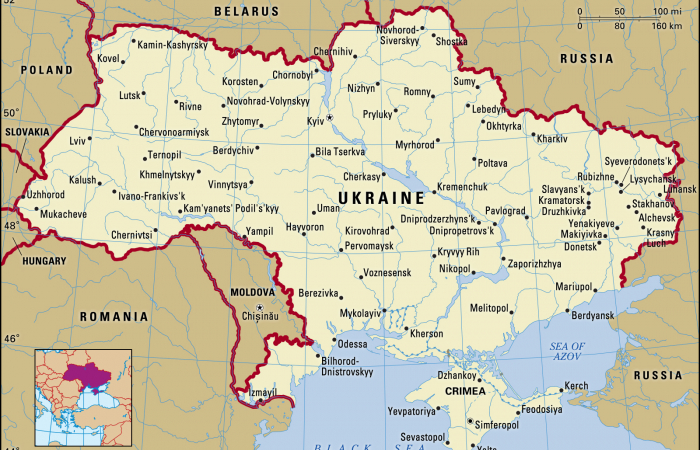
The Ukrainian government says it won't agree a ceasefire deal with Russia that involves giving up territory. Presidential adviser Mykhaylo Podolyak said Kyiv would not follow calls in the West for an urgent ceasefire that involved Russian forces remaining in territory they occupy in the south and east of the country. He said making concessions would result in Moscow starting an even larger, more bloody offensive in the longer term. His comments come as Russia continues its attempts to encircle Ukrainian forces defending the eastern city of Severodonetsk. Russia occupied the Crimean Peninsula in 2014,and annexed it to its territory. It also took de facto control of parts of the Donbas region around the same time. Immediately before launching the invasion of Ukraine on 24 February of this year, Russian president Putin formally recognised the territories, which it calls the  Lugansk and Donetsk People's Republics, as sovereign countries. After failing to occupy Kyiv and overthrow the Ukrainian government as part of its invasion plan, the Kremlin is now concentrating on expanding the territory under its control in the Donbas. The internationally community recognises Crimea and the Donbas region as an integral part of Ukraine.
Editor's choice
News
Russia steps up its support for the military government of Mali

Russia steps up its support for the military government of Mali

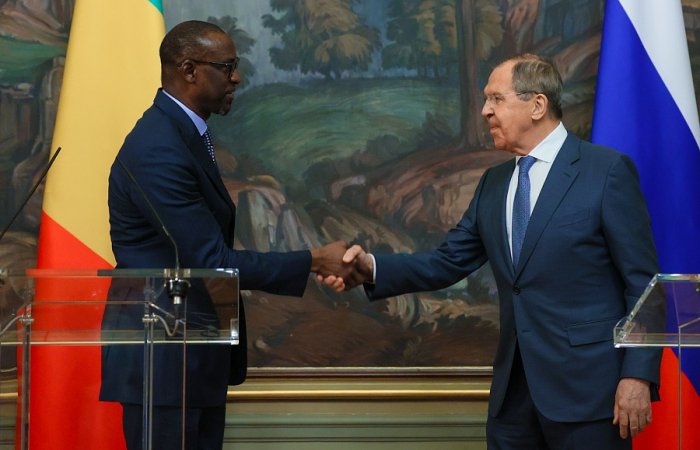
Russian Foreign Minister Sergei Lavrov on Friday (20 May) received in Moscow his Malian counterpart Abdoulaye Diop with promises of Russian support for the the Malian military government across a range of areas, including defence, security and energy. Lavrov speaking at a press conference with Diop accused France of trying to dictate to Mali who they can or cannot communicate with. "This is unacceptable and does not make the French Republic or French manners look good", the Russian foreign minister said. The meeting came on the same day that the German parliament agreed on a reconfiguration of its military contingent in Mali.
Editor's choice
News
Ukraine expects Russia to pay 600 billion USD in war reparations

Ukraine expects Russia to pay 600 billion USD in war reparations

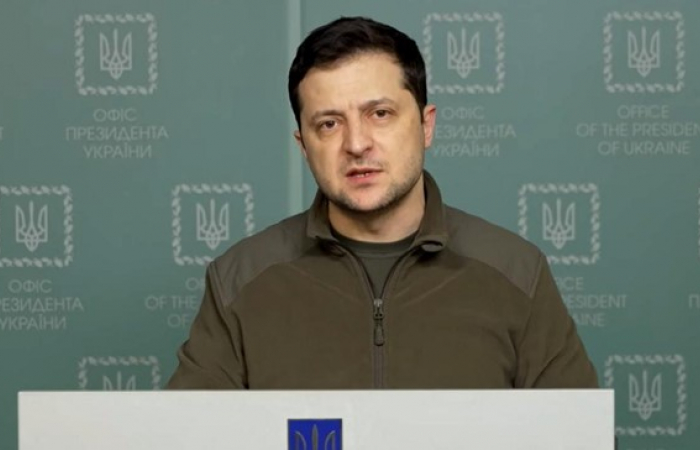
Ukrainian President Volodymyr Zelesnky said Tuesday Russia should have to pay reparations for the damage it caused to Ukraine after the war is over. “Russia will have to pay reparations. We know it clearly,” Zelensky said when addressing The Wall Street Journal CEO Summit 2022. Since the start of the war, Zelensky says Russia has caused $600 billion in damage to the country. The damage is from the Russian military’s shelling of cities, which have destroyed buildings and water systems, leaving some of those left in the country struggling for basic resources. “They have destroyed everything themselves,” Zelensky told the Journal, noting how quickly the economic relationship between Russia and Ukraine changed. Zelensky said that after the war, Ukrainians want to rebuild the country quickly, calling for businesses to flock to the nation. “I’m sure after victory we will do everything quite fast, and Ukraine will be more beautiful than before,” Zelensky said, adding businesses would “get access to our country, our 40 million-plus market.” Zelensky said the war will not end until weapons are laid down, with Ukraine’s goal to one day take back all the land Russia has occupied, including Crimea.
Editor's choice
Opinion
Russia’s war against Ukraine: where do we stand and what can the future bring?

Russia’s war against Ukraine: where do we stand and what can the future bring?

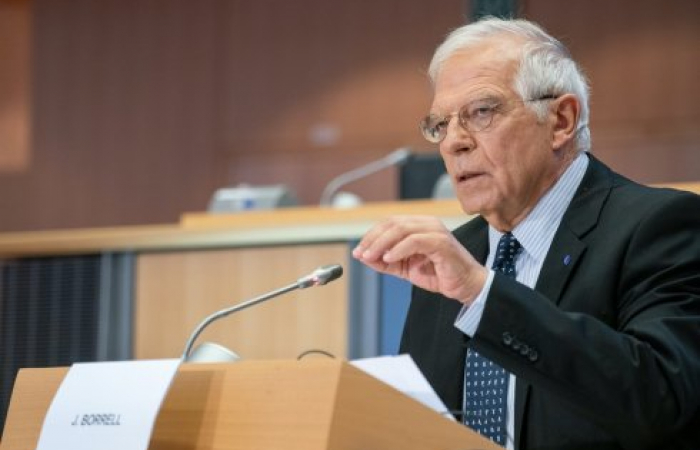
"Two months into the war against Ukraine there is no end in sight and Russia’s most recent actions even point to an intensification of the fight. The Russian leadership must stop the aggression and reconsider the unacceptable path it has chosen: for the sake of Ukraine, Russia, Europe and the wider world", says Josep Borrell, EU High Representative for foreign and security policy in this article which first appeared on his blog on the website of the European External Action Service on 26 April 2022. In the article the head of the EU diplomacy says that "Defending Ukraine from Russia’s invasion is rejecting the law of the jungle, the notion that “might makes right”. Being “neutral” is a false concept here. One country has invaded another one. Putting them on the same footing fails to differentiate between the attacker and the attacked. Such “neutrality” may respond, of course, to a variety of reasons, from hidden alignment to fear of reprisals, but it becomes in practice support to Russia and its war of aggression."