Region

Russia

Stories under this heading cover Russia, as well as countries in the eastern part of the European continent, such as Belarus, Ukraine, and Moldova.

Editor's choice
News
UN General Assembly demands that Russia returns Ukrainian children

UN General Assembly demands that Russia returns Ukrainian children

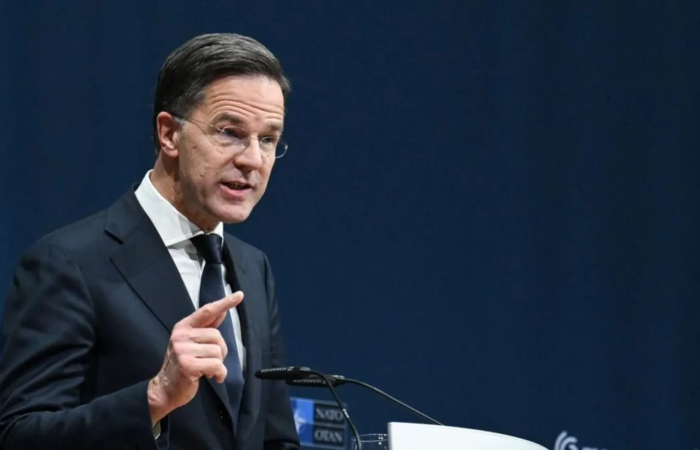
The UN General Assembly, in a vote on Wednesday (3 December) overwhelmingly voted in favour of a resolution demanding that Russia returns Ukrainian children kidnapped since the start of the Russian invasion in February 2022. 91 countries voted in favour of the resolution, 12 voted against, and 57 countries abstained or were not present. Russia and Belarus were joined by ten countries in voting against the resolution, namely, Iran, Cuba, Nicaragua, Burundi, Burkina Faso, Niger, Mali, Democratic Republic of Congo, Sudan, and Eritrea. From the South Caucasus, Georgia voted in favour of the resolution, but Armenia and Azerbaijan abstained, as did Turkiye and the five Central Asian republics. Also abstaining were the six Gulf monarchies and most Arab countries. The resolution calls for the immediate return of Ukrainian children who were deported to Russia. The Ukrainian government says more than 19,000 children have been taken away from Russian-occupied areas and elsewhere since Moscow's invasion began in February of 2022. The draft resolution submitted on Wednesday demands that Russia "ensure the immediate, safe and unconditional return" of the children. (Read more by clicking the image)
Editor's choice
News
EU imposes more sanctions on Russia but fails to reach agreement on using Russian assets

EU imposes more sanctions on Russia but fails to reach agreement on using Russian assets

The European Union on Thursday 23 October applied more economic sanctions on Russia, adding to U.S. President Donald Trump’s new punitive measures the previous day against the Russian oil industry. However, EU leaders meeting in Brussels have so far failed to reach a deal on using Russian frozen assets. European capitals were hoping to convince Belgium, which houses the international deposit organisation Euroclear and is worried about legal repercussions, that a reparation loan from the funds is workable. Most of the €200 billion in Russian central bank assets frozen by the EU are held in Euroclear. However, Belgian Prime Minister Bart De Wever has so far been skeptical, reiterating during the European Council meeting on Thursday that certain conditions must first be met before a €140 billion loan can be given to Ukraine using Russia’s frozen assets. Russian officials and state media dismissed the new Western measures, saying they are largely ineffective.

Filter archive

Publication date
Editor's choice
News
Azerbaijan mourns crash of Azal plane and death of 38 persons

Azerbaijan mourns crash of Azal plane and death of 38 persons

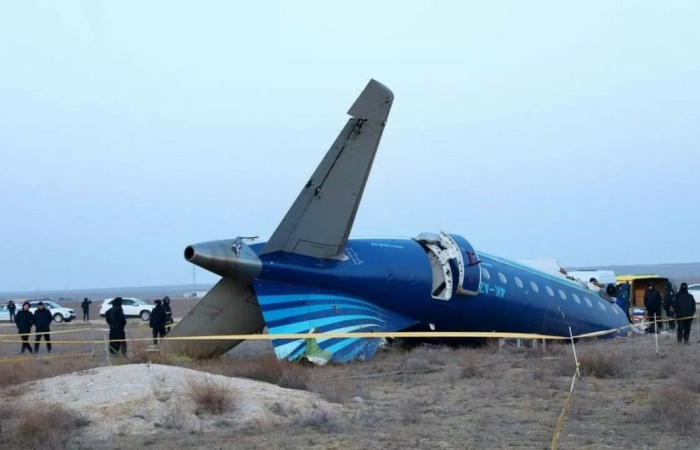
n Baku, flags on official buildings and embassies of foreign countries flew at half mast Thursday (26 December) as Azerbaijan observed a day of mourning following the crash of an AZAL plane which resulted in the death of 38 passengers and crew. The plane was on  a scheduled flight from Baku to Grozny, but was diverted to Kazakhstan because of bad weather. President Ilham Aliyev was informed of the crash whilst on his way to St Petersburg where he was to attend the informal CIS summit hosted by President Putin. He ordered his plan to return to Baku to lead the Azerbaijani response to the crash. Azerbaijani media speculated about the causes  of the crash, with some outlets saying that it was hit by a Chechen missile whilst approaching Grozny.
Editor's choice
Opinion
Opinion: Third meeting of 3+3 and reconfiguration of the South Caucasus geopolitics

Opinion: Third meeting of 3+3 and reconfiguration of the South Caucasus geopolitics

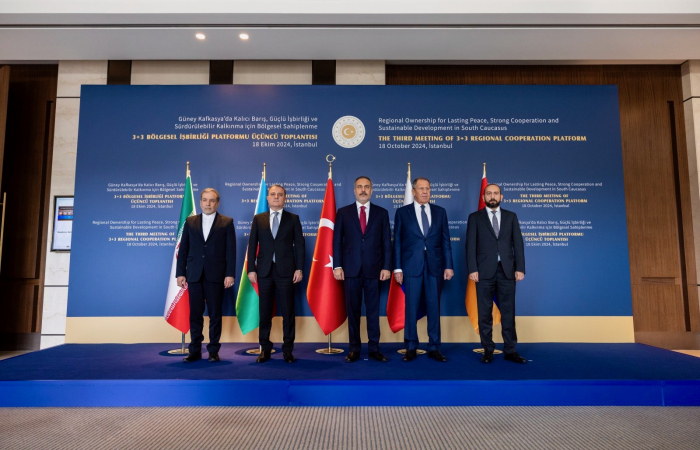
On 18 October, the 3+3 regional cooperation platform which hypothetically includes Armenia, Azerbaijan, and Georgia “plus” three surrounding powers (Türkiye, Iran, and Russia) convened the third meeting at the ministerial level, though again without the participation of Georgia. Hosted by Türkiye in Istanbul, the meeting took place amidst a sensitive security situation in the wider region due to the ramifications of the Russia-Ukraine war, the potential Iran-Israel war, the upcoming fateful parliamentary elections in Georgia, and certainly, the persisting challenges in the Armenia-Azerbaijan peace process.
Editor's choice
News
Russia agrees to withdraw border guards from the Armenian-Iranian border

Russia agrees to withdraw border guards from the Armenian-Iranian border

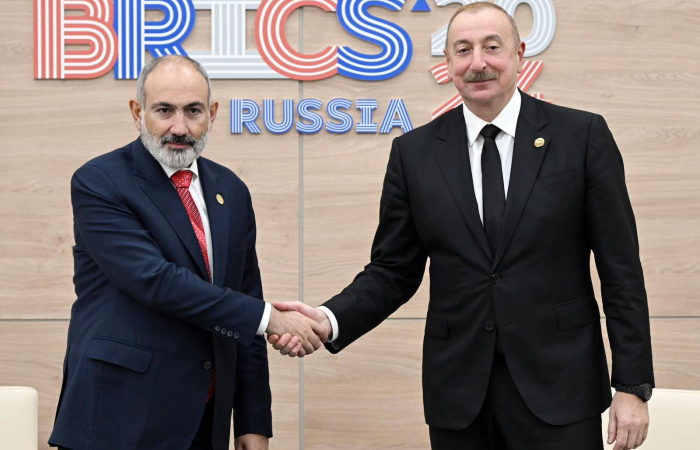
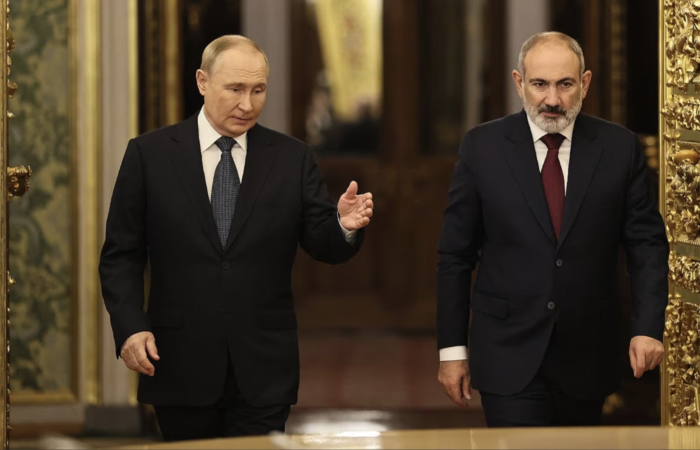
On Tuesday (8 October), Russian President Vladimir Putin and Armenian Prime Minister Nikol Pashinyan agreed at the summit of the Commonwealth of Independent States (CIS) to withdraw Russian border guards from the Armenian-Iranian frontier as of January 2025 and replace them with Armenian border guards. In addition, the Turkish border will be guarded by both Russian and Armenian guards.
Editor's choice
News
EU rejects Russian claims on NATO role in Armenia-Azerbaijan peace talks

EU rejects Russian claims on NATO role in Armenia-Azerbaijan peace talks

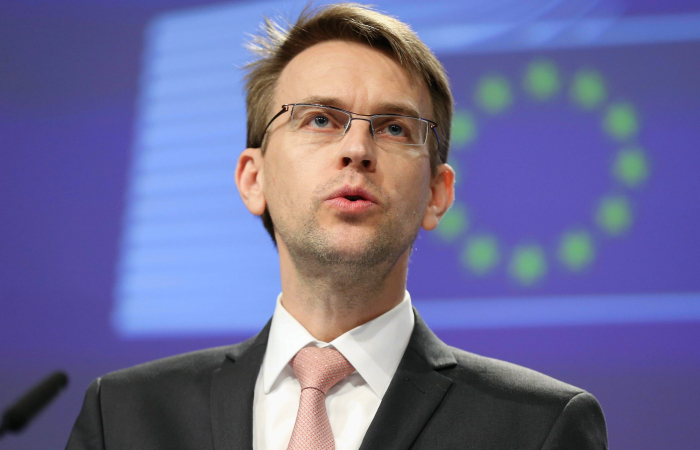
Alexander Bortnikov, the director of Russia's Federal Security Service (FSB), has claimed that Armenia is postponing peace talks with Azerbaijan in order to deploy a NATO contingent in the South Caucasus, in line with a Western agenda. These remarks have been refuted by Peter Stano, a spokesman for the European External Action Service (EEAS). Stano claims that the West strongly supports the peace process between Armenia and Azerbaijan and has no intention of establishing a NATO presence in the region.  
Editor's choice
News
Russian air strikes kill seven people in Lviv, Ukraine

Russian air strikes kill seven people in Lviv, Ukraine

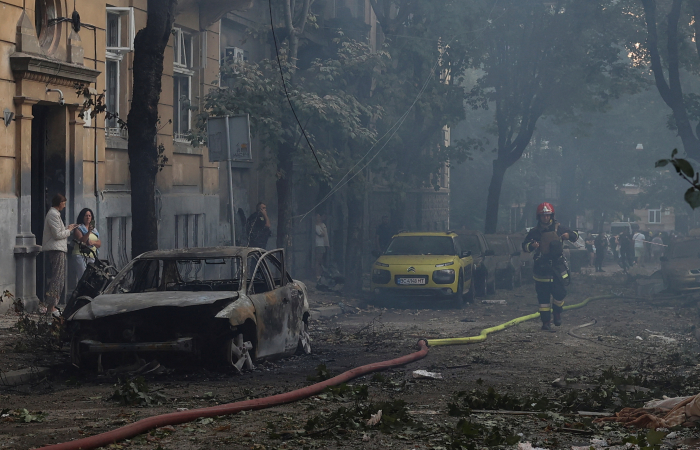
A major Russian air strike on Lviv, a city in western Ukraine near the border with NATO member Poland, killed seven people, wounded more than 30 and caused extensive damage to historic buildings in the city centre, regional officials said on Wednesday (4 September). The attack came a day after Russia's deadliest single attack this year, when two ballistic missiles hit a military institute in the central Ukrainian city of Poltava, killing 50 people and injuring hundreds more. Meanwhile, neighbouring Poland scrambled jets to secure its airspace for the third time in eight days.