


Region

Russia

Editor's choice
News
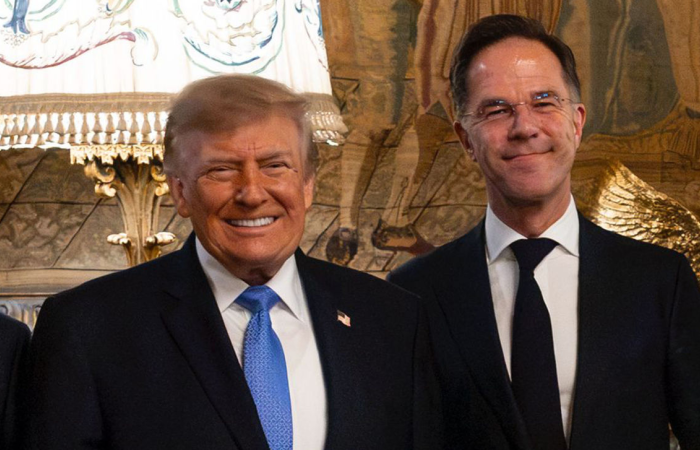
Trump and Rutte Urge Russia to Avoid Escalating the War in Ukraine

Trump and Rutte Urge Russia to Avoid Escalating the War in Ukraine

US President Donald Trump and NATO Secretary General Mark Rutte called on Russia to avoid actions that could further expand the war in Ukraine, reaffirming their support for a peaceful resolution while stressing the need to maintain pressure on Moscow. The appeal was made in a joint statement on Thursday (November 26), following a closed-door meeting that took place the day before at Trump’s Mar-a-Lago residence in Florida. The discussions focused primarily on the war in Ukraine and the conflict in Iran, alongside defence spending and investment in military-industrial capabilities across the United States and NATO. According to the White House, the two leaders emphasised the importance of Russia avoiding actions that could deliberately or unintentionally widen the conflict and called for a peaceful settlement as soon as possible. The meeting was described by the White House as “exceptional” and “very impactful.” This stance goes against the cordial approach recently taken by Trump towards Russian President Vladimir Putin. During their encounter at a summit in Shenzhen, China, the previous week, Trump referred to Putin as his “friend” and suggested that the Russian leader was interested in ending the war through diplomatic means. However, despite what the Trump administration may suggest, Moscow has maintained its demands concerning Ukraine, showing a clear lack of willingness to compromise. In an interview with Fox News on Wednesday (November 25), Rutte defended Trump’s approach, arguing that the US president was testing Putin’s intentions rather than simply taking his statements at face value. He questioned whether the Russian president was genuinely prepared to negotiate and commit to meaningful discussions, insisting that pressure on Moscow should continue. “I think it works, and we must continue along this path,” Rutte added. The NATO secretary general also stressed that Ukraine would require long-term security guarantees following the war, whether it ends through a peace agreement or an extended ceasefire. In the meantime, he argued that Kyiv must receive sufficient military support to sustain its defence and maintain pressure on Russia. Nevertheless, as of now, Ukraine seems to fall short of the required defense infrastructure, with Pete Hegseth delaying the shipment of Patriot missiles to the war-torn country. Trump and Rutte also discussed increasing defence spending across NATO, reflecting Washington’s continued pressure on European allies to assume greater responsibility for their own security. Although no further details have been disclosed, the joint statement published by NATO indicated the organization’s ambition to strengthen the military-industrial base on both sides of the Atlantic.
Editor's choice
News
Leaked Rosstat data suggests hundreds of thousands of Russian soldiers killed in Ukraine

Leaked Rosstat data suggests hundreds of thousands of Russian soldiers killed in Ukraine

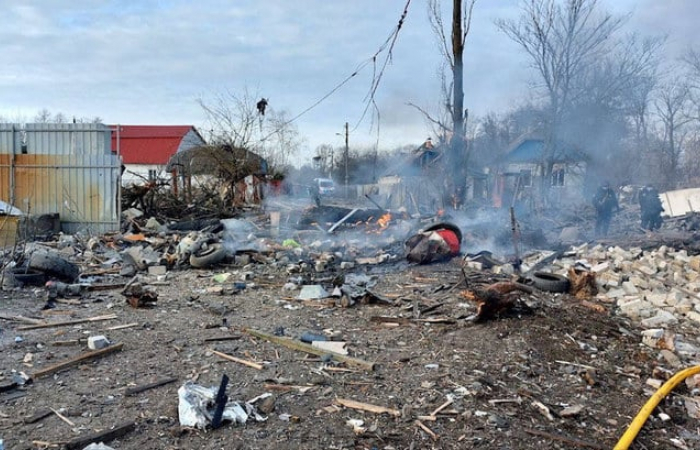
A leak from Russia’s federal statistics agency, Rosstat, indicates that at least 490,000 Russian military personnel have been killed since the country launched its full-scale invasion of Ukraine in February 2022. An investigation launched by independent media outlets Meduza and Mediazona estimates that the actual death toll could exceed 720,000 when accounting for unregistered deaths and soldiers missing in action, highlighting the scale of Russia’s losses after nearly five years of war. The data was obtained following a cyberattack on Rosstat carried out on November 1 by two hacking groups, Cyber Partisans of Belarus and Silent Crow. The groups reportedly accessed approximately 23 terabytes of information from the agency’s systems, including personal records, economic statistics and death registrations. Journalists subsequently analysed the leaked documents, which recorded military deaths registered through the end of August or September 2026, depending on the dataset examined. The confirmed figure does not reflect the full number of fatalities, as deaths are often registered months after they occur. Meduza and Mediazona used statistical modelling, comparing registration delays, death records and notices published by relatives searching for missing soldiers. Their analysis estimated that approximately 230,000 additional deaths had not yet been registered. The outlets also examined more than 160,000 missing-person notices and concluded that only around 10% of soldiers reported missing are subsequently confirmed alive. These findings brought their estimated death toll to approximately 720,000. The leaked records also revealed the circumstances surrounding military deaths. Around 92% were attributed to explosions and shrapnel, while firearm injuries accounted for approximately 1.3%. More than 1,000 soldiers reportedly died by suicide, while another 885 deaths were registered as firearm injuries with undetermined intent, a classification that may conceal additional suicides. Alcohol and drug use were also identified among the causes of military deaths. The losses have been disproportionately concentrated in poorer regions, particularly Siberia and Russia’s Far East. The Jewish Autonomous Region recorded nearly 1,000 military deaths per 100,000 inhabitants, compared with 63 per 100,000 in Moscow. Foreign recruitment has also contributed to Russia’s losses, with thousands of foreign nationals reportedly killed while fighting alongside Russian forces. The leaked Rosstat data also highlights the involvement of foreign nationals in Russia’s war against Ukraine, particularly from Central Asia and the South Caucasus. According to the BBC Russian Service and Mediazona, at least 7,421 foreign nationals have been killed fighting on Russia’s side. The casualties include nationals from Kazakhstan, Uzbekistan, Tajikistan, Kyrgyzstan and Turkmenistan, as well as Azerbaijan. The Kremlin has not published comprehensive figures for its military fatalities and has restricted access to official statistics. Meanwhile, the leaked data offers a rare insight into the human cost of the invasion, with estimates suggesting that Russia’s losses are substantially higher than previously suspected. Source: commonspace.eu with CNN (Atlanta) and Euronews (Brussels).