Region

Global

Stories in this section cover various issues and stories from all around the world.

Editor's choice
News
Zelensky to meet Trump on Sunday for crucial Ukraine talks

Zelensky to meet Trump on Sunday for crucial Ukraine talks

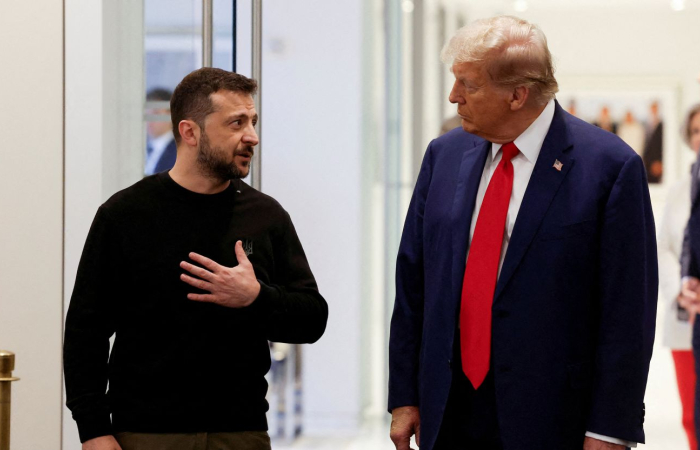
Ukrainian president Volodymyr Zelensky will meet with US president, Donald Trump, in Florida on Sunday (28 December) at 3.00 p.m. local time, in what many see as crucial talks on the future of Ukraine. Over the weekend, Russia has continued its attacks on  Ukraine, with the Ukranian air force warning that a drone and missile threat is in force for the entire country. Moscow currently controls about 75% of the Donetsk region, and some 99% of the neighbouring Luhansk.   Ukraine's president last met President Donald Trump at the White House in October Ukraine has sought to secure guarantees from the US as part of a peace deal, and Zelensky has suggested that a demilitarised "free economic zone" is a potential option for areas of Donbas that Russia has failed to take by force. On Friday, Zelensky told reporters that the 20-point plan was 90% complete: "Our task is to make sure everything is 100% ready." He wrote on social media: "We are not losing a single day. We have agreed on a meeting at the highest level – with President Trump in the near future. A lot can be decided before the new year." But in an interview with Politico, published on Friday, Trump said his Ukrainian counterpart "doesn't have anything until I approve it". "I think it's going to go good with him. I think it's going to go good with [Vladimir] Putin," Trump said. He also said he expects to speak with the Russian president "soon".

Filter archive

Publication date
Editor's choice
Monday Commentary
Monday Commentary: Multilateralism remains the best option, but the rules have changed

Monday Commentary: Multilateralism remains the best option, but the rules have changed

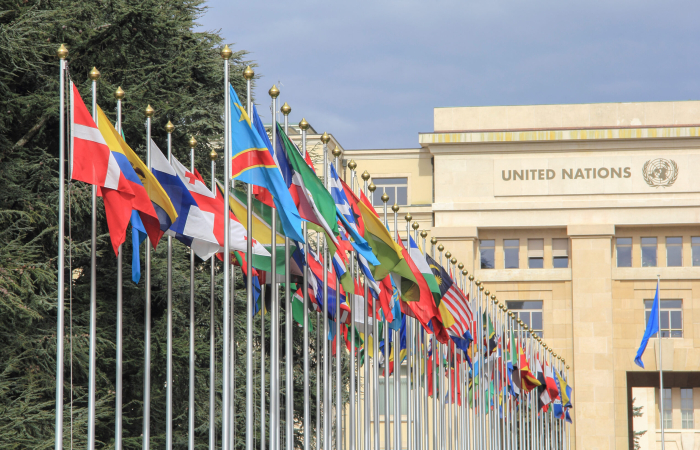
To listen to world leaders speaking these days, one would think that the world has embraced multilateralism, as the guiding principle in international relations. From Brussels to Beijing the concept is lauded, often to distinguish countries or groups of countries from Trumpian America, which has turned multilateralism into a bogey, and often a punching bag. But a closer look indicates that many countries are talking at cross-purposes.  At one end you have the European Union, itself a quintessential multilateralist project grouping 27  member states, some of whom had spent the last century fighting each other. At the other extreme, there is China, a country with great ambitions, and a great discourse that accompanies these ambitions, who however presents itself as the self-proclaimed leader of the global south. Put simply, multilateralism is when a group of countries agree to pursue a common goal in cooperation, and based on equality. On the European continent, multilateralism was for fifty years the way the continent conducted business, and two organisations became a clear expression of this multilateralist path: the European Union (EU), and the Organisation for Security and Co-operation in Europe (OSCE). They both operate by consensus. Beyond the continent, on a global level, the UN is in crisis. It will take a lot of time, effort, and money, to fix it. Three countries can help, or they can make matters worse: the US, Russia, and China. Trumpian America does not like the UN and has turned its back on multilateralism. The shameful US national security strategy creates a wedge between the US and Europe and sets a narrow vision of the world. Trump described the document as a "roadmap" to ensure the US remains "the greatest and most successful nation in human history". Russia is today in no position to counterbalance the US position, even if it wants to. So, its role in the future world order will be one of an opportunistic spoiler. China is another matter. It has the ambition to be a superpower and global player. It has good connections with the global south, although its claim of leadership is often overstated, and it pays lip service to multilateralism. It needs to be engaged, but with caution. Attempts at multilateral initiatives in the South, for example BRICS, are increasingly dysfunctional. Yet, multilateralism remains the best option for addressing the future. Some of the world's problems, such as climate change, simply cannot be tackled by one country, or one country working alone. But most of the institutions are greatly in need of an overhaul. The European Union must take the lead. It must also engage with China on a case-by-case, topic-by-topic basis. This will be a long and laborious process. But the rules of the game, and the assumptions that underpinned them, have changed, or at best are being challenged. It is time for a global rethink. (Click the image to read the full Monday Commentary).
Editor's choice
News
UN General Assembly demands that Russia returns Ukrainian children

UN General Assembly demands that Russia returns Ukrainian children

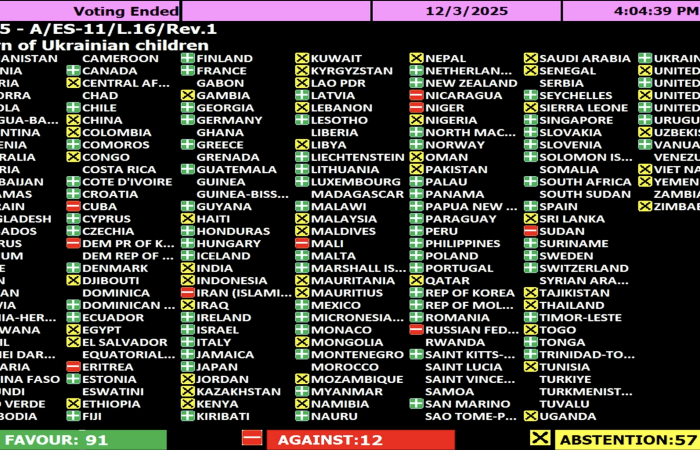
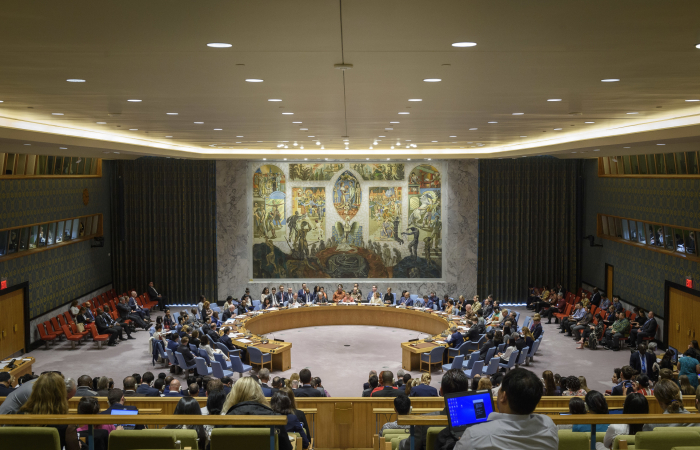
The UN General Assembly, in a vote on Wednesday (3 December) overwhelmingly voted in favour of a resolution demanding that Russia returns Ukrainian children kidnapped since the start of the Russian invasion in February 2022. 91 countries voted in favour of the resolution, 12 voted against, and 57 countries abstained or were not present. Russia and Belarus were joined by ten countries in voting against the resolution, namely, Iran, Cuba, Nicaragua, Burundi, Burkina Faso, Niger, Mali, Democratic Republic of Congo, Sudan, and Eritrea. From the South Caucasus, Georgia voted in favour of the resolution, but Armenia and Azerbaijan abstained, as did Turkiye and the five Central Asian republics. Also abstaining were the six Gulf monarchies and most Arab countries. The resolution calls for the immediate return of Ukrainian children who were deported to Russia. The Ukrainian government says more than 19,000 children have been taken away from Russian-occupied areas and elsewhere since Moscow's invasion began in February of 2022. The draft resolution submitted on Wednesday demands that Russia "ensure the immediate, safe and unconditional return" of the children. (Read more by clicking the image)
Editor's choice
Monday Commentary
Monday Commentary: Europe still needs the OSCE

Monday Commentary: Europe still needs the OSCE

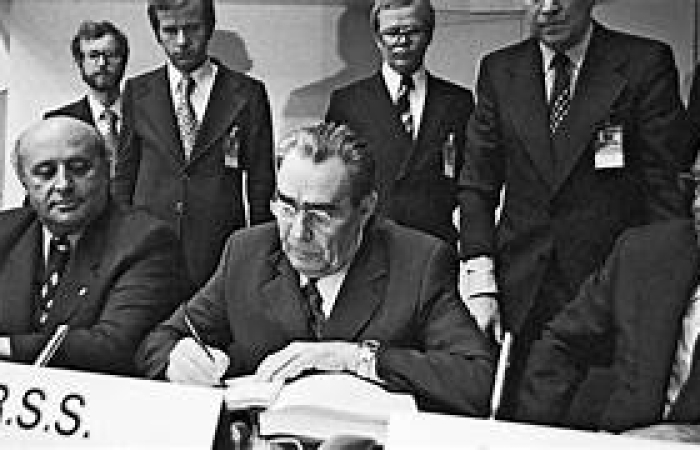
The Ministerial Council of the Organisation for Security and Co-operation in Europe (OSCE) will have its annual meeting in Vienna on 4-5 December. Foreign Ministers from the 57 member states, which also include the United States and Canada, and the Central Asian republics, and 11 partner countries, will congregate to discuss the future of European Security at a time when many believe that war in Europe over the next decade is likely. Ukraine is just a rehearsal for Russia’s ultimate ambitions. British diplomacy used to describe the OSCE as “the organization to manage Russia”. It has not done a good job of that, but this task remains paramount. The Ministerial Council will be the last major business of this year’s chairmanship, Finland, and will launch the new Chairmanship for 2026, Switzerland. The OSCE has been moribund for some time, and Russia’s invasion of Ukraine in February 2022, nearly ended it. But Europe still needs the OSCE, and there is hope that it will take a new lease of life in 2026. Switzerland has held the Chairmanship of the OSCE twice before, successfully. It has the experience, a wide network of embassies, and an able team in Bern, to successfully start what is likely to be a long and laborious journey. The new Chairman-in-office is Swiss Federal Foreign Minister Councillor, Ignazio Cassis. Cassis is also the current Vice President of the Swiss Confederation, and is fluent in Italian, English, German and French. Quite unusual also is the fact that currently the General Secretary of the OSCE is a Turk. Feridun Sinirlioğlu is an experienced Turkish diplomat, who has held the position for a year. Between them, Cassis and Sinirlioğlu will have to craft out the new OSCE, but in the end, it will largely depend on the will of the member states, including Russia. A new, reborn, OSCE, must understand that its core task remains European peace and security. It should resist the temptation of “looking busy” with a lot of secondary things. After peace and security return to Europe, it can consider other tasks. But we are far away from that yet. (Click the image to read the full commentary)
Editor's choice
News
Pope's visit to Türkiye and Lebanon has a strong ecumenical character, and places interreligious dialogue at its centre

Pope's visit to Türkiye and Lebanon has a strong ecumenical character, and places interreligious dialogue at its centre

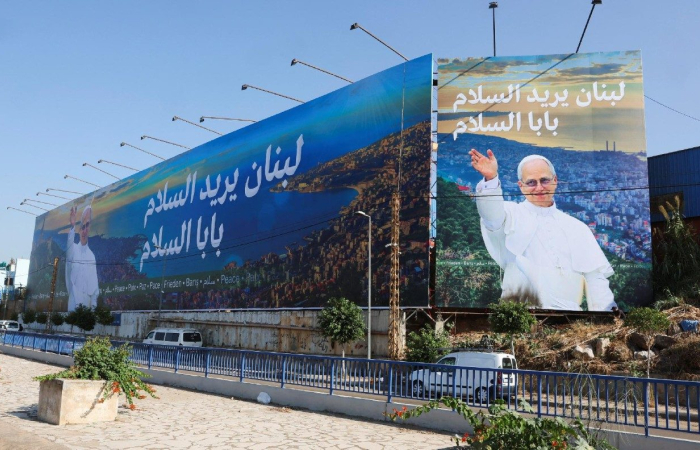
Pope Leo XIV has begun the first overseas trip of his pontificate, a six-day visit to Türkiye and Lebanon, which started yesterday (27 November) and ends on Tuesday (2 December). According to Vatican Radio, the visit "carries a strong ecumenical character and places interreligious dialogue at its centre. It will also be a moment of closeness to Christian communities and local populations across the region".   During nearly a week in the region, Pope Leo XIV will meet civil and religious authorities, visit mosques and ancient churches, pray at Beirut’s port in memory of the victims of the 2020 explosion, and hold private meetings with Presidents Recep Tayyip Erdoğan and Joseph Aoun.   A highlight of the visit will be a visit to Nicaea, where the Pope will mark the anniversary of the Council of Nicaea. Christians of many traditions recognise the Council of Nicaea as a foundation of shared faith. One of the most anticipated moments will be the Pope’s encounter with Lebanese youth in Bkerké, at the Maronite Patriarchate, a meeting expected to carry strong messages of hope in the Jubilee Year. A central event will be the ecumenical celebration in İznik, where the Pope and Ecumenical Patriarch Bartholomew will walk together toward the ruins of the Basilica of St Neophytos. The prayer, held before icons of Christ and the Council, will conclude with the lighting of a candle—a symbolic gesture of unity. The journey will also highlight interreligious engagement.   Memorable moments are expected throughout the trip: a wreath at Atatürk’s mausoleum, prayer inside the Blue Mosque, Mass at Istanbul’s Volkswagen Arena, the planting of a cedar at the presidential palace in Beirut, and prayer at the tomb of St Charbel in Lebanon. The Vatican said that "Pope Leo XIV’s pilgrimage to Türkiye and Lebanon aims to offer a voice of peace, unity, and hope at the heart of the Middle East."
Editor's choice
News
Turkiye to host COP31 in 2026

Turkiye to host COP31 in 2026

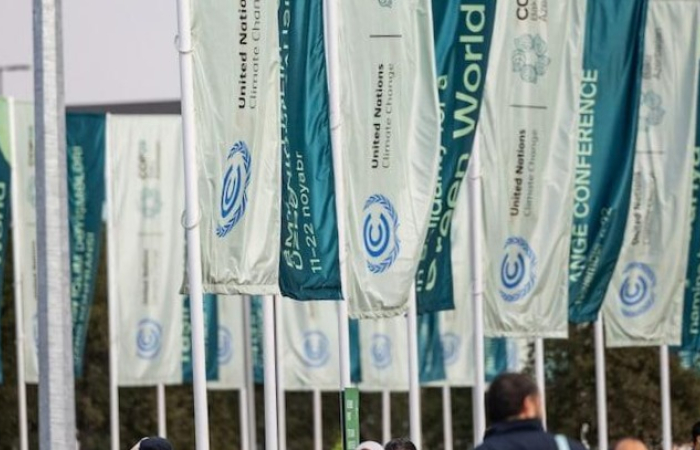
A consensus has emerged during COP 30, currently being held in Belan, Brazil, that COP 31 will be held in the Turkish city of Antalya, in 2026. In 2026 Turkiye will host another global event, the NATO leaders summit. Turkiye is set to host COP31 after reaching compromise with Australia.  The COP31 climate meeting is now expected to be held in Turkey after Australia dropped its bid to host the annual event. Under the UN rules, the right to host the COP in 2026 falls to a group of countries made up of Western Europe, Australia and others. A consensus must be reached but neither country had been willing to concede. Australia has now agreed to support the Turkish bid in return for their minister chairing the talks following negotiations at COP30, currently being held in Brazil. This unusual arrangement has taken observers by surprise. It is normal for a COP president to be from the host country and how this new partnership will work in practice remains to be seen. Australian Prime Minister Anthony Albanese has called the compromise with Turkey an "outstanding result" in an interview with the Australian Broadcasting Corporation (ABC), noting Pacific issues would be "front and centre". He added that he had spoken to Papua New Guinea Prime Minister James Marape and Prime Minister Rabuka of Fiji. There will be relief among countries currently meeting at COP30 in the Brazilian city of Belém that a compromise has been reached as the lack of agreement on the venue was becoming an embarrassment for the UN.
Editor's choice
News
Chinese using Linkedin to recruit agents in UK

Chinese using Linkedin to recruit agents in UK

An alert issued to MPs, peers and parliamentary staff by security services identified two LinkedIn profiles, which it says are used on behalf of the Chinese Ministry of State Security (MSS). It says they act as "civilian recruitment head-hunters", targeting individuals working in British politics to solicit "insider insights". UK Security minister Dan Jarvis has said the government will not tolerate "covert and calculated" attempts to interfere with the UK's sovereign affairs, after MI5 warned MPs of the risk from Chinese spies. Jarvis announced a package of measures in the House of Commons to tackle espionage threats to the UK.
Editor's choice
News
UN Security Council approves Gaza Peace Plan

UN Security Council approves Gaza Peace Plan

Unlike earlier drafts, the resolution references a credible pathway to Palestinian self-determination and statehood. It is language several council members pushed for. Israel strongly opposes the creation of a Palestinian state - a significant hurdle in the path to future statehood. Key Arab states had pressured drafters of the resolution to include Palestinian self-determination in the text. The UN secretary general's spokesperson stressed that the resolution needed to "translate... into concrete and urgently needed steps on the ground" and lead to "a political process for the achievement of the two-state solution". The US, the Palestinian Authority, and several Arab and Muslim-majority nations including Egypt, Saudi Arabia and Turkey have called for the quick adoption of the resolution. The Palestinian Authority (PA) said in a statement that the resolution's terms needed to be implemented "urgently and immediately". Russia and China did not exercise the vetoes they possess, but abstained to allow the resolution to pass, largely because the PA and eight other Arab and Muslim nations backed it.
Editor's choice
Monday Commentary
Monday Commentary: You heard about the G7. But have you heard about the G2?

Monday Commentary: You heard about the G7. But have you heard about the G2?

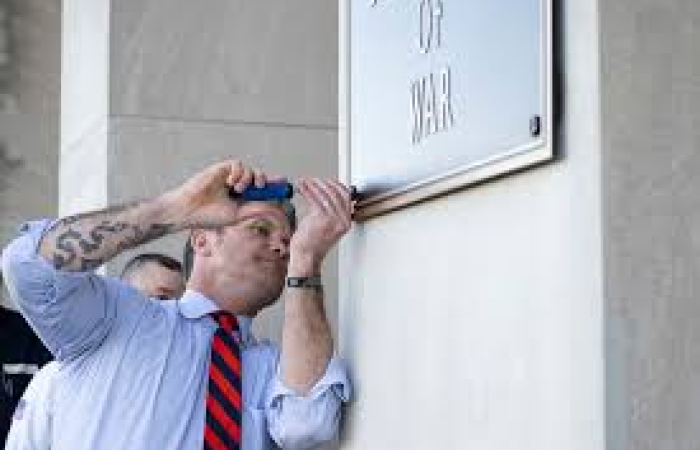
Countries that want to work together usually establish collaborative platforms, which enable them to meet regularly, co-ordinate positions and, if necessary take common action. The G7 is one such platform.  It is made up of the seven leading industrialized  countries: Canada, France, Germany, Italy, Japan, the United Kingdom, and the United States, as well as the European Union, and has been going since 1975. For a short time (1997 – 2014) there was also a G8 – which brought Russia in together with the G7. However this was ended when Russia annexed Crimea in 2014. Ahead of his meeting with the Chinese leader, Xi Jinping, on 29 October, Trump wrote on Social Media “The G2 will be convening shortly”. There was therefore surprise when Donald Trump last month started talking of the G2. So why is Trump talking about a G2? Trump wants, if possible, to avoid war with China under his watch. It will be too costly and unpredictable. Offering China the role of joint hegemon may win time, despite its risks. None of the actual problems will go away, in fact they may be exacerbated. In the meantime Trump wants to show China that the US has teeth, and it will use them if necessary. The rebranding of the Department of Defence into Department of War may seem like an expensive and reckless act of folly. But it sends a signal. Other more tangible actions like missile tests, withdrawal from test ban treaty, etc, do so too. Will there be a G2. It is highly unlikely. The Chinese have their own vision of the world in which so far Trump has been an irritant, rather than a problem. Their view of things is much longer than Trump’s. They will remain engaged, and they will talk. They are happy that the US president now looks at them as an equal. But they will not formalise the relationship. In the meantime, Donald Trump will continue sending contradictory signals hoping to confuse the Chinese. It is also unlikely.
Editor's choice
News
G7 foreign ministers issue wide ranging statement after their meeting in Canada

G7 foreign ministers issue wide ranging statement after their meeting in Canada

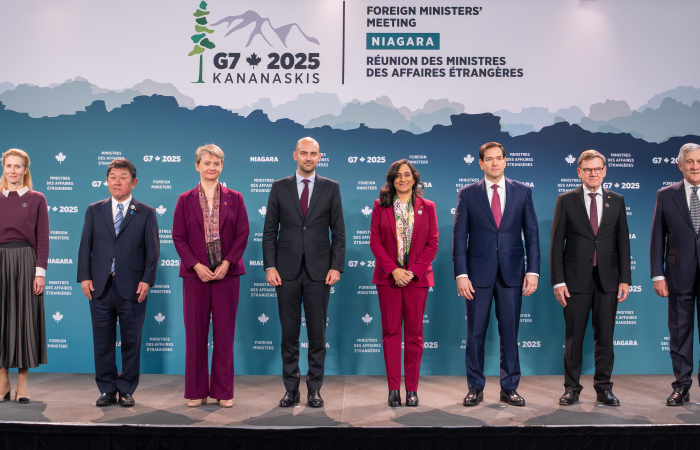
The Foreign Ministers of Canada, France, Germany, Italy, Japan, the United Kingdom, and the United States of America, and the High Representative of the European Union, met under Canada’s G7 Presidency, in Niagara, on November 11-12, 2025. The Foreign Ministers of Brazil, India, the Kingdom of Saudi Arabia, Mexico, the Republic of Korea, South Africa, and Ukraine, also joined the meeting for discussions on maritime security and prosperity, critical minerals, economic resilience and energy security. At the end of their meeting the G7 foreign ministers said: We reaffirmed our unwavering support for Ukraine in defending its territorial integrity and right to exist, and its freedom, sovereignty, and independence. We reiterated that an immediate ceasefire is urgently needed. We agreed that the current line of contact should be the starting point of negotiations. We remain committed to the principle that international borders must not be changed by force. We are increasing the economic costs to Russia, and exploring measures against countries and entities that are helping finance Russia’s war efforts. We condemned the provision to Russia of military assistance by DPRK and Iran, and the provision of weapons and dual-use components by China, a decisive enabler of Russia’s war. We acknowledged the ongoing discussions on a wide range of financing options, including further leveraging immobilised Russian Sovereign Assets in our jurisdictions in a coordinated way to support Ukraine. We strongly condemned Russia’s recent direct attacks on energy infrastructure and reaffirmed our support for Ukraine’s energy security. We reiterated our strong support for President Trump’s Comprehensive Plan to End the Gaza Conflict. We welcomed the ceasefire and the release of hostages. We stressed the urgency of returning the remains of deceased hostages. We also welcomed the increased flows of aid, but expressed concern about restrictions that remain in place. We called on all parties to allow for humanitarian assistance without interference at scale, through the United Nations and its agencies, and the Red Crescent, in addition to other international institutions and INGOs, as stipulated in President Trump’s plan. It is vital that all parties continue to engage constructively on the next steps outlined in the Comprehensive Plan, in pursuit of a political horizon for peaceful and prosperous co-existence for the Israeli and Palestinian peoples that advances comprehensive Middle East peace and stability. We will also continue to maintain attention on the situation in the West Bank. (click headline to read more)