Region

EU plus

Stories in this section cover the EU-27 countries plus the UK, Norway, Switzerland, Iceland, Liechtenstein, Monaco, Andorra and the Balkan Countries (Albania, Serbia, Montenegro, Bosnia-Herzegovina, Kosovo, North Macedonia).

Editor's choice
News
Germany accuses Russia of cyberattacks and disinformation campaign

Germany accuses Russia of cyberattacks and disinformation campaign

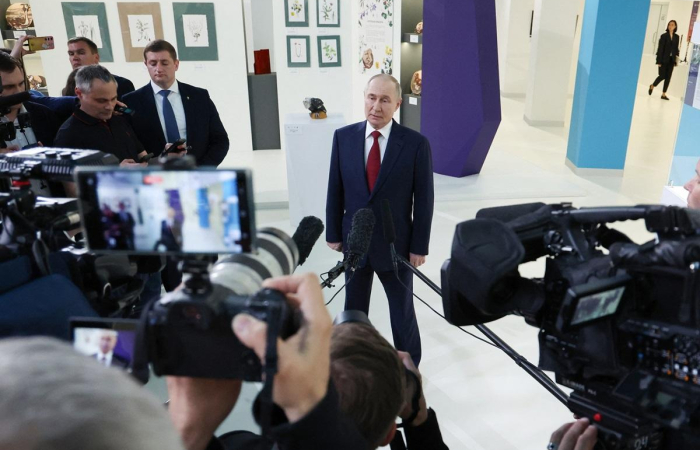
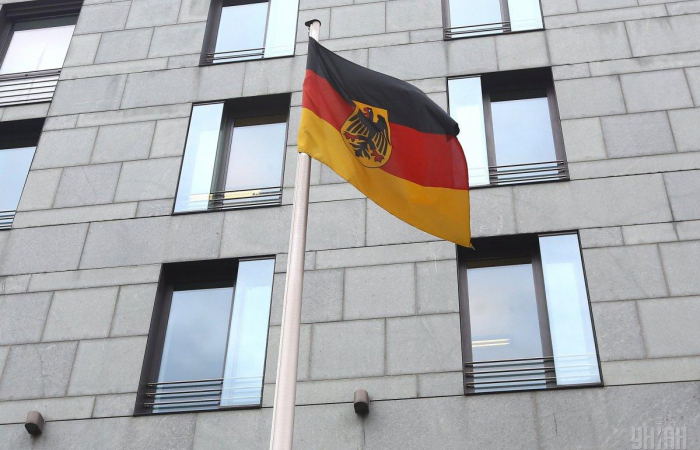
The German government holds Russia responsible for a cyberattack on German air traffic control, and for targeted disinformation campaigns before the last federal election. According to the German Foreign Office in Berlin, the incidents could be clearly attributed to the Russian military intelligence service, the GRU. In response, the Russian ambassador to Berlin was summoned to the Foreign Ministry. "We have been observing a massive increase in threatening hybrid activities by Russia for some time now," a spokesperson for the Foreign Ministry stated. These range from disinformation campaigns and espionage to cyberattacks and sabotage attempts. The aim is to divide society, sow distrust, and undermine confidence in democratic institutions. The spokesperson added that with these actions, Russia is "very concretely threatening our security, not only through its war of aggression against Ukraine, but also here in Germany."  The Foreign Ministry spokesperson explained that the cyberattack on air traffic control in August 2024 was clearly attributed to the hacker collective "APT28," known as "Fancy Bear," and to the responsibility of the Russian military intelligence service, the GRU. Furthermore, it could now be "conclusively stated" that Russia had attempted "to influence and destabilize both the last Federal election and the ongoing internal affairs of the Federal Republic of Germany." There was "absolutely irrefutable evidence" for this". The so-called "Storm 1516" campaign, which has been running since 2024, is allegedly backed by "reliable information" that the Moscow-based think tank "Center for Geopolitical Expertise" is behind it. The Center is also said to be supported by Russian military intelligence. Its primary aim is to influence democratic elections in the West. (Click the image to read more).
Editor's choice
News
NATO Chief says war is on Europe's doorstep, and warns against complacency

NATO Chief says war is on Europe's doorstep, and warns against complacency

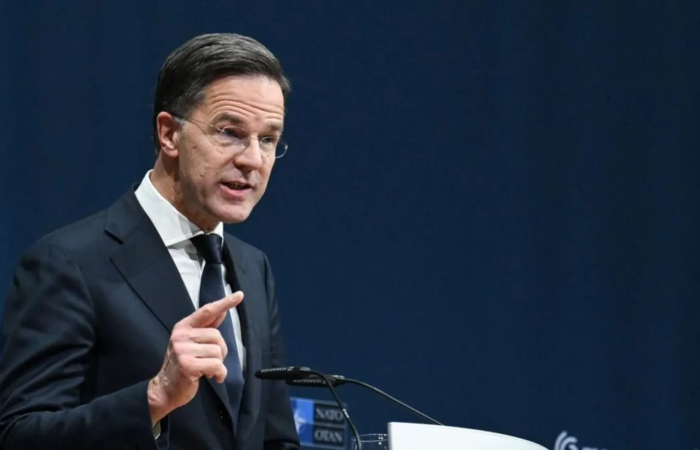
Russia could attack a NATO country within the next five years, the Secretary General of NATO, Mark Rutte, said in a stark new warning. "NATO's own defences can hold for now," Rutte warned in Berlin, but conflict was "next door" to Europe, and he feared "too many are quietly complacent, and too many don't feel the urgency, too many believe that time is on our side. "Russia is already escalating its covert campaign against our societies," Rutte said in a speech in Germany. "We must be prepared for the scale of war our grandparents or great-grandparents endured." Earlier this month, Russia's President Vladimir Putin said his country was not planning to go to war with Europe, but it was ready "right now" if Europe wanted to - or started a war. But similar reassurances were given by Moscow in 2022, just before 200,000 Russian troops crossed the border and invaded Ukraine. Putin has accused European countries of hindering US efforts to bring peace in Ukraine - a reference to the role Ukraine's European allies have recently played in trying to change a US peace plan to end the war, whose initial draft was seen as favouring Russia. But Putin was not sincere, Nato's secretary-general said in the German capital, Berlin. Supporting Ukraine, he added, was a guarantee for European security. "Just imagine if Putin got his way; Ukraine under the boot of Russian occupation, his forces pressing against a longer border with Nato, and the significantly increased risk of an armed attack against us." Russia's economy has been on a war footing for more than three years now - its factories churn out ever more supplies of drones, missiles and artillery shells. According to a recent report by the Kiel Institute for the World Economy, Russia has been producing each month around 150 tanks, 550 infantry fighting vehicles, 120 Lancet drones and more than 50 artillery pieces. The UK, and most of its Western allies, are simply not anywhere near this point. Analysts say it would take years for Western Europe's factories to come close to matching Russia's mass-production of weapons. "Allied defence spending and production must rise rapidly, our armed forces must have what they need to keep us safe," the Nato chief said.

Filter archive

Publication date
Editor's choice
News
Luhansk the first Ukrainian region fully occupied by Russia

Luhansk the first Ukrainian region fully occupied by Russia

A Russia-appointed official in Ukraine’s occupied Luhansk region was quoted by AP on Monday saying that Moscow’s forces have overrun all of it, one of four regions Russia annexed from Ukraine in September 2022. If confirmed, it would make Luhansk the first Ukrainian region fully occupied by Russia after more than three years of war with international peace efforts led by the US failing to make progress on halting the fighting. Russian President Vladimir Putin has effectively rejected a ceasefire and hasn’t budged from his demands, which include Moscow’s control over the four illegally annexed regions. 
Editor's choice
News
Denmark takes over EU Presidency with a focus on Security, Migration and Enlargement

Denmark takes over EU Presidency with a focus on Security, Migration and Enlargement

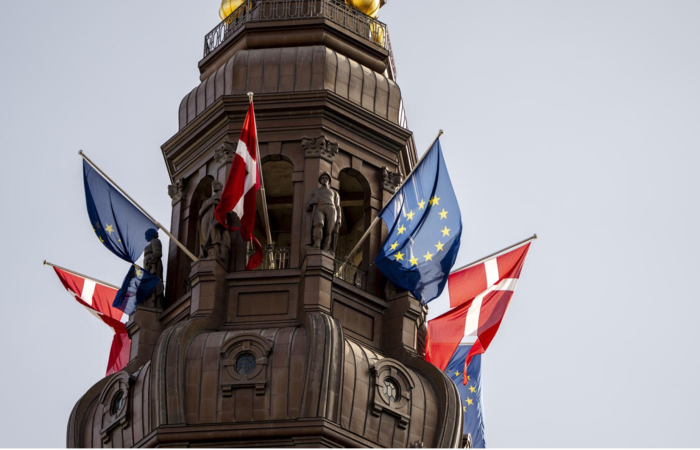
On July 1, Denmark takes over the Presidency of the Council of the European Union for the eighth time. Under the motto ‘A Strong Europe in a Changing World’, the Danish Presidency said its programme of work will ensure that the EU takes responsibility for its own security, while also strengthening its competitiveness. Prime Minister Mette Frederiksen said that priority will be given to boosting defence capabilities in Europe amid Russia's war in Ukraine and US threats to Greenland, a Danish autonomous territory. Pushing countries to keep promises to boost defence spending and bolstering Europe's "dangerous" security will top Denmark’s agenda as it takes over the rotating presidency on Tuesday, according to Prime Minister Mette Frederiksen.
Editor's choice
Monday Commentary
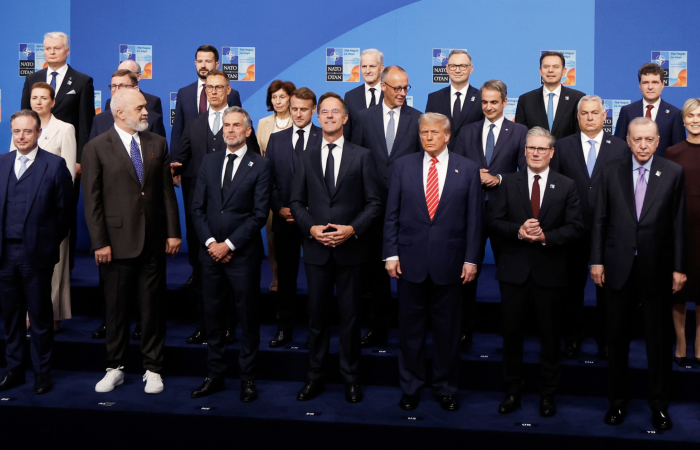
Monday Commentary: NATO Summit in The Hague II: everyone survived, now all eyes on Türkiye

Monday Commentary: NATO Summit in The Hague II: everyone survived, now all eyes on Türkiye

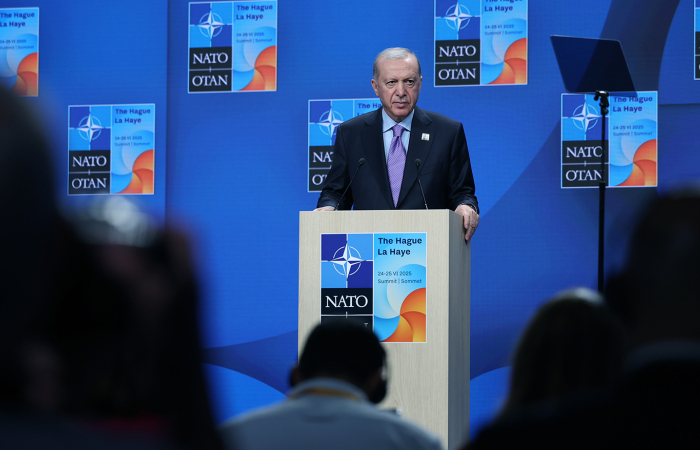
The Nato Summit held in The Hague on 24-25 June was a failure, wrapped in success. It was a success because it avoided public display of divisions, mainly by avoiding issues: it was the shortest summit anyone can remember; it also had a very short final statement that basically had two points, the first a re-commitment to article 5 of the North Atlantic Charter and the principle that an attack on one will be considered an attack on all. The fact that Nato leaders in the Hague had felt the need to re-emphasise this should be a cause of worry not celebration, but in the end, it is good that it was said. The second outcome, the one that received most attention, was the commitment of European countries to spend more on their defence: 5 per cent of GDP, of which 3.5 per cent on hard defence, and 1.5 per cent on related ancillary areas such as infrastructure. You may, if you want, believe that this was a response to US President Donald Trump's insistence. Or, if you are more prudent, understand that countries that matter – Germany, France, Poland and the Scandinavian countries had decided on this course of action quite separately, and as a response to Russia’s invasion of Ukraine, which was a wake-up call. Finland and Sweden’s decision to abandon their neutrality, and join NATO was taken long before Trump returned to the White House. The EU’s decision to spend massively on defence was always to ensure that other European countries are part of this process, willy-nilly.
Editor's choice
News
Several countries bordering Russia will leave the Ottawa Convention which bans land mines

Several countries bordering Russia will leave the Ottawa Convention which bans land mines

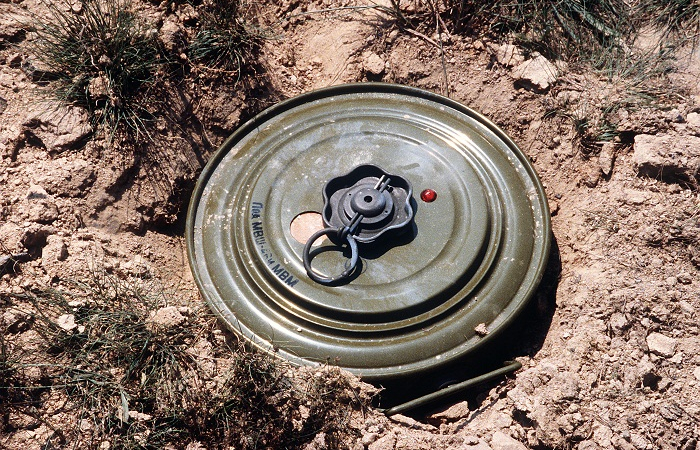
Several countries that border Russia intend to leave the Ottawa Convention which bans anti personnel land mines. They include EU member states Finland, Poland, Latvia, Lithuania and Estonia, as well as Ukraine. Russia has not signed the Ottawa treaty and continues to stockpile and use landmines. Ukraine is withdrawing from the Ottawa Convention, which prohibits the use, stockpiling and production of anti-personnel mines, according to Roman Kostenko, People's Deputy of the Golos party and Secretary of the Committee on National Security, Defense and Intelligence of the Verkhovna Rada of Ukraine . He said this is a step that the realities of war have long required. "Russia is not a party to this convention and is massively using mines against our military and civilians. We cannot remain constrained in conditions where the enemy has no restrictions," the MP noted.
Editor's choice
News
Georgian Parliament Speaker says EU Funding is Promoting ‘Hatred, Violence, and Propaganda’ in Georgia

Georgian Parliament Speaker says EU Funding is Promoting ‘Hatred, Violence, and Propaganda’ in Georgia

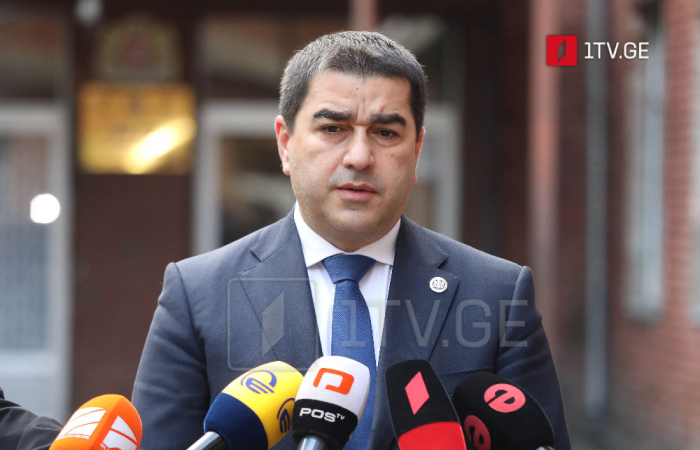
Georgian Parliament Speaker Shalva Papuashvili has severely criticised how funding from the European Union is being implemented in Georgia saying that ministers from European Union Member States and EU Commissioners are making unjustified critical statements about Georgia while hatred, violence, and propaganda are being encouraged in the country with EU funding. According to the Georgian Public Broadcaster, Papuashvili said he was troubled by the narrative heard from various ministers from EU Member States before the meeting of the Foreign Affairs Council held on 23rd June claiming that “disinformation is being spread about some alleged democratic backsliding or walking the wrong path”.