Region

EU plus

Stories in this section cover the EU-27 countries plus the UK, Norway, Switzerland, Iceland, Liechtenstein, Monaco, Andorra and the Balkan Countries (Albania, Serbia, Montenegro, Bosnia-Herzegovina, Kosovo, North Macedonia).

Editor's choice
News
Germany accuses Russia of cyberattacks and disinformation campaign

Germany accuses Russia of cyberattacks and disinformation campaign

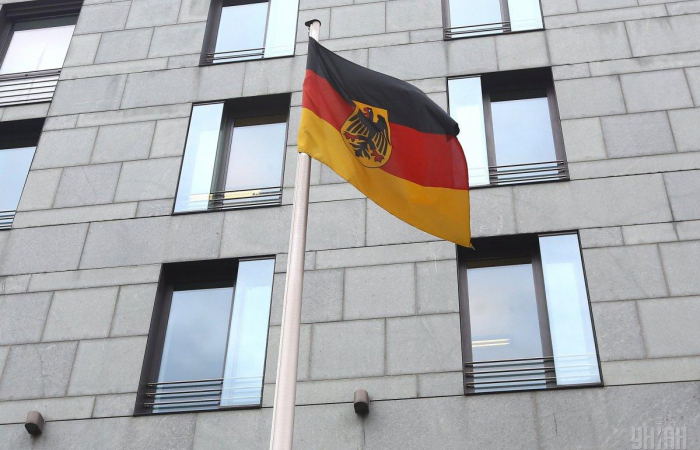
The German government holds Russia responsible for a cyberattack on German air traffic control, and for targeted disinformation campaigns before the last federal election. According to the German Foreign Office in Berlin, the incidents could be clearly attributed to the Russian military intelligence service, the GRU. In response, the Russian ambassador to Berlin was summoned to the Foreign Ministry. "We have been observing a massive increase in threatening hybrid activities by Russia for some time now," a spokesperson for the Foreign Ministry stated. These range from disinformation campaigns and espionage to cyberattacks and sabotage attempts. The aim is to divide society, sow distrust, and undermine confidence in democratic institutions. The spokesperson added that with these actions, Russia is "very concretely threatening our security, not only through its war of aggression against Ukraine, but also here in Germany."  The Foreign Ministry spokesperson explained that the cyberattack on air traffic control in August 2024 was clearly attributed to the hacker collective "APT28," known as "Fancy Bear," and to the responsibility of the Russian military intelligence service, the GRU. Furthermore, it could now be "conclusively stated" that Russia had attempted "to influence and destabilize both the last Federal election and the ongoing internal affairs of the Federal Republic of Germany." There was "absolutely irrefutable evidence" for this". The so-called "Storm 1516" campaign, which has been running since 2024, is allegedly backed by "reliable information" that the Moscow-based think tank "Center for Geopolitical Expertise" is behind it. The Center is also said to be supported by Russian military intelligence. Its primary aim is to influence democratic elections in the West. (Click the image to read more).
Editor's choice
News
NATO Chief says war is on Europe's doorstep, and warns against complacency

NATO Chief says war is on Europe's doorstep, and warns against complacency

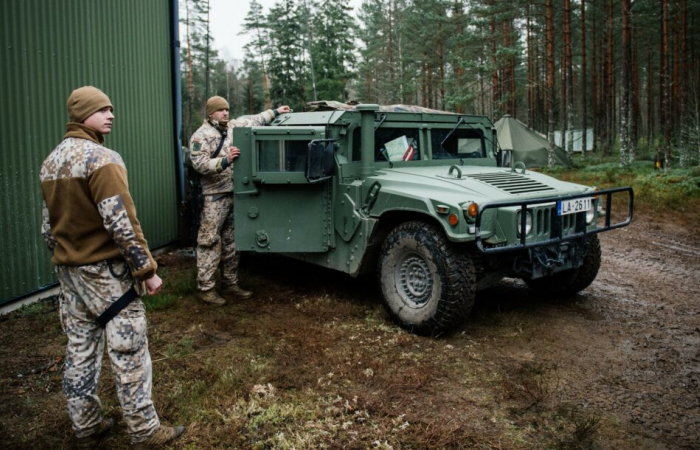
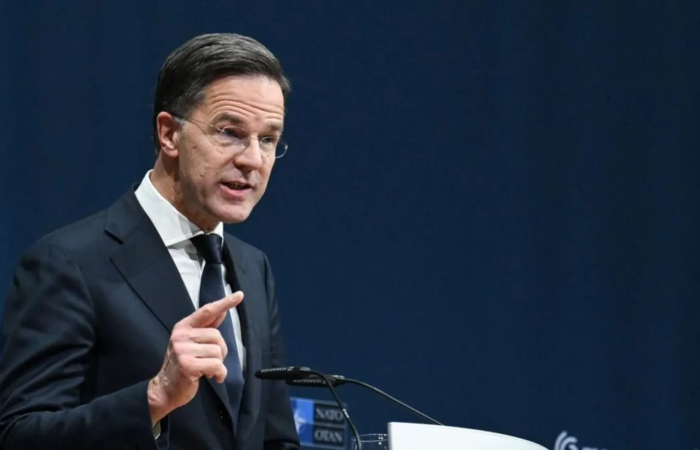
Russia could attack a NATO country within the next five years, the Secretary General of NATO, Mark Rutte, said in a stark new warning. "NATO's own defences can hold for now," Rutte warned in Berlin, but conflict was "next door" to Europe, and he feared "too many are quietly complacent, and too many don't feel the urgency, too many believe that time is on our side. "Russia is already escalating its covert campaign against our societies," Rutte said in a speech in Germany. "We must be prepared for the scale of war our grandparents or great-grandparents endured." Earlier this month, Russia's President Vladimir Putin said his country was not planning to go to war with Europe, but it was ready "right now" if Europe wanted to - or started a war. But similar reassurances were given by Moscow in 2022, just before 200,000 Russian troops crossed the border and invaded Ukraine. Putin has accused European countries of hindering US efforts to bring peace in Ukraine - a reference to the role Ukraine's European allies have recently played in trying to change a US peace plan to end the war, whose initial draft was seen as favouring Russia. But Putin was not sincere, Nato's secretary-general said in the German capital, Berlin. Supporting Ukraine, he added, was a guarantee for European security. "Just imagine if Putin got his way; Ukraine under the boot of Russian occupation, his forces pressing against a longer border with Nato, and the significantly increased risk of an armed attack against us." Russia's economy has been on a war footing for more than three years now - its factories churn out ever more supplies of drones, missiles and artillery shells. According to a recent report by the Kiel Institute for the World Economy, Russia has been producing each month around 150 tanks, 550 infantry fighting vehicles, 120 Lancet drones and more than 50 artillery pieces. The UK, and most of its Western allies, are simply not anywhere near this point. Analysts say it would take years for Western Europe's factories to come close to matching Russia's mass-production of weapons. "Allied defence spending and production must rise rapidly, our armed forces must have what they need to keep us safe," the Nato chief said.

Filter archive

Publication date
Editor's choice
News
Kosovo-Serbia tensions defused after a flurry of overnight diplomatic activity

Kosovo-Serbia tensions defused after a flurry of overnight diplomatic activity

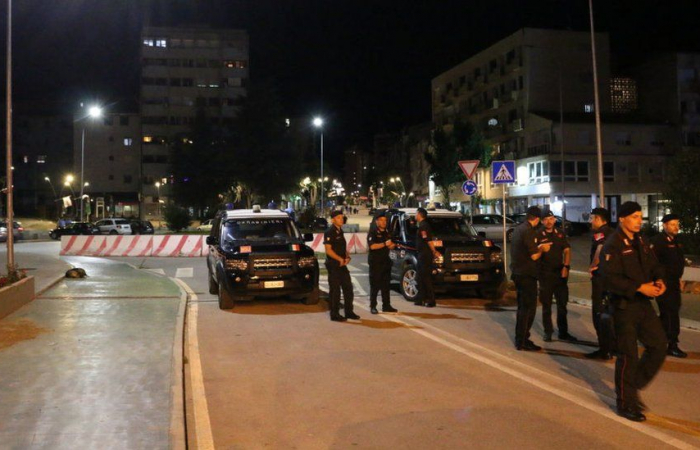
A flurry of diplomatic activity on Sunday night helped defuse tensions between Kosovo and Serbia which saw both sides mobilising military forces. The crisis revolved around a decision of the government of Kosovo that would introduce new rules requiring Serbs in Kosovo to swap their Serbian-issued car number plates for Kosovan-issued ones. The rules were due to come into force at midnight on Monday. But on Sunday ethnic Serbs in the north barricaded roads and armed men fired shots in protest. The rules' implementation has now been delayed for a month following consultations with the US and EU. NATO described the situation as "tense" as hundreds of ethnic-Serbs parked trucks, tankers and other vehicles near two key border crossings with Serbia in protest over the new rules, forcing the police to close the two crossings. The mission led by the alliance in Kosovo, KFOR, said it was "prepared to intervene if stability is jeopardised, in accordance with its mandate, coming from UNSC resolution 1244 of 1999."
Editor's choice
News
Russia restarts limited gas supplies to Germany from Nord Stream I

Russia restarts limited gas supplies to Germany from Nord Stream I

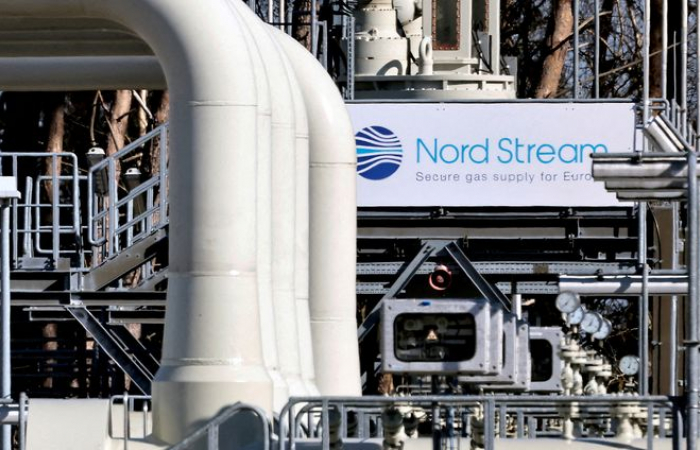
Russia has restarted gas supplies to Germany via the German-Russian Nord Stream I gas pipeline on Thursday (21 July). The gas pipeline had been closed for the past ten days for the usual annual maintenance, but it was uncertain whether gas would flow via the pipeline again. The Russian state-owned gas company Gazprom had previously informed European clients by letter that it cannot guarantee that deliveries will be resumed after the maintenance work. It invoked "exceptional circumstances". The European Commission therefore feared that Russia would permanently stop the gas supplies from Nord Stream I after the maintenance. European Commissioner Johannes Hahn said this week that the European Commission was even working on the "assumption that the gas supplies will not be resumed". Gazprom already reduced gas supplies to Germany by 60 per cent in June. It is not clear whether resumed deliveries will be at the same level as before the maintenance. At that time, they amounted to 67 million cubic metres per day, about 40 percent of Nord Stream I's maximum capacity. Since the supply resumed, the gas price has fallen slightly, first by 6.5 percent, after which the price stabilised around 4 percent. 
Editor's choice
News
EU and Azerbaijan seal strategic partnership agreement on energy security

EU and Azerbaijan seal strategic partnership agreement on energy security

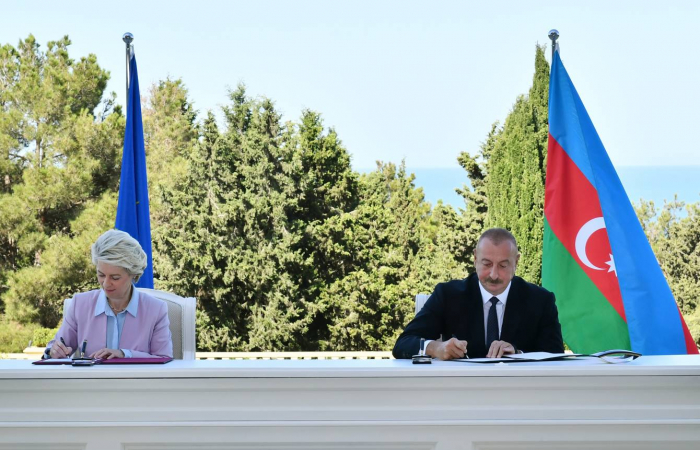
After years of uncertainty in EU-Azerbaijan relations, co-operation between the two sides has finally been put on a strategic footing with the signing in Baku on Monday (19 July) of a new "Memorandum of Understanding on a Strategic Partnership in the Field of Energy". The signing of the MOU comes at a crucial time when Europe is frantically trying to replace gas and other energy supplies from Russia, in the aftermath of the latter's invasion of Ukraine. A report on the website of the European Commission said that the memorandum signed by the two Presidents today includes a commitment to double the capacity of the Southern Gas Corridor to deliver at least 20 billion cubic metres to the EU annually by 2027. This will contribute to the diversification objectives in the REPowerEU Plan and help Europe to end its dependency on Russian gas. Based on the strengthened energy cooperation, Azerbaijan is already now increasing deliveries of natural gas to the EU, from 8.1 billion cubic metres in 2021 to an expected 12 bcm in 2022. commonspace.eu political editor said in a comment that "EU-Azerbaijan relations need to continue to be build, based on mutual respect and recognising the importance of people to people contacts for the future of the relationship. The EU on its part, especially now that the stakes are higher, needs to put more efforts in supporting lasting peace in the region. The energy agenda has its specific importance and aspects, but it cannot be seen in isolation of wider issues."
Editor's choice
News
NATO countries sign the accession documents for Finalnd and Sweden to join the alliance

NATO countries sign the accession documents for Finalnd and Sweden to join the alliance

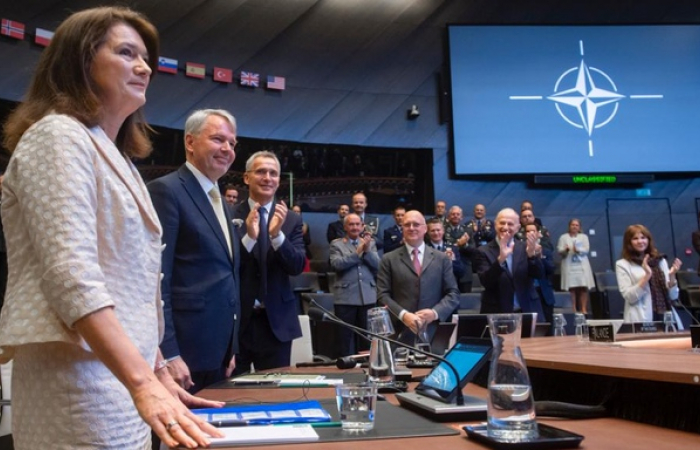
NATO Ambassadors signed the Accession Protocols for Finland and Sweden at NATO Headquarters on Tuesday (5 July 2022), in the presence of Finnish Foreign Minister Pekka Haavisto and Swedish Foreign Minister Ann Linde. The protocols now need to be approved by the countries of all thirty member states, and this procedure will take a while. But for many practical purposes Sweden and Finland are now members of the alliance, breaking with decades of neutrality as Europe continues to face Russian aggression against Ukraine. NATO Secretary General, Jens Stoltenberg said that NATO’s door remains open to European democracies who are ready and willing to contribute to our shared security: “With 32 nations around the table, we will be even stronger and our people will be even safer, as we face the biggest security crisis in decades.”
Editor's choice
News
NATO summit marks a new beginning for the organisation

NATO summit marks a new beginning for the organisation

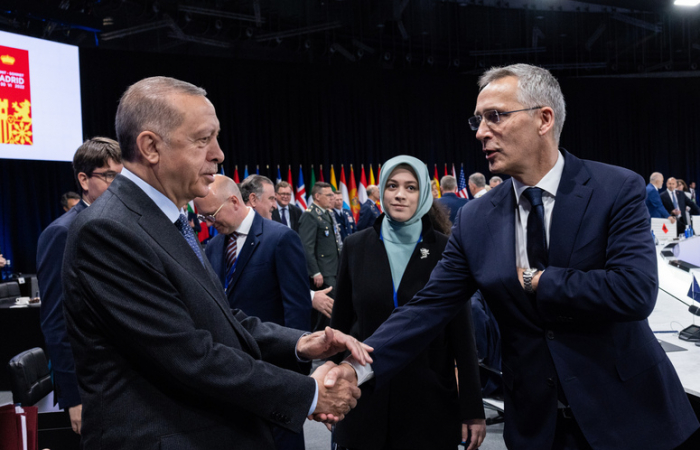
The NATO Summit in Madrid drew to a close on Thursday (30 June 2022) with decisions to transform and strengthen the Alliance. Secretary General Jens Stoltenberg said: “The decisions we have taken in Madrid will ensure that our Alliance continues to preserve peace, prevent conflict, and protect our people and our values. Europe and North America, standing together in NATO.” NATO leaders agreed on a fundamental shift in NATO’s deterrence and defence, with strengthened forward defences, enhanced battlegroups in the eastern part of the Alliance, and an increase in the number of high readiness forces to well over 300,000. Leaders also agreed to invest more in NATO and to increase common funding. During the Summit, NATO’s closest partners Finland and Sweden were invited to join the Alliance, a significant boost to Euro-Atlantic security. Allies further agreed on long-term support for Ukraine through a strengthened Comprehensive Assistance Package.
Editor's choice
Commentary
Commentary: A historic decision leaves Ukrainians delighted, Moldovans ecstatic and Georgians grumpy

Commentary: A historic decision leaves Ukrainians delighted, Moldovans ecstatic and Georgians grumpy

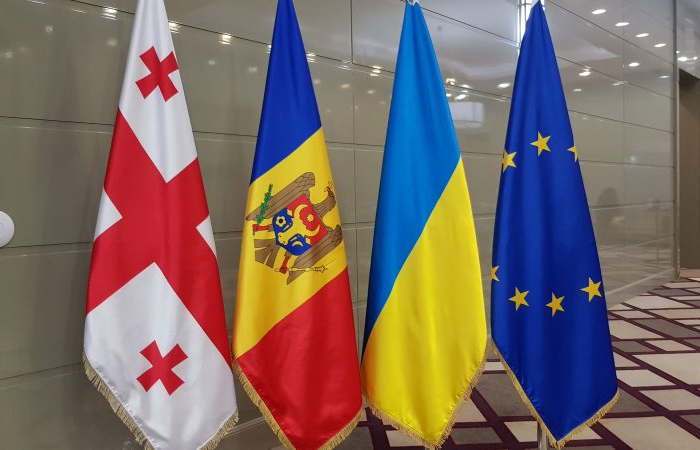
the European Council which gathers the 27 EU member states and the institutions, agreed to give Ukraine and Moldova candidate status with immediate effect. It gave Georgia "a membership perspective", with candidate status in the future if they can get their act together quickly. The Ukrainians were delighted. President Zelensky described it as a victory and promised not to rest until Russia’s defeat and full membership had been secured. In Moldova, the pro European government was ecstatic. Things had moved much faster than they had anticipated. In Georgia the situation is different, and the country is somewhat grumpy. Georgians do not  like to be last, and in a sense in this process at which they were until last year at the centre, they find themselves lagging behind the other two trio countries. The government has tried to put on a brave face saying that being given a membership perspective was a victory for Georgia too. The opposition accuses the government of squandering a historic opportunity which will have long lasting impact. In many ways both are right. An EU membership perspective is important for Georgia, even if it is largely an abstract term. It consolidates the relationship. But it would have been much better for Georgia if they had been given candidate status with the others. The ball is now in the court of the Georgian politicians, and the world will be watching.