Latvia introduces compulsory military service due to tensions with Russia

The Latvian Minister of Defence, Artis Pabriks, has urged the imposition of compulsory military service following the increasing tensions with neighboring Russia due to the war in Ukraine.

“The current military system of Latvia has reached its limit. Meanwhile, we have no reason to think that Russia will change its behavior”, said Pabrik.

The minister also announched plans to build a new military base near the southeastern city of Jekabpils, located closer to the Russian border than the existing Adazi base.

The system will be phased in over the next five years. People between the ages of 18 and 27 who are called up can choose to join the army or the National Guard. If they do not want that, there is an alternative service where they can work for a government-affiliated organisation. The remuneration is a maximum of EUR 400 per month. The new conscription military service only applies to men.

Since 2007, the Latvian army has consisted of active professional soldiers and part-time  National Guard volunteers who reinforce the infantry on weekends. In total, the armed forces have 7500 members. They are supported by 1500 NATO troops.
 

source: commonspace.eu with agencies
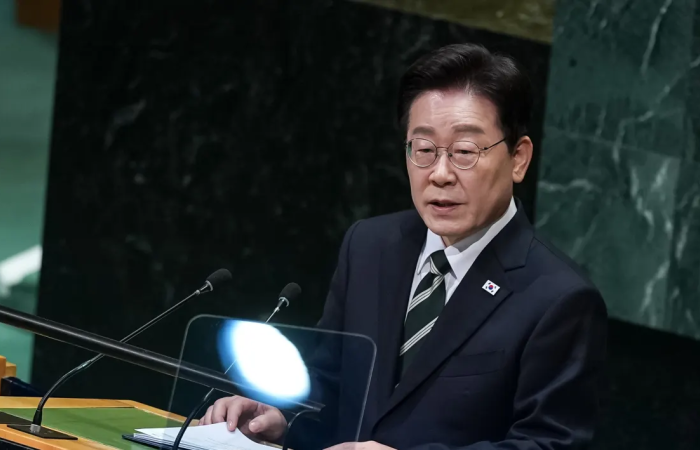
photo: Soldiers from the Latvian National Armed Forces stand next to an armored Hummer vehicle at Hagshult Airbase, Sweden. Getty Images

Related articles

Popular

Editor's choice
Interview
Thursday Interview: Murad Muradov

Thursday Interview: Murad Muradov

Today, commonspace.eu starts a new regular weekly series. THURSDAY INTERVIEW, conducted by Lauri Nikulainen, will host  persons who are thinkers, opinion shapers, and implementors in their countries and spheres. We start the series with an interview with Murad Muradov, a leading person in Azerbaijan's think tank community. He is also the first co-chair of the Action Committee for a new Armenian-Azerbaijani Dialogue. Last September he made history by being the first Azerbaijani civil society activist to visit Armenia after the 44 day war, and the start of the peace process. Speaking about this visit Murad Muradov said: "My experience was largely positive. My negative expectations luckily didn’t play out. The discussions were respectful, the panel format bringing together experts from Armenia, Azerbaijan, and Turkey was particularly valuable during the NATO Rose-Roth Seminar in Yerevan, and media coverage, while varied in tone, remained largely constructive. Some media outlets though attempted to represent me as more of a government mouthpiece than an independent expert, which was totally misleading.  Overall, I see these initiatives as important steps in rebuilding trust and normalising professional engagement. The fact that soon a larger Azerbaijani civil society visits to Armenia followed, reinforces the sense that this process is moving in the right direction." (click the image to read the interview in full)