Region

EU plus

Stories in this section cover the EU-27 countries plus the UK, Norway, Switzerland, Iceland, Liechtenstein, Monaco, Andorra and the Balkan Countries (Albania, Serbia, Montenegro, Bosnia-Herzegovina, Kosovo, North Macedonia).

Editor's choice
News
European leaders set out their plan for Ukraine

European leaders set out their plan for Ukraine

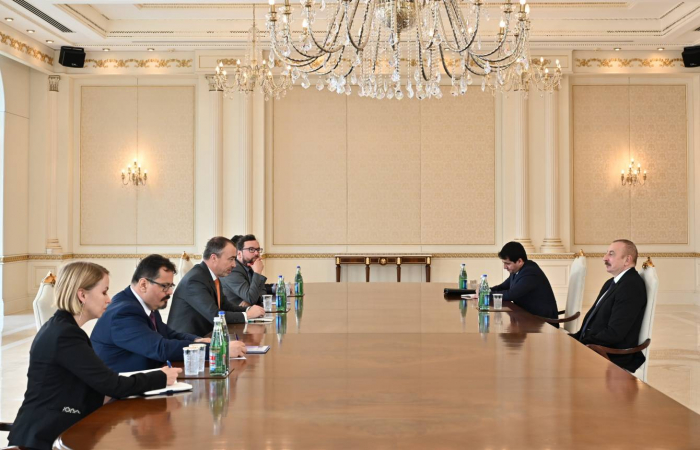
The leaders of Germany, Denmark, Finland, France, Italy, Netherlands, Norway, Poland, Sweden, and United Kingdom, together with the President of the European Council, and the President of the European Commission, o  Monday (15 December) issued a statement, outlining their plan for Ukraine. In their statement, Chancellor Merz, Prime Minister Frederiksen, President Stubb, President Macron, Prime Minister Meloni, Prime Minister Schoof, Prime Minister Støre, Prime Minister Tusk, Prime Minister Kristersson, Prime Minister Starmer, as well as President Costa and President von der Leyen spoke about "Peace for Ukraine". The Leaders welcomed significant progress on President Trump’s efforts to secure a just and lasting peace in Ukraine. They also welcomed the close work between President Zelenskyy’s and President Trump’s teams as well as European teams over the recent days and weeks. They agreed to work together with President Trump and President Zelenskyy to get to a lasting peace which preserves Ukrainian sovereignty and European security. Leaders appreciated the strong convergence between the United States, Ukraine and Europe. Leaders agreed that ensuring the security, sovereignty, and prosperity of Ukraine was integral for wider Euro-Atlantic security. They were clear that Ukraine and its people deserved a prosperous, independent, and sovereign future, free from fear of future Russian aggression. Both the US and European leaders committed to work together to provide robust security guarantees and economic recovery support measures for Ukraine in the context of an agreement on ending the war. This would include commitments to: Provide sustained and significant support to Ukraine to build its armed forces, which should remain at a peacetime level of 800,000 to be able to deter conflict and defend Ukraine’s territory. A European-led ‘multinational force Ukraine’ made up from contributions from willing nations within the framework of the Coalition of the Willing and supported by the US. It will assist in the regeneration of Ukraine’s forces, in securing Ukraine’s skies, and in supporting safer seas, including through operating inside Ukraine. (Click the image to read the statement in full).


Filter archive

Publication date
Editor's choice
News
Brussels hosts 6th EU-GCC Business forum

Brussels hosts 6th EU-GCC Business forum

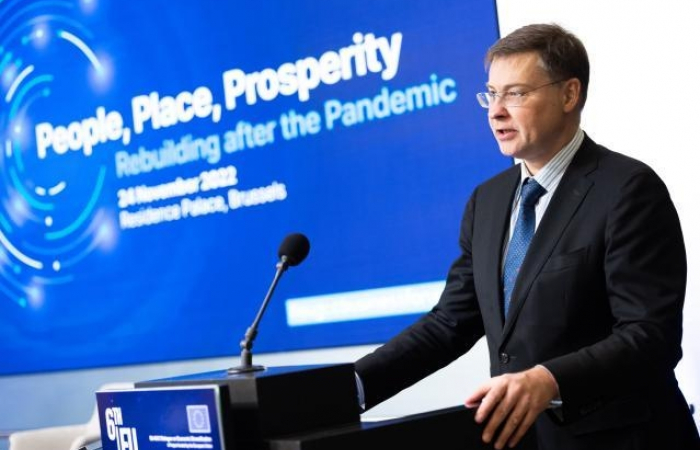
The EU and the GCC have underlined their commitment to expanding cooperation during the sixth joint business forum held at the Residence Palace in the European Quarter of Brussels on Thursday, 24 November.  "This meeting is both welcome and timely, given the very challenging global developments we have faced, and continue to face, in 2022," said European Commission Executive Vice-President Valdis Dombrovskis in his keynote speech to the gathering. Dombrovskis said that "in this challenging environment, the EU is fully committed to strengthening economic ties between our two regional blocs. By developing our areas of mutual interest, by working in a more collaborative way, we can achieve real benefits.  "The EU is guided in this important work by our Communication on a 'Strategic Partnership with the Gulf, published in May of this year. The strategic aim of this roadmap is clear: we want to broaden and deepen our cooperation with the GCC and its member countries. We view the Gulf as a dynamic neighboring region, and an important gateway between Europe, Asia and Africa."
Editor's choice
News
Criminal networks in the Western Balkans have become key actors in both regional and European Union drug markets

Criminal networks in the Western Balkans have become key actors in both regional and European Union drug markets

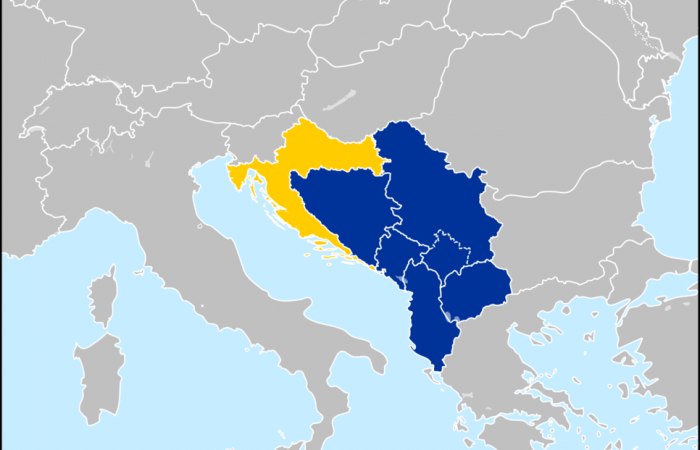
Criminal networks in the Western Balkans have become key actors in both regional and European Union drug markets, a report by the European Monitoring Centre on Drugs and Drug Addiction (EMCDDA) said on Monday. The report says that the strategic geographical position of countries such as Albania, Montenegro, North Macedonia, Serbia, Bosnia and Herzegovina, and Kosovo, combined with high demand for drugs, particularly in the European Union and Turkey, have accelerated criminal groups’ operations. “Some EU countries are located on trafficking routes that pass through the Western Balkans before re-entering the EU. This means that trafficking flows can be complex,” the agency said in the report which is part of a bigger regional study conducted between 2019 and 2022. Sizeable diasporas from the region in the EU also provide a pool of individuals who can be exploited or recruited into these networks, the report said. The EMCDDA report discusses Western Balkan groups’ operational presence in Belgium and the Netherlands, with the ports of Antwerp and Rotterdam being important for drug distribution and import into the EU.