Region

EU plus

Stories in this section cover the EU-27 countries plus the UK, Norway, Switzerland, Iceland, Liechtenstein, Monaco, Andorra and the Balkan Countries (Albania, Serbia, Montenegro, Bosnia-Herzegovina, Kosovo, North Macedonia).

Editor's choice
News
Germany accuses Russia of cyberattacks and disinformation campaign

Germany accuses Russia of cyberattacks and disinformation campaign

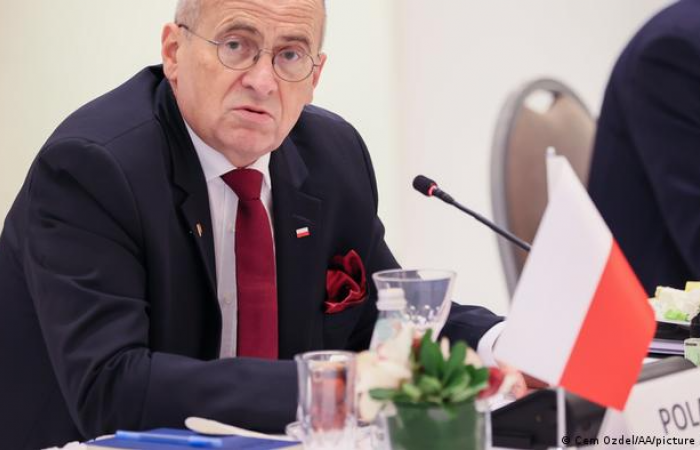
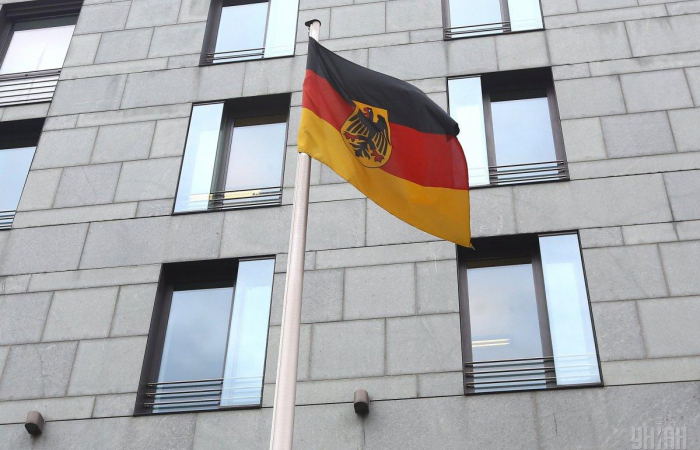
The German government holds Russia responsible for a cyberattack on German air traffic control, and for targeted disinformation campaigns before the last federal election. According to the German Foreign Office in Berlin, the incidents could be clearly attributed to the Russian military intelligence service, the GRU. In response, the Russian ambassador to Berlin was summoned to the Foreign Ministry. "We have been observing a massive increase in threatening hybrid activities by Russia for some time now," a spokesperson for the Foreign Ministry stated. These range from disinformation campaigns and espionage to cyberattacks and sabotage attempts. The aim is to divide society, sow distrust, and undermine confidence in democratic institutions. The spokesperson added that with these actions, Russia is "very concretely threatening our security, not only through its war of aggression against Ukraine, but also here in Germany."  The Foreign Ministry spokesperson explained that the cyberattack on air traffic control in August 2024 was clearly attributed to the hacker collective "APT28," known as "Fancy Bear," and to the responsibility of the Russian military intelligence service, the GRU. Furthermore, it could now be "conclusively stated" that Russia had attempted "to influence and destabilize both the last Federal election and the ongoing internal affairs of the Federal Republic of Germany." There was "absolutely irrefutable evidence" for this". The so-called "Storm 1516" campaign, which has been running since 2024, is allegedly backed by "reliable information" that the Moscow-based think tank "Center for Geopolitical Expertise" is behind it. The Center is also said to be supported by Russian military intelligence. Its primary aim is to influence democratic elections in the West. (Click the image to read more).
Editor's choice
News
NATO Chief says war is on Europe's doorstep, and warns against complacency

NATO Chief says war is on Europe's doorstep, and warns against complacency

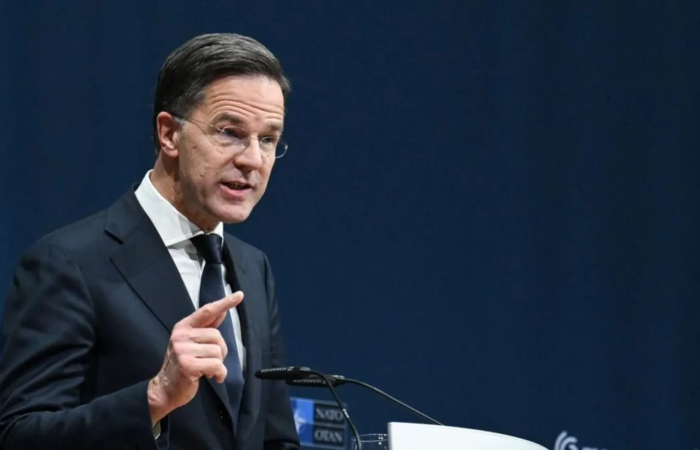
Russia could attack a NATO country within the next five years, the Secretary General of NATO, Mark Rutte, said in a stark new warning. "NATO's own defences can hold for now," Rutte warned in Berlin, but conflict was "next door" to Europe, and he feared "too many are quietly complacent, and too many don't feel the urgency, too many believe that time is on our side. "Russia is already escalating its covert campaign against our societies," Rutte said in a speech in Germany. "We must be prepared for the scale of war our grandparents or great-grandparents endured." Earlier this month, Russia's President Vladimir Putin said his country was not planning to go to war with Europe, but it was ready "right now" if Europe wanted to - or started a war. But similar reassurances were given by Moscow in 2022, just before 200,000 Russian troops crossed the border and invaded Ukraine. Putin has accused European countries of hindering US efforts to bring peace in Ukraine - a reference to the role Ukraine's European allies have recently played in trying to change a US peace plan to end the war, whose initial draft was seen as favouring Russia. But Putin was not sincere, Nato's secretary-general said in the German capital, Berlin. Supporting Ukraine, he added, was a guarantee for European security. "Just imagine if Putin got his way; Ukraine under the boot of Russian occupation, his forces pressing against a longer border with Nato, and the significantly increased risk of an armed attack against us." Russia's economy has been on a war footing for more than three years now - its factories churn out ever more supplies of drones, missiles and artillery shells. According to a recent report by the Kiel Institute for the World Economy, Russia has been producing each month around 150 tanks, 550 infantry fighting vehicles, 120 Lancet drones and more than 50 artillery pieces. The UK, and most of its Western allies, are simply not anywhere near this point. Analysts say it would take years for Western Europe's factories to come close to matching Russia's mass-production of weapons. "Allied defence spending and production must rise rapidly, our armed forces must have what they need to keep us safe," the Nato chief said.

Filter archive

Publication date
Editor's choice
News
EU to integrate financial contributions to Ukraine into its 2023 budget

EU to integrate financial contributions to Ukraine into its 2023 budget

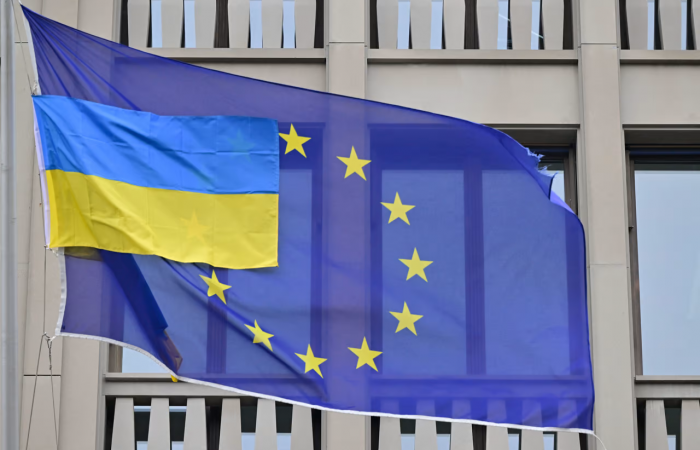
On Tuesday (4 October), the European Union announced that it will integrate financial support to Ukraine into its 2023 budget, making its monetary contributions more structured and predictable, thus easing the economic pressures on war-torn Ukraine. The support payments will tighten the links between the EU and Ukraine, which got one step closer to achieving full EU membership after being granted candidate status earlier this year.  The decision to formalise the financial support was taken after criticism from the United States and others, who have accused the EU of delaying current support payments, and thereby raising doubts on how committed the EU is to Ukraine’s reconstruction after the war’s conclusion.  Out of the €9 billion promised in May this year, only €1 billion has so far been paid out, while the next payment of €5 billion is expected to reach Kyiv before the end of the year. Meanwhile, the United States has contributed over €10 billion in financial support, and over €25 billion in military aid to Ukraine since the beginning of the full-scale Russian invasion in late February. Financially, Ukraine is struggling significantly as a result of the ongoing war with Russia. Reports estimate that monthly foreign aid of approximately €5 billion is required for the Ukrainian economy to stay afloat. Oleg Ustenko, the economic adviser to Ukrainian President Volodymyr Zelensky, predicts that Ukraine’s deficit will shrink in the coming year to approximately €3.5 billion per month, as Ukraine has managed to resume initially disrupted economic activities in its western regions.
Editor's choice
Monday Commentary
Opinion: Preparing for the worst, whilst working to avoid it

Opinion: Preparing for the worst, whilst working to avoid it

Putin’s annexation of parts of Ukraine takes the world to the verge of War, but a stronger and more united global condemnation of Russian aggression can still make Putin step back. Monday Commentary is back. Every Monday, commonspace.eu Managing Editor, Dennis Sammut discusses a hot topic on the European and international agenda. This week he weighs the implications of Russia’s annexation of parts of Ukraine, and the dilemma it poses to the rest of the world. He argues that it takes the world to the verge of a world war involving nuclear-armed states. But this can still be avoided if there is more global unity in condemnation of the Russian aggression.
Editor's choice
Editorial
Editorial: A dark day in the history of Europe

Editorial: A dark day in the history of Europe

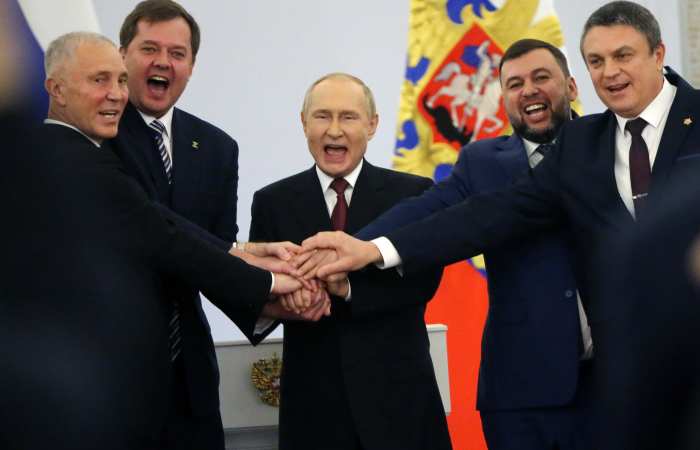
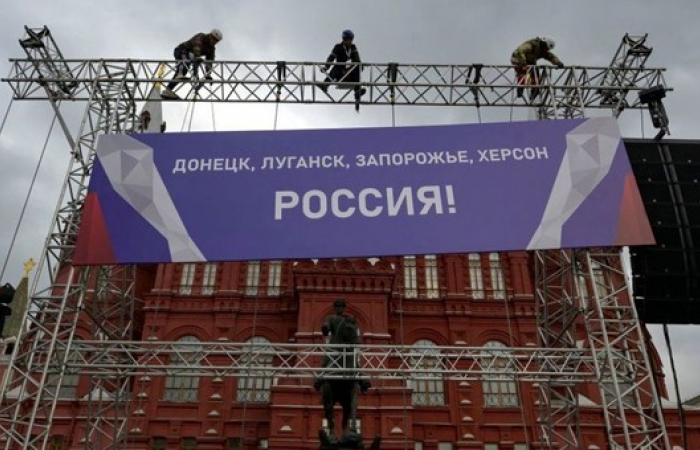
Friday, 30 September 2022 will for a long time be remembered as a sad and dark day for Europe. This afternoon, at 15:00 (12:00 GMT) in the St George Hall of the Grand Kremlin Palace president Vladimir Putin will hold a signing ceremony annexing four more regions of Ukraine into the Russian Federation. The events in Europe in the 1930 are repeating themselves with an eerie familiarity: a big country invades a smaller neighbouring country, organises a sham referendum in parts or all of that country, after which it claims the moral authority to annex that territory or country.  In an act of cynicism late on Thursday, the Russian president signed two decrees recognising Zaporizhzhia and Kherson as independent territories. Their so called independence will last for only a few hours, before they are absorbed into Russia. The documents, shared on Russian state media, say the independence of the two regions is being recognised in accordance with international law and "enshrined in the Charter of the United Nations". However, UN Secretary General António Guterres has said any annexation of a country's territory based on the use of force violates the UN Charter and international law. Europeans thought that those times were over, and that the lessons had been learnt. Apparently not. Russia's invasion of Ukraine last February set the stage for what will take place in the Kremlin today. After votes in Luhansk and Donetsk in the east of Ukraine, and in Zaporizhzhia and Kherson in the south, Russia will annexe them, in defiance of the wish of the Ukrainian people and their legitimate government, and of most of the international community. It has already acted in this way once, when in 2014, in similar circumstances it occupiued and annexed Crimea. Today's events are being hailed as a victiory by the Kremlin. A stage has already been set up in Moscow's Red Square, with billboards proclaiming the four regions as part of Russia and a concert planned for the evening in celebration. Some Russians may decide to follow the misguided steps of their leaders, but for the rest of Europe today is a sad and dark day.
Editor's choice
News
Macron hosts Pashinyan at the Elysee to discuss situation in the South Caucasus

Macron hosts Pashinyan at the Elysee to discuss situation in the South Caucasus

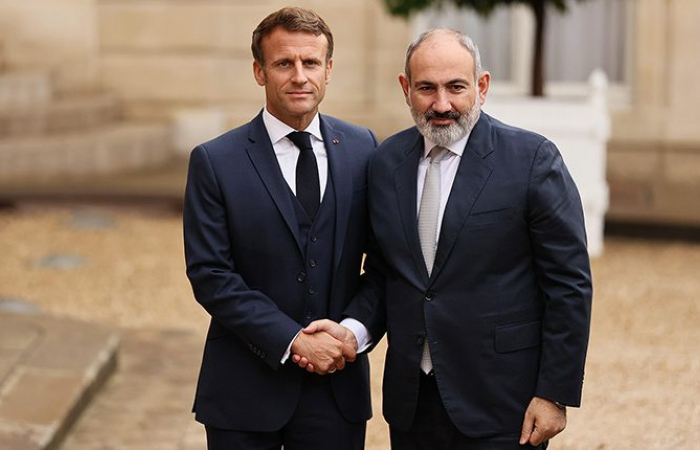
French president. Emanuel Macron on Monday (26 September) hosted Armenian prime minister Nikol Pashinyan at the Elysee Palace to discuss the current situation in the South Caucasus, and particularly Armenian-Azerbaijani relations. Macron described the situation following the recent armned clashes on 13-14 September as "critical". President Macron said France will do everything to pursue its goal, which is a stable, safe and prosperous South Caucasus." Macron also discussed the issue of relations between Armenia and Turkey. "This is a difficult but very necessary process and you know that France is also committed to this issue. This process is very important for the region", he said. In conclusion, Macron reiterated France's commitment to achieving peace and stability for Armenia and the entire region. "I welcome your sense of responsibility and your position to do everything to establish peace.  I want your country to have calm and peaceful borders", Macron told Pashinyan in his opening remarks.
Editor's choice
News
Germany seals major energy deal with the UAE

Germany seals major energy deal with the UAE

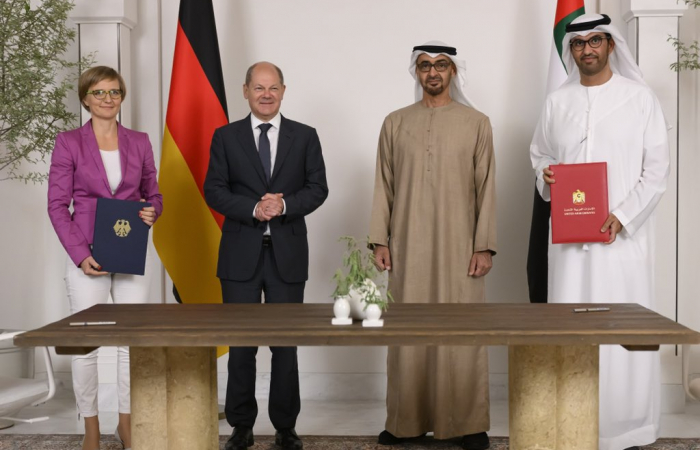
The United Arab Emirates (UAE) and Germany signed a "landmark agreement" on Sunday (25 September) aimed at accelerating joint efforts to boost energy security, decarbonisation and combat climate change. The major deal was struck in the presence of UAE President, Sheikh Mohammed bin Zayed, and German Chancellor Olaf Scholz, who is currently visiting the Emirates. The deal secures the delivery of 137,000 cubic meters of LNG to be sent to the new LNG terminal in Brunsbüttel near Hamburg in December. According to the dpa news agency, the amount included in the first delivery equates to around 0.95 billion kilowatt hours of electricity. However, the LNG deal can only make up for a small part of the 56.3 billion cubic meters of gas that Germany received from Russia in 2020.
Editor's choice
Opinion
Opinion: Macron's 'European Political Community' offers an opportunity for a continent-wide approach to critical security issues

Opinion: Macron's 'European Political Community' offers an opportunity for a continent-wide approach to critical security issues

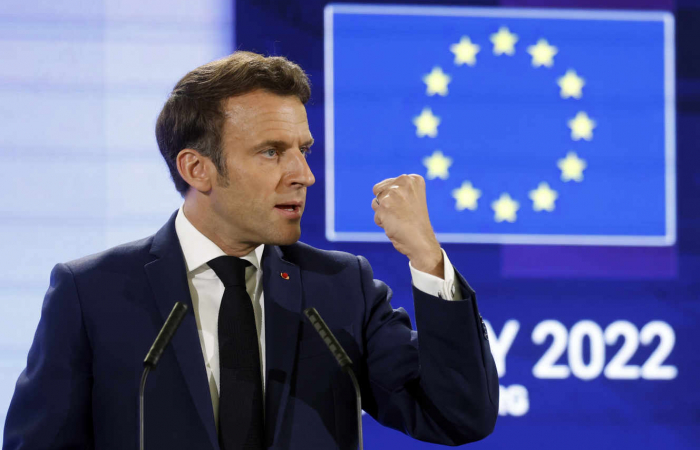
French President Emmanuel Macron's proposal to create a "European Political Community" can, if handled correctly, provide a permanent framework where EU countries and other European states can interact on critical political and security issues. However, for the community to succeed it must not simply become an extension of the EU. It must be designed to ensure that all countries involved have a voice in fostering political dialogue and cooperation in order to address issues of common interest, writes Maximiliaan van Lange in this op-ed for commonspace.eu. Overall the idea of a European Political Community is a positive one. Ensuring that countries like Türkiye and the UK can be equal partners in the discussion on the future of Europe's security, is an important and positive step. Making sure that smaller countries in the Balkans and the Caucasus can also be part of the conversation is equally relevant. But for the Community to succeed it must quickly carve a niche for itself in the crowded field of European institutions, which apart from NATO and the EU, also includes the Council of Europe, the OSCE, the Western European Union, not to mention multiple sub regional entities. The best option for the new community is to focus on security, and the security threats poised by the new Russian and Chinese assertivness.