Region

EU plus

Stories in this section cover the EU-27 countries plus the UK, Norway, Switzerland, Iceland, Liechtenstein, Monaco, Andorra and the Balkan Countries (Albania, Serbia, Montenegro, Bosnia-Herzegovina, Kosovo, North Macedonia).

Editor's choice
News
Germany accuses Russia of cyberattacks and disinformation campaign

Germany accuses Russia of cyberattacks and disinformation campaign

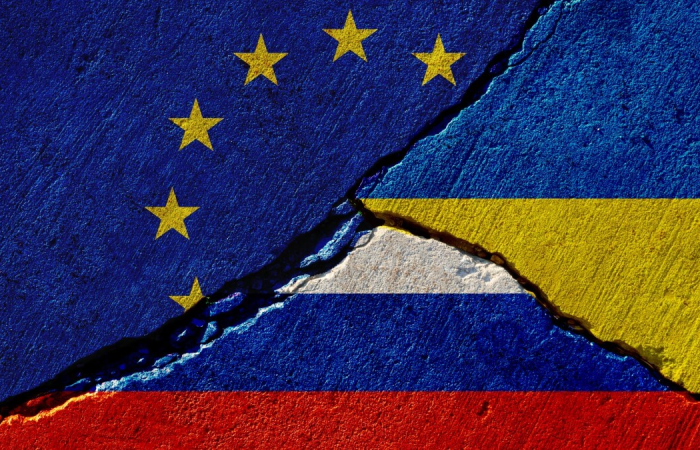
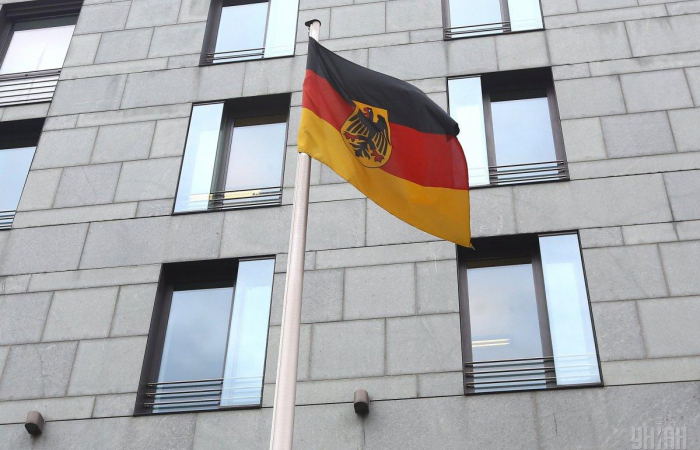
The German government holds Russia responsible for a cyberattack on German air traffic control, and for targeted disinformation campaigns before the last federal election. According to the German Foreign Office in Berlin, the incidents could be clearly attributed to the Russian military intelligence service, the GRU. In response, the Russian ambassador to Berlin was summoned to the Foreign Ministry. "We have been observing a massive increase in threatening hybrid activities by Russia for some time now," a spokesperson for the Foreign Ministry stated. These range from disinformation campaigns and espionage to cyberattacks and sabotage attempts. The aim is to divide society, sow distrust, and undermine confidence in democratic institutions. The spokesperson added that with these actions, Russia is "very concretely threatening our security, not only through its war of aggression against Ukraine, but also here in Germany."  The Foreign Ministry spokesperson explained that the cyberattack on air traffic control in August 2024 was clearly attributed to the hacker collective "APT28," known as "Fancy Bear," and to the responsibility of the Russian military intelligence service, the GRU. Furthermore, it could now be "conclusively stated" that Russia had attempted "to influence and destabilize both the last Federal election and the ongoing internal affairs of the Federal Republic of Germany." There was "absolutely irrefutable evidence" for this". The so-called "Storm 1516" campaign, which has been running since 2024, is allegedly backed by "reliable information" that the Moscow-based think tank "Center for Geopolitical Expertise" is behind it. The Center is also said to be supported by Russian military intelligence. Its primary aim is to influence democratic elections in the West. (Click the image to read more).
Editor's choice
News
NATO Chief says war is on Europe's doorstep, and warns against complacency

NATO Chief says war is on Europe's doorstep, and warns against complacency

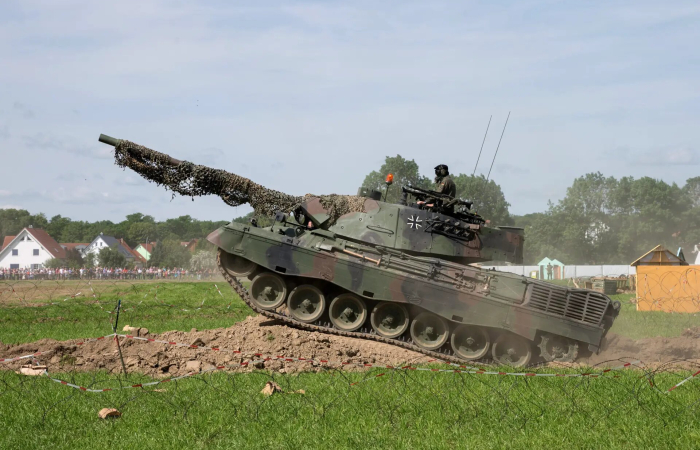
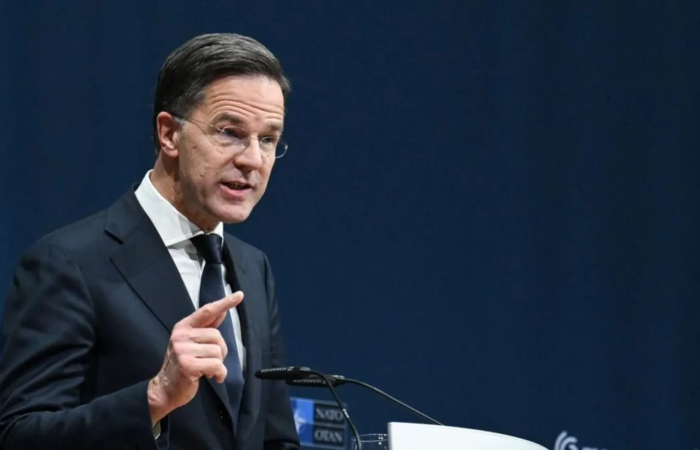
Russia could attack a NATO country within the next five years, the Secretary General of NATO, Mark Rutte, said in a stark new warning. "NATO's own defences can hold for now," Rutte warned in Berlin, but conflict was "next door" to Europe, and he feared "too many are quietly complacent, and too many don't feel the urgency, too many believe that time is on our side. "Russia is already escalating its covert campaign against our societies," Rutte said in a speech in Germany. "We must be prepared for the scale of war our grandparents or great-grandparents endured." Earlier this month, Russia's President Vladimir Putin said his country was not planning to go to war with Europe, but it was ready "right now" if Europe wanted to - or started a war. But similar reassurances were given by Moscow in 2022, just before 200,000 Russian troops crossed the border and invaded Ukraine. Putin has accused European countries of hindering US efforts to bring peace in Ukraine - a reference to the role Ukraine's European allies have recently played in trying to change a US peace plan to end the war, whose initial draft was seen as favouring Russia. But Putin was not sincere, Nato's secretary-general said in the German capital, Berlin. Supporting Ukraine, he added, was a guarantee for European security. "Just imagine if Putin got his way; Ukraine under the boot of Russian occupation, his forces pressing against a longer border with Nato, and the significantly increased risk of an armed attack against us." Russia's economy has been on a war footing for more than three years now - its factories churn out ever more supplies of drones, missiles and artillery shells. According to a recent report by the Kiel Institute for the World Economy, Russia has been producing each month around 150 tanks, 550 infantry fighting vehicles, 120 Lancet drones and more than 50 artillery pieces. The UK, and most of its Western allies, are simply not anywhere near this point. Analysts say it would take years for Western Europe's factories to come close to matching Russia's mass-production of weapons. "Allied defence spending and production must rise rapidly, our armed forces must have what they need to keep us safe," the Nato chief said.

Filter archive

Publication date
Editor's choice
News
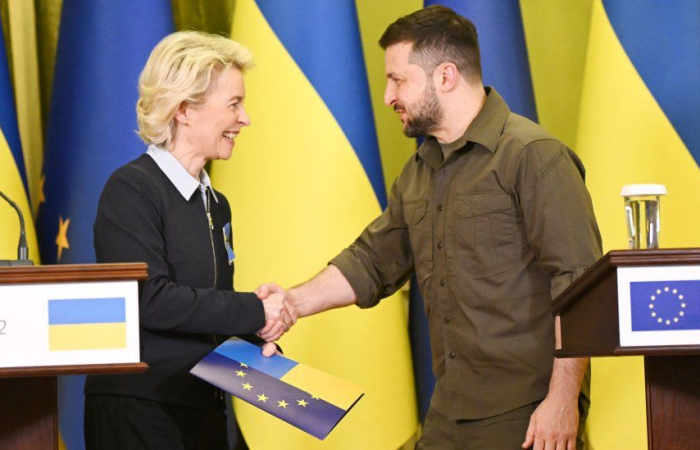
President Zelensky addresses European Parliament

President Zelensky addresses European Parliament

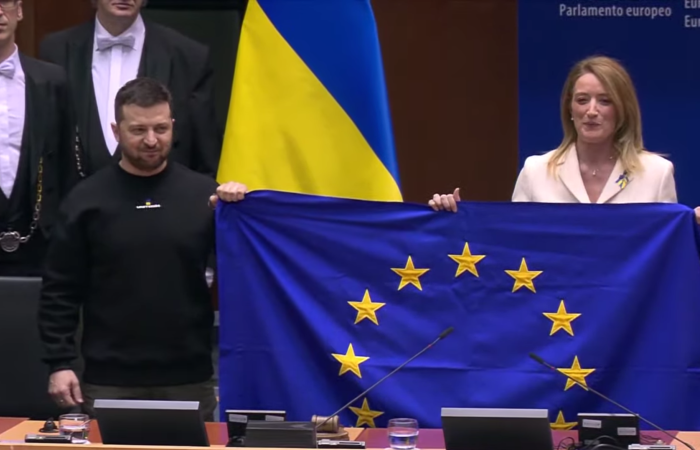
One day after addressing the UK Parliament in the Palace of Westminster in London, the Ukrainian President Volodymyr Zelensky has addressed the European Parliament in Brussels on Thursday (9 February). Entering the hemicycle shortly after 11am local time, Zelensky was greeted by MEPs with a standing ovation. President of the European Parliament Roberta Metsola opened proceedings with a short speech in which she praised Ukraine's courage in its fight for European values, which "binds all peoples across the continent as sisters and brothers." Referring to Ukraine's ongoing campaign to join the EU, about which some member states have a deal of scepticism and concern, Metsola called on EU leaders to ensure that Ukraine gets "the fastest possible accession process", coupled with funds for reconstruction and more heavy weapons to repel Russia's invasion, including "long-range systems and the jets". "Our response must be proportional to the threat and the threat is existential," Metsola said. Rounding off her introduction, she told Zelensky, "We have your back. We were with you then. We are with you now. We will be with you for as long as it takes. Freedom will prevail, peace will reign and you will win. Slava Ukraini!"
Editor's choice
News
President Zelensky addresses UK Parliament

President Zelensky addresses UK Parliament

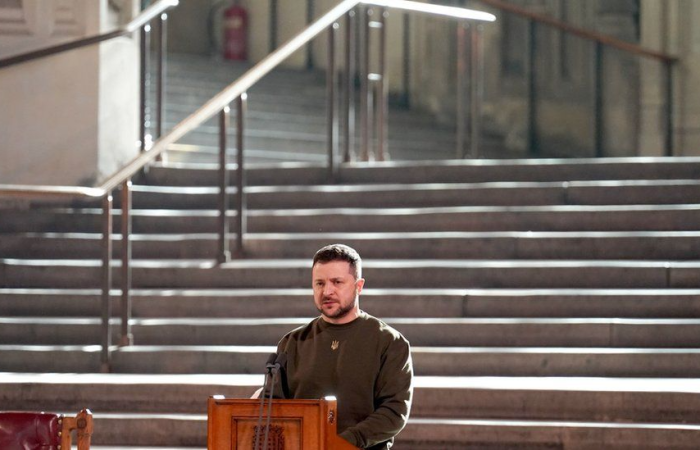
Ukrainian President Volodymyr Zelensky has addressed a joint meeting of the UK Parliament in the Palace of Westminster in London. Walking on stage shortly after 1pm local time on Wednesday (8 February), President Zelensky was greeted by rapturous applause and cheers from members of the House of Commons and the House of Lords. Introducing President Zelensky, Speaker of the House of Commons Lindsay Hoyle spoke about his first meeting with the Ukrainian head of state in October 2020, and about Zelensky's remote speech to the House of Commons on 8 March 2022, describing it as "devastating and powerful". The Speaker said he was "honoured you put yourself at risk to address us again and shine a light on the fact that your country is fighting for its survival". Before handing over to President Zelensky, Lindsay Hoyle finished by saying, "We will always be united in our unwavering belief in democracy. Slava Ukraini!" Speaking for some 20 minutes, President Zelensky began by thanking the United Kingdom for its support in training Ukrainian soldiers, also recounting his first visit to London approximately two and a half years ago.
Editor's choice
Opinion
Opinion: Sweden must re-evaluate its internal and external relations before NATO accession can become reality

Opinion: Sweden must re-evaluate its internal and external relations before NATO accession can become reality

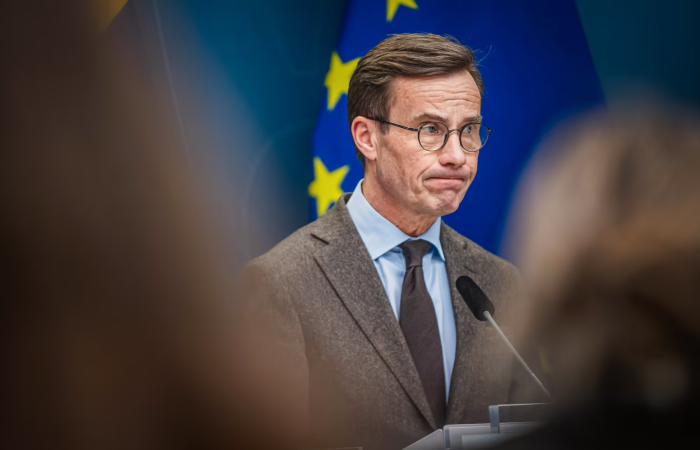
Given the increasingly uncertain political climate in which Swedish Prime Minister Ulf Kristersson finds himself, Sweden requires an internal and external positional re-evaluation in order to finalise its accession to NATO, writes Alfred Stranne in this op-ed for commonspace.eu. Meanwhile, Sweden needs to understand the increasing anger coming from Ankara, which is severely hindering its progression towards becoming a member of the alliance. Meanwhile, Sweden must also look within NATO itself to seek support in reassuring Ankara that Sweden will be a significant security provider for the alliance, providing added benefits for Ankara as well. This would repair Sweden’s relations with Turkey and reassure Ankara that despite the ideological and religious differences between Kristersson and Erdogan, Sweden and Turkey have common interests in seeking regional peace and stability.
Editor's choice
Event
Armenian and Azerbaijani experts discuss process of confidence-building with EU officials in Brussels

Armenian and Azerbaijani experts discuss process of confidence-building with EU officials in Brussels

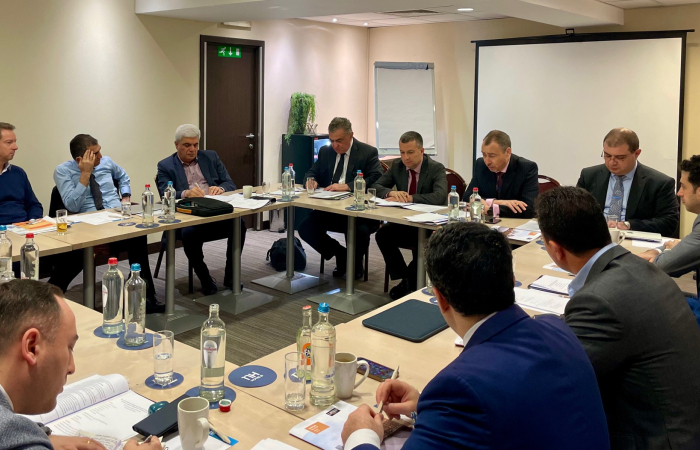
The Joint Armenian-Azerbaijani Liaison Group on Confidence-building measures in support of lasting peace in the South Caucasus (JOLIG) met in Brussels on 1 – 2 February 2023. Armenian and Azerbaijani experts that form part of the Group discussed recent developments in the South Caucasus, developments in the process of normalising Armenia-Azerbaijan relations and establishing peace in the region, and how confidence-building measures can help overcome present and future problems and challenges. On 1 February, the Group had a substantive meeting with the European Union Special Representative for the South Caucasus, Toivo Klaar, who reiterated the continued and ongoing commitment of the European Union in support of peace between Armenia and Azerbaijan. The group asked EUSR Toivo Klaar to convey their appreciation to European Council President Charles Michel for his continuing efforts to mediate between the two sides. The Group expressed its willingness to contribute with tangible actions and initiatives towards on-going European Union peace efforts in the region.
Editor's choice
News
Ukraine gears up for EU summit amid warnings of anniversary invasion

Ukraine gears up for EU summit amid warnings of anniversary invasion

As the one-year anniversary of Russia’s re-invasion of Ukraine approaches, Ukrainian officials are expressing concerns of a new major offensive following a recent large-scale Russian mobilisation. This comes as Kyiv prepares to host EU officials on Friday (3 February) for a summit on the embattled counry's progress towards EU membership. Ukrainian Defence Minister Oleksii Reznikov estimates that Russia has mobilised up to 500,000 troops, despite official numbers claiming the mobilisation of 300,000 Russian troops. The estimates come after Ukrainian officials have announced high military activity on the Russian side of its border. Russia also celebrates its "Defender of the Fatherland Day" on 23 February, just one day before the one-year mark of the so-called "special military operation".