


Opinion: People-to-People Contact Remains Absent in Armenia–Azerbaijan Normalisation

You must be glad to be here,” the bartender told my friend, a journalist for a major international media outlet just arrived that evening in Yerevan from Baku via Tbilisi. He raised an eyebrow in response as the bartender slowly poured our drinks.

Why?” he asked, clearly confused.

Because Azerbaijanis are Muslims, they dont drink, and there are no bars in Baku,” she replied, somehow absolutely convinced that she was correct.

The exchange was almost comical, but revealed something deeper. Three decades of conflict had turned former neighbours into strangers. In Tbilisi, where ethnic Armenians and Azerbaijanis live side by side, it would be met with ridicule. Only last October I sat at a table where the vodka flowed as a local Armenian sang in Azerbaijani and ethnic Azerbaijanis expressed their appreciation in Armenian.

It was a glimpse of what has otherwise been lost – human contact and friendship. I think it was Thomas de Waal that told me in an interview in Yerevan in the early 2000s that one of the greatest losses in the conflict had been the exodus of ethnic Azerbaijanis from Armenia and ethnic Armenians from Azerbaijan. Today, coexistence and familiarity only exists in third countries such as Georgia.

Yet it doesn’t require much to break these misconceptions. Thousands of Armenians cross daily into Georgias Kvemo Kartli region, home to the largest concentration of ethnic Azerbaijanis in the country. Unlike many in Yerevan, Armenians directly across the border know this reality well, with some still crossing to trade just as they did until the mid-2000s when the Bagratashen-Sadakhlo market closed.

Otherwise, such encounters are unimaginable for others. On a 2010 trip with Armenian journalists from Yerevan through that same predominantly ethnic Azerbaijani region of Georgia, they were stunned when I pointed out that most shop signs were in Azerbaijani, a detail they had somehow overlooked or ignored despite having traveled the same road many times before.

Ironically, they were en route to a cross-border media workshop in Tbilisi meant to foster Armenian–Azerbaijani dialogue, yet not a single story of coexistence emerged from that initiative. Around the same time, incidentally, while flying from the United Arab Emirates to Georgia via Azerbaijan, I even met an Armenian passport holder on the same flight who used it several times for the sake of convenience and cost.

At baggage retrieval, Armenians and Azerbaijanis stood almost side by side, collecting luggage from flights arriving almost simultaneously from Yerevan and Baku. In Tbilisi's markets, ethnic Armenians and Azerbaijanis sell their produce at adjoining stalls. It is a reality that the media might have missed or dare not mention, but this is a disservice to their audiences.

Nonetheless, without open borders and diplomatic relations, it remains limited to Georgia. International donors could help, not by funding yet another round of exclusive meetings in Brussels or Berlin but by engaging those excluded so far – youth, teachers, farmers, local officials, and other ordinary citizens who will one day have to live with the consequences of peace – or its continued absence.

If peace is to take root, Armenians and Azerbaijanis must relearn how to live as neighbours, not strangers, and that begins not at conferences abroad, but in markets, schools, and everyday interactions in villages along the border. Here the media can play a role by covering positive stories and depicting the human face of both sides. In any referendum, incidentally, it will be those people voting.

In the early 2010s, the late Georgi Vanyan gathered residents from Noyemberyan in Armenia and their counterparts across the border in Qazakh in Azerbaijan together in a nearby village in Georgia. Analysts and activists from Yerevan and Baku were present, of course, but the bulk of attendees were from the regions that had previously been ignored. That deserves revival.

With border demarcation underway and leaders in both countries speaking of peace, the need is greater and the environment more conducive than ever. Governments will ultimately decide policy, and businesses will shape cross-border trade, but reconciliation can only happen when a broad spectrum of society is involved. It is arguably psychologically necessary too.

Communication is not betrayal,” Vanyan told Azerbaijani media in a 2009 interview. It is a natural human need.”   

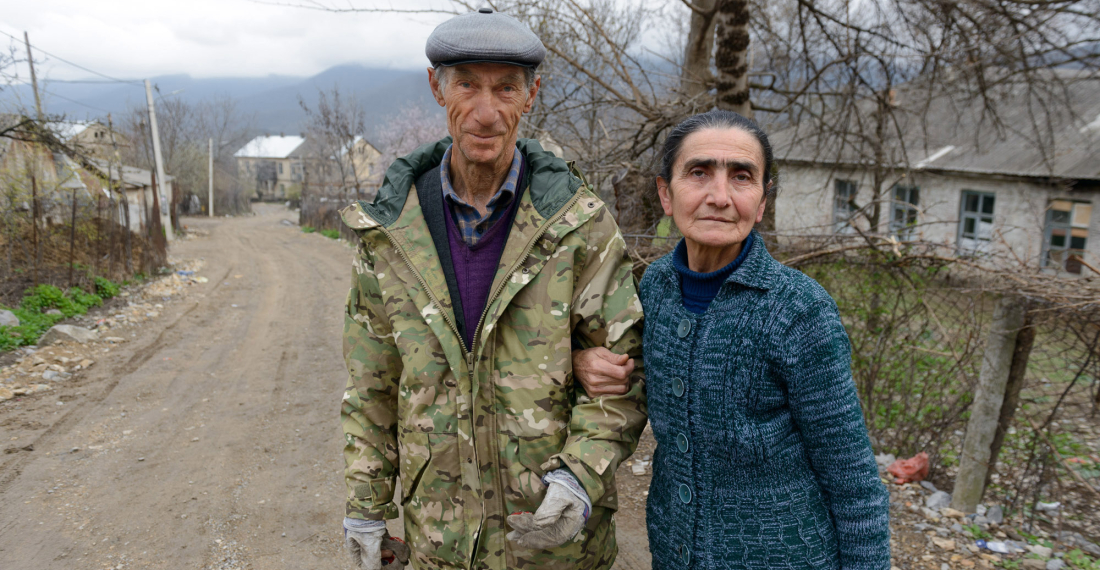
source: Onnik James Krikorian is a journalist, photojournalist, and consultant from the U.K. who has covered the Armenia-Azerbaijan conflict since 1994. Photo: Two lifelong friends, one an ethnic Azerbaijani (left) and the other an ethnic Armenian (right), in a coinhabited village in Georgia where the two groups live side by side together © Onnik James Krikorian 2017 
The views expressed in opinion pieces and commentaries do not necessarily reflect the position of commonspace.eu or its partners.


Related articles

Editor's choice
News
UAE says it will withdraw from Yemen, but division emerges in Yemeni presidential council

UAE says it will withdraw from Yemen, but division emerges in Yemeni presidential council

In a move seen as an attempt to de-escalate a crises with Saudi Arabia, the United Arab Emirates, on Tuesday (30th December) announced that it was heeding a call to withdraw its troops from Southern Yemen. UAE says that its presence included counter-terrorism teams that were crucial in fighting against Islamist groups. UAE sources said that parts of Yemen not controlled by the Houthis have had Al Qaeda in the Arab Peninsula (AQAP) operatives using the territory to launch attacks on Europe, the US and Middle East. UAE teams have co-ordinated with American and British special forces and intelligence. The sources added that Emirati forces and their Yemeni allies also helped reverse Houthi gains in the south. including the liberation of Aden port. The small UAE contingent has remained in place since the UAE withdrew most of its military personnel in 2019. The leading English-language newspaper in Abu Dhabi, The National, said that the main UAE force was based at Riyan Mukalla International Airport, with access to fixed-wing aircraft and helicopters, but also operated smaller contingents in the port town Balhaf and Shabwa. "It is understood it also flew a number of drones from the airbase that were able to track terrorist movements, pass information back to its allies and assisted special forces' missions." Meanwhile a division has emerged in Yemen's presidential council after four members denounced what they called the 'unilateral decisions' by the chairman. Four of Yemen’s eight Presidential Leadership Council members on Tuesday denounced an announcement by the council’s chairman accusing him of breaching the governing agreement. Tension between Yemeni leaders has been rising for weeks, underscoring the fragility of the country's already fractured political landscape and further complicating efforts to confront the Iran-backed Houthi rebels. The latest rift took an unprecedented turn on Tuesday morning, marked by a Saudi-led coalition “limited operation” striking combat vehicles Riyadh linked to the Southern Transitional Council, which has three members in the PLC. The PLC Chairman, Rashad al Alimi, on Tuesday said that he was seeking to cancel the joint defence agreement with the UAE. “What has been issued … constitutes a clear violation of the Declaration of the Transfer of Power [agreement], which explicitly stipulates that the Presidential Leadership Council is a collective body whose decisions are taken by consensus, or by majority when consensus is not possible,” the statement by the four members said. “It does not, under any circumstances, allow for unilateral decision-making on sovereign, military, or major political matters." The statement was signed by STC chief Aidarous Al Zubaidi, Faraj Al Bahsani, Tariq Saleh and Abu Zaraa al Muharrami. (click the picture to read the full article).

Popular

Editor's choice
News
UAE says it will withdraw from Yemen, but division emerges in Yemeni presidential council

UAE says it will withdraw from Yemen, but division emerges in Yemeni presidential council

In a move seen as an attempt to de-escalate a crises with Saudi Arabia, the United Arab Emirates, on Tuesday (30th December) announced that it was heeding a call to withdraw its troops from Southern Yemen. UAE says that its presence included counter-terrorism teams that were crucial in fighting against Islamist groups. UAE sources said that parts of Yemen not controlled by the Houthis have had Al Qaeda in the Arab Peninsula (AQAP) operatives using the territory to launch attacks on Europe, the US and Middle East. UAE teams have co-ordinated with American and British special forces and intelligence. The sources added that Emirati forces and their Yemeni allies also helped reverse Houthi gains in the south. including the liberation of Aden port. The small UAE contingent has remained in place since the UAE withdrew most of its military personnel in 2019. The leading English-language newspaper in Abu Dhabi, The National, said that the main UAE force was based at Riyan Mukalla International Airport, with access to fixed-wing aircraft and helicopters, but also operated smaller contingents in the port town Balhaf and Shabwa. "It is understood it also flew a number of drones from the airbase that were able to track terrorist movements, pass information back to its allies and assisted special forces' missions." Meanwhile a division has emerged in Yemen's presidential council after four members denounced what they called the 'unilateral decisions' by the chairman. Four of Yemen’s eight Presidential Leadership Council members on Tuesday denounced an announcement by the council’s chairman accusing him of breaching the governing agreement. Tension between Yemeni leaders has been rising for weeks, underscoring the fragility of the country's already fractured political landscape and further complicating efforts to confront the Iran-backed Houthi rebels. The latest rift took an unprecedented turn on Tuesday morning, marked by a Saudi-led coalition “limited operation” striking combat vehicles Riyadh linked to the Southern Transitional Council, which has three members in the PLC. The PLC Chairman, Rashad al Alimi, on Tuesday said that he was seeking to cancel the joint defence agreement with the UAE. “What has been issued … constitutes a clear violation of the Declaration of the Transfer of Power [agreement], which explicitly stipulates that the Presidential Leadership Council is a collective body whose decisions are taken by consensus, or by majority when consensus is not possible,” the statement by the four members said. “It does not, under any circumstances, allow for unilateral decision-making on sovereign, military, or major political matters." The statement was signed by STC chief Aidarous Al Zubaidi, Faraj Al Bahsani, Tariq Saleh and Abu Zaraa al Muharrami. (click the picture to read the full article).

