


This article is reproduced from Civic Idea (Tbilsii)
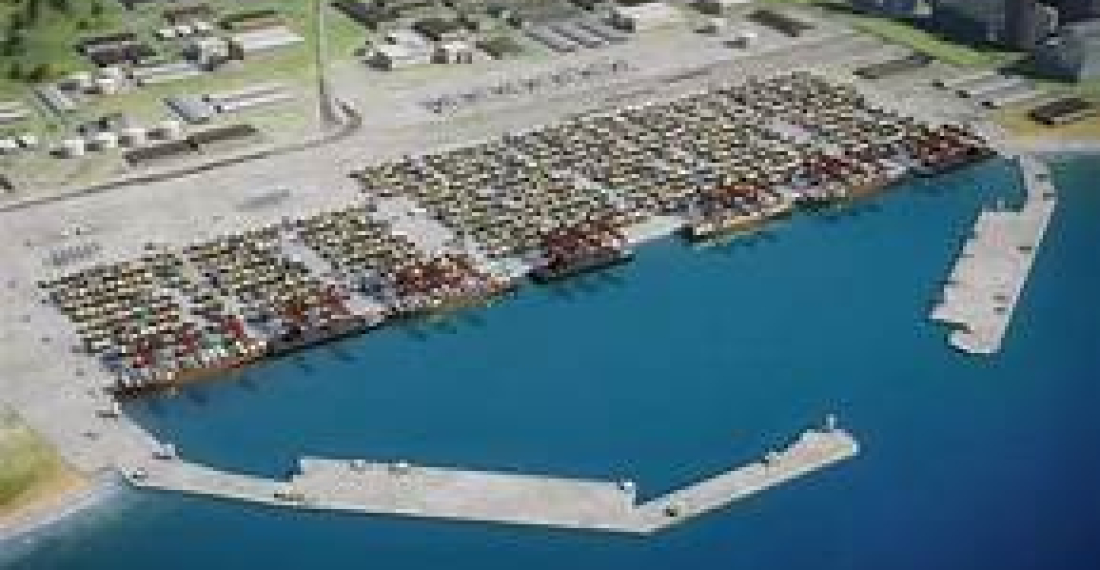
On July 6, Georgia's Minister of Economy and Sustainable Development, Mariam Kvrivishvili, announced that the government is abandoning the investor concession concept for the Anaklia deep-sea port and moving the project to a so-called “landlord model.” Under the new arrangement, the state will remain the sole owner of the maritime and port infrastructure and will itself finance, develop, and manage it, while international companies will be limited to leasing and equipping individual terminals. The minister described the model as “the most national” one, stressed that no shares in the port will be sold, said the total project cost remains approximately USD 1.1 billion, and confirmed that the state will now have to add USD 200 million to the planned budget to cover berths, communications, and other core infrastructure previously expected from the investor. The first vessel, she said, is still planned for 2029.
Behind the presentation lies a simpler fact. The tender, announced in 2024 as a process for a Chinese-Singaporean consortium built around China Communications Construction Company affiliates, has collapsed, with that consortium the only bidder. The minister acknowledged that negotiations with the consortium ended over issues she linked to national interests, while insisting that the parting was a joint and friendly decision and that the government retains a “strong desire and motivation” to see active Chinese involvement in the port's operation and development.
Civic IDEA's assessment
The government's own framing deserves to be read carefully. We are told that international interest in Anaklia “grew so strong” that the state responded by withdrawing the project from private investment altogether and taking it fully onto its own balance sheet before construction has meaningfully begun. In our assessment, this is not how growing investor interest is normally answered. A project that genuinely attracts multiple credible bidders is re-tendered on better terms; it is not nationalized.
The financial logic is equally strained. The 2024 arrangement promised Georgia an initial foreign direct investment inflow of roughly USD 600 million from the winning consortium. That inflow is now gone. In its place, the state must find an additional USD 200 million of public money, and the minister named no lender, saying only that negotiations with international financial institutions have begun and that their interest is strong. Until those institutions are named, this claim cannot be verified. Given the current state of Georgia's relations with Western partners and development banks, and the government's repeated emphasis on its strategic partnership with Beijing, Chinese policy banks are a plausible source of such borrowing. If that proves true, the port would still be built with Chinese money, only now structured as Georgian public debt rather than as investor capital carrying investor risk.
Beyond the headline numbers, the shift from an investor-run concession to a state-built port raises a series of structural problems. First, it transfers risk from investors to taxpayers. Under a concession, construction cost overruns, delays, and demand shortfalls are borne by the concessionaire, disciplined by performance obligations and penalties. Under self-construction, every overrun and every year of delay lands directly on the state budget, with no external party contractually accountable for delivery.
Second, it removes the operator expertise and cargo commitments that underpin a port's viability. A strategic port investor brings not only capital but shipping-line relationships, terminal operating experience, and volume guarantees. The Georgian state has never built or operated a deep-sea container port, and no party has now underwritten the cargo flows that would make Anaklia commercially sustainable. The minister's announcement that first-phase cargo projections will be revised upward, at the very moment the project loses its anchor investor, only sharpens this concern.
Third, it weakens transparency at precisely the stage where the largest sums will be spent. Canceling the tender removes competitive discipline from the process. Contracts for dredging, breakwater construction, berths, and access infrastructure can now be awarded through direct state procurement, where the real beneficiaries often sit one layer down, in subcontracting chains. This is exactly the route through which CCCC-affiliated contractors, or other politically favored companies, could re-enter the project without the scrutiny that an equity stake or a public tender would attract. Civic IDEA will be watching the contractor lists closely.
Fourth, the landlord model itself, while legitimate and widely used in ports, works only under conditions Georgia currently does not meet: an independent port authority, transparent and competitive terminal concessions, and separation between the state as owner, regulator, and commercial counterparty. In the hands of a government exercising full political control over the entity, terminal leases risk becoming discretionary instruments, and a lease granted to a sanctioned state-owned enterprise would attract far less public and international attention than a sale of shares would.
Fifth, this is the third collapse of an Anaklia arrangement in six years, after the cancellation of the Anaklia Development Consortium's contract in 2020 and a failed bid in 2022. Whatever the merits of each individual decision, the cumulative record signals to serious international operators that the rules governing Georgia's flagship infrastructure project can change after award. The minister's reference to unnamed Western interest should therefore be treated with caution until specific companies are identified, something she has promised to do “in the near future.”
Finally, the decision converts what was presented as a headline foreign direct investment success into a public expenditure item, at a time when FDI inflows into Georgia are already a point of concern. For a government that has consistently cited Anaklia as proof of investor confidence, financing the port from the budget and from loans is a quiet admission that the investment model failed.
source: This article is reproduced from CIVIC IDEA (Tbilsi)



