


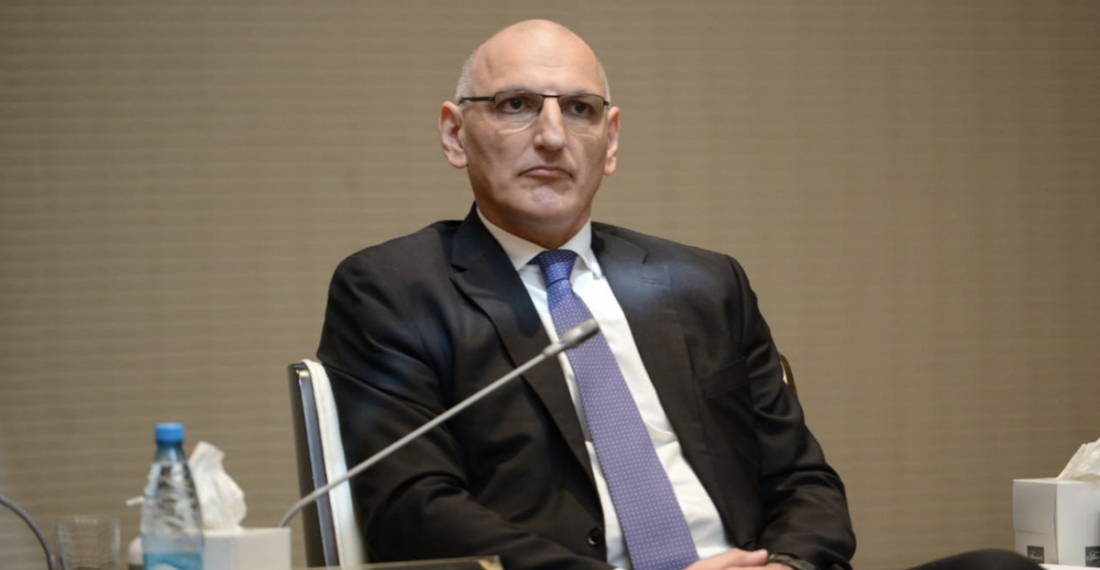
Elchin Amirbayov: " Let us make sure that, when we speak about peace in the South Caucasus, we are not speaking only about the absence of war"

On Thursday (3 September), in an important speech to the 4th International Mine Action Conference, organised in Baku by ANAMA and the United Nations, Ambassador Elchin Amirbayov, Representative of the President of Azerbaijan on special assignments, spoke about the importance of mine action in the wider context of peace, with particular reference to the South Caucasus.

He said:

"Azerbaijan and Armenia have a unique opportunity to turn a page. The political process has created the conditions for a different South Caucasus — one based on peace, connectivity, economic cooperation and good-neighbourly relations. But if we want peace to be sustainable, durable and irreversible, we must remove the remnants of war both from the ground and from existing political and legal framework. Because:  above all, peace needs the next generation to inherit a landscape without mines – both beneath the ground and in our discourse.

So the idea is to turn mine action from a legacy of war into an instrument of peace. Jointly, we can accelerate this. And let us make sure that, when we speak about peace in the South Caucasus, we are not speaking only about the absence of war. Let us make peace something people can walk on, live on, build on — and pass on to their children".

Here is the speech of Elchin Amirbayov in full:

It is a pleasure to welcome you all in Baku and thank you for being here, since your presence carries an important message. The challenge of landmines is far too great for any country to face alone. It requires solidarity and partnership. And above all, it requires sustained international commitment.

This year’s Conference focuses on humanitarian demining for safe settlements and recovery. In my remarks, I would like to address this topic from an angle of mine action’s role as part of peacebuilding.

And the central message here is simple: Peace cannot be considered complete while the physical consequences of war continue to threaten lives, block movement, limit economic activity, slow down return of IDPs and stand in the way of normalization of inter-state relations.

It is about whether people can return home. Whether communities can be rebuilt.

Whether children can walk safely to school. And, ultimately, whether peace can become a lasting reality that people can actually live in from now on.

Let me put this very directly: The shooting has stopped. But the mines have not.

And this is why humanitarian demining has become much more than a humanitarian task. It has become a peacebuilding task. The UN Peacebuilding Commission, in discussion on mine action two months ago, also recognized demining as an enabler of peacebuilding, reconciliation and recovery. The logic is clear. You cannot build peace on unsafe ground.

A little more than a year ago, on 8 August 2025, Azerbaijan and Armenia took a historic step in Washington. The text of the peace agreement was initialled by Foreign Ministers, and the leaders signed the Washington Joint Declaration, which set out a vision of a future no longer bound by the conflict of the past. By the way, we hope that very soon the remaining obstacle will be removed to enable the parties to sign the peace agreement and to codify peace.

Since Washington, we have lived in conditions of de-facto peace. There has been no military escalation between our countries. Dialogue between governments and civil societies has continued. Trade and economic interaction have begun. Connectivity projects are being advanced.

And our societies are gradually being asked to look towards a different future. This is truly a historic opportunity.

But peace is not created only by political agreements. Peace has to be made visible on the ground.

And in Azerbaijan, one of the greatest obstacles to making peace visible is beneath the ground.

Since the end of the 2020 war, 437 people in Azerbaijan have been killed or injured by landmines.

And every single new victim is more than a humanitarian tragedy. It is a psychological blow to families. It is also a reminder to society that the war is not yet completely behind us.

And it inevitably negatively affects public confidence in the process of normalization.

This is why I would argue that every mine explosion today has consequences far beyond the immediate victim. It hampers the atmosphere in which peace is being built.

This is particularly important in Azerbaijan because we are not dealing with a small, isolated contaminated area. More than 13 percent of our territory was polluted by mines and unexploded ordnance. And almost 6 years after the end of the war, 75 percent of landmine-infested territory is still full of seeds of death. This is a serious human security and return problem.

There is another dimension which makes this particularly urgent. Azerbaijan today is undertaking one of the largest post-conflict reconstruction efforts in our region, if not in the world.

Former IDPs are returning to their homes. Villages and towns are being rebuilt. Roads, schools, hospitals and economic infrastructure is constructed.

But there is a very simple truth:

You cannot rebuild a community before you can safely clear the ground beneath it.

So, when we talk about demining, we should also talk about the right to return, the right to rebuild and the right to live without fear.

This brings me to the question: What can the international community do more?

Azerbaijan is very grateful to each and every country and organization that have till today supported our mine-action efforts. We do take this as a sign of friendship and solidarity both with those directly affected and with Azerbaijan. But the scale of international support remains very limited.

Approximately 95 percent of the financing comes from Azerbaijan’s own state resources.

Only around 5 percent comes from the outside. We believe that this imbalance can and needs to change.

And I would like to suggest several thoughts of how this may be done.

First: make mine action part of the international peace agenda.

When we speak about peace in the South Caucasus, we speak about borders, connectivity, trade and confidence-building. We should add one more item: clearing the physical legacy of war.

Mine action should be treated as an investment in the durability of peace.

Second: in addition to a major national effort, to think of creating a long-term international funding mechanism for Azerbaijan’s mine action.

Not only emergency contributions. Not only individual projects.

But predictable, multi-year funding that allows Azerbaijan to plan, recruit, train, invest in equipment and accelerate clearance.  We need to finance the solution, not simply manage the problem. And predictable funding was particularly mentioned by H.E. President Ilham Aliyev in his welcoming remarks to this Conference yesterday.

Third: establish a stronger international technology partnership.

Artificial intelligence, drones, satellite imagery, advanced surveying, mechanical demining and data technologies can dramatically improve both the speed and safety of clearance.

Azerbaijan has the ambition to become a regional centre of excellence in mine action and is open to such cooperation.

And last but not least: make mine action part of confidence-building in the region.

Humanitarian issues can sometimes create space for practical cooperation even when political questions remain sensitive.

The removal of the remnants of war is one such area. It is about saving lives. It is about the future.

And it should be approached accordingly.

There is also a larger point I would like to leave with you.

A mine is designed to stop movement.  It prevents people from returning. It keeps land unproductive.

It separates communities. It preserves fear. In that sense, the mine is almost a physical symbol of the conflict.

Demining does exactly the opposite. It opens roads, reconnects communities, restores livelihoods and enables return. It also creates confidence in the future

So perhaps we should begin to think of every mine clearance not simply as a humanitarian operation, but as a small part of peace infrastructure.

And let me conclude with this.

Azerbaijan and Armenia have a unique opportunity to turn a page.

The political process has created the conditions for a different South Caucasus — one based on peace, connectivity, economic cooperation and good-neighbourly relations.

But if we want peace to be sustainable, durable and irreversible, we must remove the remnants of war both from the ground and from existing political and legal framework.

Because:  above all, peace needs the next generation to inherit a landscape without mines – both beneath the ground and in our discourse.

So the idea is to turn mine action from a legacy of war into an instrument of peace.

Jointly, we can accelerate this. And let us make sure that, when we speak about peace in the South Caucasus, we are not speaking only about the absence of war.

Let us make peace something people can walk on, live on, build on — and pass on to their children.



Latest

Editor's choice
Monday Commentary
Monday Commentary: PEACE IN OUR TIME?

Monday Commentary: PEACE IN OUR TIME?

Making peace between Armenia and Azerbaijan was never going to be simple, nor easy, nor quick. It is taking time, writes Dennis Sammut in this Monday Commentary. “There is a sense of realism coming from the leaders of the two countries – President Ilham Aliyev of Azerbaijan and prime minister Nikol Pashinyan of Armenia, that frankly, is necessary and welcome”, he writes. At a time when conflicts are raging all over the world – from Ukraine to the Gulf, from Africa to South Asia, the prospect that Armenia and Azerbaijan had finally, after decades of conflict that left thousands of dead and many more displaced, decided on embarking on a journey of peace was welcomed. Peace between Armenia and Azerbaijan can be top-down up to a point. Both leaders have spent political capital preparing for a peace deal. But both are aware that their people are not ready for peace yet. In fact, in Armenia, most of the elite are negative toward a peace deal with Azerbaijan. Pashinyan needs time to persuade his countryfolk. That is why 2031 is realistic. Ilham Aliyev runs a tighter shop, but he is also not immune to public opinion. Every time someone hits a landmine in Karabakh, which unfortunately happens often, peace comes into question. Which is why Aliyev chooses to sound hardline, more often than not. In pursuing the peace agenda, both Aliyev and Pashinyan need to proceed cautiously. But they are right in making peace the central issue in their agenda. It is the main issue, and the one that will define them in history. So forward, cautiously but resolutely! In pursuing the peace agenda, Aliyev and Pashinyan need to be supported clearly and unambiguously. There are too many people in Baku and Yerevan who are sitting on the sides, waiting. The international community is not doing enough. It is time to be counted. Otherwise, the spoilers will win, and the region will go back to its bad habits. (Click the image to read the full commentary).
Editor's choice
News
King calls slave trade a 'shameful chapter' during Commonwealth address

King calls slave trade a 'shameful chapter' during Commonwealth address

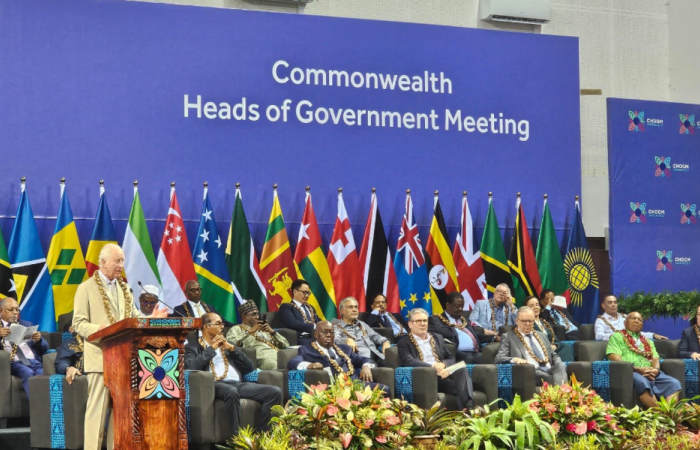
King Charles has described the transatlantic slave trade as a "shameful chapter of history" that filled him with "profound sorrow" as he opened a summit of Commonwealth leaders in the Caribbean. He said the trade in enslaved persons "still casts a shadow" over the association of nations. There have been calls from some for the UK to make a formal apology for its historic role in the slave trade ahead of the Commonwealth Heads of Government Meeting (Chogm) in Antigua and Barbuda, but there was not one in the King's address. Prime Minister Andy Burnham, also at the summit, has said that he is open to Britain issuing a formal apology but has ruled out financial reparations. While there was no direct apology, the King did offer some contrition - and there was also an acknowledgement that he had personally learnt more about the legacy of the slave trade. He said: "The transatlantic trade in enslaved persons still casts a shadow over these islands and other members of our Commonwealth. "As I have said before, that shameful chapter of history is one that fills my heart with horror and my soul with the most profound personal sorrow." (click image to read more).

Popular

Editor's choice
Monday Commentary
Monday Commentary: European-Azerbaijan relations need an intensive and multifaceted dialogue that is frank and honest

Monday Commentary: European-Azerbaijan relations need an intensive and multifaceted dialogue that is frank and honest

Last week I visited Baku, Azerbaijan. My visit was relatively short, but very intensive, and had many meetings with stakeholders and colleagues. When I arrived in Baku first time in 1996,  Azerbaijan was a different country: weak, poor, and shaken by defeat in war. For thirty year the Karabakh issue dominated the agenda: the political agenda but also the popular mindset. Now, thirty years later, Azerbaijan has returned to Karabakh, and peace with Armenia is on the horizon. It is a new era for Armenia-Azerbaijan relations, for the South Caucasus, but also for Europe.  But we cannot be complacent: the Peace agreement has been initialed but not signed; borders remain closed; TRIPP is ambitious but remains an idea; and there are spoilers who want to turn the clock back. We must not allow them, and in this Europe and Azerbaijan must work together. Europe’ vanguard organization is the European Union – it is a free union of 27 member states; it is a strong global economic force, and increasingly a diplomatic and military force too. But it remains “work in progress” and can often appear dysfunctional. It often lacks collective and institutional memory. In its dealings with Azerbaijan the EU has made many mistakes – not least opening the delegation here late – in 2008. It sometimes appears condescending. Some utterances from the European Parliament and from some quarters in some member states are not understandable even for me. They irritate the Azerbaijanis, but serve no other purpose But Azerbaijan has also not handled relations with the EU well. It has failed to respond when the hand of friendship reached out; and it confused irritating actions, sometimes by well-meaning people; sometimes by outright spoilers, with strategic action. In short, EU-Azerbaijan relations have suffered from a lack of proper dialogue. This dialogue must be frank, honest and multi-faceted involving different segments of society on both sides.   Is Azerbaijan Europe? When Azerbaijan applied to join the Council of Europe in the 1990s, there were some who opposed, saying this was not Europe. I was one of the people who argued that Armenia and Azerbaijan may be on the periphery of the continent geographically, but were European in essence. Certainly their elites. During the discussion on 4 September in Baku, my friend Farhad Mammedov, mentioned that Azerbaijan is not interested in joining the EU, and was now close to the Central Asian countries in the 5 plus 1 format. Neither things mean that Azerbaijan is not Europe. There are several European countries that are not in the EU, and do not want to be, for example Norway and Switzerland. Iceland has recently voted to stay out of the EU. The UK was a member and left. Europe is bigger than the EU, and the holding of the European Political Community summit in Baku in 2027 proves that. Despite all the rhetoric, I never heard the president of Azerbaijan  saying that Azerbaijan is not Europe, nor have I heard any European president say it either. Not wanting to join the EU and forging close relations with neighbouring regions does not make Azerbaijan any less European. It is only logical that when Europeans talk to Azerbaijan they talk like family. The conversation is often frank. It must also be honest, and Europeans need always to remember this too. A frank, honest and multi-faceted dialogue A frank, honest and multifaceted dialogue will contribute to relations between Azerbaijan and the rest of Europe: it will avoid misperception, which unfortunately is very common on both sides; it will provide a forum where problems can be discussed and resolved, and it will increase mutual trust, so that together common problems can be addressed. (click image to read the full Monday Commentary)
Editor's choice
Monday Commentary
Monday Commentary: “The barren rocks of Aden” and “These lands of Yemen are so ruthless”

Monday Commentary: “The barren rocks of Aden” and “These lands of Yemen are so ruthless”

There are two early 20th-century tunes that mark foreign attempts to occupy and “pacify” Yemen. The Scottish tune “The barren rocks of Aden” marks the mobilisation of Highland soldiers, enlisted to be deployed to the Yemeni port of Aden, that in 1837 became the last colony to be incorporated into the British Empire. The tune talks of the harshness of the terrain, but is celebratory, It was even played as a farewell tune to Sir William Luce at the parade in Sharjah celebrating his end as “British Viceroy” in the Middle East in 1966. The second tune is an Anatolian lament. As Ilker Sezer reminded us this weekend, in his weekly feature on “Turkiye Today”, it “mourns the tragic fate of Ottoman soldiers dispatched to the harsh, remote deserts of Yemen during the fall of the empire, young men who marched away from their villages and never returned home. Most of their names, and numbers, were never recorded. Yet, their fate left a mark on the Turkish psyche.” Subsequent invaders have discovered that Yemen is a grave that cannot be overcome by the strength of modern technology, and that whilst Yemeni society is splintered and divided, building a reliable alliance with Yemeni factions is difficult. These are the harsh lessons facing Saudi Arabia, as the Kingdom faces its biggest challenge in its modern history. The leadership of the Kingdom now has to respond decisively. At stake is their very credibility. This is likely to be a long and messy conflict. Saudi military objectives need to be focused: to box in the Houthis rather than destroy them. This is likely to include: (a) regaining territory lost on the Red Sea coast; (b) control over Bab el Mandeb Strait; (c) some kind of cordon sanitaire on the Saudi-Yemeni border; and if things go well (d) the capture of Sanaa. All this would not eliminate the Houthi problem, but it will contain it. In the end the Saudis will have to continue managing Yemen with a mixture of carrot and stick. For the moment, the stick is likely, but the carrot cannot be forgotten either. (click the image to read the Monday Commentary in full)

