


Editor's choice
Opinion
Opinion: The future of the China-US-Russia triangle after Pelosi's visit to Taiwan

Opinion: The future of the China-US-Russia triangle after Pelosi's visit to Taiwan

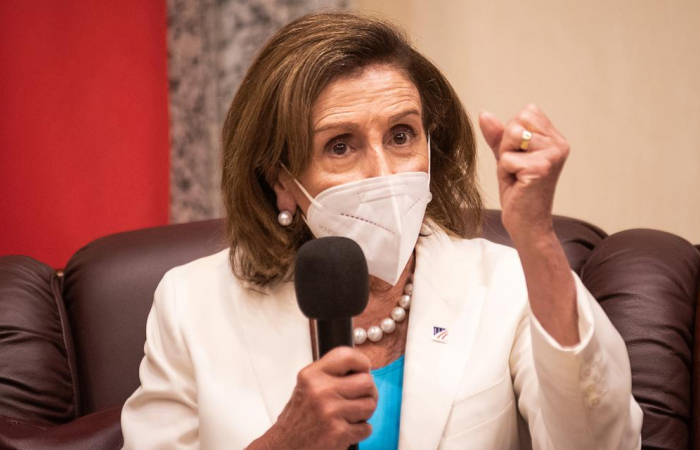
Since February 24, 2022, the international community's focus was concentrated entirely on the war in Ukraine and the growing Russia – West confrontation. It seemed that nothing could change the situation until the end of hostilities in Ukraine. However, on August 2 and 3, almost everyone’s attention shifted from Ukraine to Taiwan. As the Speaker of the US House of Representatives, Nancy Pelosi, stated her intention to visit Taiwan, up to half a million people were watching the trajectory of her plane on air flight tracking sites. The negative reaction of China, including the warning of President Xi during his conversation with President Biden that those who played with fire would be perished by it, created hype around this visit. Many were discussing the possibility of Chinese military jets closing the airspace over Taiwan and preventing Pelosi’s plane from landing in Taiwan, while some enthusiasts were even contemplating the possibility of a US-China direct military clash. As Pelosi landed in Taiwan and met with the Taiwanese President, the global social media was full of amateur assessments about the strategic victory of the US and the confirmation of the US global hegemony. However, as the dust settles down, and information noise and manipulation eventually decreases, a more serious assessment is needed to understand the real consequences of this visit.
Editor's choice
Monday Commentary
Monday Commentary: Europe’s deadly war enters its fifth year

Monday Commentary: Europe’s deadly war enters its fifth year

This week marks the fourth anniversary of Russia’s unprovoked attack and invasion of Ukraine, sparking a deadly European war. Despite the fact that only Ukrainian soldiers are fighting the Russian aggression, this war is a European war. Its outcome will have consequences throughout the continent. This has been a deadly war. Tens of thousands of soldiers on both sides have been  killed. Hundreds of thousands of Ukrainians have been displaced. The cost of the war unleashed by Vladimir Putin, in human, social and financial terms have been enormous, and cannot be accurately calculated as long as the fighting continues. The war in Ukraine must end this year! This can only happen if there is enough pressure on Putin’s Russia. Europe must sustain and increase its support for Ukraine. Fortunately leaders of the main European governments: France, Germany, UK and Poland are convinced of the importance of this, but they need to ensure the resolve of others, and of the European public. The support of the US is essential. Trump can end the war, not by agreeing to Russia’s terms, but by increasing pressure on Russia. There is still widespread support for Ukraine in American body-politic. Now is the time to show it. Ones the fighting stops the challenging task of rebuilding Ukraine – not just the infrastructure, but also the spirit of the Ukrainian nation – starts. In this Europe must lead, and EU accession is major and essential step that must happen quickly. Ukraine is a big country, damaged by war, and the EU will not digest it easily. For Europe however this is the ultimate test which it must pass honourable. And finally, once the guns are silent, what to do with Russia. Russia is too big, too important, and too close, to be ignored. However, under Putin Russia will remain a danger for its neighbours, for Europe, and ultimately, for the world. Relations with Russia will have to be re-invented. Europe must never again deal with Russia from a position of weakness or dependence. The decision of Finland and Sweden to abandon neutrality and join NATO, after the Russian invasion of Ukraine, has shown the way. A strong Europe can open a new dialogue with Moscow. But after Ukraine, trust will take a long time to build. (click the image to read the full Monday Commentary).
Editor's choice
News
Ukraine secures over €600 million in energy support at Paris meeting

Ukraine secures over €600 million in energy support at Paris meeting

Ukraine’s Ministry of Energy and Western partners have agreed to allocate more than €600 million in support for Ukraine’s energy sector following a meeting in Paris, according to Energy Minister Denys Shmyhal. The funding package includes more than €250 million in contributions to the Ukraine Energy Support Fund, a separate United States assistance programme worth $276 million through the SPARK project, and €71 million in humanitarian energy assistance from France to be provided during 2026. The Paris meetings brought together representatives of the European Union, the United States, the United Kingdom, Denmark, Canada, Latvia, Germany, the Netherlands, Norway, Poland, Finland, and France. The support comes as Ukraine faces urgent needs to expand its energy generation capacity. Ukrainian officials have said that around 9.5 GW of new capacity will be required in the near future to stabilise the country’s energy system.
Editor's choice
Interview
Thursday Interview: Ambassador Akan Rakhmetullin

Thursday Interview: Ambassador Akan Rakhmetullin

His Excellency Mr. Akan Rakhmetullin is the Ambassador of the Republic of Kazakhstan to the Kingdom of the Netherlands and Permanent Representative to the Organisation for the Prohibition of Chemical Weapons (OPCW). A career diplomat with more than three decades of experience across bilateral and multilateral postings, he has represented Kazakhstan at the United Nations (UN) and the Organization for Security and Co-operation in Europe (OSCE), and played a central role in shaping the country’s multi-vector foreign policy and engagement with international institutions. Speaking to commonspace.eu, Ambassador Rakhmetullin reflected on his experience of representing a newly independent state in the 1990s, Kazakhstan’s ongoing domestic reform agenda, and how internal political changes shape the country’s external posture. He also discussed opportunities for deeper cooperation with Europe, particularly in energy, technology, and agriculture, defended the relevance of multilateral institutions under growing political strain, and explained why Kazakhstan continues to pursue a multi-vector foreign policy aimed at maintaining balanced relations with major powers. (Read the full interview by clicking the image above)