Filter archive

Publication date
Editor's choice
Opinion
Opinion: The future of the China-US-Russia triangle after Pelosi's visit to Taiwan

Opinion: The future of the China-US-Russia triangle after Pelosi's visit to Taiwan

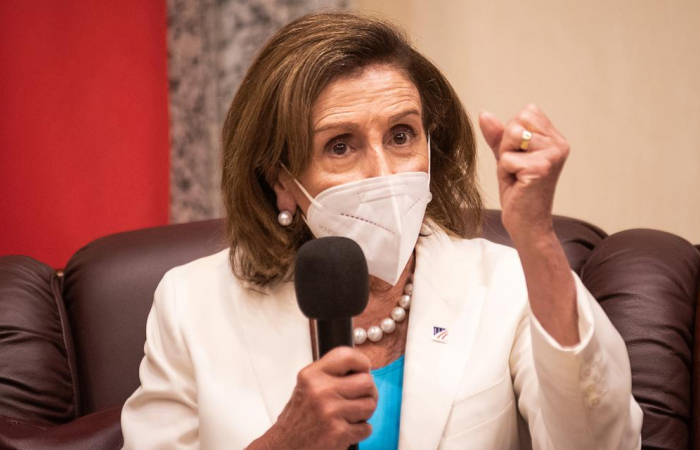
Since February 24, 2022, the international community's focus was concentrated entirely on the war in Ukraine and the growing Russia – West confrontation. It seemed that nothing could change the situation until the end of hostilities in Ukraine. However, on August 2 and 3, almost everyone’s attention shifted from Ukraine to Taiwan. As the Speaker of the US House of Representatives, Nancy Pelosi, stated her intention to visit Taiwan, up to half a million people were watching the trajectory of her plane on air flight tracking sites. The negative reaction of China, including the warning of President Xi during his conversation with President Biden that those who played with fire would be perished by it, created hype around this visit. Many were discussing the possibility of Chinese military jets closing the airspace over Taiwan and preventing Pelosi’s plane from landing in Taiwan, while some enthusiasts were even contemplating the possibility of a US-China direct military clash. As Pelosi landed in Taiwan and met with the Taiwanese President, the global social media was full of amateur assessments about the strategic victory of the US and the confirmation of the US global hegemony. However, as the dust settles down, and information noise and manipulation eventually decreases, a more serious assessment is needed to understand the real consequences of this visit.
Editor's choice
GULF CRISIS
Russia and China veto UNSC resolution, whilst Trump calls for erasing Iranian civilisation

Russia and China veto UNSC resolution, whilst Trump calls for erasing Iranian civilisation

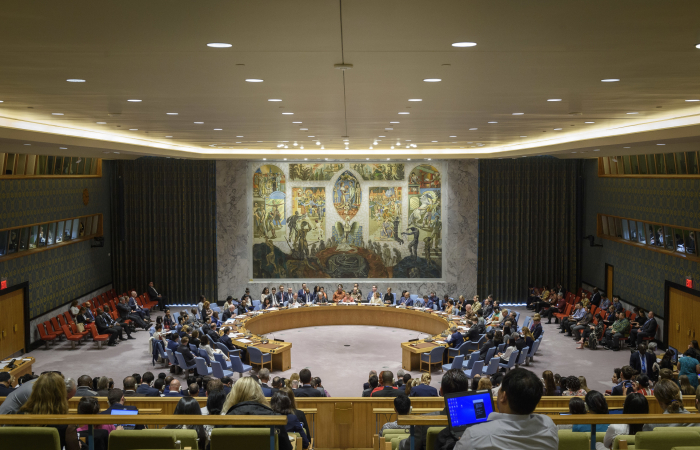
Russia and China on Tuesday vetoed a UN Security Council resolution aimed at reopening the Strait of Hormuz that had been repeatedly watered down in hopes those two countries would abstain. The vote — 11 in favor, two against and two abstentions — took place just hours before an 8 p.m. Eastern deadline set by US President Donald Trump for Iran to open the strategic waterway or face attacks on its power plants and bridges. One-fifth of the world’s oil typically passes through the strait, and Iran’s stranglehold during the war has sent energy prices soaring. The initial Bahrain proposal would have authorized countries to use “all necessary means” — UN wording that would include military action — to ensure transit through the Strait of Hormuz and deter attempts to close it. After Russia, China and France, all veto-wielding countries on the 15-member Security Council, expressed opposition to approving the use of force, the resolution was revised to eliminate all references to offensive action. It would have authorized only “all defensive means necessary.” A vote had been expected on Saturday. But instead the resolution was further weakened to eliminate any reference to Security Council authorization — which is an order for action — and limit its provisions to the Strait of Hormuz. Previous drafts had included adjacent waters. The resolution vetoed Tuesday "strongly encourages states interested in the use of commercial maritime routes in the Strait of Hormuz to coordinate efforts, defensive in nature, commensurate with the circumstances, to contribute to ensuring the safety and security of navigation across the Strait of Hormuz.” This should include escorting merchant and commercial vessels, and deterring attempts to close, obstruct or interfere with international navigation through the strait, it says. The resolution also demanded that Iran immediately halt attacks on merchant and commercial vessels and stop impeding their freedom of navigation through the Strait of Hormuz and attacking civilian infrastructure. In response to the US and Israeli attacks beginning on Feb. 28, Iran has targeted hotels, airports, residential buildings and other civilian infrastructure in more than 10 countries, including the Islamic Republic's Gulf neighbors, some of the world’s major exporters of oil and natural gas. Iran's blockade in the strait is seen by Gulf nations as an existential threat. Bahrain, a Gulf nation that hosts the US Fifth Fleet and is the Security Council’s Arab representative and its president this month, has been pressing for UN action. At the same time, Trump on Monday demanded again that Iran reopen the Strait of Hormuz after heaping praise on the US military for the daring rescue of two crewmen of a fighter jet shot down in Iran. The Republican president warned Iran that the "entire country can be taken out in one night, and that might be tomorrow night.” He repeated the warning on Tuesday, saying a “whole civilization will die tonight” if Tehran does not meet his deadline to agree to a deal that includes reopening the Strait of Hormuz. Russia’s UN Ambassador Vassily Nebenzia and China’s UN Ambassador Fu Cong have blamed the US and Israel for starting the war and sparking an expanding global crisis. They told the Security Council last week that the most urgent priority now is to end military operations immediately. In response to Iran’s strikes against its Gulf neighbors, the Security Council adopted a Bahrain-sponsored resolution on March 11 condemning the “egregious attacks” and calling for Tehran to immediately halt its strikes. That resolution, adopted by a vote of 13-0 with Russia and China abstaining, also condemned Iran’s actions in the Strait of Hormuz as a threat to international peace and security and called for an immediate end to all actions blocking shipping. (click image to read full report)
Editor's choice
News
Azerbaijan president Aliyev makes short official visit to Georgia

Azerbaijan president Aliyev makes short official visit to Georgia

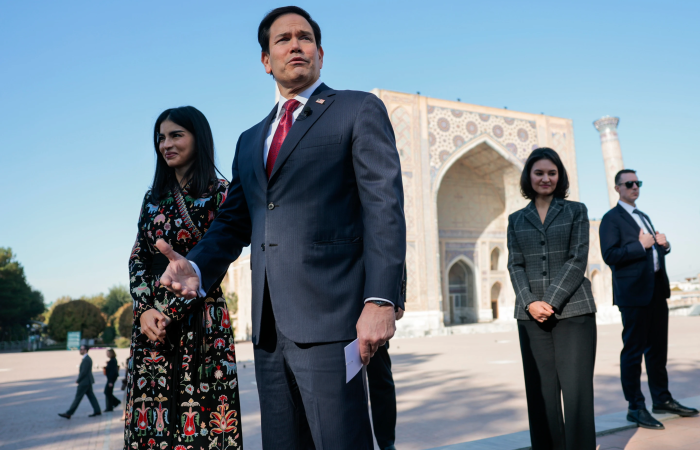
Azerbaijan President Ilham Aliyev on Monday (6 April) made an official visit to Georgia. During the visit, which lasted only for a few hours, Aliyev held meetings with the country's leadership, including the de facto political leader, Bidzina Ivanishvili, the honorary president of the ruling Georgian Dream party. Speaking at a press briefing with Georgian Prime Minister Irakli Kobakhidze. Aliyev said that the South Caucasus was becoming a center of peace, security, and cooperation. "I would also like to note the role of Georgia here. The Georgian Prime Minister noted the peace between Armenia and Azerbaijan. Trade is also important in this area. Today, trade between Azerbaijan and Armenia is carried out through Georgia. For this, I would like to thank Georgia"
Editor's choice
GULF CRISIS
  "Tuesday, 8:00 P.M. Eastern Time"

  "Tuesday, 8:00 P.M. Eastern Time"

The deadline given by US president Donald Trump for the “opening” by Iran of the Straits of Hormuz is approaching. "Tuesday, 8:00 P.M. Eastern Time!" will not mark the end of the world. But it will be the end of the Middle East as we know it. Trump delivered his ultimatum in the most unorthodox way for a world leader. The paragraph below contains very strong language, which we do not usually allow on commonspace.eu, but given the fact that they were written by the president of the United States in a public post, we are making an exception. Trump says: "Tuesday will be Power Plant Day, and Bridge Day, all wrapped up in one, in Iran. There will be nothing like it!!! Open the Fuckin’ Strait, you crazy bastards, or you’ll be living in Hell - JUST WATCH! Praise be to Allah. President DONALD J. TRUMP". Iran have made it clear that if their oil and water infrastructure is attacked, they will reciprocate by attacking similar infrastructure in neighbouring GCC countries. Given the dependence of these states on energy resources for their economies, and on desalination plants for their water, within days we will see a total change of reality in the Middle East. Sane people all over the world are calling for de-escalation and a return to negotiations. This war should never have started, but now it must stop. This is not a game and not a movie. "Tuesday, 8:00 P.M. Eastern Time!" must not become a deadline leading to a tragic end for the Middle East. It can and should mark the moment of a new beginning for the region. (This is a comment by the editorial team of commonspace.eu).
Editor's choice
News
Pope Leo XIV, has called on world leaders to lay down their weapons and choose “encounter” over domination

Pope Leo XIV, has called on world leaders to lay down their weapons and choose “encounter” over domination

The leader of the Catholic Church, Pope Leo XIV, has called on world leaders to lay down their weapons and choose “encounter” over domination. “Let those who have weapons lay them down!”, the Pope urged on Easter Sunday in his traditional Urbi et Orbi message. Speaking to the tens of thousands of pilgrims gathered in St Peter's Square, Pope Leo urged "those who have the power to unleash wars" to chose peace.  This should not be a peace “imposed by force”, he stressed, but one achieved through dialogue – “not with the desire to dominate others, but to encounter them”. Pope Leo warned that the world is “growing accustomed to violence”. We are “becoming indifferent”, he said, not only to the deaths of thousands of people, but to the “hatred and division” war causes, as well as its “economic and social consequences”. Borrowing a phrase from the late Pope Francis, Pope Leo warned of the “ever-increasing ‘globalisation of indifference’”. “We cannot continue to be indifferent!”, he urged. “We cannot resign ourselves to evil!”. For this reason, he said, he would be leading a prayer vigil for peace next Saturday, April 11th, in St Peter’s Basilica.
Editor's choice
News
Israel destroys 17 UNIFIL Cameras

Israel destroys 17 UNIFIL Cameras

Israeli forces destroyed 17 surveillance cameras linked to the United Nations peacekeepers’ main headquarters in southern Lebanon in 24 hours, a UN security official told AFP on Saturday. Since the start of the Israel-Hezbollah war on March 2, the UN Interim Force in Lebanon (UNIFIL) has been caught in the crossfire in the country’s south, with Hezbollah launching attacks on Israel and its troops, and Israeli forces pushing into border towns. The official, who requested anonymity, said “17 of the headquarters’ cameras have been destroyed by the Israeli army” in the coastal town of Naqura. UNIFIL spokeswoman Kandice Ardiel told AFP on Saturday that “the cameras appear to have been destroyed by some kind of laser.” She added that “(Israeli) soldiers are present in Naqura and have been undertaking massive demolitions of buildings in the village this week.” Earlier this week, Ardiel told AFP that “not only have these demolitions destroyed civilian homes and businesses, but the strength of the blasts have caused damage to UNIFIL’s headquarters.” Three Indonesian peacekeepers from the UN force have been killed in two separate incidents over the past week. UNIFIL also reported Friday an “explosion” in one of its bases near Odaisseh in south Lebanon that wounded three personnel, adding that they “do not yet know the origin of the explosion.” The Israeli army accused Hezbollah of firing “a rocket that landed in a UNIFIL outpost.” The UN office in Jakarta said on Saturday the wounded were Indonesian. Indonesia condemned the incident as “unacceptable,” saying “these events underscore the urgent need to strengthen protection for UN peacekeeping forces amid an increasingly dangerous conflict situation.” According to the UN, 97 force members have been killed in violence since its establishment in 1978 to monitor the withdrawal of Israeli forces after they invaded Lebanon.