A webinar hosted by the SETA Foundation for Political, Economic and Social Research on 13 March brought together regional experts to assess the implications of the ongoing US–Israel–Iran war for the South Caucasus. Moderated by Assoc. Prof. Murat Aslan of Hasan Kalyoncu University and SETA, the discussion featured Mr. Məhəmməd Məmmədov of the Topchubashov Center in Azerbaijan, Dr. Benyamin Poghosyan of APRI Armenia, and Dr. Kenan Aslanlı of Ankara Yıldırım Beyazıt University (AYBU).
The panel examined how escalating regional tensions are reshaping security, energy and connectivity dynamics across the South Caucasus. For the region, the immediate concern is whether the conflict will expand and destabilise an area already navigating fragile peace efforts, shifting energy dynamics and competing geopolitical pressures. One positive development, however, is that the war has not so far derailed contacts between Armenia and Azerbaijan.
Strategic importance grows alongside vulnerability
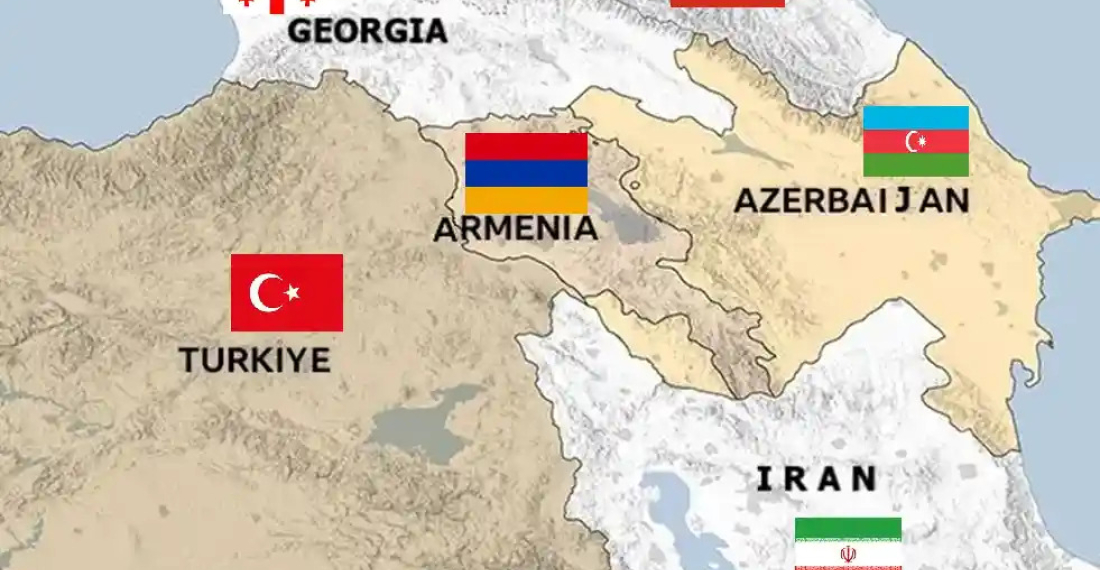
Türkiye, Azerbaijan and Armenia are all acutely aware of the risks. The region sits at the intersection of major connectivity projects, energy corridors and geopolitical competition. Its strategic importance has increased as an alternative route linking Central Asia to Europe, but so too have its vulnerabilities. Russia remains a key actor, developments in Georgia are consequential, and the wider balance of power is fragile.
From Azerbaijan’s perspective, Məmmədov argued that the conflict presents both risks and opportunities. As the only country bordering both Russia and Iran, Azerbaijan is especially exposed to spillover effects. The widening conflict and the targeting of energy-related infrastructure in the broader region have sharpened concerns in Baku, given Azerbaijan’s close ties with both Israel and Türkiye and its role as a major energy exporter.
Baku adopts cautious deterrence strategy
Baku has responded cautiously, adopting what Məmmədov described as a balancing strategy aimed at signalling deterrence while avoiding direct involvement. After Azerbaijan said Iranian drones crossed into its territory in Nakhchivan, injuring four people, it evacuated diplomatic staff from Iran. It was later reported that Azerbaijan reopened border crossings with Iran for cargo traffic.
Məmmədov argued that the risk of miscalculation is heightened by the complexity of Iran’s internal power structure. Azerbaijan has historically tried to manage tensions with Iran while preserving areas of practical cooperation, but wartime conditions make that balance harder to sustain.
Armenia’s dependence on Iran routes; urgency of advancing Armenia–Azerbaijan peace
From the Armenian perspective, Poghosyan stressed that stability in Iran is essential. With its borders with Türkiye and Azerbaijan closed, Armenia depends heavily on Georgia and Iran as its two open land routes. Prolonged instability could disrupt supply chains, increase inflationary pressures and create broader humanitarian and economic strain.
Poghosyan also stressed the urgency of advancing regional peace. While progress has been made, including the joint declaration signed in Washington on 8 August 2025, peace between Armenia and Azerbaijan remains incomplete and vulnerable to political change and external shocks. Full normalisation between Armenia and Türkiye remains closely linked to that process, meaning a peace agreement could open the way to broader regional integration.
Energy as a central pillar of modern conflict
Energy dynamics form a central pillar of the current crisis. As Aslanlı argued, energy now serves multiple roles in modern conflict: it is a strategic objective, a tactical instrument and increasingly a direct operational target. Recent attacks on energy infrastructure across the Middle East show how exposed critical infrastructure has become.
The war has reinforced the importance of alternative energy corridors. With routes through Russia constrained and southern routes via Iran unstable, the Middle Corridor linking Central Asia to Europe via the South Caucasus and Türkiye has gained prominence. Azerbaijan already plays an important role in supplying gas westward, though production constraints mean any gains are likely to come more from prices than from a sharp increase in output.
At the same time, risks are growing. If instability spreads further, pipelines, maritime routes and other infrastructure could come under greater pressure. Security, long treated as secondary to connectivity, is becoming central.
Economically, the region faces a mixed outlook. Higher energy prices may benefit Azerbaijan, but inflationary pressure, especially in food and commodities, will affect all countries. The South Caucasus retains advantages in location and resources, but weak coordination, regulatory fragmentation and limited infrastructure integration continue to constrain its potential.
Nuclear risks and proliferation concerns
Finally, the discussion turned to the nuclear dimension. Rising enrichment levels in Iran and wider global trends point to a renewed period of nuclear competition. Məmmədov warned that any Iranian move toward nuclear weapons capability could trigger a broader regional arms race. Poghosyan reiterated Armenia’s support for nuclear non-proliferation and warned that further nuclearisation would weaken regional security.
At the same time, nuclear energy is regaining importance globally, driven by energy-security concerns and decarbonisation goals. This is visible in Europe and also in the South Caucasus. Türkiye is expanding its nuclear capacity through Akkuyu, while Armenia’s government has said it has decided to pursue small modular reactor technology.
For the South Caucasus, this presents both risks and opportunities. Regional cooperation in nuclear research and technology could emerge as a new area of engagement, though geopolitical tensions may limit that scope.
The war has reinforced the South Caucasus’ strategic importance while also exposing its vulnerabilities. The region faces a narrowing window to consolidate peace, strengthen connectivity and adapt to shifting energy and security dynamics.