The year 2025 marked a defining moment in Azerbaijan’s energy journey. Long recognized as a cornerstone of Eurasian oil and gas supply, the country did not abandon its hydrocarbon legacy but reframed it, leveraging existing credibility to accelerate a strategic pivot toward renewables, electricity exports, and green energy diplomacy. By the end of the year, Azerbaijan strengthened its position as a stabilizing force in Europe’s gas security and a rising hub for clean energy transmission across continents.
Natural gas exports, amounting to 25bcm per year, continued to play a critical role in Azerbaijan’s energy policy assisting the country’s overall foreign policy and geopolitical standing. Through the Southern Gas Corridor (SGC), Azerbaijani gas reached 14 countries, ten of them in Europe, including eight EU member states. Daily exports to Europe averaged around 35 million cubic meters, reinforcing Azerbaijan’s reputation as a reliable supplier at a time when European energy diversification remained a strategic imperative.
Baku signaled readiness to increase gas supplies to Europe from its existing level (around 13bcm) but stressed the need for long-term demand guarantees. Without investment certainty, further expansion of upstream production and pipeline capacity would not be economically viable.
During his visit to Slovakia on 8-9 December, President Ilham Aliyev of Azerbaijan assured that his country has enough resources to increase gas exports to Europe. “As new gas fields are developed, we will obtain additional resources, and it will naturally become possible to supply Azerbaijani gas to both Slovakia and its neighboring countries in even larger volumes,” the president noted during his press conference with his Slovakian counterpart.
While natural gas retained its geopolitical prominence, Azerbaijan’s oil and petroleum sector in 2025 reflected both continuity and adaptation.
Crude oil production of Azerbaijan continued its gradual decline in 2025, projected at 28.5 million tons, in line with a long-term shift from oil dominance toward a more diversified energy portfolio. In terms of the oil industry, a politically and economically significant development was the SOCAR–ExxonMobil Memorandum of Understanding signed in Washington during President Aliyev’s visit on August 7-8. Azerbaijan is hopeful about the discovery of a major unconventional oil field in the country with the support of US energy giant ExxonMobil, Economy Minister Mikayil Jabbarov said following the Washington visit of President Aliyev. Beyond technical collaboration, this MoU anchored U.S. economic engagement in Azerbaijan’s energy future, reinforcing investment confidence in the South Caucasus at a sensitive geopolitical moment.
Refining and export trends revealed nuanced dynamics. For the first ten months of 2025, Azerbaijan exported a total of 10,650 tons of gasoline. This included 6,457 tons of Aİ-92 and 4,196 tons of the higher-octane Aİ-95 grade. Aİ-92 gasoline went primarily to Türkiye (47%), Afghanistan (36%), and Georgia (17%), while Aİ-95 was shipped exclusively to Georgia. Despite the modest volumes, the introduction of Aİ-95 gasoline into export markets marked a strategic move toward higher-value products and diversified market offerings.
December 2025 brought a landmark development in regional energy trade. For the first time, SOCAR exported 1,220 tons of locally produced Aİ-95 gasoline to Armenia, loaded in 22 railcars. This shipment, the first petroleum trade between Azerbaijan and Armenia, occurred even as a formal peace treaty remained pending, signaling a cautious but meaningful step toward economic normalization and post-conflict market integration.
That said, on the production side, structural shifts were evident. While oil output continued its gradual decline, natural gas, by contrast, offered growth potential. New production from the deep layers of Azeri-Chirag-Gunashli, progress toward Absheron Phase 2 (adding at least 3 bcm annually), and renewed interest in fields such as Babak (400 bcm reserves) and Umid (at least 200 bcm) signaled a strategy focused on stability rather than volume maximalism.
Renewables: From Policy Vision to Physical Infrastructure
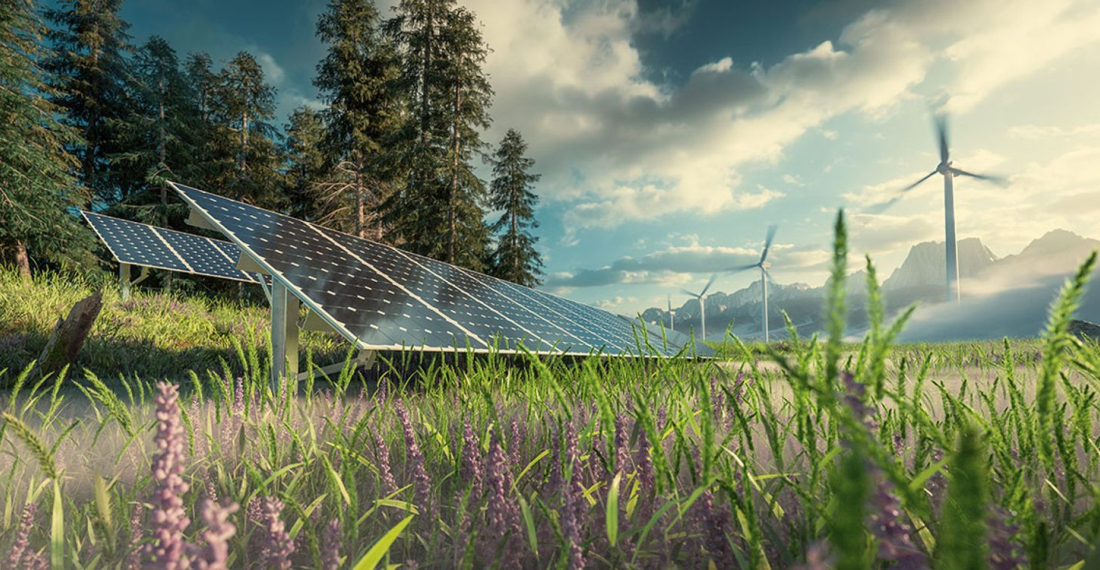
What set 2025 apart was the speed with which Azerbaijan moved from renewable ambition to execution. The government announced plans to commission more than ten solar and wind plants in the next two years, totaling over 2,000 MW in capacity and $2.7 billion in investments. By 2030, renewables are expected to account for 38 percent of national energy production, with ambitions to generate over 6 GW of combined onshore and offshore solar and wind energy by 2032.
This transformation rests on exceptional natural resources. Azerbaijan’s renewable technical potential is estimated at 135 GW onshore and 157 GW offshore, with Caspian Sea wind resources ranking second globally after the North Sea. By the end of 2025, the country operated 1,829 MW of renewable capacity – around 18.8% of total installed electricity capacity – with more than 2 GW planned by 2027.
Several projects underscored Azerbaijan’s irreversible momentum in renewables. The Garadagh Solar Power Plant (230 MW), developed with Masdar from the United Arab Emirates, produced over one billion kWh within two years since its launch in October 2023, saving 110 million cubic meters of gas annually and avoiding 200,000 tons of CO₂ emissions.
The Khizi–Absheron Wind Power Plant (240 MW), being constructed with the Saudi company ACWA Power, advanced toward full grid connection. In parallel, the bp-backed Shafag Solar (240 MW) in Jabrayil progressed in construction, utilizing an innovative virtual power transfer model to decarbonize the Sangachal terminal by roughly 50%.
Masdar’s mega-projects – including Bilasuvar (445 MW), Neftchala (315 MW), and Absheron-Garadagh wind (240 MW) – reinforced Azerbaijan’s appeal to global investors, with the first Bilasuvar modules installed in October. In the liberated territories of Karabakh and East Zangezur, projects such as Nobel Energy's Ufug and Shams solar plants (each 50 MW) saw foundations laid, advancing post-conflict reconstruction while aligning with sustainability goals. The vast renewable energy potential of the liberated territories promises to play significant role in Azerbaijan’s green energy transition.
In 2025 Azerbaijan emerged as a regional hub for green electricity transit and export
Green energy corridors developed with Azerbaijan’s participation are designed to leverage the country’s geographical location at the crossroads of Europe and Asia, its abundant renewable resources, and its growing electricity infrastructure to connect renewable energy producers with high-demand markets.
The Black Sea Submarine Cable, on which Azerbaijan, Georgia, Romania and Hungary first signed an agreement in December 2022, exemplifies this approach. Stretching approximately 1,195 km and linking the above-named countries, the project received EU Project of Mutual Interest (PMI) status in December 2025. This recognition not only accelerates funding and regulatory support but also embeds the corridor within Europe’s strategic energy infrastructure. Once operational, the cable will transmit 1,000–1,300 MW of renewable electricity, effectively turning Azerbaijan into a gateway for clean power to European markets. Construction of the Black Sea Energy Cable is estimated at €3.5 billion and will take 3-4 years. The European Commission plans to allocate €2.3 billion to the project. Beyond technical capacity, the corridor carries broader geopolitical significance: it positions Azerbaijan as a reliable partner in Europe’s renewable energy diversification, complementing its traditional role in natural gas supply.
Complementing this, the Central Asia–Azerbaijan green energy corridor was institutionalized following COP29 in 2024. Formal agreements with Kazakhstan and Uzbekistan, supported by a Baku-based joint venture and backed by feasibility studies from the Asian Development Bank (ADB) and the Asian Infrastructure Investment Bank (AIIB), aim to channel renewable electricity from Central Asia through Azerbaijan to Europe. This corridor taps into Central Asia’s significant solar and wind potential, allowing surplus green electricity from Kazakhstan and Uzbekistan to reach high-demand markets efficiently.
In parallel, a Memorandum of Understanding (MoU) was signed in April 2025 between Azerbaijan, Georgia, Türkiye, and Bulgaria and formalized cross-border renewable electricity transmission and trade between the sides. This will serve as another corridor carrying Azerbaijani electricity produced from renewable sources to the European market. This initiative aims not only to expand physical interconnectors but also to integrate national grids with the European Network of Transmission System Operators for Electricity (ENTSO-E). The agreement sets the stage for deeper regional energy integration, enabling flexible, large-scale electricity flows, balancing variable renewable generation, and strengthening energy security.
In conclusion, by the close of 2025, Azerbaijan succeeded to preserve its role as a gas security provider for Europe while constructing cables, turbines, solar panels, and financial instruments that anchor a renewable future.
Rather than treating the energy transition as a rupture, Azerbaijan approached it as a gradual process, balancing continued hydrocarbon production with investments in renewable energy and cross-border connectivity. As a result, 2025 reflected a consolidation of this dual-track approach, with Azerbaijan simultaneously maintaining its traditional energy role and expanding its participation in emerging green energy networks.