Filter archive

Publication date
Authors
Editor's choice
Opinion
Opinion: Armenia’s 2026 Post-Election Landscape: Stable Majorities, Constitutional Realities, and the Architecture of "Active Balance"

Opinion: Armenia’s 2026 Post-Election Landscape: Stable Majorities, Constitutional Realities, and the Architecture of "Active Balance"

The finalization of preliminary data from all 2,005 polling stations following Armenia’s parliamentary elections has yielded a deceptively straightforward result. While the ruling Civil Contract party captured 49.81% of the popular vote, falling just short of an absolute majority among the electorate, the cold mechanics of the d'Hondt method and the natural elimination of minor lists under the updated threshold transformed this plurality into a commanding 60.95% legislative majority. Civil Contract has organically secured 64 out of the 105 baseline mandates, easily crossing the constitutionally required 54% threshold for a "stable majority." By completely eliminating the prospect of a second-round runoff or the necessity of building a coalition, this outcome allows Nikol Pashinyan to retain the premiership and form a unilateral executive. The remaining seats have been distributed between a fragmented opposition: the "Strong Armenia" bloc secured 29 mandates, while the "Armenia" bloc obtained 12. The Prosperous Armenia Party failed to cross the updated threshold, settling at 4.00% before final ballot adjustments.

Editor's choice
Analysis
Analysis: Armenia's July application to join the Shanghai Cooperation Organization underscores its commitment to a diversified foreign policy

Analysis: Armenia's July application to join the Shanghai Cooperation Organization underscores its commitment to a diversified foreign policy

In July 2025, Armenia officially applied to become a full member of the Shanghai Cooperation Organization (SCO), marking a significant step, underscoring its commitment to a diversified foreign policy amidst shifting regional dynamics. In this analysis, Johnny Melikian, Senior Research Fellow at Orbelli Centre in Yerevan, discusses the reasons behind Armenia's move. This application is more than a simple institutional maneuver, he argues; “it encapsulates Yerevan’s strategic search for geopolitical stability, economic partnerships, and regional relevance in an increasingly complex Eurasian theater.” As Prime Minister Nikol Pashinyan confirmed during a press conference on July 16, the move reflects Armenia’s pursuit of a balanced and balancing foreign policy amidst shifting global and regional dynamics.
Editor's choice
Opinion
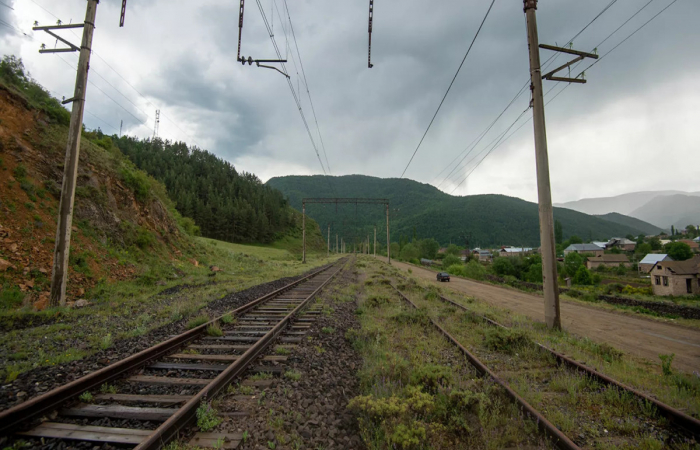
Armenia-Azerbaijan connectivity is crucial for the future of the South Caucasus, and important also for partners beyond

Armenia-Azerbaijan connectivity is crucial for the future of the South Caucasus, and important also for partners beyond

Johnny Melikian and Ramazan Samadov are members of a Joint Liaison Group of Armenian and Azerbaijani experts preparing a report on how confidence building measures can support lasting peace in the South Caucasus. In this joint paper they discuss the important role of connectivity, which they say is a key factor in building the region's future.