Filter archive

Publication date
Editor's choice
Opinion
Opinion: The future of the China-US-Russia triangle after Pelosi's visit to Taiwan

Opinion: The future of the China-US-Russia triangle after Pelosi's visit to Taiwan

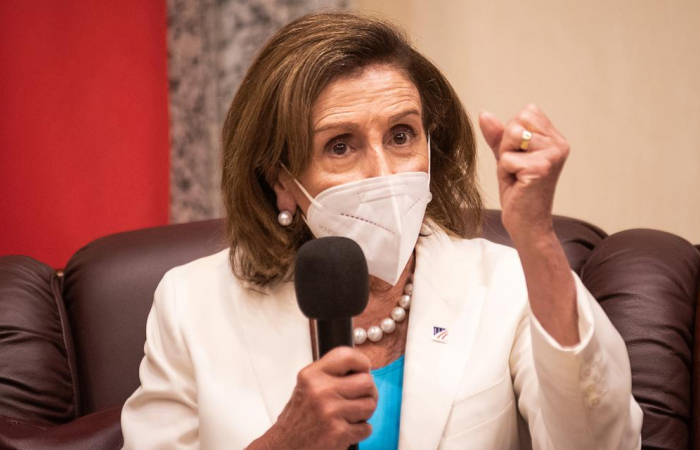
Since February 24, 2022, the international community's focus was concentrated entirely on the war in Ukraine and the growing Russia – West confrontation. It seemed that nothing could change the situation until the end of hostilities in Ukraine. However, on August 2 and 3, almost everyone’s attention shifted from Ukraine to Taiwan. As the Speaker of the US House of Representatives, Nancy Pelosi, stated her intention to visit Taiwan, up to half a million people were watching the trajectory of her plane on air flight tracking sites. The negative reaction of China, including the warning of President Xi during his conversation with President Biden that those who played with fire would be perished by it, created hype around this visit. Many were discussing the possibility of Chinese military jets closing the airspace over Taiwan and preventing Pelosi’s plane from landing in Taiwan, while some enthusiasts were even contemplating the possibility of a US-China direct military clash. As Pelosi landed in Taiwan and met with the Taiwanese President, the global social media was full of amateur assessments about the strategic victory of the US and the confirmation of the US global hegemony. However, as the dust settles down, and information noise and manipulation eventually decreases, a more serious assessment is needed to understand the real consequences of this visit.
Editor's choice
Monday Commentary
Monday Commentary: Armenians and Azerbaijanis are carving a new South Caucasus

Monday Commentary: Armenians and Azerbaijanis are carving a new South Caucasus

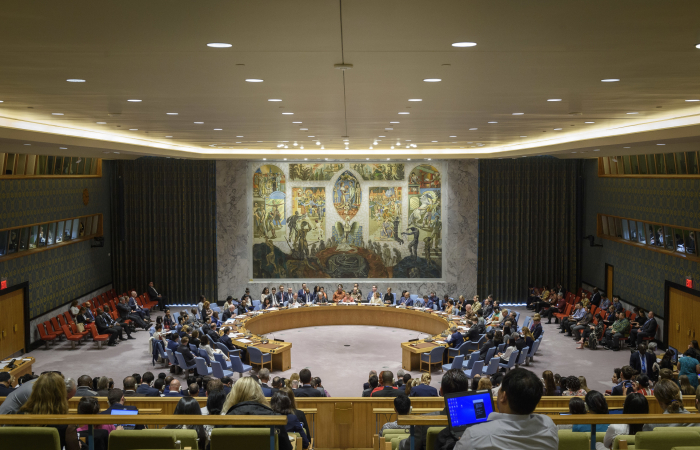
For many years, the international community was telling the governments of Armenia and Azerbaijan to prepare their populations for peace. Instead, they prepared them for war, which eventually came in 2020, followed by a period of uncertainty. In the last year the two sides turned the page. In March 2025 they agreed the elements of a peace agreement. On 8 August, at a historic meeting in the White House, this agreement was initialed. Since then, the two sides have taken huge, unprecedented steps to achieve peace and reconciliation. On 13 February, twenty Azerbaijani civil society experts walked across the border with Armenia, presented their passports at an Armenian border checkpoint and entered Armenia, to be welcomed by 20 Armenian counterparts, with who they spent the next two days discussing future regional peace and co-operation. The symbolism and importance of this event is huge. Even if you accept that this was a tightly choreographed affair, managed by the two governments, its importance is unquestionable. There will now be a “return” event. The 20 Armenians involved in the process will go to Azerbaijan. The arrival of the large Azerbaijani group in Armenia was in the framework of the “Peace Bridge”, which started taking shape in October of last year. This has two characteristics, which make it special, relevant and ground breaking. The first is that the initiative not only has government backing, but has two important “patrons” – presidential adviser in Azerbaijan, Hikmet Haciyev; and Armenian National Security Council Secretary, Armen Grigoryan. These two men did most of the heavy lifting behind the scenes to get the peace process on the right track. So there is a bit of a haze between track 1 and track 2, but in this case it is all for the better. The second important element, is that this is an all-local initiative. There is no foreign funding; no external NGO, or any other outside involvement. This is hugely significant and important. One also needs to commend the transparency of the process. The names of those participating on both sides were published.There is no conflict anymore between Armenia and Azerbaijan. Armenians and Azerbaijanis, at official level, and at civil society level, are talking directly to each other without intermediaries. This is something to be celebrated. That part of our work is done, and we should be happy and satisfied. We contributed as much as anyone so that the sides could reach this point. Now its time to move on. (click image to read the full Monday Commentary)
Editor's choice
News
The British prime minister says Europe must "stand on its own two feet" when it comes to defence

The British prime minister says Europe must "stand on its own two feet" when it comes to defence

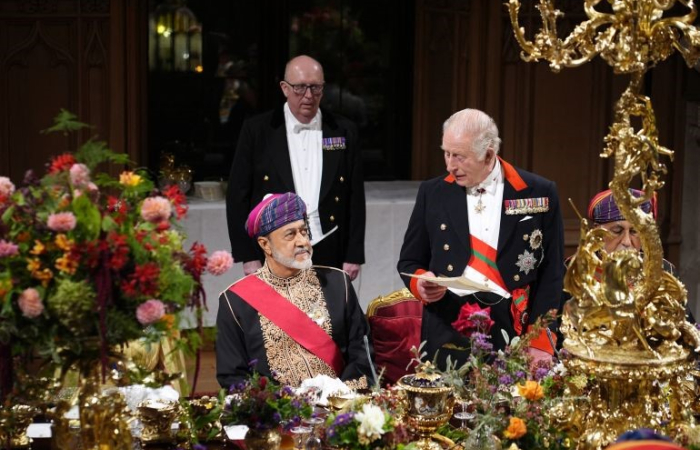
The UK will deploy a carrier strike group, led by the aircraft carrier HMS Prince of Wales to the Arctic and the High North as part of efforts to bolster security against Russian threats. British prime minister, Sir Keir Starmer announced the deployment in a speech on Saturday (14 February) at the Munich Security Conference. Europe must be ready to fight to protect its people, values, and way of life,  Sir Keir told the Conference. Starmer also called for deeper links and cooperation, including economic ties, between the UK and EU. The PM stressed the continent must "stand on its own two feet" when it comes to defence commitments. "We must build our hard power, because that is the currency of the age," he told the conference. (Click image to read the full story).
Editor's choice
Opinion
A new chapter in US relations with the South Caucasus

A new chapter in US relations with the South Caucasus

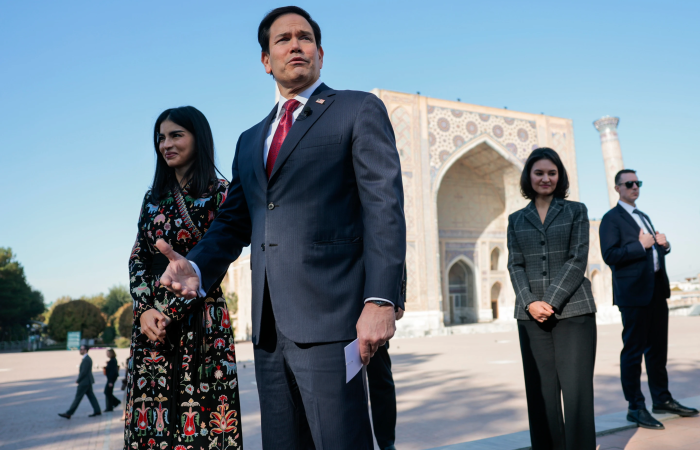
The visit of US Vice President, J.D. Vance, to the South Caucasus was a success and achieved all the main American immediate objectives. And this time the main American partner is not Georgia, but Armenia and Azerbaijan. This was not just a symbolic protocol visit, although there was a lot of that and the significance and symbolism would have come across clearly in both Moscow and Tehran. But there was also substance. The US Vice President visited Armenia on Monday (9th February), and Azerbaijan on Tuesday (10th February). In Yerevan, the Vice President and Armenia’s Prime Minister Nikol Pashinyan signed a joint statement on the completion of negotiations on a 123 Agreement, which establishes a legally binding framework for peaceful nuclear cooperation between the U.S. and partner countries. While in Azerbaijan, Vance and Azerbaijani President Ilham Aliyev signed a Strategic Partnership Charter between the U.S. and Azerbaijan that covers regional connectivity, economic investment, and security and defense issues. The guests were happy, and the hosts were delighted. Not so Russia. The Kremlin has always saw the South Caucasus as its backyard. Armenia had traditionally been compliant; Azerbaijan tried to present a balanced approach, and even Georgia, except for a fleeting moment in the second part of the Saakashvili’s government, never failed to understand Russian interests. The warmth with which the US Vice President was received in Baku  and Yerevan went beyond protocol niceties. It was genuine, and it would have worried the Kremlin. Neither Aliyev, nor Pashinyan, want a long messy problem with Russia. But they both basked in the warmth of the new found peace between them, that now is all but guaranteed by the United States. The visit of J.D. Vance to Armenia and Azerbaijan left the Georgian government looking silly. No amount of verbal massaging could hide the disappointment of being left out. The Georgians had got used to the fact that they were at the centre of the South Caucasus, and nothing could happen in the region without them. They now need to adjust to the new reality. Further mistakes and miscalculations need to be avoided. Where does that leave the EU? The European Union appears to have lost the initiative in the South Caucasus. Whilst there is some soul-searching going on in Brussels, there is a failure to accept that there is lack of strategy. Decisions are often taken as a result of momentary reflexes, or priorities of individual member states. The present lull must be used to articulate a clearer strategy towards the region. The summit of the European Political Community, in Yerevan, on 4 May, offers the EU an excellent opportunity to relaunch its message in the region. What next? The visit of J.D. Vance to the South Caucasus opened a new chapter in American relations with the South Caucasus. Yet for this chapter to be meaningful and long-lasting, there is yet a lot of work to be done.