


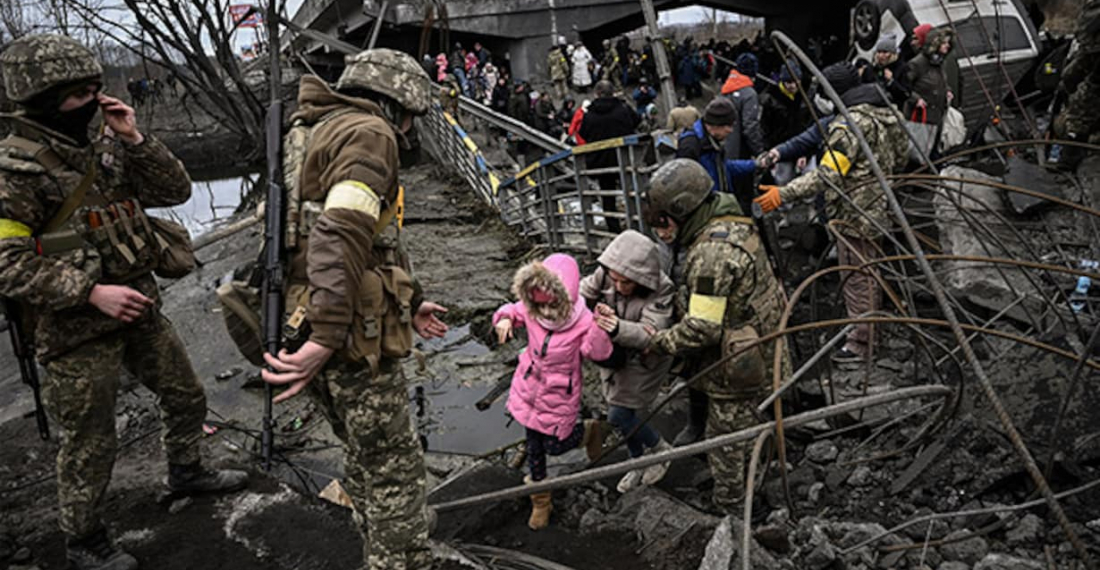
Russia launched a large-scale overnight missile and drone attack across Ukraine on Thursday (July 30), killing at least 14 people and injuring dozens in strikes that stretched from Kyiv to the country's western regions. The barrage came hours after Ukrainian President Volodymyr Zelensky warned that intelligence indicated a "high probability" of a massive Russian attack and renewed calls for allies to strengthen Ukraine's air defenses.
One person was killed and at least two others were injured in Kyiv, where multiple explosions were heard shortly after 1 a.m. local time on Thursday (10 p.m. GMT Wednesday). Air raid alerts sent residents into metro stations as Russian ballistic missiles and drones targeted the capital. In the surrounding Kyiv region, five additional people were reported injured.
The deadliest strike occurred near Kryvyi Rih, Zelensky's hometown, where a Russian Iskander-M ballistic missile hit a family home in the village of Radushne. Local military administration chief Oleksandr Vilkul said six members of the same family were killed, including two girls aged five and 12. Eight others, among them two children, were wounded. In a Telegram post, Vilkul described it as "a dark night," adding that rescue operations continued amid fears the death toll could rise.
Elsewhere, one person was killed in a drone strike on a private business in the central Poltava region, while at least six people died in Dnipropetrovsk region. In the western city of Lviv, Russian missiles damaged residential buildings, trapping people beneath the rubble and injuring at least 26. Emergency crews continued rescue efforts throughout the morning.
According to Zelensky, Russia launched more than 70 missiles and over 280 attack drones during the assault. Ukrainian air defenses intercepted more than 260 drones, but the president said the country's ability to repel ballistic missile attacks remains limited by a shortage of interceptor missiles.
"This Russian terror once again proves that protection against the Russian missile threat is the most important task when it comes to saving the lives of our people," Zelensky wrote on X. He stressed that Ukraine could not face the threat alone and again appealed for additional Patriot air defense systems and PAC-3 interceptor missiles.
The strikes followed Zelensky's visit to Washington on July 29, where he met U.S. President Donald Trump. Zelensky said the two discussed expanding Ukraine's air defense capabilities, including the possibility of producing Patriot interceptors under U.S. license. The latest attack underscored Ukraine's continued dependence on Western military support as Russia maintains its campaign of long-range missile and drone strikes more than four years after launching its full-scale invasion.
Source: commonspace.eu with Al Jazeera (Doha), CNN (Atlanta), France24 (Issy-les-Moulineaux) and agencies



