


Liberated head of antiterrorist forces in Mali surrenders to the police

The Divisional Police Commissioner, Oumar Samaké, commander of the Special Antiterrorist Force (FORSAT), in Mali went voluntarily to camp 1 of the Bamako gendarmerie on Monday (6 September), said a security source who requested anonymity.

Samaké had been forcibly released on Friday by heavily armed police officers, hours only after being detained in Bamako for his alleged role in the bloody crackdown on the July 2020 protest. His liberation had been seriously criticised by the government, magistrates' unions, politicians and ordinary citizens.

On Monday morning, Samaké, the police unions, and the Minister of Security held an emergency meeting on the issue of the former's surrender. According to a security source, it was a the end of this meeting that the minister asked the commander of the FORSAT to return to prison.

In a television statement the following day, the government asked "everyone to be reassured", assuring that the fight against impunity would continue.

 
source: commonspace.eu with RFi (Paris) and agencies.
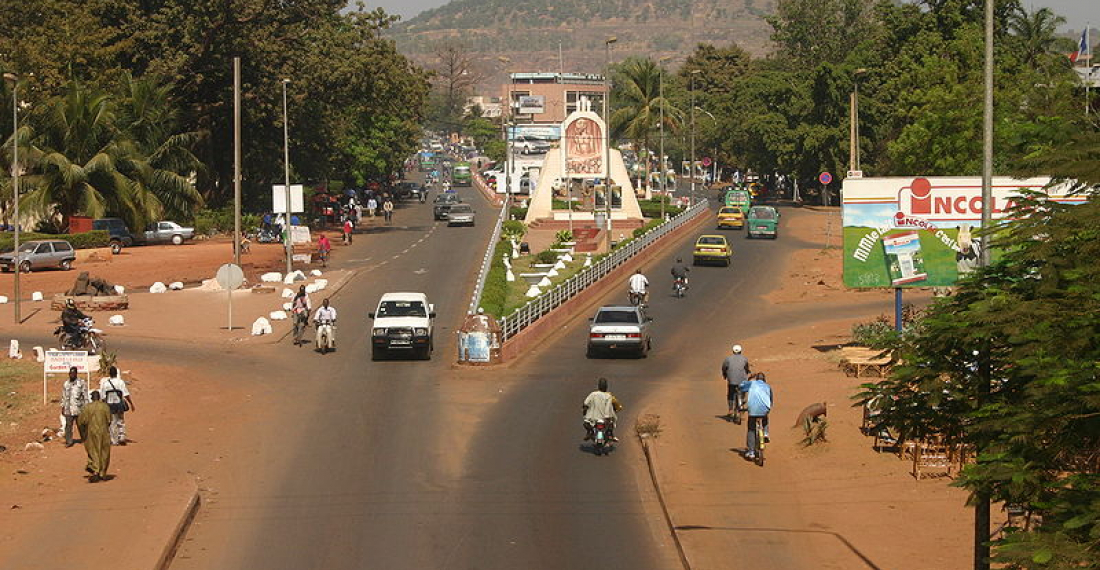
photo: Bamako, Mali; Robin Taylor.

Related articles

Popular

Editor's choice
Interview
Thursday Interview: Murad Muradov

Thursday Interview: Murad Muradov

Today, commonspace.eu starts a new regular weekly series. THURSDAY INTERVIEW, conducted by Lauri Nikulainen, will host  persons who are thinkers, opinion shapers, and implementors in their countries and spheres. We start the series with an interview with Murad Muradov, a leading person in Azerbaijan's think tank community. He is also the first co-chair of the Action Committee for a new Armenian-Azerbaijani Dialogue. Last September he made history by being the first Azerbaijani civil society activist to visit Armenia after the 44 day war, and the start of the peace process. Speaking about this visit Murad Muradov said: "My experience was largely positive. My negative expectations luckily didn’t play out. The discussions were respectful, the panel format bringing together experts from Armenia, Azerbaijan, and Turkey was particularly valuable during the NATO Rose-Roth Seminar in Yerevan, and media coverage, while varied in tone, remained largely constructive. Some media outlets though attempted to represent me as more of a government mouthpiece than an independent expert, which was totally misleading.  Overall, I see these initiatives as important steps in rebuilding trust and normalising professional engagement. The fact that soon a larger Azerbaijani civil society visits to Armenia followed, reinforces the sense that this process is moving in the right direction." (click the image to read the interview in full)

