Lets go to a museum - online!

 William Murray looks at what museums and galleries have to offer online during the crisis and how best to support them in this piece for commonspace.eu

With public places out of bounds, museums and galleries are finding the current coronavirus crisis particularly difficult to weather. In France, the gallery trade association, the Comité professionnel des galeries d'art, has stated that up to a third of all French art galleries could be forced to close their doors permanently by the end of the year, with losses from March to June estimated to reach €184m [1]. Likewise, in the US, the Metropolitan Museum of Art alone expects an $100m shortfall due to the pandemic and has already laid-off 81 employees [2]. Similar stories are popping up every day from all corners of the globe. Whilst all sectors are struggling, by supporting some of the new virtual initiatives by the museum and gallery sector, we can make our isolation a lot more interesting, whilst supporting culture institutions through virtual footfall.

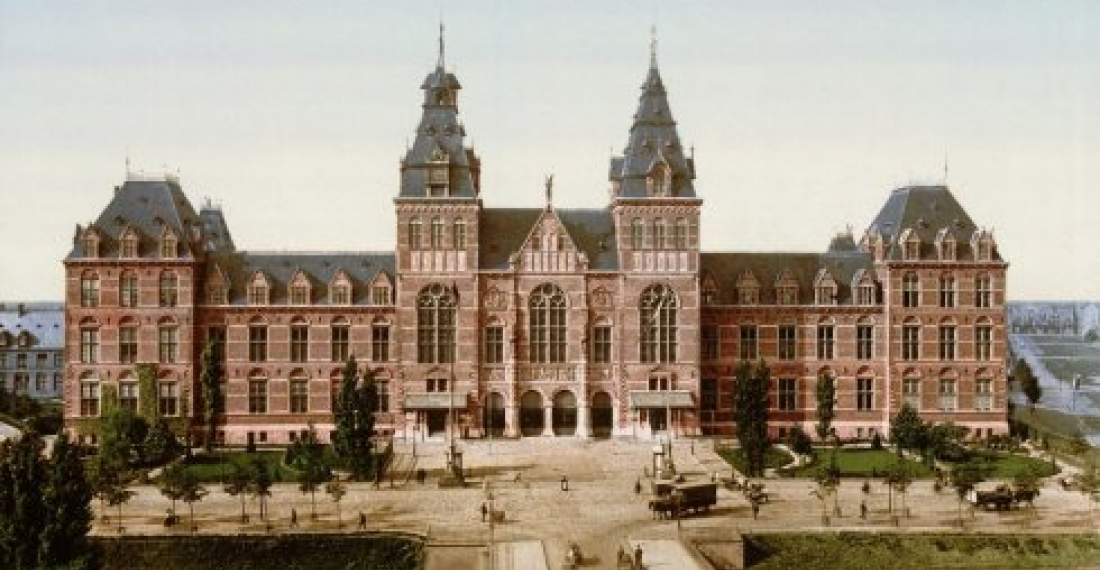
Whilst viewing artifacts through the screen of a computer will never be quite the same as looking at them in person, there is a silver lining. The pandemic has forced museum curators to be innovative and think hard about how best to provide virtual experiences for their patrons. Whilst it may no longer be possible to spend the day at your local museum, it has never been easier to get a taste of what museums are offering around the world. For example, alongside a digital tour, Amsterdam's Rijksmuseum is providing a number of experiences, including the video series #Rijksmuseumfromhome in which the curators discuss artifacts from both the museum and their own houses [3][4]. From Italy, Florence's Uffizi gallery has free virtual tours of its Hall of the Dynasties and the Galleries of Sixteenth-Century Venetian Painting [5]. And from Croatia, Zagreb's curious, award-winning Museum of Broken Relationships provides online its extensive collection of seemingly arbitrary objects, each of which with a personal story relating to someone's lost love [6]. The Google Arts & Culture project has collated a list of over 2200 museums and galleries that can be visited virtually, ranging from well-known state museums to virtual tours of heritage sites, like CERN - the European Nuclear Research Centre - in Geneva and the Eiffel Tower in Paris [7].

There is clearly a wealth of content available from some of the world's most notable institutions, but how can one best support their local museums and cultural sites, especially those with smaller budgets? Whilst we are limited in what we can do, certain museums are offering advanced tickets or seasons passes that will be valid once they are allowed to reopen. You can also support institutions through their online gift shops or by making a donation online. In reality, we must prepare to support such institutions once this crisis ends. Stay in touch with your local museums and galleries online to find out when they will be opening, and consider then planning a day out - there's little doubt that we will all be raring to get out of the house and spend a day absorbing different culture once this difficult period comes to an end.

What are museums and galleries where you live doing to stay afloat during this crisis? Let us know on twitter @commonspaceEU

Source: William Murray, Project Officer and Coordinator at LINKS Europe, for commonspace.eu

Featured Sources:

[1] The Art Newspaper - 'One third of French galleries could shut before end of 2020 due to coronavirus impact': https://www.theartnewspaper.com/news/one-third-of-french-galleries-could-shut-before-end-of-2020-due-to-coronavirus-impact

[2] ARTnews - 'Metropolitan Museum of Art Lays Off 81 Employees Amid Financial Uncertainty': https://www.artnews.com/art-news/news/met-museum-layoffs-coronavirus-1202684559/ 

[3] Rijksmuseum - 'Masterpieces Up Close': https://www.rijksmuseum.nl/en/masterpieces-up-close

[4] Rijksmuseum - '#Rijksmuseumfromhome': https://www.youtube.com/playlist?list=PLB_wSMz6npKOaxSuQ5k5sv8pIZqg4YQ1D 

[5] Uffizi Gallery - 'The Hall of the Dynasties and the Galleries of Sixteenth-Century Venetian Painting': https://www.uffizi.it/en/online-exhibitions/uffizi-virtual-tour

[6] Museum of Broken Relationships - 'Explore the Museum': https://brokenships.com/explore 

[7] Google Arts & Culture – ‘Collections’: https://artsandculture.google.com/partner


Related articles

Editor's choice
News
Borrell tells the European Parliament that the situation in Afghanistan was critical, but the EU will remain engaged

Borrell tells the European Parliament that the situation in Afghanistan was critical, but the EU will remain engaged

Borrell underlined that the European Union will make every effort to support the peace process and to remain a committed partner to the Afghan people. "Of course, we will have to take into account the evolving situation, but disengagement is not an option.  We are clear on that: there is no alternative to a negotiated political settlement, through inclusive peace talks.
Editor's choice
News
NATO Chief says war is on Europe's doorstep, and warns against complacency

NATO Chief says war is on Europe's doorstep, and warns against complacency

Russia could attack a Nato country within the next five years, the Secretary General of NATO, Mark Rutte, said in a stark new warning. "Nato's own defences can hold for now," Rutte warned in Berlin, but conflict was "next door" to Europe and he feared "too many are quietly complacent, and too many don't feel the urgency, too many believe that time is on our side. "Russia is already escalating its covert campaign against our societies," Rutte said in a speech in Germany. "We must be prepared for the scale of war our grandparents or great-grandparents endured." Earlier this month, Russia's President Vladimir Putin said his country was not planning to go to war with Europe, but it was ready "right now" if Europe wanted to - or started a war. But similar reassurances were given by Moscow in 2022, just before 200,000 Russian troops crossed the border and invaded Ukraine. Putin has accused European countries of hindering US efforts to bring peace in Ukraine - a reference to the role Ukraine's European allies have recently played in trying to change a US peace plan to end the war, whose initial draft was seen as favouring Russia. But Putin was not sincere, Nato's secretary-general said in the German capital, Berlin. Supporting Ukraine, he added, was a guarantee for European security. "Just imagine if Putin got his way; Ukraine under the boot of Russian occupation, his forces pressing against a longer border with Nato, and the significantly increased risk of an armed attack against us." Russia's economy has been on a war footing for more than three years now - its factories churn out ever more supplies of drones, missiles and artillery shells. According to a recent report by the Kiel Institute for the World Economy, Russia has been producing each month around 150 tanks, 550 infantry fighting vehicles, 120 Lancet drones and more than 50 artillery pieces. The UK, and most of its Western allies, are simply not anywhere near this point. Analysts say it would take years for Western Europe's factories to come close to matching Russia's mass-production of weapons. "Allied defence spending and production must rise rapidly, our armed forces must have what they need to keep us safe," the Nato chief said.

Popular

Editor's choice
News
NATO Chief says war is on Europe's doorstep, and warns against complacency

NATO Chief says war is on Europe's doorstep, and warns against complacency

Russia could attack a Nato country within the next five years, the Secretary General of NATO, Mark Rutte, said in a stark new warning. "Nato's own defences can hold for now," Rutte warned in Berlin, but conflict was "next door" to Europe and he feared "too many are quietly complacent, and too many don't feel the urgency, too many believe that time is on our side. "Russia is already escalating its covert campaign against our societies," Rutte said in a speech in Germany. "We must be prepared for the scale of war our grandparents or great-grandparents endured." Earlier this month, Russia's President Vladimir Putin said his country was not planning to go to war with Europe, but it was ready "right now" if Europe wanted to - or started a war. But similar reassurances were given by Moscow in 2022, just before 200,000 Russian troops crossed the border and invaded Ukraine. Putin has accused European countries of hindering US efforts to bring peace in Ukraine - a reference to the role Ukraine's European allies have recently played in trying to change a US peace plan to end the war, whose initial draft was seen as favouring Russia. But Putin was not sincere, Nato's secretary-general said in the German capital, Berlin. Supporting Ukraine, he added, was a guarantee for European security. "Just imagine if Putin got his way; Ukraine under the boot of Russian occupation, his forces pressing against a longer border with Nato, and the significantly increased risk of an armed attack against us." Russia's economy has been on a war footing for more than three years now - its factories churn out ever more supplies of drones, missiles and artillery shells. According to a recent report by the Kiel Institute for the World Economy, Russia has been producing each month around 150 tanks, 550 infantry fighting vehicles, 120 Lancet drones and more than 50 artillery pieces. The UK, and most of its Western allies, are simply not anywhere near this point. Analysts say it would take years for Western Europe's factories to come close to matching Russia's mass-production of weapons. "Allied defence spending and production must rise rapidly, our armed forces must have what they need to keep us safe," the Nato chief said.