


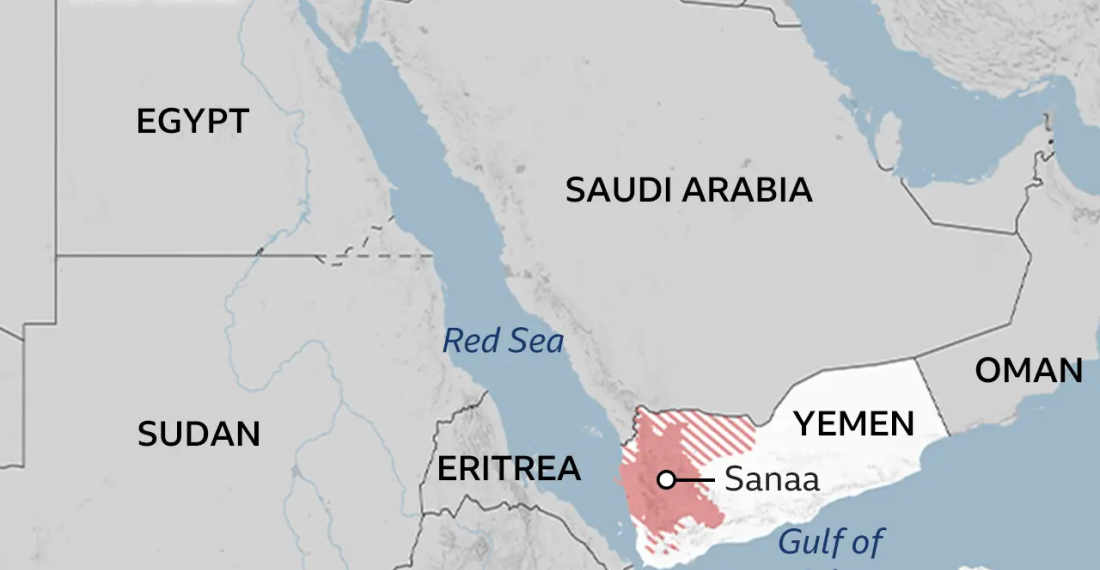
The Houthi movement in Yemen have declared a maritime blockade on Saudi Arabia, in a move which could put even greater pressure on international energy supplies.
In a statement, the Houthis military spokesperson Yahya Saree said the group would enforce the blockade against its "criminal Saudi enemy", effective immediately.
He said the Houthis were acting in response to Saudi Arabia's "oppressive siege" on Yemen over the past 12 years, and promised the rebels would respond to "any foolish act" by their neighbour to break the restrictions with force.
While smaller gulf states such as Kuwait, Bahrain and Qatar suffered major disruption to their exports as a result, Saudi Arabia had been able to use its geography to its advantage and pump oil from its large port precincts on the Persian Gulf to facilities on the west coast.
That allowed it to send shipments out through the Red Sea instead — providing a vital lifeline for the Saudi economy and relieving some, but not all, of the pressure on global oil supplies.
The east-west pipeline, as it is known, had come under attack by Iran at the height of the war.
The new blockade announced by the Houthis suggested the group would target ships carrying Saudi exports transiting through the Bab el-Mandeb Strait — the narrow waterway between Yemen and the Horn of Africa, acting as the gateway to the Red Sea.
The Houthis have previously attacked ships transiting through in protest over the Israel-Gaza war — a move that forced global shipping companies to take massive detours to avoid the area.
The Houthis and the Saudis have been in conflict for more than a decade, as civil war ripped Yemen apart and the Saudis formed a coalition to try to restore the Yemeni government's rule.
A truce brokered in 2022 had largely held until last week, when the Houthis accused Saudi Arabia of bombing Yemen's main international airport in a bid to prevent an Iranian plane landing there.
The rebels fired missiles in response.
source: commonspace.eu with ABC (Canberra) and agencies



