Georgian opposition leader outlines plan to connect with the grassroots

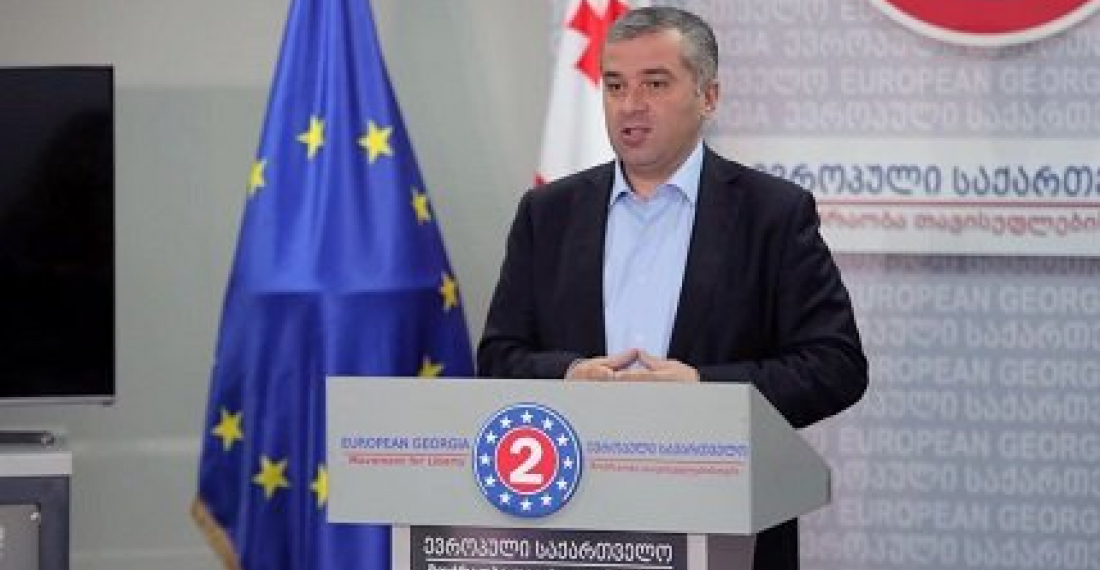
David Bakradze, the leader of the Georgian opposition party "European Georgia" spoke about his party plans to connect with the grassroots after a meeting of the party's political council held in Tbilisi earlier this week.

Bakradze said that the party's immediate task was to be close to the people, listen to their problems and discuss with them how it could help them improve their lives and take the country forward.
"We must be as close to people as possible", Bakradze said.

The leader of "European Georgia" added that soon party leaders will travel throughout Georgia, visiting every district, every city, and every village, to meet people and to hear their problems.

Bakradze was for a long time speaker of the Georgian parliament, and was a candidate in recent presidential elections, where he came third.

source: commonspace.eu with agencies

photo: David Bakradze (archive picture)
 

Related articles

Popular

Editor's choice
Interview
Thursday Interview: Murad Muradov

Thursday Interview: Murad Muradov

Today, commonspace.eu starts a new regular weekly series. THURSDAY INTERVIEW, conducted by Lauri Nikulainen, will host  persons who are thinkers, opinion shapers, and implementors in their countries and spheres. We start the series with an interview with Murad Muradov, a leading person in Azerbaijan's think tank community. He is also the first co-chair of the Action Committee for a new Armenian-Azerbaijani Dialogue. Last September he made history by being the first Azerbaijani civil society activist to visit Armenia after the 44 day war, and the start of the peace process. Speaking about this visit Murad Muradov said: "My experience was largely positive. My negative expectations luckily didn’t play out. The discussions were respectful, the panel format bringing together experts from Armenia, Azerbaijan, and Turkey was particularly valuable during the NATO Rose-Roth Seminar in Yerevan, and media coverage, while varied in tone, remained largely constructive. Some media outlets though attempted to represent me as more of a government mouthpiece than an independent expert, which was totally misleading.  Overall, I see these initiatives as important steps in rebuilding trust and normalising professional engagement. The fact that soon a larger Azerbaijani civil society visits to Armenia followed, reinforces the sense that this process is moving in the right direction." (click the image to read the interview in full)