Georgian civil society organisations express negative assessment of 31 October elections

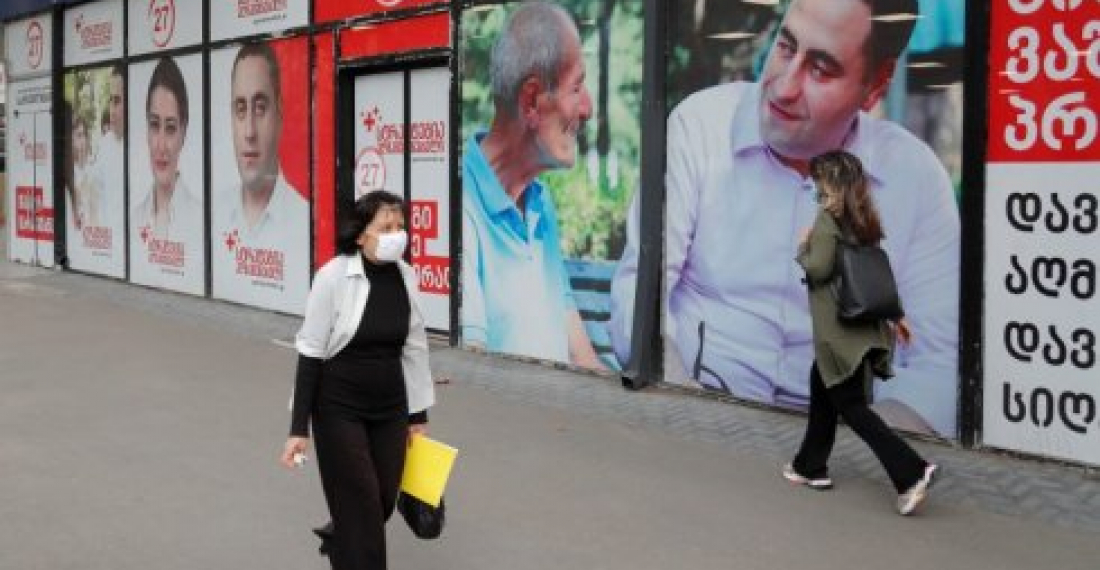
Georgian civil society organisations have given a negative assessment of the 31 October parliamentary elections. They say "the Georgian government has failed to ensure the elections adhere to democratic standards".

On October 31, 2020, the parliamentary elections were held in Georgia in accordance with the updated electoral system. The citizens of Georgia had the opportunity to elect a legislative body based on a model that is close to the proportional system, and this should be considered as an important step forward. Despite this change, we believe that the Georgian government has failed to ensure the elections adhere to democratic standards. Moreover, in our assessment, the 2020 parliamentary elections were the least democratic and free among the elections held under the Georgian Dream government.

In the pre-election period, political parties had the opportunity to campaign without significant restrictions. However, during the campaign, there were instances of violent confrontations, harassment, and threats against voters and journalists, and these cases were not normally followed by an efficient investigation. This created a perception of a political bias of the investigative bodies in the part of the society. Also, the pre-election period was characterized by unprecedented use of administrative resources by the ruling party, blurring the line between the state and the party. The ruling party did not shy away from manipulating the patriotic feelings of the citizens and, presumably for this purpose, launched the so-called "Cartographers Case", which led to the arrest of two, most likely innocent, people.

On election day, there were cases of verbal and physical confrontations in and around polling stations, the observers, and journalists being obstructed and attacked. NGOs have reported numerous cases of breaches of the secrecy of the ballot and voter bribery. Just five NGOs, with about 3,000 observers, wrote more than 500 complaints at various polling stations. Some PEC members, as well as representatives of political parties, including the opposition, displayed a hostile attitude towards the observers.

There was also a problem of the Central Election Commission's delay in announcing the primary election results, about seven hours after polling stations closed, which should be seen as a deterioration in established practice over the past eight years. The delay in publishing the primary results has raised questions in the public about the fairness of vote counting. These questions were exacerbated after the public found out that there was a certain imbalance in the vote count protocols in 8% of polling stations. In view of these circumstances, NGOs request a recount of the results of the precincts where imbalances were observed in the protocols, as well as the lawful and impartial review of the submitted complaints.

In summary, we would like to note that the 2020 parliamentary elections were marked by a low degree of democracy, which would be detrimental to the stable development of our country and its international reputation.

 The statement was signed by the following organisations:

Georgian Young Lawyers' Association (GYLA)
Transparency International Georgia (TI)
International Society for Fair Elections and Democracy (ISFED)
Georgian Democracy Initiative (GDI)
Open Society Georgia Foundation (OSGF)
Human Rights Education and Monitoring Center (EMC)
The Economic Policy Research Center (EPRC)
Union "Sapari"
Institute for Development of Freedom of Information (IDFI)
Human Rights Center (HRC)
Green Alternative
Democracy Reporting International Georgia (DRI)
Georgian Media Club
Atlantic Council of Georgia
The Georgian Institute of Politics (GIP)
International Center for Civic Culture (ICCC)
Regional Development Center
Georgia's Reforms Associates (GRASS)
Research Center for Human Rights and Social Justice (HRIDC)
Democratic Development Union of Georgia
In-Depth Reporting and Advocacy Center
Management Systems Development Center (MSDC)
Civic Initiative
Community Foundation "Leli"
Community Union "Nukriani"
Governance Monitoring Center (GMC)

source: commonspace.eu
Related articles

Editor's choice
News
Council of Europe launches new International Claims Commission for Ukraine

Council of Europe launches new International Claims Commission for Ukraine

Thirty-four countries and the European Union have signed a new convention establishing an International Claims Commission for Ukraine at a diplomatic conference co-hosted by the 46-nation Council of Europe and the Netherlands in the Hague. The diplomatic conference was attended by leaders and high-level representatives from over 50 states, including the President of Ukraine, Volodymyr Zelenskyy, the President of the Republic of Moldova, Maia Sandu, and the Prime Minister of the Netherlands, Dick Schoof.  “Today marks a major step forward in ensuring accountability for Ukraine. The International Claims Commission represents justice and hope for tens of thousands of victims—our determination that those who have suffered will not be forgotten. I call for quick ratifications so we can get the commission rapidly up and running for the people of Ukraine,” said Council of Europe Secretary General Alain Berset. Ukrainian President Volodymyr Zelenskyy said: “We expect that every mechanism for compensation from the Register of Damage and Claims Commission to the actual payments – will start working and receive strong and sufficient international support, so that people can truly feel that any kind of damage caused by the war can be compensated. This war, and Russia’s responsibility for it, MUST become a clear example – so that others learn not to choose aggression.” “Accountability is about creating the conditions for peace that endures. And therefore, accountability is a condition of security – today and for the future. But accountability is not only about Ukraine. And it is not only about one aggressor and one victim. Accountability is about Europe. About every country in Europe. It is about whether Europe, as a whole, is willing to defend its peace,” said Maia Sandu, President of the Republic of Moldova, which currently holds the Presidency of the Council of Europe’s Committee of Ministers. The Prime Minister of the Netherlands, Dick Schoof, said: “Every day Russia is deliberately bombarding homes, destroying businesses and damaging infrastructure in Ukraine. Russia must compensate Ukraine for the damage caused. That is why we have launched the International Claims Commission for Ukraine and we are honoured to host it.” The International Claims Commission will be the second part of a comprehensive compensation mechanism related to Russia’s war of aggression, building on the existing Register of Damage for Ukraine. The claims commission will be established within the framework of the Council of Europe and will also be open to other countries. The Register of Damage for Ukraine, created in 2023, collects and records compensation claims submitted by individuals, organisations and public bodies in Ukraine. Forty-four states and the European Union have so far joined the Register, which has already received 86,000 claims. The International Claims Commission will review, assess and decide upon claims submitted to the Register of Damage for Ukraine and determine the amount of compensation, if any, which is due in each case. The convention establishing the commission will enter into force once it has been ratified by 25 signatories, as long as sufficient funds have been secured to support its initial work.

Popular

Editor's choice
News
Council of Europe launches new International Claims Commission for Ukraine

Council of Europe launches new International Claims Commission for Ukraine

Thirty-four countries and the European Union have signed a new convention establishing an International Claims Commission for Ukraine at a diplomatic conference co-hosted by the 46-nation Council of Europe and the Netherlands in the Hague. The diplomatic conference was attended by leaders and high-level representatives from over 50 states, including the President of Ukraine, Volodymyr Zelenskyy, the President of the Republic of Moldova, Maia Sandu, and the Prime Minister of the Netherlands, Dick Schoof.  “Today marks a major step forward in ensuring accountability for Ukraine. The International Claims Commission represents justice and hope for tens of thousands of victims—our determination that those who have suffered will not be forgotten. I call for quick ratifications so we can get the commission rapidly up and running for the people of Ukraine,” said Council of Europe Secretary General Alain Berset. Ukrainian President Volodymyr Zelenskyy said: “We expect that every mechanism for compensation from the Register of Damage and Claims Commission to the actual payments – will start working and receive strong and sufficient international support, so that people can truly feel that any kind of damage caused by the war can be compensated. This war, and Russia’s responsibility for it, MUST become a clear example – so that others learn not to choose aggression.” “Accountability is about creating the conditions for peace that endures. And therefore, accountability is a condition of security – today and for the future. But accountability is not only about Ukraine. And it is not only about one aggressor and one victim. Accountability is about Europe. About every country in Europe. It is about whether Europe, as a whole, is willing to defend its peace,” said Maia Sandu, President of the Republic of Moldova, which currently holds the Presidency of the Council of Europe’s Committee of Ministers. The Prime Minister of the Netherlands, Dick Schoof, said: “Every day Russia is deliberately bombarding homes, destroying businesses and damaging infrastructure in Ukraine. Russia must compensate Ukraine for the damage caused. That is why we have launched the International Claims Commission for Ukraine and we are honoured to host it.” The International Claims Commission will be the second part of a comprehensive compensation mechanism related to Russia’s war of aggression, building on the existing Register of Damage for Ukraine. The claims commission will be established within the framework of the Council of Europe and will also be open to other countries. The Register of Damage for Ukraine, created in 2023, collects and records compensation claims submitted by individuals, organisations and public bodies in Ukraine. Forty-four states and the European Union have so far joined the Register, which has already received 86,000 claims. The International Claims Commission will review, assess and decide upon claims submitted to the Register of Damage for Ukraine and determine the amount of compensation, if any, which is due in each case. The convention establishing the commission will enter into force once it has been ratified by 25 signatories, as long as sufficient funds have been secured to support its initial work.