Georgia and EU hold dialogue on Human Rights

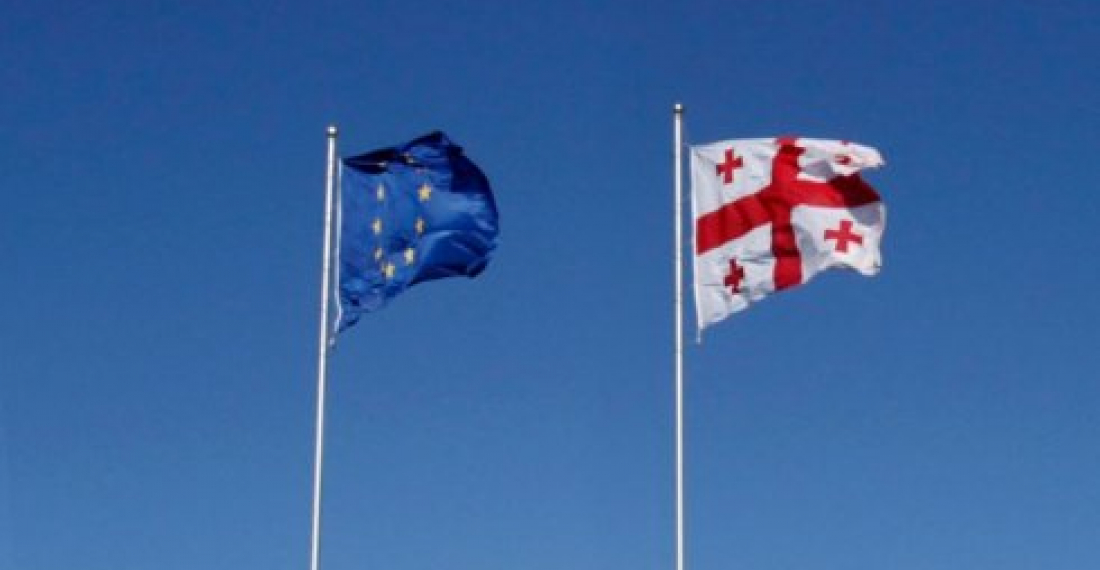
The European Union and Georgia held the 13th round of their annual Human Rights Dialogue by video-conference on 2 July 2020.

The Georgian delegation was headed by Mr. Vakhtang Makharoblishvili, First Deputy Minister of Foreign Affairs while the EU delegation was led by Mr Richard Tibbels, Head of Division in the European External Action Service. Reviewing developments since the previous dialogue in May 2019, the dialogue allowed as previously for an open, constructive exchange on the human rights situation in Georgia, on Georgia's commitment to making sustainable progress in human rights protection and on the latest developments with the EU's policy for the promotion and protection of democracy and human rights.

The sides stressed their commitment to the universality of human rights for all, regardless of religion or belief, ethnic origin, race, sex, language, sexual orientation, gender identity, ability or other. The EU and Georgia welcomed progress on human rights protection in Georgia, and acknowledged the particular challenges posed by the coronavirus pandemic to international human rights protection.

The EU reaffirmed its support to the sovereignty and territorial integrity of Georgia within its internationally recognised borders. The EU expressed concern about the deterioration of the human rights situation in the Georgian regions of Abkhazia and Tskhinvali region/South Ossetia, especially with regard to ethnic discrimination in particular towards ethnic Georgians, restriction of freedom of movement, including for health care and access to other social services, arbitrary detentions, violation of property rights and education in mother tongue, as well as about the persistent obstacles to the safe and dignified return of internally displaced persons and refugees to their homes.

The EU and Georgia reaffirmed that the Russian Federation has an obligation to implement the EU-mediated 12 August 2008 Ceasefire Agreement, and stressed the need for tangible results in the Geneva International Discussions in order to solve the security and human rights challenges of people affected by the conflict. The EU expressed deep concern about the complete closure of the administrative boundary line in Tskhinvali region/South Ossetia since September 2019, which has led to critical humanitarian consequences in Akhalgori district particularly during the Coronavirus pandemic. The sides underlined the importance of ending impunity in the cases of deprivation of life of Georgian citizens Archil Tatunashvili and Giga Otkhozoria. The EU and Georgia stressed the need for unhindered access by international humanitarian and human rights mechanisms of the relevant international organisations, as well as the EU Monitoring Mission (EUMM), to both Georgian regions. The EU encouraged increased efforts in addressing the fate of missing persons with a view to giving closure. The EU reiterated its support to Georgia's peace initiative "A Step to a Better Future" aimed at improving the socio-economic situation of conflict-affected people and at building confidence among the divided communities and welcomed its implementation

The EU welcomed the adoption of the constitutional amendments in Parliament on 29 June 2020 that establish a more proportional electoral system and will promote greater parliamentary pluralism. The EU raised the importance of adopting, with broad parliamentary support, ambitious electoral reform legislation arising from the OSCE/ODIHR recommendations as well as the importance of its timely adoption and effective implementation. Both sides agreed on the importance of maintaining a free and pluralistic media environment, and political pluralism as a prerequisite for the conduct of democratic elections, including in the context of the forthcoming parliamentary elections. The parties agreed on the importance of the fundamental freedoms including freedom of expression and freedom of assembly and committed to upholding them for all.

The EU welcomes progress on support to those belonging to ethnic minorities and ensuring civic integration processes in Georgia and encourages Georgia to continue efforts to improve the participation of women and representatives of those belonging to ethnic minorities in all areas of public life.

The EU recalled the importance of combating all forms of discrimination and of protection and better integration of those belonging to vulnerable groups including LGBTI persons. The EU welcomed Georgia's efforts to continue ensuring the effective implementation of its anti-discrimination law and strengthening the policy framework. The EU also encouraged Georgia to progress on legislation and coordinated efforts to deliver real benefits in the lives of persons with disabilities.

The EU noted progress made in combatting domestic violence and all violence against women, hate crimes and discrimination, and ensuring victim-centred investigations. The EU recalled the importance of implementing commitments related to the Istanbul Convention.

The Georgian Inter-Agency Human Rights Council's meaningful cooperation with civil society was recalled and the EU encouraged Georgia to continue integrating the voice of civil society into the policy making process. The valuable ongoing work of the Public Defender's Office and the new State Inspectorate Service was also discussed and the important role of independent oversight bodies in holding governments to account and in shaping laws and policies.

The EU welcomed progress in the implementation of the Law on Occupational Safety to all sectors of the economy and again encouraged efforts to ensure that the labour inspectorate is transformed into a fully-fledged labour inspectorate. The EU welcomed the adoption of the Child Rights Code and progress with the Juvenile Justice Code as part of necessary efforts to address the situation of children in vulnerable situations and children in situations of extreme poverty. The EU stressed the importance of finalising the deinstitutionalisation process.

The EU noted the considerable progress made in and priority attached by Georgia to preventing torture and ill-treatment. The EU welcomed the ongoing reform of the penitentiary and crime prevention systems under the Ministry of Justice of Georgia and human-centred corona responses of the Special Penitentiary Service. The EU looked forward to the continued implementation of all recommendations of the Committee on the Prevention of Torture and of the National Preventive Mechanism.

The parties highlighted the importance of coordinated work to protect and promote human rights utilising national policy mechanisms, such as the National Human Rights Strategy and Action Plan. The parties also agreed to continue to identify ways to further strengthen their cooperation on human rights issues in multilateral fora, including the UN, OSCE and the Council of Europe and on the importance of strengthening multilateralism. The EU welcomed Georgia's achievements under its Presidency of the Committee of Ministers of the Council of Europe. The EU also welcomed Georgia's continued active engagement in the "Good Human Rights Stories" initiative. In line with its policy of consulting civil society ahead of its meetings on human rights, the EU drew on the valuable input of Georgian and international NGOs and international and regional organisations active in Georgia.

source: commonspace.eu with the Europpean External Action Service

 

Latest

Editor's choice
Monday Commentary
Monday Commentary: PEACE IN OUR TIME?

Monday Commentary: PEACE IN OUR TIME?

Making peace between Armenia and Azerbaijan was never going to be simple, nor easy, nor quick. It is taking time, writes Dennis Sammut in this Monday Commentary. “There is a sense of realism coming from the leaders of the two countries – President Ilham Aliyev of Azerbaijan and prime minister Nikol Pashinyan of Armenia, that frankly, is necessary and welcome”, he writes. At a time when conflicts are raging all over the world – from Ukraine to the Gulf, from Africa to South Asia, the prospect that Armenia and Azerbaijan had finally, after decades of conflict that left thousands of dead and many more displaced, decided on embarking on a journey of peace was welcomed. Peace between Armenia and Azerbaijan can be top-down up to a point. Both leaders have spent political capital preparing for a peace deal. But both are aware that their people are not ready for peace yet. In fact, in Armenia, most of the elite are negative toward a peace deal with Azerbaijan. Pashinyan needs time to persuade his countryfolk. That is why 2031 is realistic. Ilham Aliyev runs a tighter shop, but he is also not immune to public opinion. Every time someone hits a landmine in Karabakh, which unfortunately happens often, peace comes into question. Which is why Aliyev chooses to sound hardline, more often than not. In pursuing the peace agenda, both Aliyev and Pashinyan need to proceed cautiously. But they are right in making peace the central issue in their agenda. It is the main issue, and the one that will define them in history. So forward, cautiously but resolutely! In pursuing the peace agenda, Aliyev and Pashinyan need to be supported clearly and unambiguously. There are too many people in Baku and Yerevan who are sitting on the sides, waiting. The international community is not doing enough. It is time to be counted. Otherwise, the spoilers will win, and the region will go back to its bad habits. (Click the image to read the full commentary).
Editor's choice
News
Ukraine Peace Talks Set to Expand as Russia and Europe Clash Over Post-war Security

Ukraine Peace Talks Set to Expand as Russia and Europe Clash Over Post-war Security

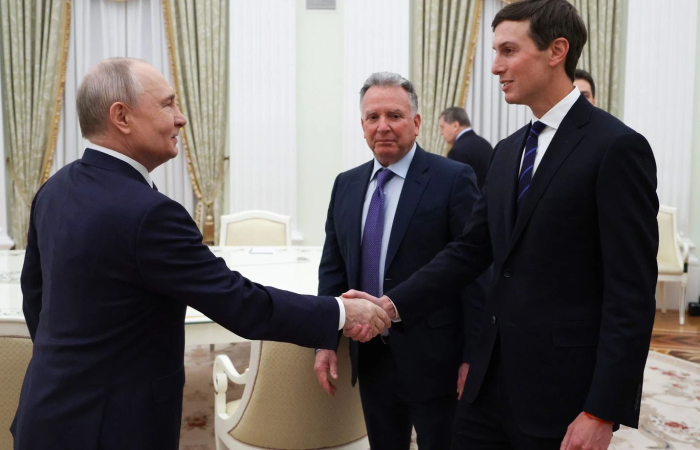
Ukraine and Russia could see European countries join the next round of peace negotiations, following talks between US special envoys Steve Witkoff and Jared Kushner and Russian President Vladimir Putin in Moscow on Thursday (November 12). However, conflicting positions over European military involvement, Ukraine’s territorial future and the continent’s security arrangements highlight the difficulties facing the diplomatic process. Speaking after the meeting, Witkoff said European participation would be an important development, describing the countries concerned as key partners. Kushner also indicated that Washington had noticed a shift in European attitudes and believed their involvement would not obstruct progress. In a statement published on X, he said the expanded discussions would address broader European security arrangements alongside territorial disputes between Russia and Ukraine. The US envoys subsequently travelled to Dublin, where they met Ukrainian President Volodymyr Zelenskyy during a European summit. Zelenskyy welcomed the possibility of European participation and expressed hope that the negotiations would include measures to reduce tensions and establish ceasefires. He also reiterated the importance of European representation in decisions concerning the continent’s security. Moscow, however, has offered a more cautious interpretation of the proposed expansion. Putin's aide, Yuri Ushakov, suggested that European countries should first reconsider their military assistance to Kyiv, arguing that their current actions demonstrated an unwillingness to pursue peace. Putin similarly called on Washington to work with its European allies to establish whether they genuinely wanted peace or continued confrontation with Russia. The Russian president also rejected the prospect of European peacekeeping troops being deployed to Ukraine following a potential agreement, describing such a presence as a continuation of the war. His position reflects wider disagreements over the future European security architecture, with Moscow seeking discussions on the continent's broader security arrangements, while European leaders insist that such negotiations cannot replace a settlement of the war. Simultaneously, Zelenskyy raised concerns about disruptions to Starshield, the US-made satellite communications service used by Ukrainian forces. He described Washington’s discussions with Moscow about Europe's future security as unusual and warned against decisions that could undermine Ukraine's sovereignty. Despite the diplomatic activity, fighting continued. Russian drone attacks killed two people in Ukraine's Sumy region and injured five in Rivne, while a separate attack in Russia's Belgorod region killed one person and injured four. Ukrainian agricultural company Kernel Holding also suspended operations at all its oilseed extraction facilities following repeated Russian attacks.

Popular

Editor's choice
Monday Commentary
Monday Commentary: European-Azerbaijan relations need an intensive and multifaceted dialogue that is frank and honest

Monday Commentary: European-Azerbaijan relations need an intensive and multifaceted dialogue that is frank and honest

Last week I visited Baku, Azerbaijan. My visit was relatively short, but very intensive, and had many meetings with stakeholders and colleagues. When I arrived in Baku first time in 1996,  Azerbaijan was a different country: weak, poor, and shaken by defeat in war. For thirty year the Karabakh issue dominated the agenda: the political agenda but also the popular mindset. Now, thirty years later, Azerbaijan has returned to Karabakh, and peace with Armenia is on the horizon. It is a new era for Armenia-Azerbaijan relations, for the South Caucasus, but also for Europe.  But we cannot be complacent: the Peace agreement has been initialed but not signed; borders remain closed; TRIPP is ambitious but remains an idea; and there are spoilers who want to turn the clock back. We must not allow them, and in this Europe and Azerbaijan must work together. Europe’ vanguard organization is the European Union – it is a free union of 27 member states; it is a strong global economic force, and increasingly a diplomatic and military force too. But it remains “work in progress” and can often appear dysfunctional. It often lacks collective and institutional memory. In its dealings with Azerbaijan the EU has made many mistakes – not least opening the delegation here late – in 2008. It sometimes appears condescending. Some utterances from the European Parliament and from some quarters in some member states are not understandable even for me. They irritate the Azerbaijanis, but serve no other purpose But Azerbaijan has also not handled relations with the EU well. It has failed to respond when the hand of friendship reached out; and it confused irritating actions, sometimes by well-meaning people; sometimes by outright spoilers, with strategic action. In short, EU-Azerbaijan relations have suffered from a lack of proper dialogue. This dialogue must be frank, honest and multi-faceted involving different segments of society on both sides.   Is Azerbaijan Europe? When Azerbaijan applied to join the Council of Europe in the 1990s, there were some who opposed, saying this was not Europe. I was one of the people who argued that Armenia and Azerbaijan may be on the periphery of the continent geographically, but were European in essence. Certainly their elites. During the discussion on 4 September in Baku, my friend Farhad Mammedov, mentioned that Azerbaijan is not interested in joining the EU, and was now close to the Central Asian countries in the 5 plus 1 format. Neither things mean that Azerbaijan is not Europe. There are several European countries that are not in the EU, and do not want to be, for example Norway and Switzerland. Iceland has recently voted to stay out of the EU. The UK was a member and left. Europe is bigger than the EU, and the holding of the European Political Community summit in Baku in 2027 proves that. Despite all the rhetoric, I never heard the president of Azerbaijan  saying that Azerbaijan is not Europe, nor have I heard any European president say it either. Not wanting to join the EU and forging close relations with neighbouring regions does not make Azerbaijan any less European. It is only logical that when Europeans talk to Azerbaijan they talk like family. The conversation is often frank. It must also be honest, and Europeans need always to remember this too. A frank, honest and multi-faceted dialogue A frank, honest and multifaceted dialogue will contribute to relations between Azerbaijan and the rest of Europe: it will avoid misperception, which unfortunately is very common on both sides; it will provide a forum where problems can be discussed and resolved, and it will increase mutual trust, so that together common problems can be addressed. (click image to read the full Monday Commentary)
Editor's choice
Monday Commentary
Monday Commentary: “The barren rocks of Aden” and “These lands of Yemen are so ruthless”

Monday Commentary: “The barren rocks of Aden” and “These lands of Yemen are so ruthless”

There are two early 20th-century tunes that mark foreign attempts to occupy and “pacify” Yemen. The Scottish tune “The barren rocks of Aden” marks the mobilisation of Highland soldiers, enlisted to be deployed to the Yemeni port of Aden, that in 1837 became the last colony to be incorporated into the British Empire. The tune talks of the harshness of the terrain, but is celebratory, It was even played as a farewell tune to Sir William Luce at the parade in Sharjah celebrating his end as “British Viceroy” in the Middle East in 1966. The second tune is an Anatolian lament. As Ilker Sezer reminded us this weekend, in his weekly feature on “Turkiye Today”, it “mourns the tragic fate of Ottoman soldiers dispatched to the harsh, remote deserts of Yemen during the fall of the empire, young men who marched away from their villages and never returned home. Most of their names, and numbers, were never recorded. Yet, their fate left a mark on the Turkish psyche.” Subsequent invaders have discovered that Yemen is a grave that cannot be overcome by the strength of modern technology, and that whilst Yemeni society is splintered and divided, building a reliable alliance with Yemeni factions is difficult. These are the harsh lessons facing Saudi Arabia, as the Kingdom faces its biggest challenge in its modern history. The leadership of the Kingdom now has to respond decisively. At stake is their very credibility. This is likely to be a long and messy conflict. Saudi military objectives need to be focused: to box in the Houthis rather than destroy them. This is likely to include: (a) regaining territory lost on the Red Sea coast; (b) control over Bab el Mandeb Strait; (c) some kind of cordon sanitaire on the Saudi-Yemeni border; and if things go well (d) the capture of Sanaa. All this would not eliminate the Houthi problem, but it will contain it. In the end the Saudis will have to continue managing Yemen with a mixture of carrot and stick. For the moment, the stick is likely, but the carrot cannot be forgotten either. (click the image to read the Monday Commentary in full)