Fears of extended rule as Erdogan appoints legal experts to draft new Constitution

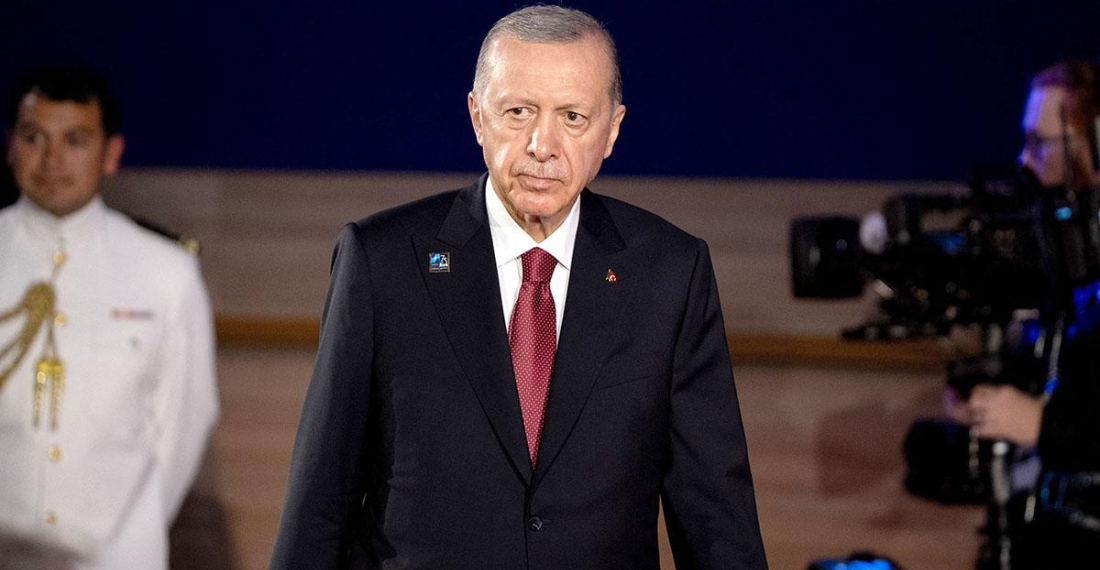
Turkish President Recep Tayyip Erdogan has appointed a team of legal experts to start working on a new constitution with critics saying it could allow him to remain in power beyond 2028, when his current term ends. Erdogan, who has led Türkiye as president since 2014 and was prime minister for more than a decade before that, has advocated for a new constitution arguing that the current one, which was drafted following a military coup in 1980, is outdated and retains elements of military influence even though it was amended several times.

 “As of yesterday, I have assigned 10 legal experts to begin their work, and with this effort, we will proceed with the preparations for the new constitution,” Erdogan told his ruling party’s local administrators in a speech, according to the Associated Press. “For 23 years, we have repeatedly demonstrated our sincere intention to crown our democracy with a new civilian and libertarian constitution.”

Under the current constitution, Erdogan cannot run again unless early elections are called or the legal framework is changed. Critics see the push for a new constitution as a possible path for re-election, allowing legal changes that would bypass the constitutional term limits.

Erdogan, who has grown increasingly authoritarian over the years, has denied seeking a new constitution in order to remain in power, saying last week “we want the new constitution not for ourselves, but our country.”

Erdogan’s ruling party and its nationalist allies lack the votes needed to usher in a new constitution. Some analysts believe the government’s recent effort to end the decades-long conflict with the militant Kurdistan Workers Party or PKK, is part of strategy to gain the support of a pro-Kurdish party in parliament for the new charter.

The effort to introduce a new constitution comes months after Ekrem Imamoglu the popular mayor of Istanbul and a key Erdogan rival, was arrested and jailed on corruption charges.

His arrest has been widely viewed as politically motivated although the government insists Türkiye’s judiciary is independent and free of political influence. It triggered widespread demonstrations calling for his release and an end to Turkey’s democratic backsliding under Erdogan.
Source: commonspace.eu with agencies and Associated Press. Photo: Andrew Harnik/Getty Images via AFP

Related articles

Editor's choice
News
Aden under curfew, as problem in Yemen's south deepens

Aden under curfew, as problem in Yemen's south deepens

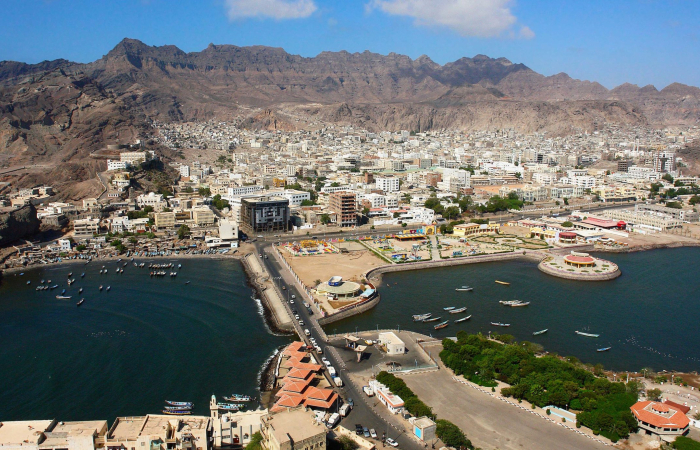
The port city of Aden, in Yemen's south, has been put under curfew, as the rift in the country between  the Saudi led coalition which  backs Yemen's presidential governing council, and the southern forces led by the Southern Transitional Council (STC), deepens. Abdul Rahman al-Mahrami, a member of the Yemeni Presidential Governing Council and commander of the al-Amalik brigades, has ordered a curfew in the temporary capital, Aden, "to maintain security". "A curfew has been imposed throughout Aden Governorate from 9:00 p.m. to 6:00 a.m., in accordance with the instructions of Commander Abdul Rahman al-Mahrami, a member of the Presidential Management Council," the statement said. It states that only security and military personnel, as well as medical and technical teams with approved permits, will be allowed to move in the area during these hours. Yemen's presidential council, which is backed by Saudi Arabia and which already is in a struggle with the Houthi Movement in the north of the country who also occupy the capital Sanaa, two days ago issued an order for the arrest of the head of the Southern Transitional Council (STC),, Aidarous al Zubaidi. The STC have wide support among people in the South, and advocate that South Yemen restores its independence. The coalition warned of further escalation in Aden, long regarded as an STC stronghold, as the Presidential Leadership Council (PLC) chief accused STC leader Aidarous Al Zubaidi of “high treason” and announced the revocation of his membership in the governing body. The moves mark a sharp escalation in tensions within the anti-Houthi camp, despite National Shield Forces, rivals of the STC and former allies, having recently retaken control of Hadhramaut and Mahra from southern fighters. The STC’s takeover of the two regions last month angered Saudi Arabia and contributed to igniting the current internal conflict. (click the picture to read more)

Popular

Editor's choice
News
Aden under curfew, as problem in Yemen's south deepens

Aden under curfew, as problem in Yemen's south deepens

The port city of Aden, in Yemen's south, has been put under curfew, as the rift in the country between  the Saudi led coalition which  backs Yemen's presidential governing council, and the southern forces led by the Southern Transitional Council (STC), deepens. Abdul Rahman al-Mahrami, a member of the Yemeni Presidential Governing Council and commander of the al-Amalik brigades, has ordered a curfew in the temporary capital, Aden, "to maintain security". "A curfew has been imposed throughout Aden Governorate from 9:00 p.m. to 6:00 a.m., in accordance with the instructions of Commander Abdul Rahman al-Mahrami, a member of the Presidential Management Council," the statement said. It states that only security and military personnel, as well as medical and technical teams with approved permits, will be allowed to move in the area during these hours. Yemen's presidential council, which is backed by Saudi Arabia and which already is in a struggle with the Houthi Movement in the north of the country who also occupy the capital Sanaa, two days ago issued an order for the arrest of the head of the Southern Transitional Council (STC),, Aidarous al Zubaidi. The STC have wide support among people in the South, and advocate that South Yemen restores its independence. The coalition warned of further escalation in Aden, long regarded as an STC stronghold, as the Presidential Leadership Council (PLC) chief accused STC leader Aidarous Al Zubaidi of “high treason” and announced the revocation of his membership in the governing body. The moves mark a sharp escalation in tensions within the anti-Houthi camp, despite National Shield Forces, rivals of the STC and former allies, having recently retaken control of Hadhramaut and Mahra from southern fighters. The STC’s takeover of the two regions last month angered Saudi Arabia and contributed to igniting the current internal conflict. (click the picture to read more)