


On the eve of leaders meeting, Armenia and Azerbaijan report clashes on border and in the conflict zone

Both Armenia and Azerbaijan have reported clashes on the international border between them and in the Nagorno-Karabakh conflict zone on Tuesday (26 March), hours before it was confirmed that the leaders of the two countries will be meeting in Vienna on Friday in an attempt to move forward the peace talks aimed at ending the conflict over Nagorno-Karabakh.

related content: Armenian and Azerbaijani leaders to meet Friday in Vienna

The Azerbaijani Defence Ministry said a soldier was killed as a result of the incidents in the Fizuli region. He was named as Ellez Aleddin Ellezov.

Armenian media sources said that "Armenian servicemen have prevented Azerbaijani troops' attempts to carry out engineering work and bring their positions closer to the border. The incident occurred on Tuesday, March 26 near the Armenian border village of Berdavan in Tavush province."

The reports added that "Failing to heed the Armenian side's warnings, the Azerbaijani soldiers opened fire towards the Armenian troops who retaliated, causing the suspension of engineering work. No casualties were reported on the Armenian side."

However, the Azerbaijani Defence Ministry said information on the alleged attempt of the Azerbaijani side to propel forward its positions by carrying out engineering work on the Armenian-Azerbaijani state border "is untrue and another provocation of the Armenian side, as well as it aims to aggravate the situation at the front". "As a result of decisive and adequate actions undertaken by the units of the Azerbaijan Army, the enemy's firing positions were suppressed and its further provocations were stopped. Currently, the units of the Azerbaijan Army fully control the situation on the front line," the statement added.

Commonspace.eu reports incidents on the line of contact based on secondary sources and is not able to verify the accuracy of the reports.

source: commonspace.eu with agencies

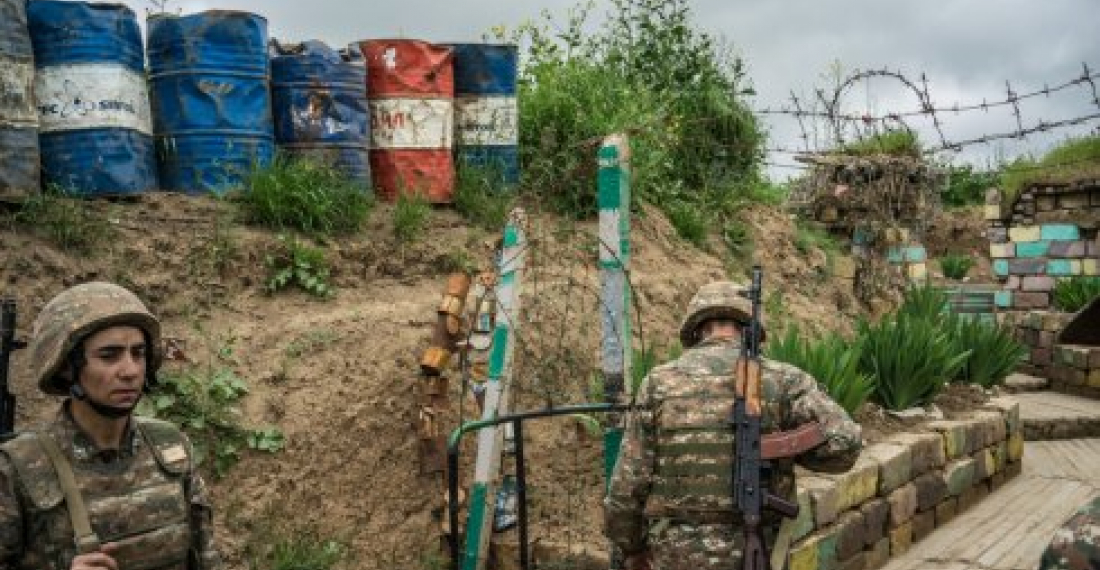
photo: An Armenian military post on the line of contact in the nagorno-Karabakh conflict zone (archive picture)


Related articles

Editor's choice
News
Aden under curfew, as problem in Yemen's south deepens

Aden under curfew, as problem in Yemen's south deepens

The port city of Aden, in Yemen's south, has been put under curfew, as the rift in the country between  the Saudi led coalition which  backs Yemen's presidential governing council, and the southern forces led by the Southern Transitional Council (STC), deepens. Abdul Rahman al-Mahrami, a member of the Yemeni Presidential Governing Council and commander of the al-Amalik brigades, has ordered a curfew in the temporary capital, Aden, "to maintain security". "A curfew has been imposed throughout Aden Governorate from 9:00 p.m. to 6:00 a.m., in accordance with the instructions of Commander Abdul Rahman al-Mahrami, a member of the Presidential Management Council," the statement said. It states that only security and military personnel, as well as medical and technical teams with approved permits, will be allowed to move in the area during these hours. Yemen's presidential council, which is backed by Saudi Arabia and which already is in a struggle with the Houthi Movement in the north of the country who also occupy the capital Sanaa, two days ago issued an order for the arrest of the head of the Southern Transitional Council (STC),, Aidarous al Zubaidi. The STC have wide support among people in the South, and advocate that South Yemen restores its independence. The coalition warned of further escalation in Aden, long regarded as an STC stronghold, as the Presidential Leadership Council (PLC) chief accused STC leader Aidarous Al Zubaidi of “high treason” and announced the revocation of his membership in the governing body. The moves mark a sharp escalation in tensions within the anti-Houthi camp, despite National Shield Forces, rivals of the STC and former allies, having recently retaken control of Hadhramaut and Mahra from southern fighters. The STC’s takeover of the two regions last month angered Saudi Arabia and contributed to igniting the current internal conflict. (click the picture to read more)

Popular

Editor's choice
News
Aden under curfew, as problem in Yemen's south deepens

Aden under curfew, as problem in Yemen's south deepens

The port city of Aden, in Yemen's south, has been put under curfew, as the rift in the country between  the Saudi led coalition which  backs Yemen's presidential governing council, and the southern forces led by the Southern Transitional Council (STC), deepens. Abdul Rahman al-Mahrami, a member of the Yemeni Presidential Governing Council and commander of the al-Amalik brigades, has ordered a curfew in the temporary capital, Aden, "to maintain security". "A curfew has been imposed throughout Aden Governorate from 9:00 p.m. to 6:00 a.m., in accordance with the instructions of Commander Abdul Rahman al-Mahrami, a member of the Presidential Management Council," the statement said. It states that only security and military personnel, as well as medical and technical teams with approved permits, will be allowed to move in the area during these hours. Yemen's presidential council, which is backed by Saudi Arabia and which already is in a struggle with the Houthi Movement in the north of the country who also occupy the capital Sanaa, two days ago issued an order for the arrest of the head of the Southern Transitional Council (STC),, Aidarous al Zubaidi. The STC have wide support among people in the South, and advocate that South Yemen restores its independence. The coalition warned of further escalation in Aden, long regarded as an STC stronghold, as the Presidential Leadership Council (PLC) chief accused STC leader Aidarous Al Zubaidi of “high treason” and announced the revocation of his membership in the governing body. The moves mark a sharp escalation in tensions within the anti-Houthi camp, despite National Shield Forces, rivals of the STC and former allies, having recently retaken control of Hadhramaut and Mahra from southern fighters. The STC’s takeover of the two regions last month angered Saudi Arabia and contributed to igniting the current internal conflict. (click the picture to read more)

