


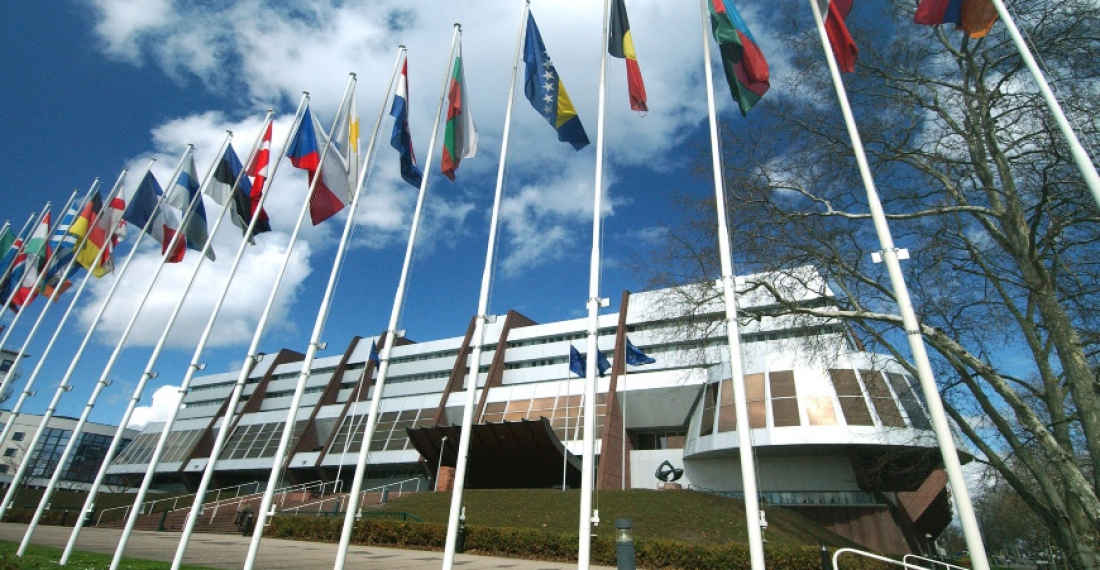
Council of Europe Congress adopts critical resolution on Georgia

The Congress of Local and Regional Authorities of the Council of Europe meeting in Strasbourg has adopted a critical resolution on Georgia that expresses deep concern over clear signs of democratic backsliding and the weakening of human rights in the country. It points at the increasing polarisation in society and the adoption of legislation that contradicts Council of Europe standards. 101 members voted in favour and only 10 against. The Congress of Local and Regional Authorities is an institution of the Council of Europe, responsible for strengthening local and regional democracy in its 46 member states and assessing the application of the European Charter of Local Self-Government.

The following are the key elements of the resolution:

Amid deepening polarisation in Georgia, the rapid and dramatic democratic backsliding observed over the past two years, has affected local democracy in Georgia increasingly: this has intensified in the aftermath of the 2024 parliamentary election, which were rejected by all opposition parties, domestic and some international election observers, notably due to concerns over their integrity, and of the decision to halt Georgian EU accession on 28 November 2024.

The progressive marginalisation of the opposition from the political scene and the lack of dialogue between the authorities and the opposition has led to a de facto absence of political pluralism, including in municipal councils. This situation has led to anexcessive concentration of power by the ruling party, and has prompted the opposition to boycott all decision-making bodies, shrinking the space for negotiation and mediation.

Following the highly controversial adoption of the Law on Transparency of Foreign Influence and the Foreign Agents Registration Act (FARA) adopted in first reading, there has been increased intimidation and stigmatisation of NGOs and dissenting voices in the media, which work under increasingly challenging conditions, undermining their freedom of association and freedom of expression. In a democratic society, freedom of expression must be protected, supported and promoted irrespective of whether it is critical of the government, and even if it is influenced by international discourse.

Violent crackdowns by law enforcement on peaceful demonstrators and opposition figures, especially in Tbilisi, violate freedoms of expression and assembly. Recent amendments further restricting protests through harsher penalties and fines have compounded the problem.

The instrumentalisation of public institutions including at local level, has resulted in numerous reports of dismissals, intimidation and pressure on civil servants, facilitated by the adoption of amendments to the Law on Public Service.

The recent findings by both international and domestic observers have also raised concerns regarding the politicisation of public administration, widespread misuse of administrative resources and pressure on voters during electoral campaigns, unduly tilting the playing field between candidates and distorting voters’ will.

 The legal framework applicable to local elections in Georgia has been amended repeatedly, more than 20 times since the last elections without extensive consultations and broad consensus, which is not in line with the principle of stability of electoral law. The amendments have reinforced the dominant position of the ruling party in the Central Election Commission, undermining its independence, and have also wound back fundamental rules pertaining to the electoral system, gender quotas and the establishment of electoral districts.

The many shortcomings and challenges affecting the respect of democracy, rule of law and human rights have led to a collapse in public confidence in democratic institutions for large parts of the Georgian population, and notably the young people, and damaged local democracy, which is not conducive to holding the 2025 local elections in a trust-based environment; in fact, it risks exacerbating the situation.

The resolution urges the Georgian authorities to take the following steps:

Urgently resume political dialogue at all levels of government, through an inclusive political process which engages all stakeholders, including local authorities, opposition and civil society, to reduce polarisation, restore the checks and balances essential in a pluralist democracy and regulate the participation rights of the opposition.

Repeal legislation in breach of human rights, in particular the Law on Transparency of Foreign Influence, and refrain from enacting the FARA adopted in first reading, and avoid taking any actions that would further impede the indispensable work of civil society and have a chilling effect on media outlets or undermine the foundations of democracy, all of which would be detrimental to local self-government in Georgia.

Fully investigate cases of arbitrary detention and violence against peaceful protesters and journalists, as recommended by the UN High Commissioner for Human Rights; release all detainees, including journalist Mzia Amaghlobeli and ensure that any sanctions imposed for protest-related offences in municipalities meet the legal standards of necessity and proportionality.

Repeal the contentious amendments of the Law on Public Service and reintegrate employees of local public service dismissed on the basis of these provisions.

Source: commonspace.eu with agencies. Photo: Council of Europe in Strasbourg

Related articles

Editor's choice
News
Borrell tells the European Parliament that the situation in Afghanistan was critical, but the EU will remain engaged

Borrell tells the European Parliament that the situation in Afghanistan was critical, but the EU will remain engaged

Borrell underlined that the European Union will make every effort to support the peace process and to remain a committed partner to the Afghan people. "Of course, we will have to take into account the evolving situation, but disengagement is not an option.  We are clear on that: there is no alternative to a negotiated political settlement, through inclusive peace talks.
Editor's choice
News
Egypt rejects Israeli "offer" for an exit only Rafah checkpoint in Gaza

Egypt rejects Israeli "offer" for an exit only Rafah checkpoint in Gaza

Egypt has rejected an Israeli "offer" for opening for exit only the Rafah checkpoint in Gaza. According to the Egyptian State Information Service, Egyptian authorities refuted on Wednesday afternoon reports that Israel claims it will open the Rafah crossing, the only lifeline for Gaza to the outside world, but only for those wishing to leave the besieged coastal enclave.  Citing an Egyptian official, the service stated that ''any agreement to open the crossing will cover both entry and exit, in line with US President Donald Trump's plan for humanitarian and political arrangements following the ceasefire.'' Cairo reaffirmed its adherence to the plan and UN Security Council Resolution 2803, including the right of return for Palestinians and maintaining two-way operations at the crossing. Earlier in the day, Israel's Coordinator of Government Activities in the Territories (COGAT) announced that the Rafah crossing would reopen ''within the next few days,'' marking the first such move since February 2025. According to the statement, departures would require prior Israeli security approval and would follow mechanisms previously implemented under EU supervision. Notably, the statement made no mention of the entry of humanitarian aid, which continues to flow through the Kerem Shalom crossing. A Palestinian official also echoed the Egyptian denial of Israel's claim. The announced agreements stress that no Palestinians will be forced to leave Gaza. Those who choose to travel will have the right to return, while humanitarian aid will continue through UN agencies, the International Red Cross and Crescent, and other independent organisations. A European Union official, who requested anonymity and is familiar with the matter, told TNA that the EU has received no official notification from Israel regarding new arrangements, stressing that "no changes exist beyond the January agreements, and we await Israel's formal approval for crossing operations under the Trump plan. "Reopening the crossing will follow mechanisms jointly supervised by the EU and the Palestinian Authority to ensure oversight and transparency, according to the EU official.

Popular

Editor's choice
News
Egypt rejects Israeli "offer" for an exit only Rafah checkpoint in Gaza

Egypt rejects Israeli "offer" for an exit only Rafah checkpoint in Gaza

Egypt has rejected an Israeli "offer" for opening for exit only the Rafah checkpoint in Gaza. According to the Egyptian State Information Service, Egyptian authorities refuted on Wednesday afternoon reports that Israel claims it will open the Rafah crossing, the only lifeline for Gaza to the outside world, but only for those wishing to leave the besieged coastal enclave.  Citing an Egyptian official, the service stated that ''any agreement to open the crossing will cover both entry and exit, in line with US President Donald Trump's plan for humanitarian and political arrangements following the ceasefire.'' Cairo reaffirmed its adherence to the plan and UN Security Council Resolution 2803, including the right of return for Palestinians and maintaining two-way operations at the crossing. Earlier in the day, Israel's Coordinator of Government Activities in the Territories (COGAT) announced that the Rafah crossing would reopen ''within the next few days,'' marking the first such move since February 2025. According to the statement, departures would require prior Israeli security approval and would follow mechanisms previously implemented under EU supervision. Notably, the statement made no mention of the entry of humanitarian aid, which continues to flow through the Kerem Shalom crossing. A Palestinian official also echoed the Egyptian denial of Israel's claim. The announced agreements stress that no Palestinians will be forced to leave Gaza. Those who choose to travel will have the right to return, while humanitarian aid will continue through UN agencies, the International Red Cross and Crescent, and other independent organisations. A European Union official, who requested anonymity and is familiar with the matter, told TNA that the EU has received no official notification from Israel regarding new arrangements, stressing that "no changes exist beyond the January agreements, and we await Israel's formal approval for crossing operations under the Trump plan. "Reopening the crossing will follow mechanisms jointly supervised by the EU and the Palestinian Authority to ensure oversight and transparency, according to the EU official.

